*NURSING > STUDY GUIDE > NUR 2349 Professional Nursing Exam 3 Study Guide (All)
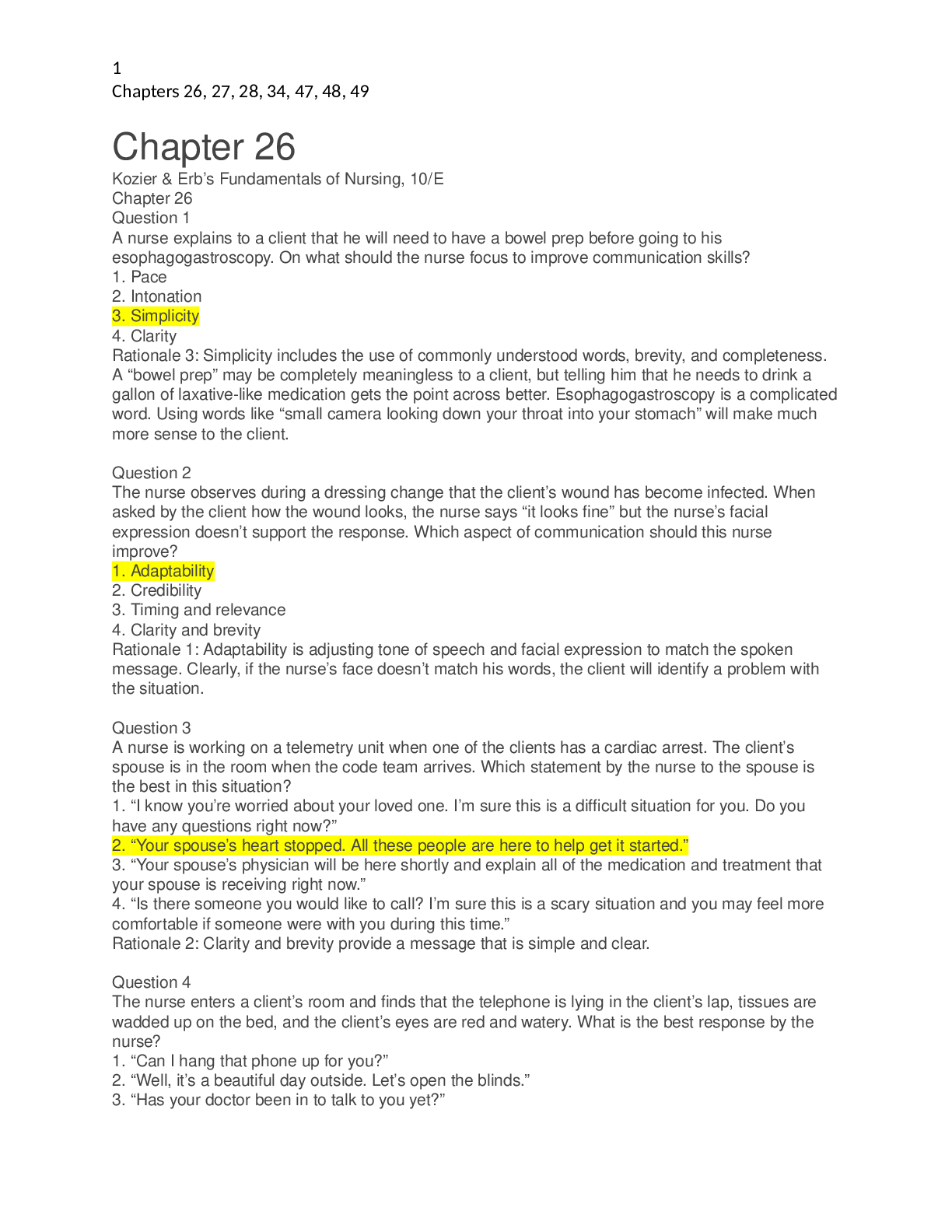
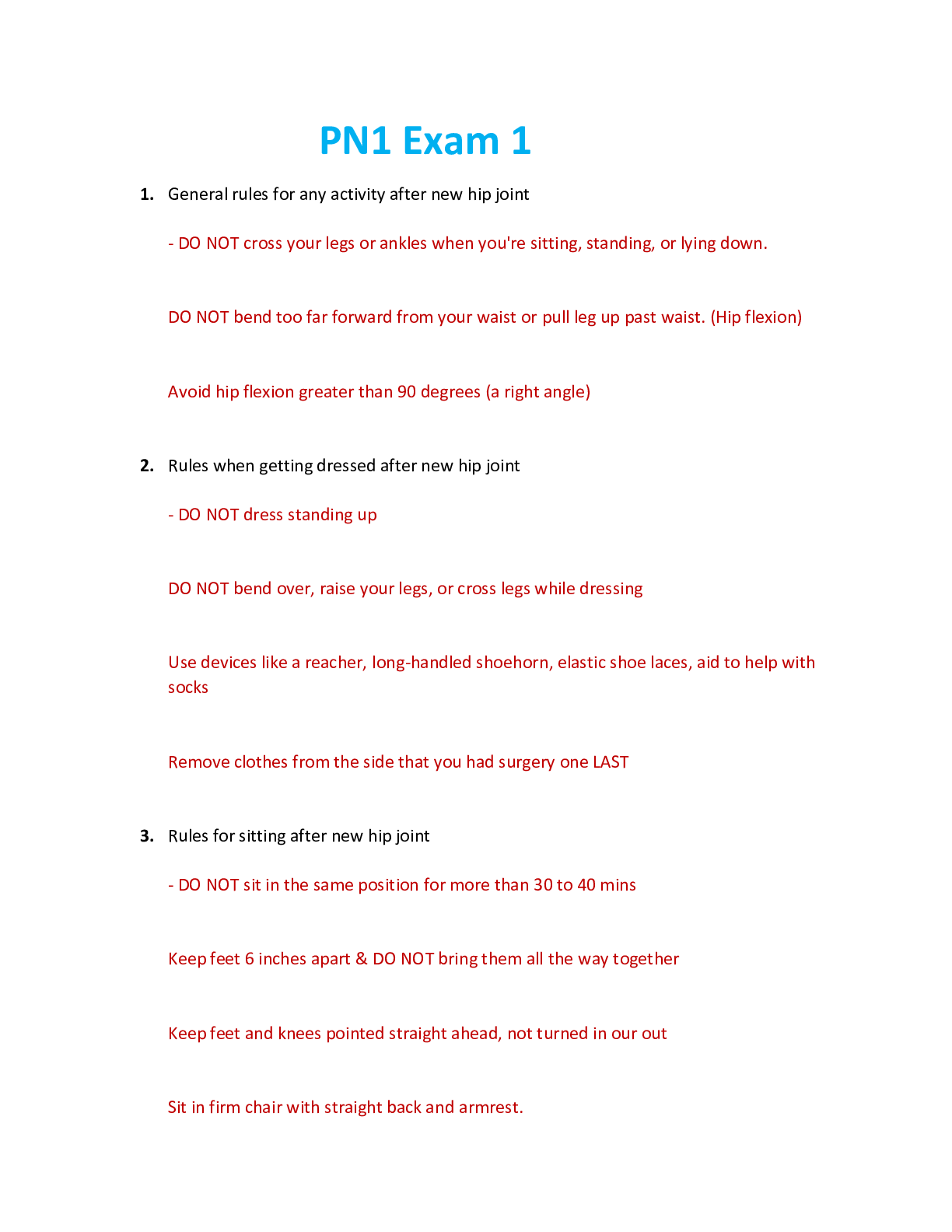
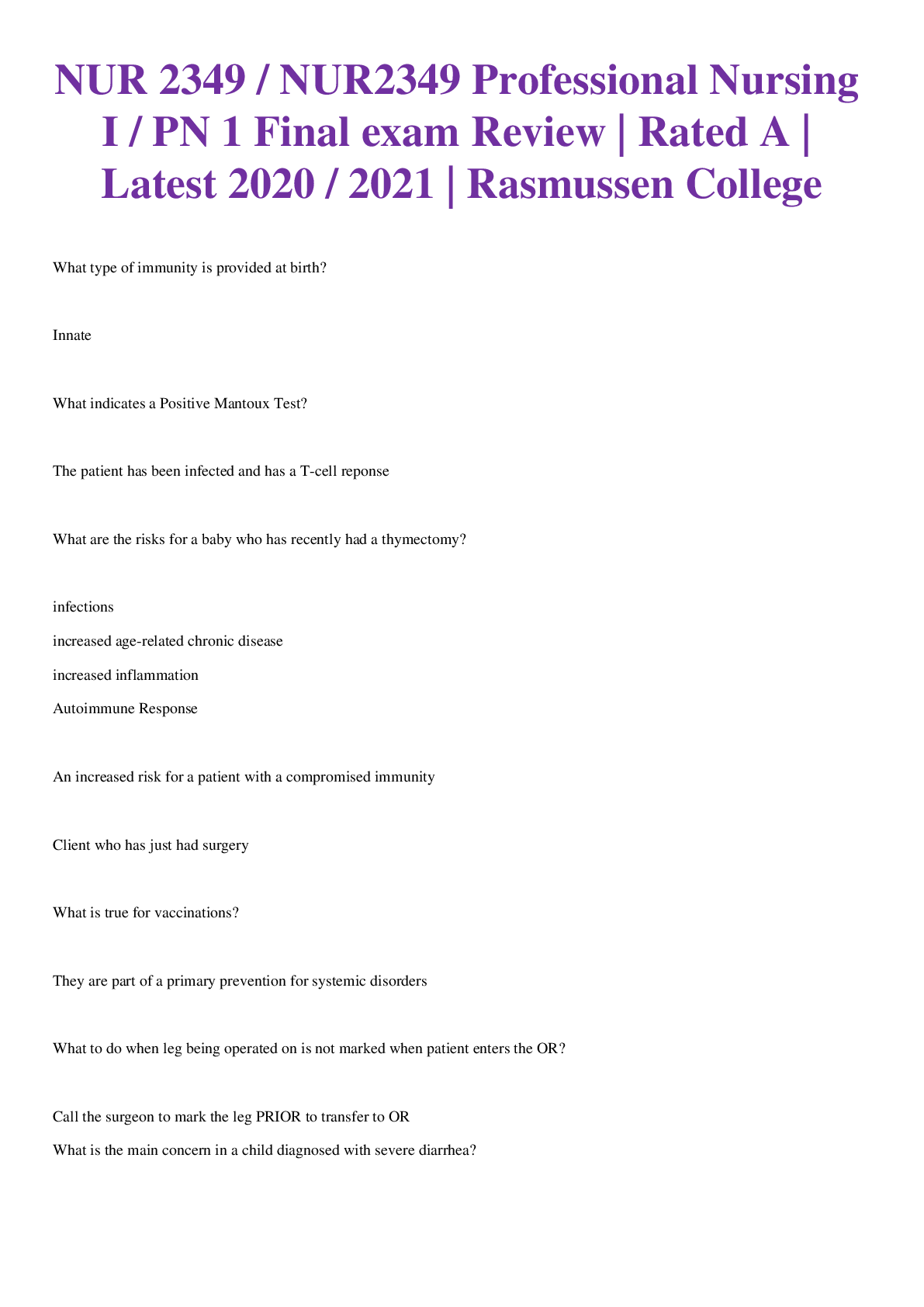
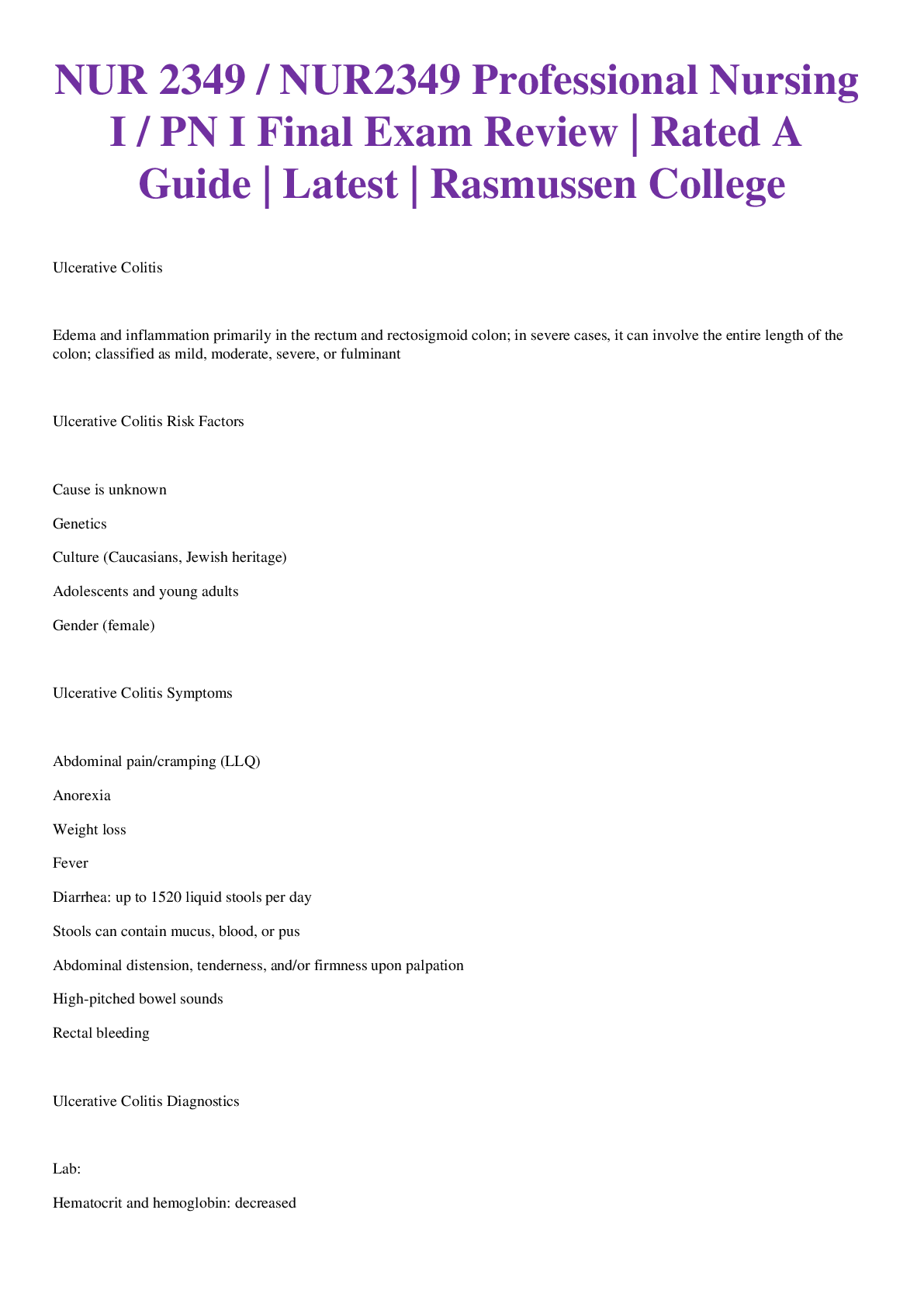
***Exam 3 Study Guide*** NUR 2349: Professional Nursing I MODULE 6: IMMUNITY Chapter 17: Inflammation and Immunity • Allergies • True allergic reaction vs. side effects: • A ... true allergic reaction occurs when your body sees something as harmful and rejects it. You can have pruritis, urticaria, redness, rhinorrhea, sneezing, itchy and watery eyes, crackles, wheezes, hoarseness, stridor, blood vessel dilation, decreased cardiac output, bronchoconstriction, and anaphylaxis. Adverse reaction. • A side effect is a sensitivity and is not life-threating. It can include nausea, decreased energy, muscle aches, coughing, constipation, diarrhea, easy bruising, ringing in the ears, or stuffy nose. Angioedema may occur which is edema in lips, face, tongue, larynx, neck. Generally caused by ACE inhibitors or NSAIDs. Something that isn’t detrimental. • Anaphylactic shock (definition, care, etc.): Anaphylaxis is life-threatening reaction to a Type 1 hypersensitivity reaction which occurs rapidly and systemically. Common causes are drugs, dyes, food, and insects. Nursing interventions include maintaining the airway, administering epinephrine, and education on avoiding of allergen exposure and use of epinephrine. The patient may need more than one shot of epinephrine. Remove and prevent allergen exposure if possible. Pharmacologic: • Diphenhydramine/Benadryl • Corticosteroids • Epinephrine • Antihistamines • Leukotriene inhibitors • Mast cell stabilizers • Decongestants • Allergy Shots • Inflammation • Pathophysiological process: (Cause of tissue damage.) Stage 1: Vascular response with blood vessel changes. Constriction of small veins and dilation of arterioles. Redness and warmth. Increased blood flow to the affected area which leads to edema and capillary leak. Macrophage is the major cell type involved and releases cytokines that stimulate more WBC production. Stage 2: Cellular exudate. Exudate (pus) forms which contains dead WBCs, necrotic tissue, and fluids. Neutrophils secondary to cytokines from macrophages. Basophils and mast cells sustain and continue initial responses. This stage may occur for several days. Stage 3: Tissue repair and replacement. WBCs induce the remaining healthy cells to divide. Scar tissue is formed. Blood vessels grow. • Signs and Symptoms (localized and systemic): Localized inflammation symptoms are pain, redness, warmth, decreased function, and welling. System symptoms are fever, increased WBC count (normal WBC values are 4,500-10,000). • Nursing care: When wrapping the affected extremity, start distal and work proximal to promote return towards the heart. Never wrap down because it will inhibit venous return. • Medical treatment (medications, procedures, etc.): RICE – Rest, Ice, Compression, Elevated. Treatment includes resting the affected extremity. Applying cold/ice for 15-20 minutes every 2-3 hours. Utilizing compression devices to limit harmful swelling and promote blood return to the heart. Elevating the affected extremity to promote blood and fluid return to the heart [Show More]
Last updated: 3 years ago
Preview 1 out of 17 pages
Buy this document to get the full access instantly
Instant Download Access after purchase
Buy NowInstant download
We Accept:
Can't find what you want? Try our AI powered Search
Connected school, study & course
About the document
Uploaded On
Oct 29, 2020
Number of pages
17
Written in
All
This document has been written for:
Uploaded
Oct 29, 2020
Downloads
0
Views
104
Scholarfriends.com Online Platform by Browsegrades Inc. 651N South Broad St, Middletown DE. United States.
We're available through e-mail, Twitter, and live chat.
FAQ
Questions? Leave a message!
Copyright © Scholarfriends · High quality services·