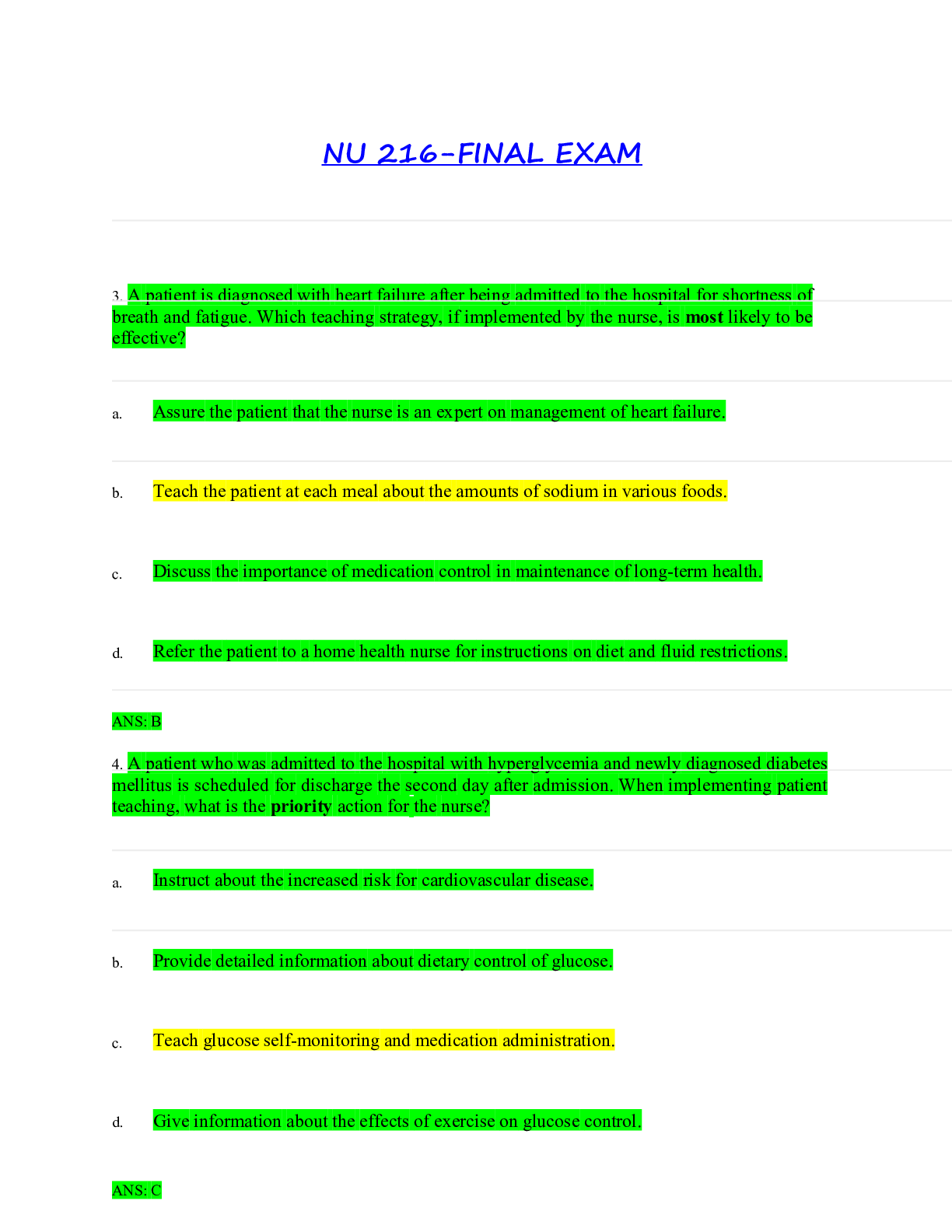
NU 216-FINAL EXAM
Document Content and Description Below
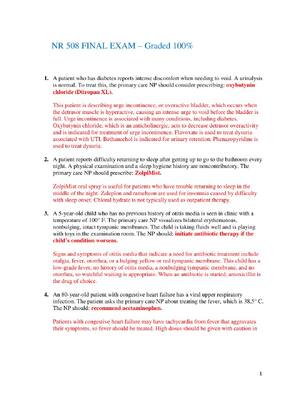
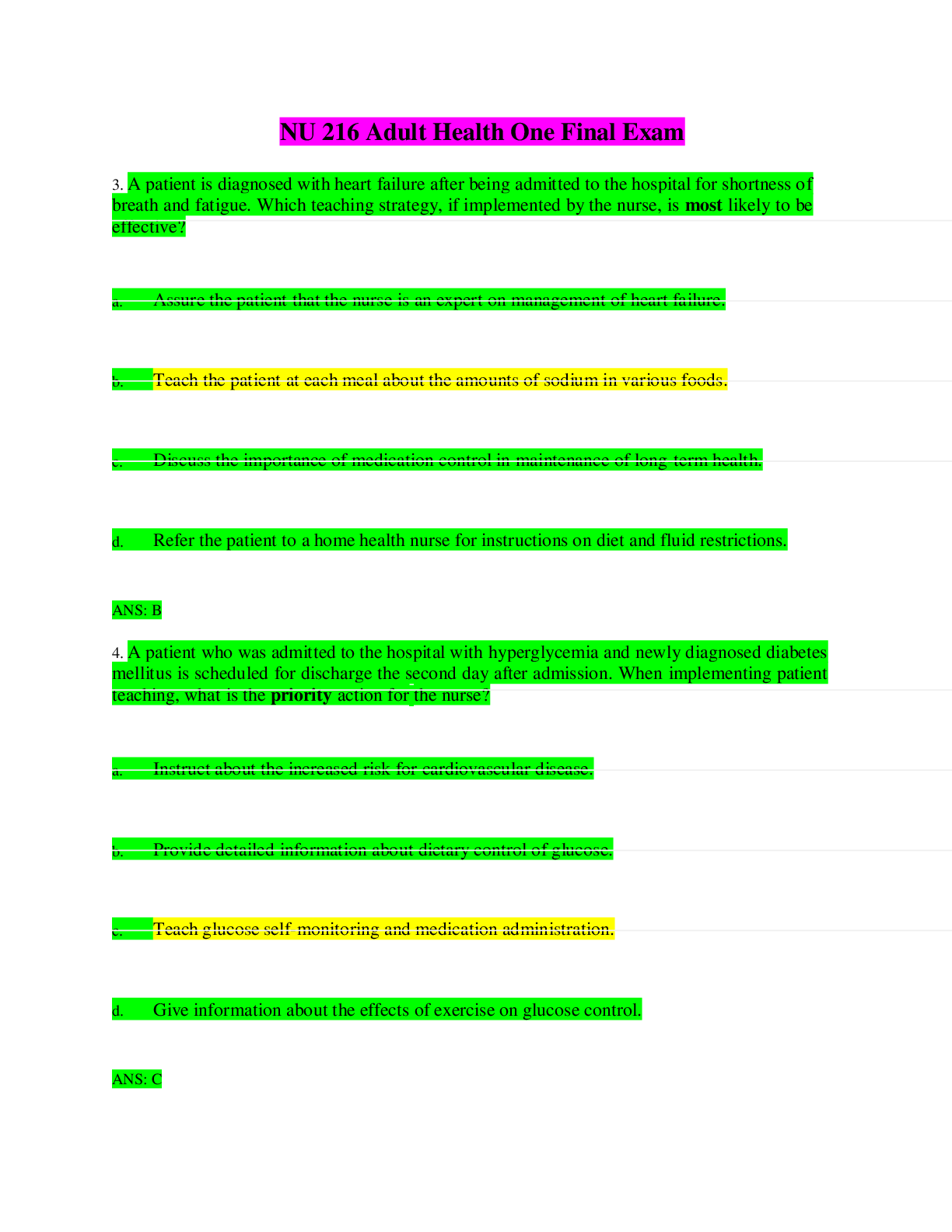
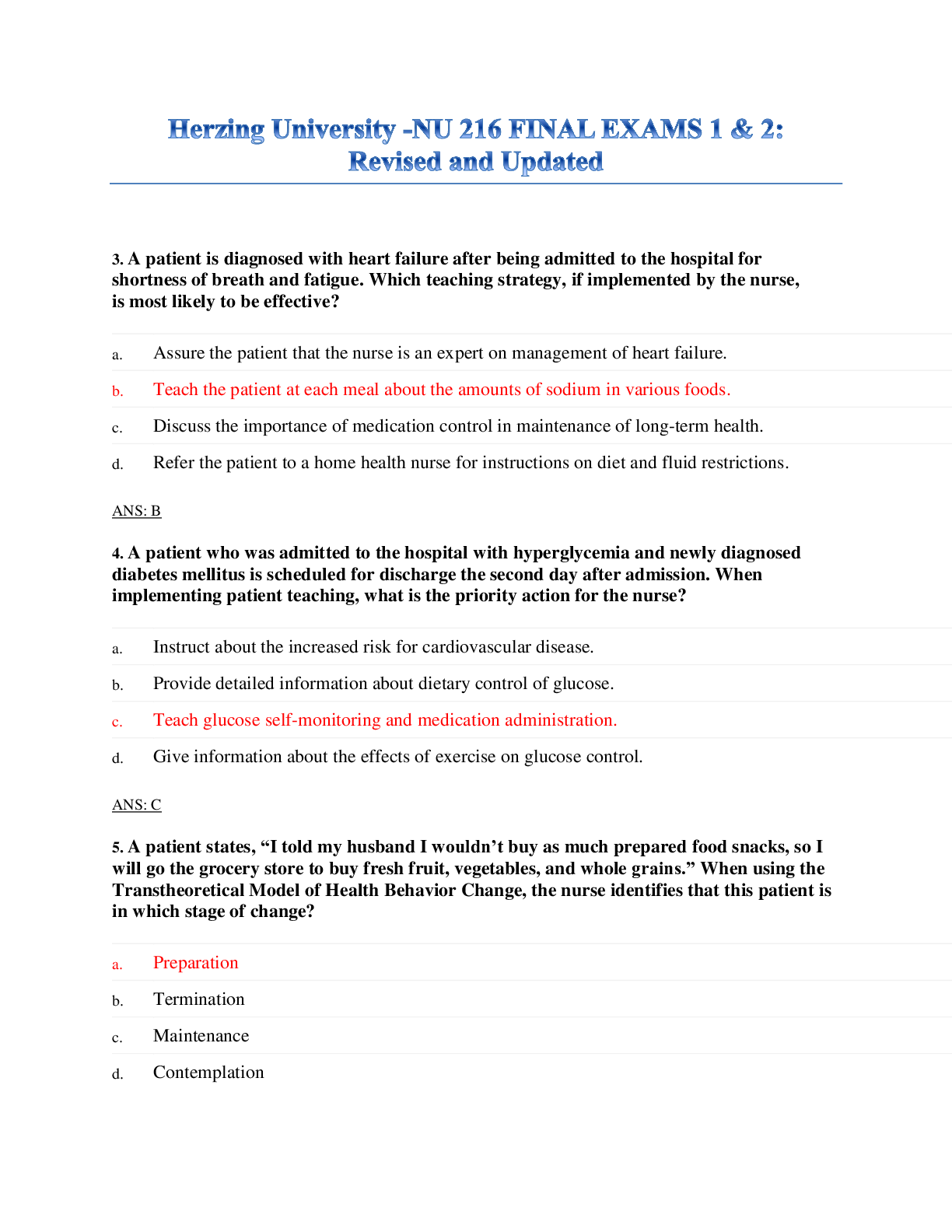
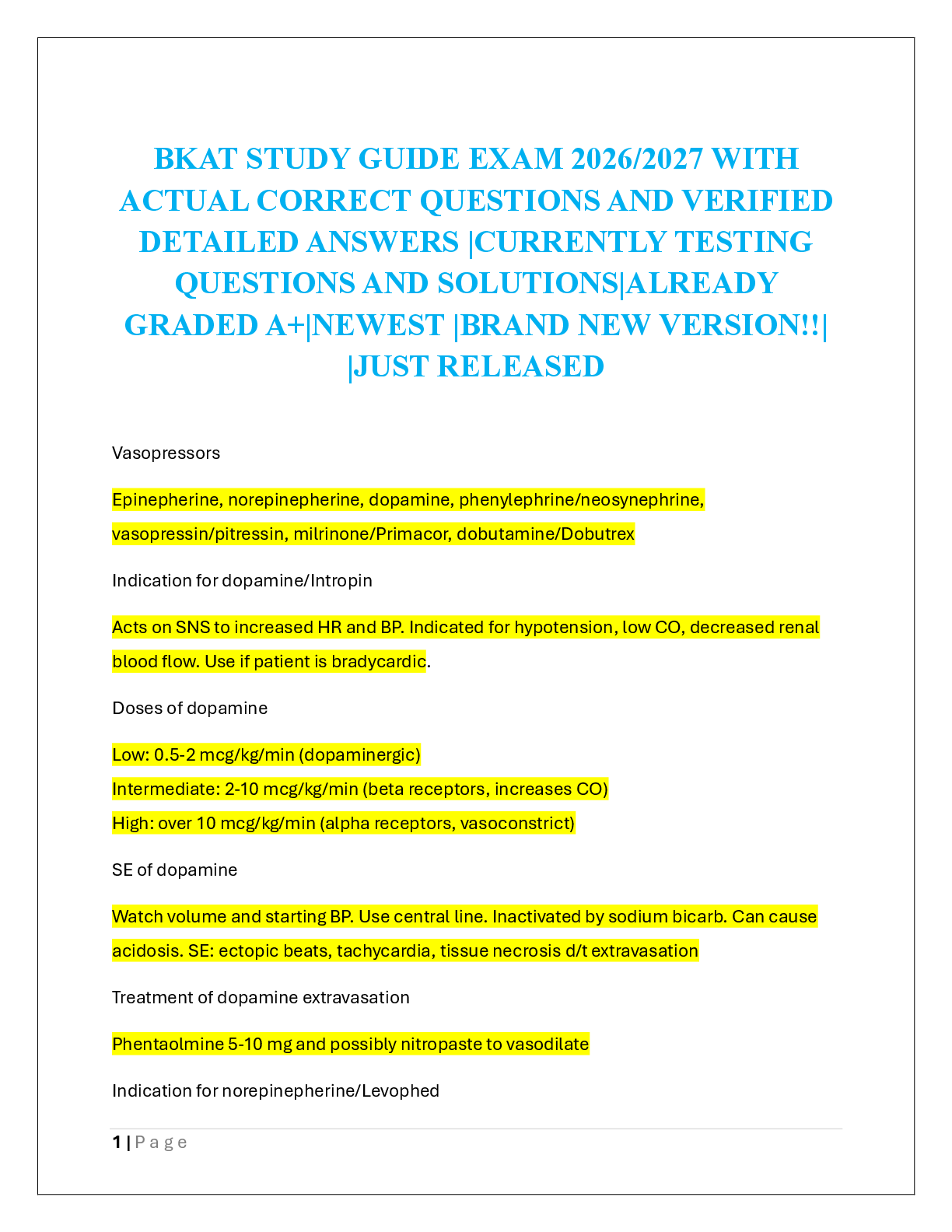
3. A patient is diagnosed with heart failure after being admitted to the hospital for shortness of breath and fatigue. Which teaching strategy, if implemented by the nurse, is most likely to be effective?
a. Assure
...
[Show More]
Last updated: 3 years ago
Preview 1 out of 83 pages
Instant download
Buy this Document to get the Full Access Instantly
Provided by Students Who Aced it
We Verify Document Content to Gurantee Accuracy
Reviews( 0 )
Document information
Connected school, study & course
About the document
Uploaded On
Mar 31, 2022
Number of pages
83
Written in
All

Additional information
This document has been written for:
Uploaded
Mar 31, 2022
Downloads
0
Views
76
Topic Tags
Related Subjects & Courses
Explore similar study resources and related concepts.
Recommended For You
Get more on EXAM »
$12
12 Pages
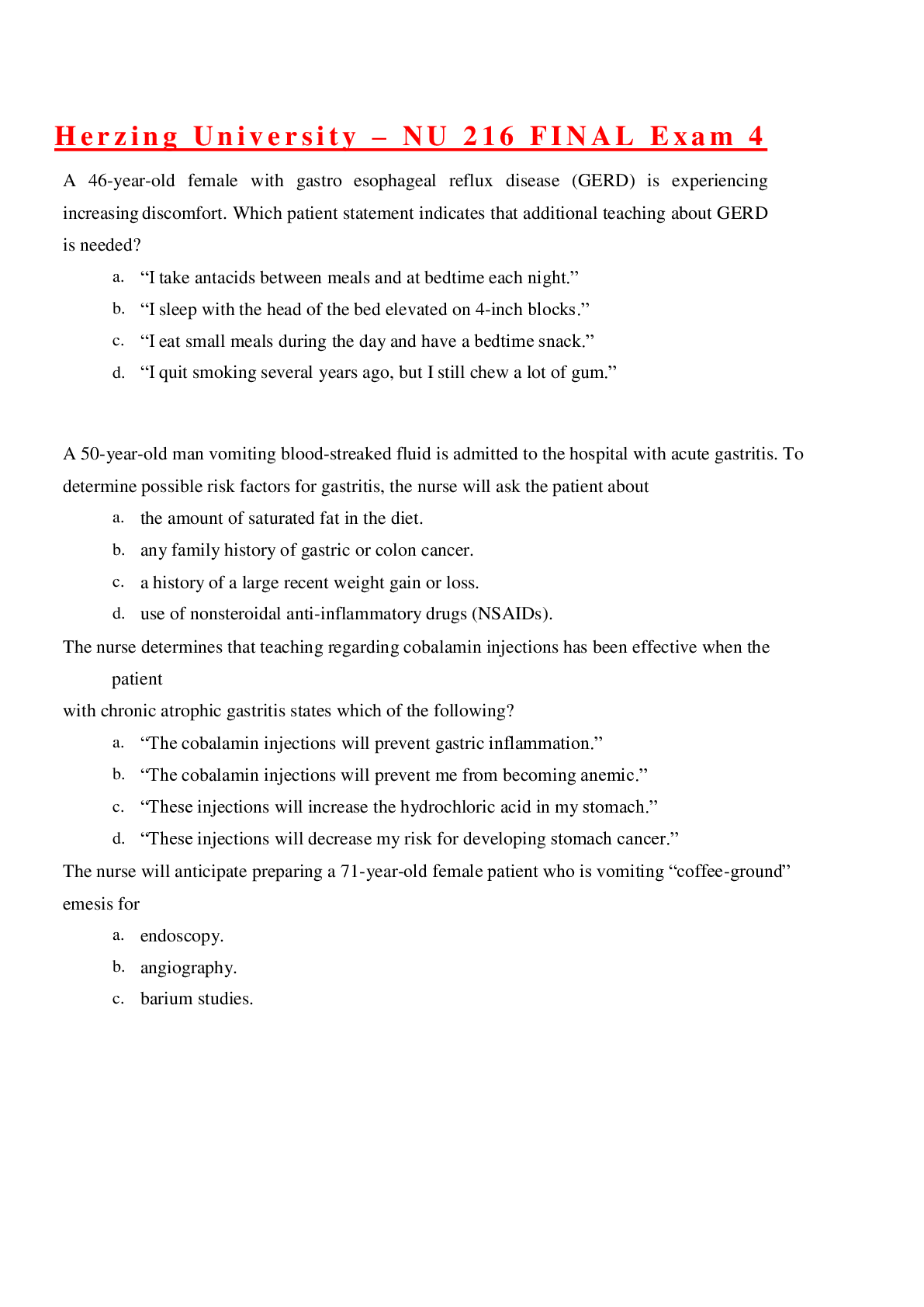
Herzing University -NU 216 FINAL Exam 4 QUESTIONS WITH ANSWERS...

$13
21 Pages
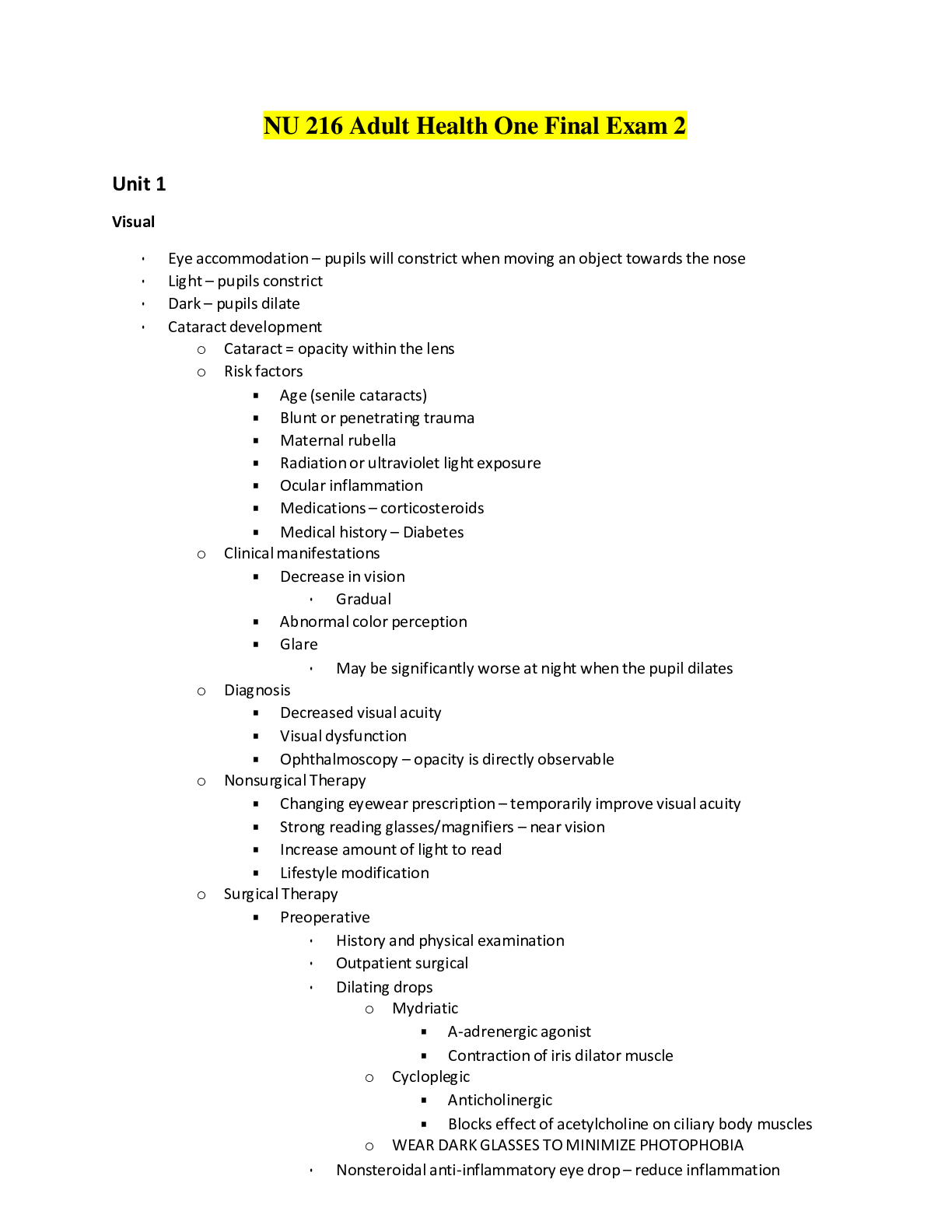
NU 216 Adult Health 1- FINAL EXAM. Herzing University REVISED...
$15
10 Pages
Herzing University -NU 216 FINAL EXAMS 1 & 2 Revised and Updat...

$7
11 Pages
Herzing University -NU 216 FINAL EXAMS 3: Revised and Updated
$12
1 Pages
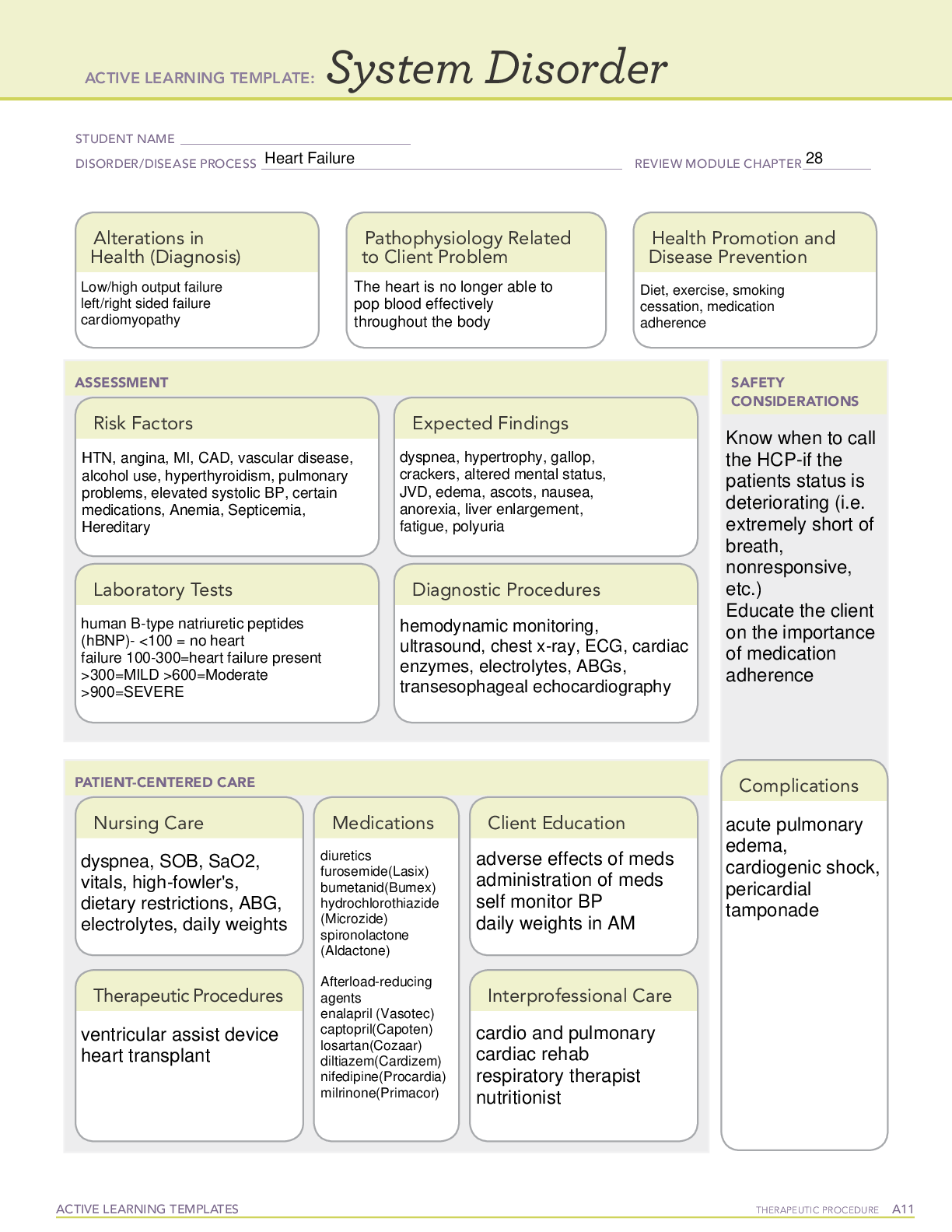
NU 216FINAL System_Disorder_form_Congestive Heart Failure ACTI...
$14.5
39 Pages
NU 216 Adult Health 1 - Herzing University_ FINAL EXAMS 1 & 2...
$22.5
307 Pages
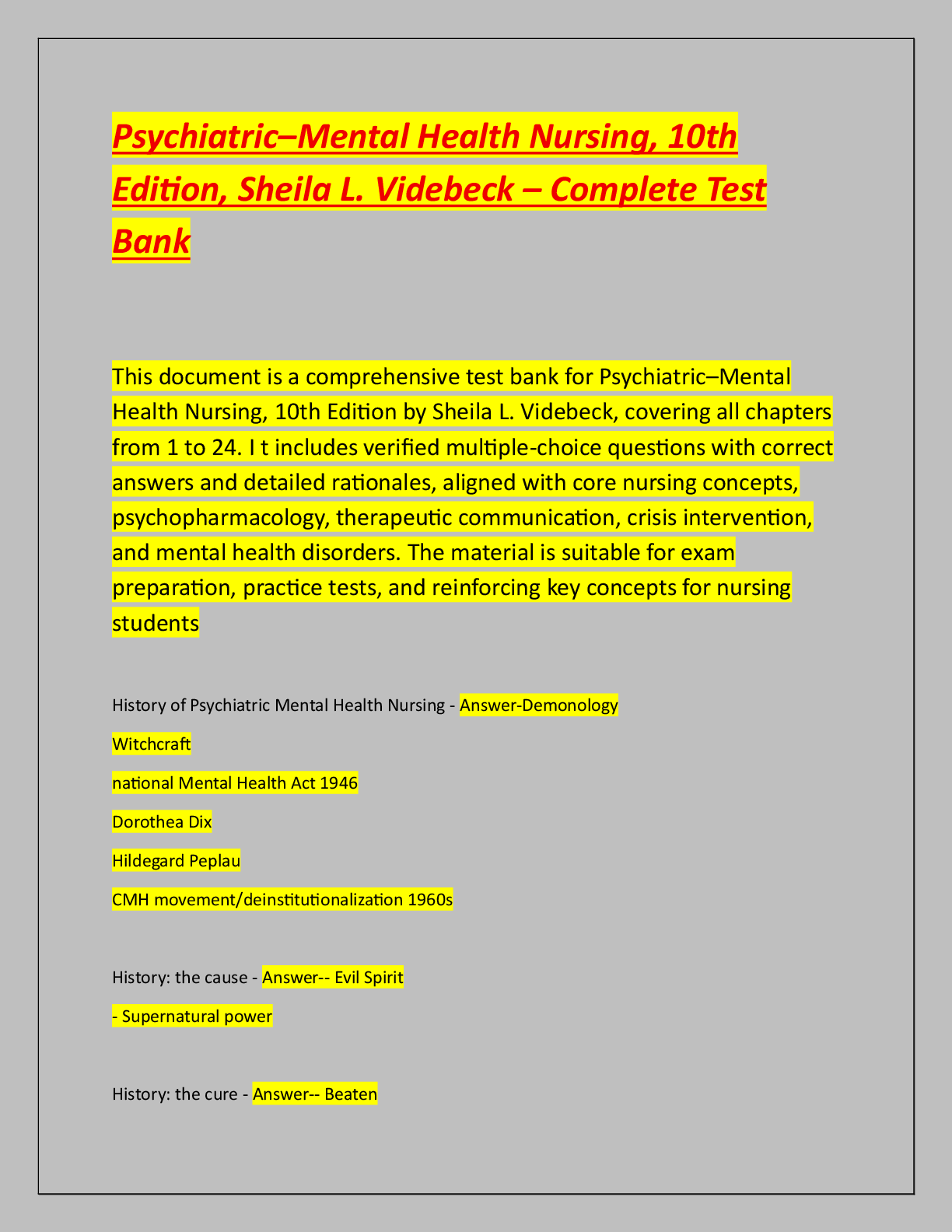
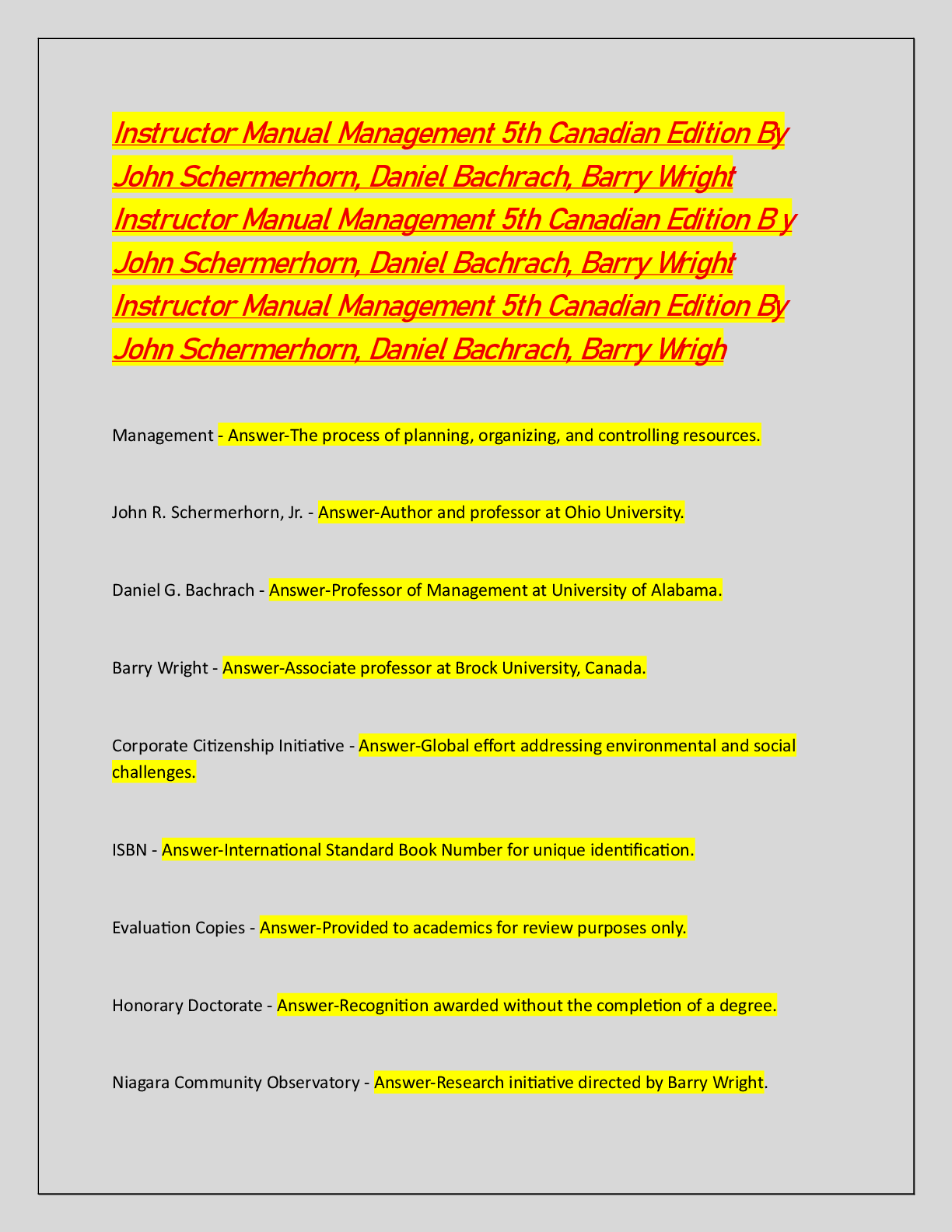
TEST BANK for Davis Advantage for Psychiatric Mental Health Nu...
More related documents below