COMPLEX NR341 Respiratory Practice Questions and answers
Document Content and Description Below
COMPLEX NR341 Respiratory Practice Questions and answers
1. The nurse is caring for a patient who is hyperventilating. Which acid-base imbalance is the patient at risk for developing due to hyperventilation?
A. Metabo
...
[Show More]
Last updated: 1 year ago
Preview 1 out of 4 pages
Instant download

Buy this Document to get the Full Access Instantly
Provided by Students Who Aced it
We Verify Document Content to Gurantee Accuracy
Reviews( 0 )
Document information
Connected school, study & course
About the document
Uploaded On
Jun 23, 2022
Number of pages
4
Written in
All

Additional information
This document has been written for:
Uploaded
Jun 23, 2022
Downloads
0
Views
279
Topic Tags
Recommended For You
Get more on EXAM »
$6
2 Pages
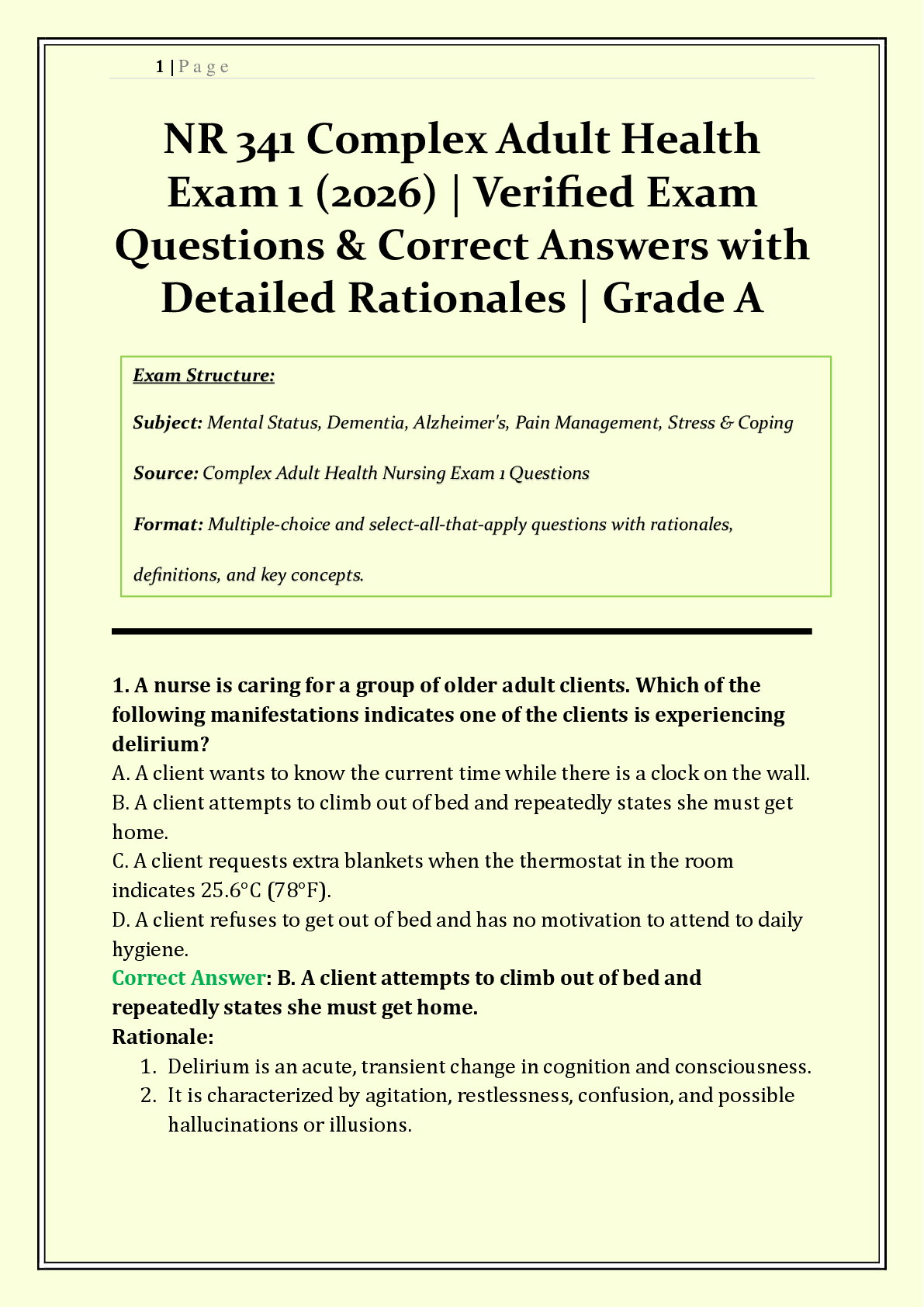
NR341 / NR 341: Complex Adult Health Exam 1 (Meds) Chamberlain...
$8.5
28 Pages
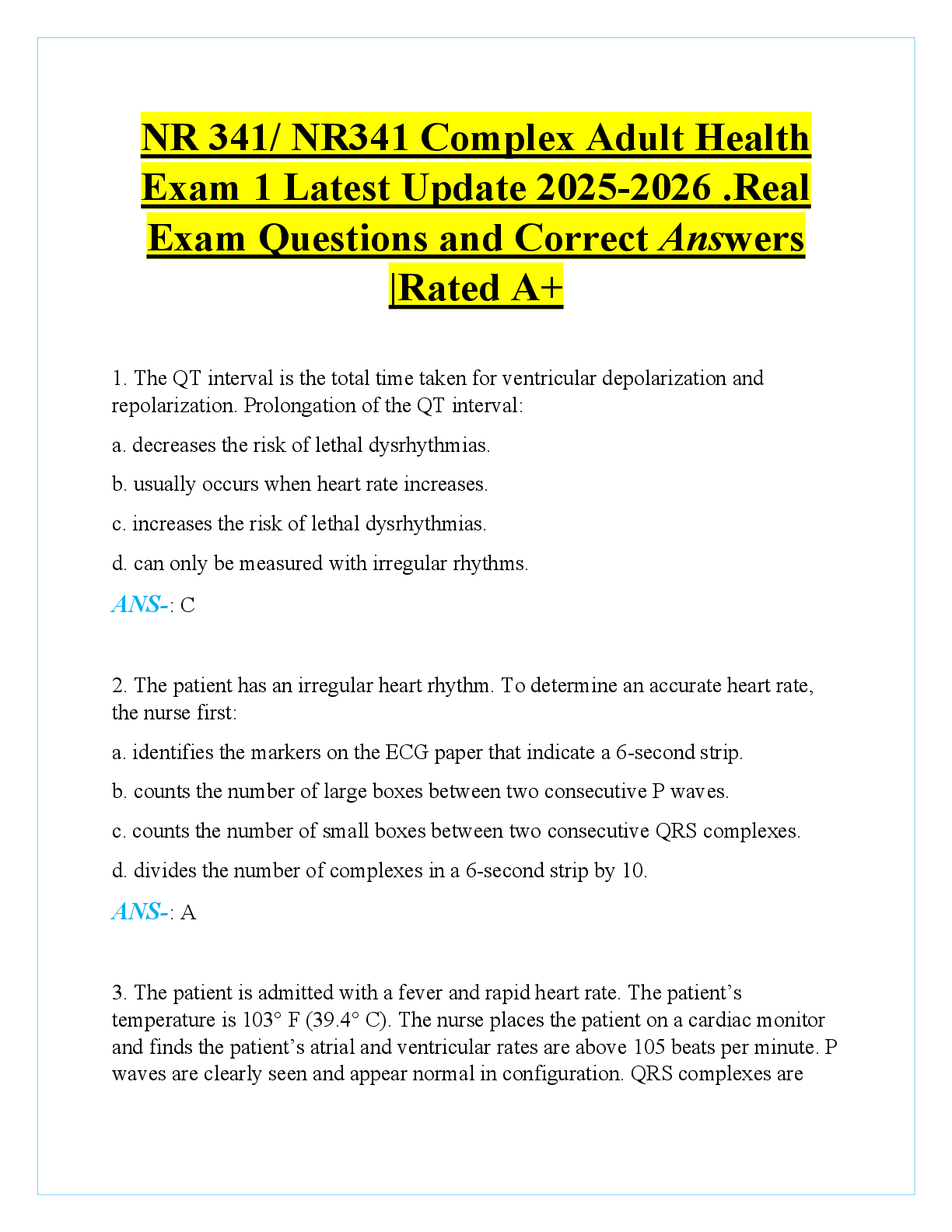
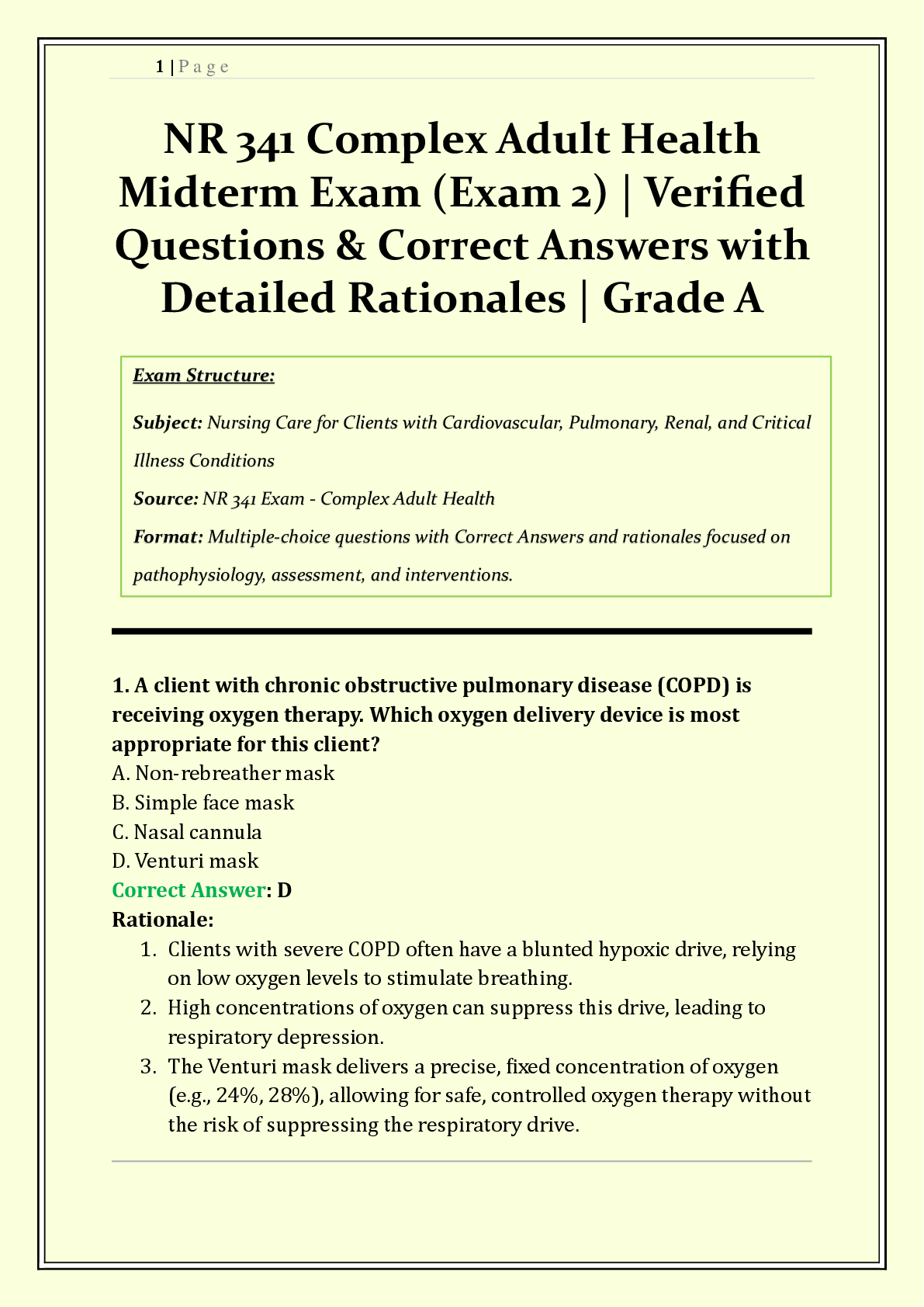
NR 341 Respiratory Exam Questions and Answers (Verified Answ...
$10
12 Pages
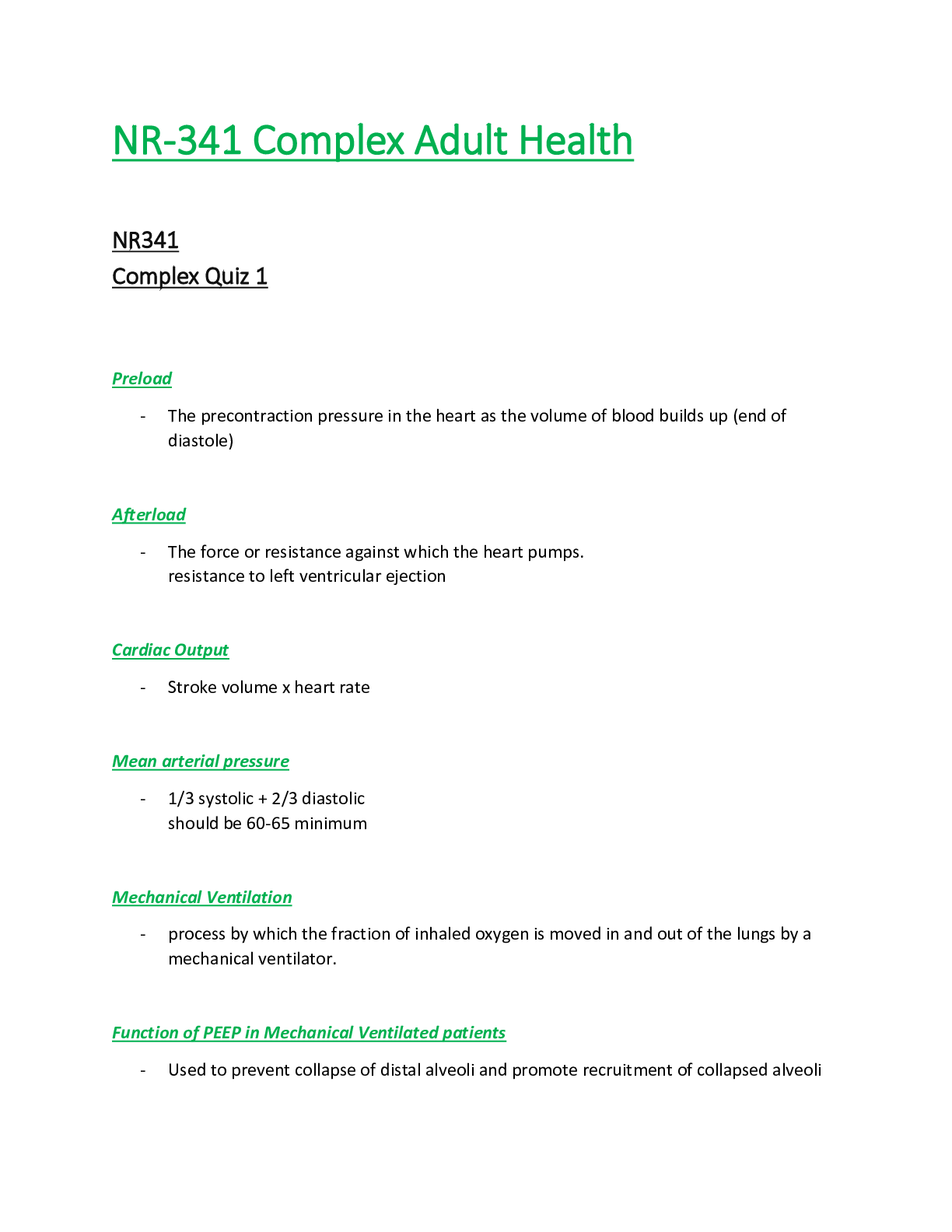
NR341 / NR 341 Quiz 1 (Latest 2021 /2022): Complex Adult Healt...
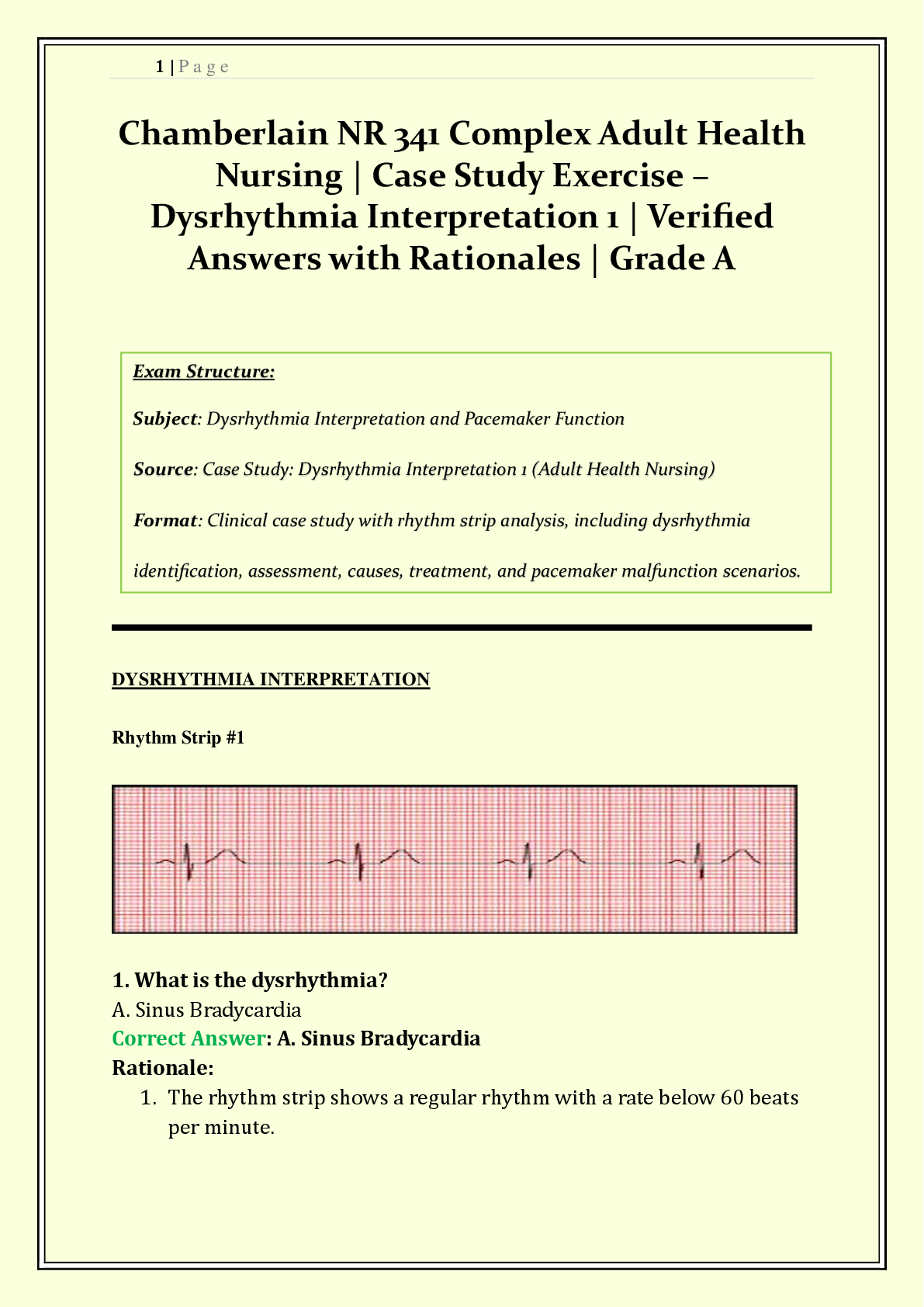

$27
122 Pages
NR 341 EXAM 2 CCATS- ChamberlainNURS 6512N TESTBANK-Guide to C...

$11
42 Pages
NR 341 / NR341 CMS Review Updated: Complex Adult Health - Cham...

$9
15 Pages