NR 511 Quiz week 5 -2020
Document Content and Description Below
A 13-year-old obese (body mass index [BMI] above the 95th percentile) boy reports low-grade left knee pain for the past 2 months. He denies antecedent trauma but admits to frequent “horseplay” with his friends. The pain
...
[Show More]
Last updated: 3 years ago
Preview 1 out of 13 pages
Instant download
Buy this Document to get the Full Access Instantly
Provided by Students Who Aced it
We Verify Document Content to Gurantee Accuracy
Reviews( 0 )
Document information
Connected school, study & course
About the document
Uploaded On
Apr 03, 2022
Number of pages
13
Written in
All

Additional information
This document has been written for:
Uploaded
Apr 03, 2022
Downloads
0
Views
73
Document Keyword Tags
Recommended For You
Get more on EXAM »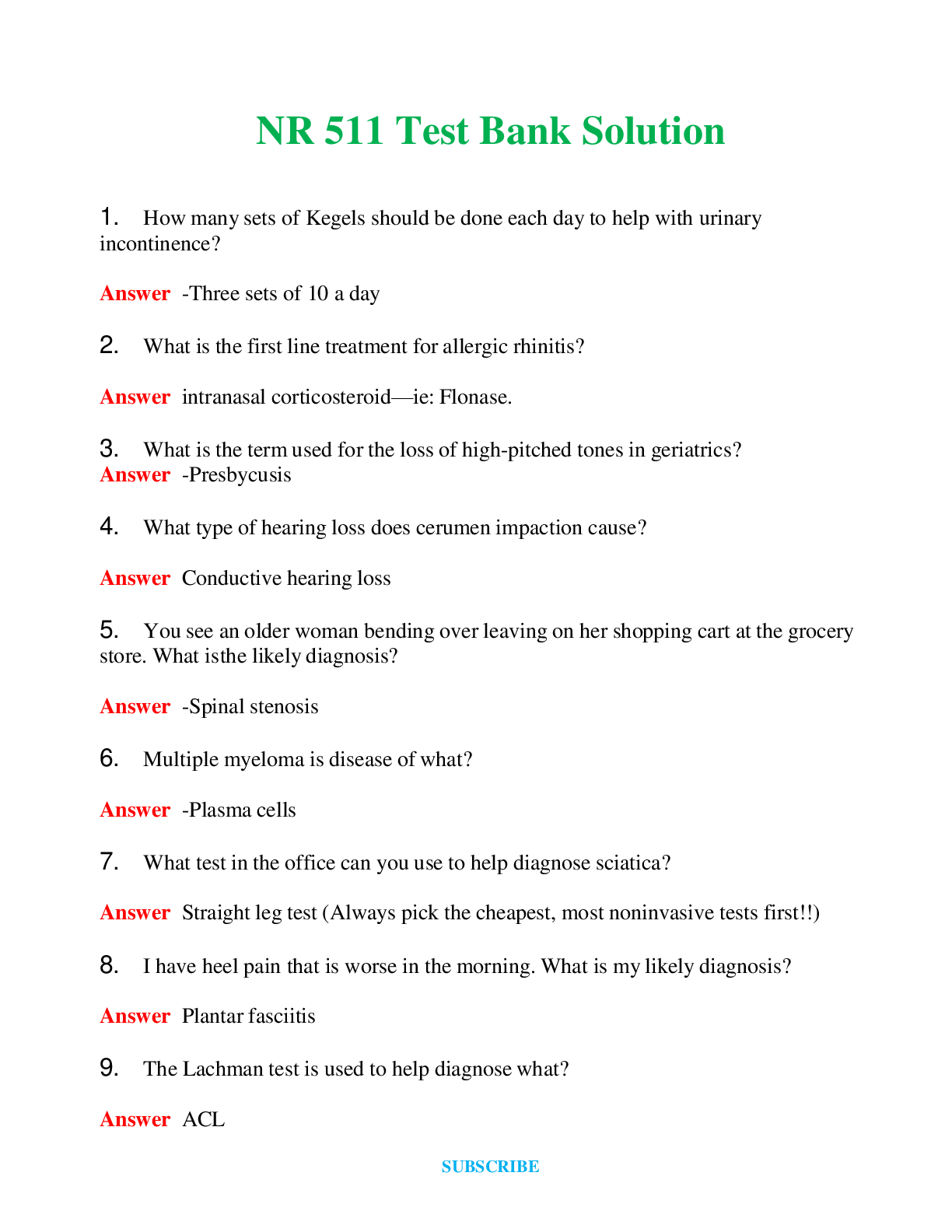
$12.5
136 Pages
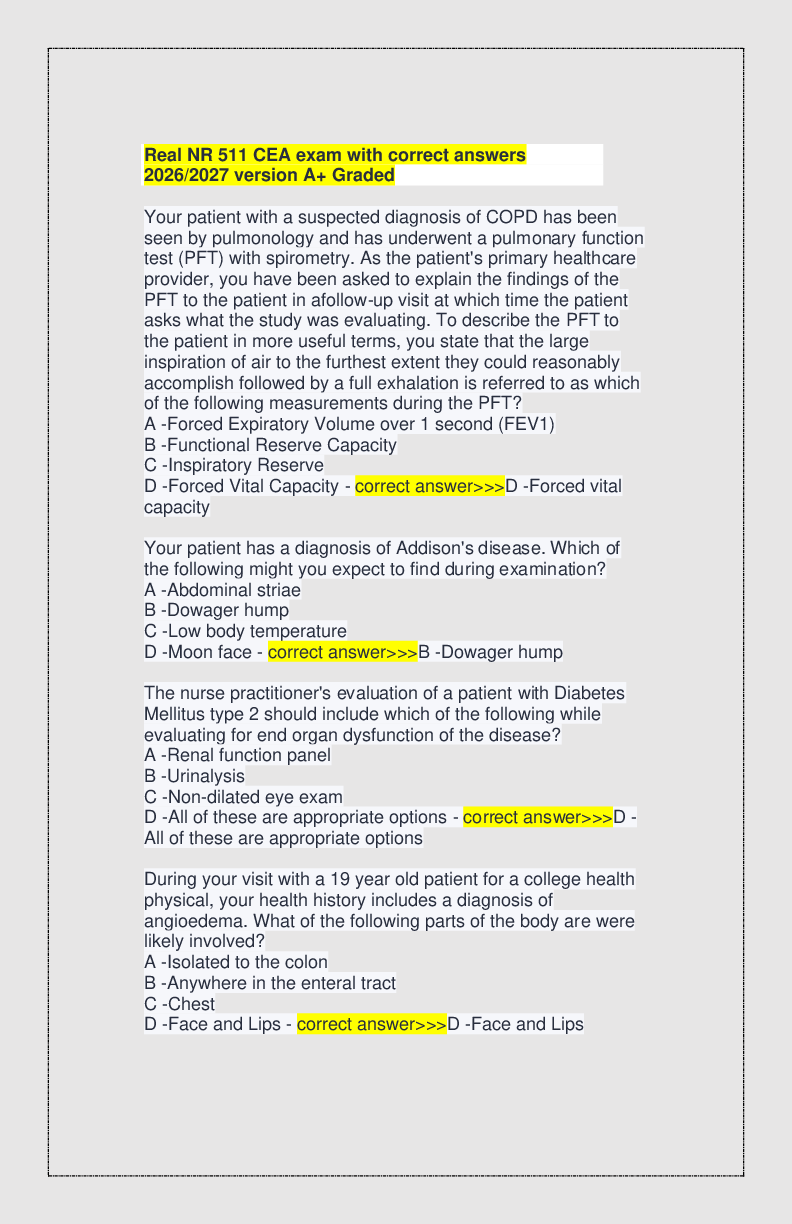
NR 511 Test Bank Solution Questions and Answers (Verified A...
$12.5
39 Pages
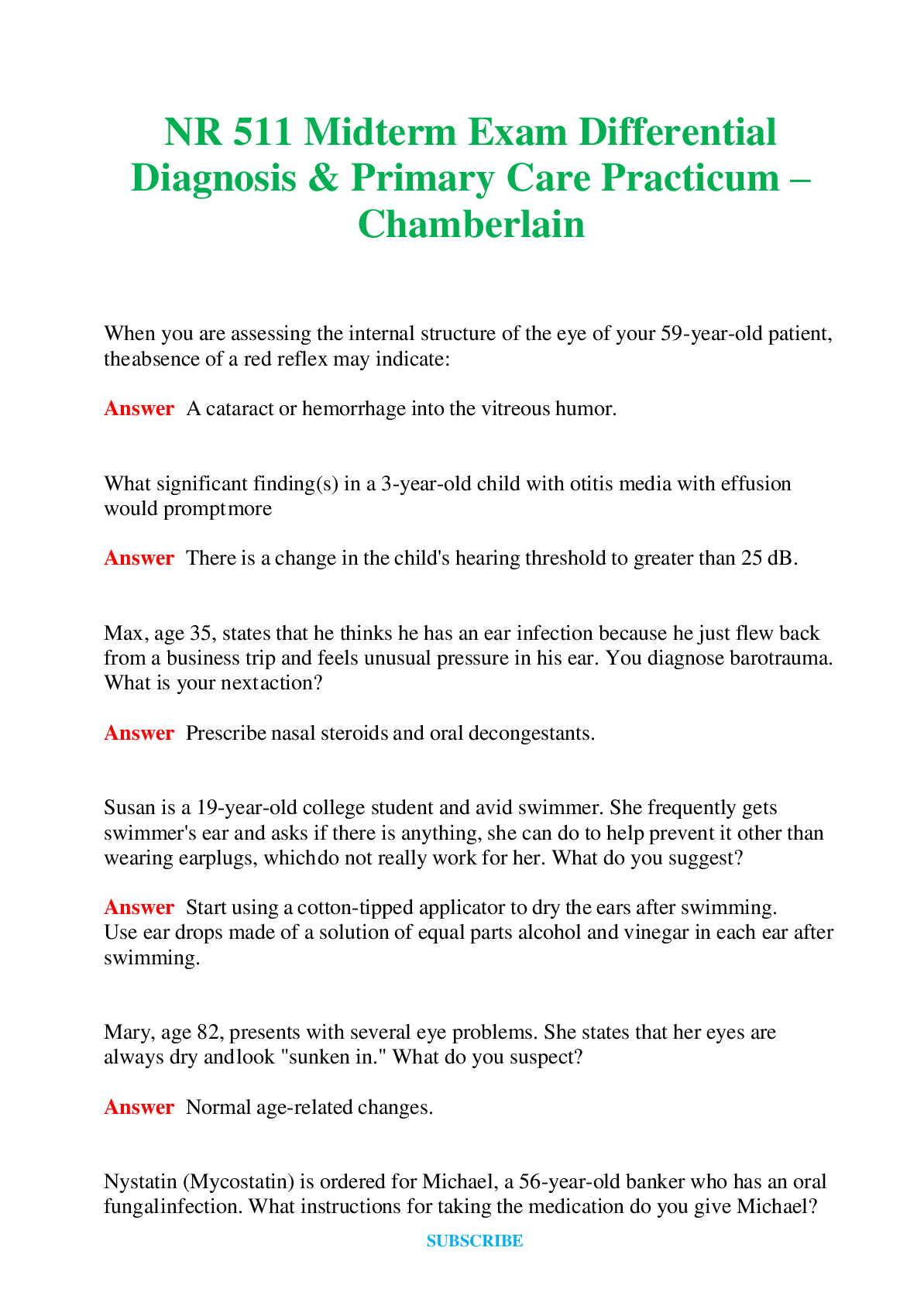
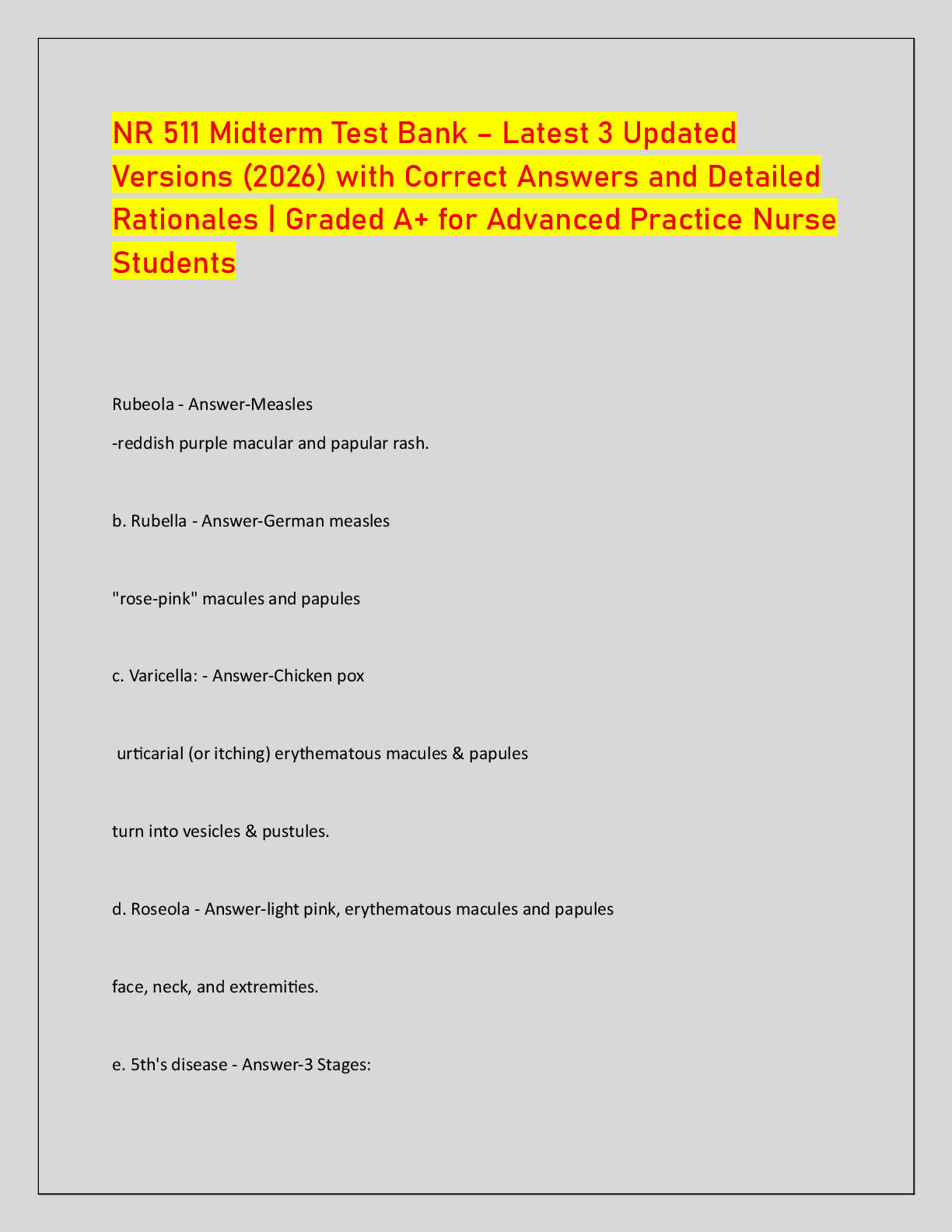
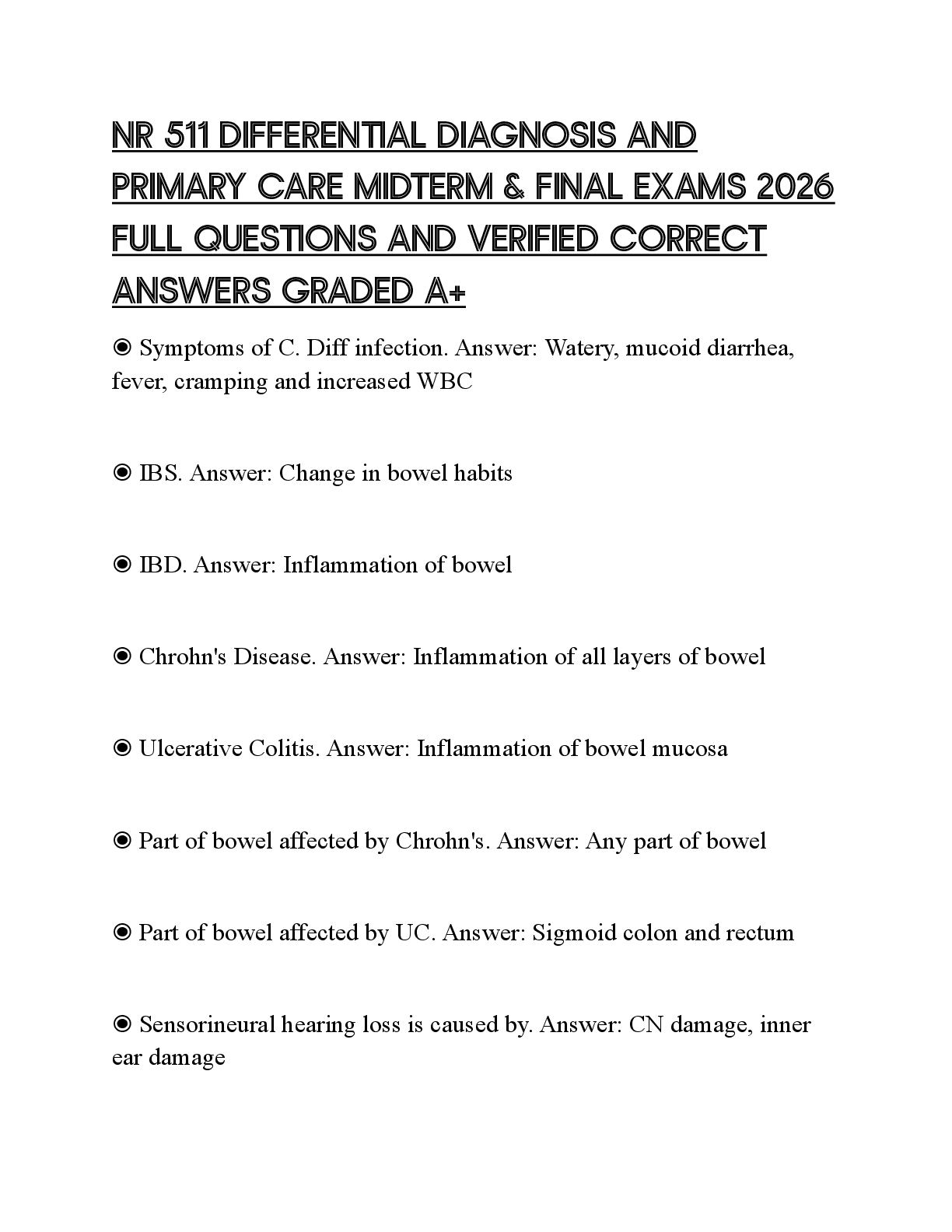
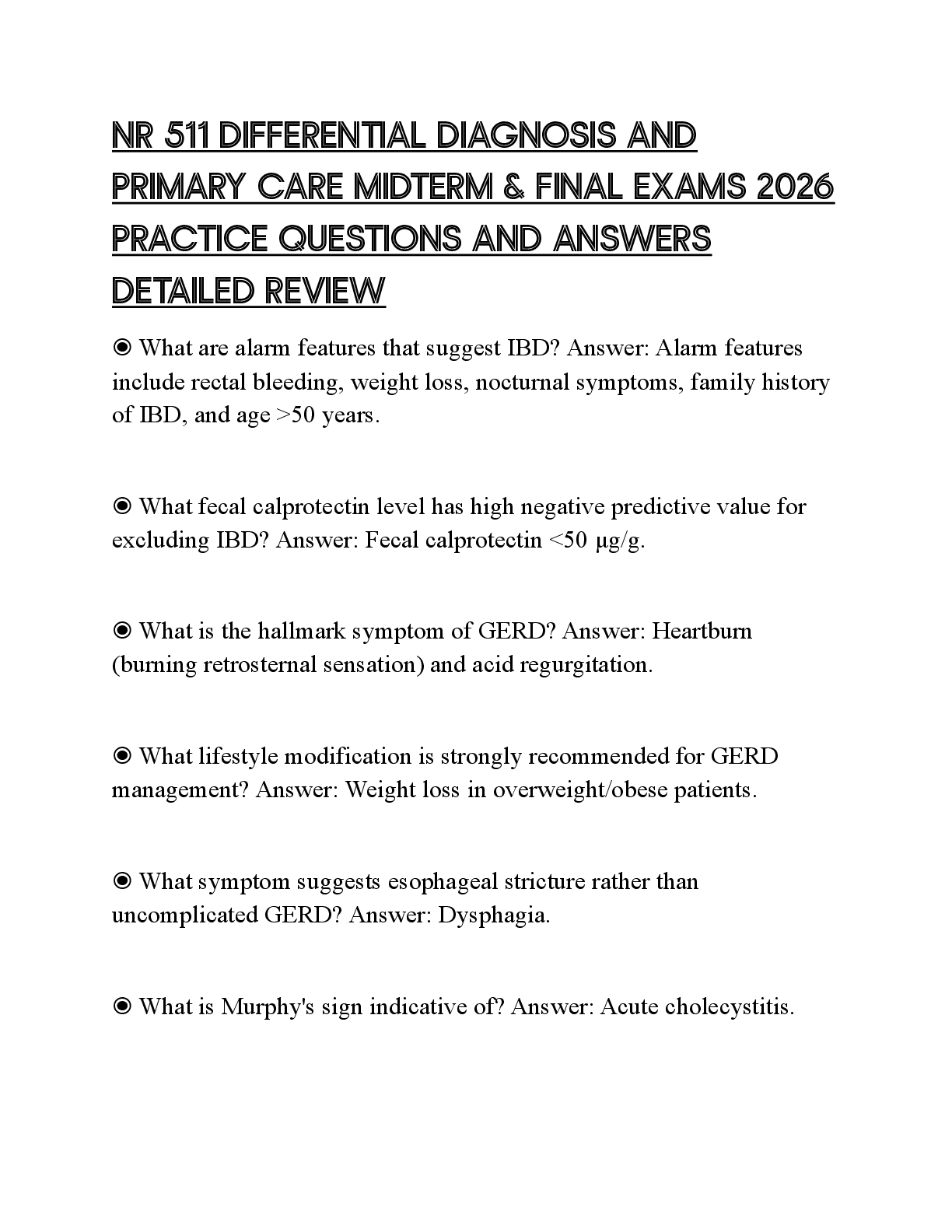
NR 511 Midterm Exam Differential Diagnosis & Primary Care Pr...
$12.5
67 Pages
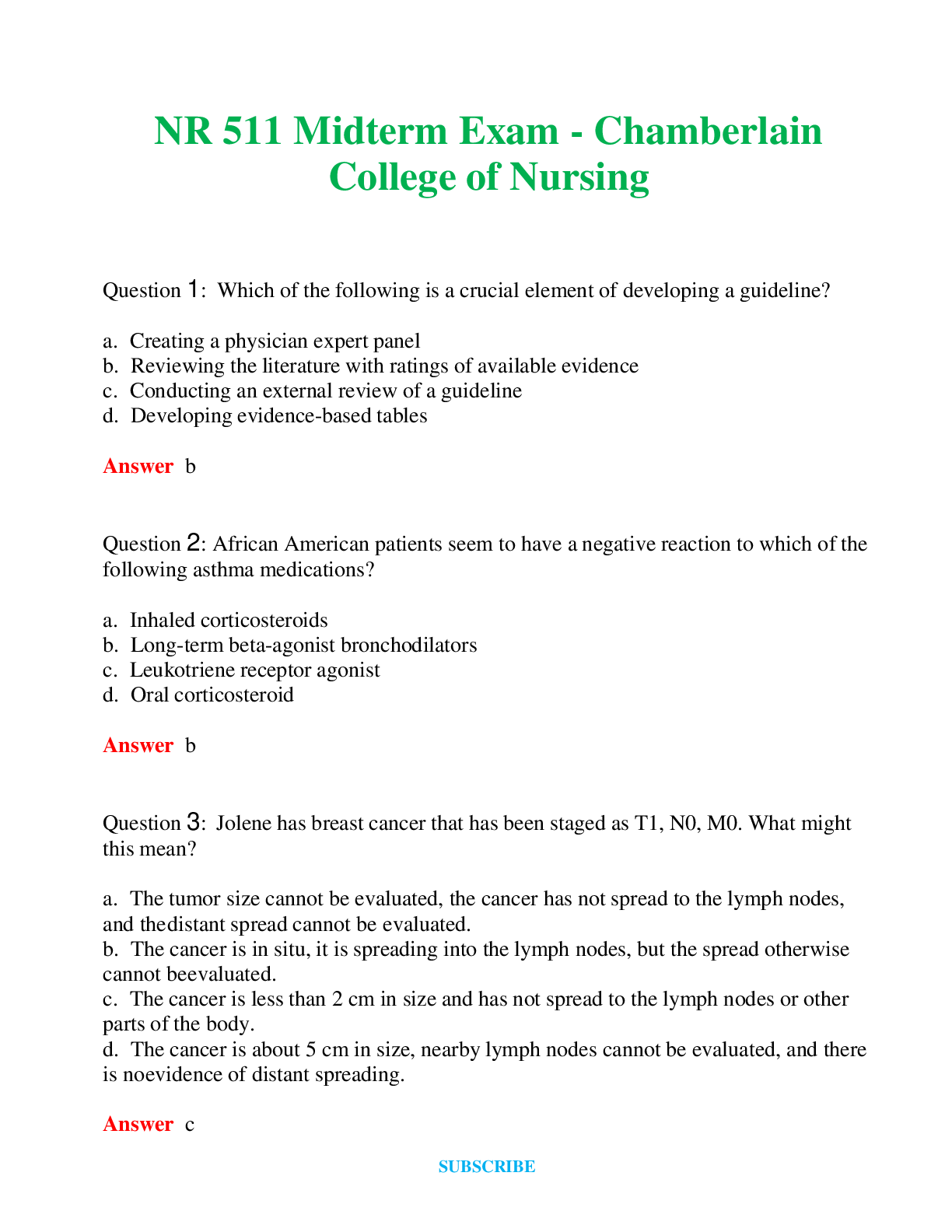
NR 511 Midterm Exam - Chamberlain College of Nursing Questi...

$15
53 Pages
NR 511 Week 8 Final Exam Study Guide With Questions And Latest...
$15
43 Pages
NR 511 Differential Diagnosis & Primary Care Practicum Final E...
$15
48 Pages
NR 511 Final Exam Study Guide (Wk1- Wk 6) -Questions and Answe...


$10
28 Pages
NR511 _ NR 511 Final Exam Study Guide Updated: Differential Di...
$14
9 Pages