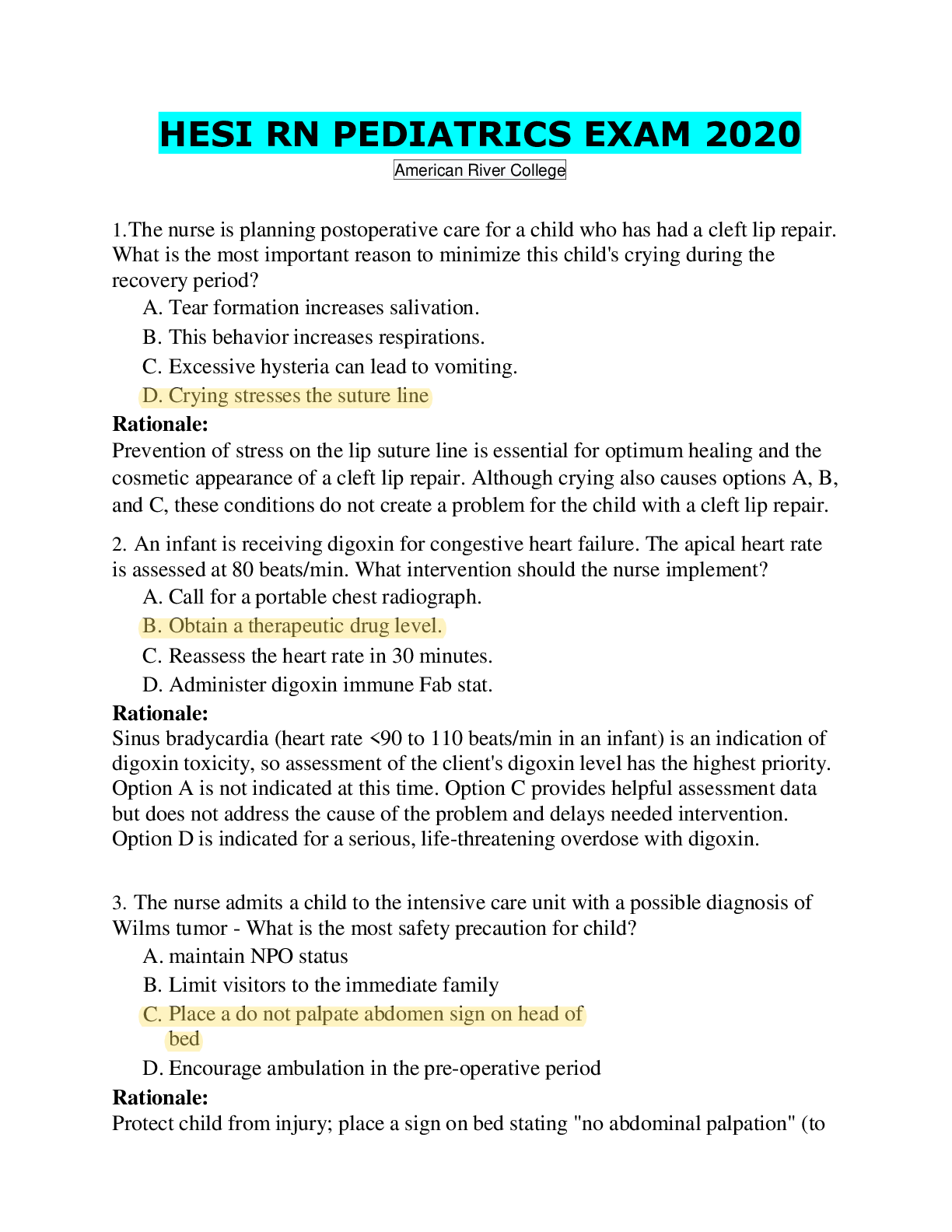
1. The nurse is planning postoperative care for a child who has had a cleft lip repair. What is the most important reason to minimize this child's crying during the recovery period?
A. Tear formation increases salivatio
...
1. The nurse is planning postoperative care for a child who has had a cleft lip repair. What is the most important reason to minimize this child's crying during the recovery period?
A. Tear formation increases salivation.
B. This behavior increases respirations.
C. Excessive hysteria can lead to vomiting.
D. Crying stresses the suture line
Rationale:
Prevention of stress on the lip suture line is essential for optimum healing and the cosmetic appearance of a cleft lip repair. Although crying also causes options A, B, and C, these conditions do not create a problem for the child with a cleft lip repair.
2. An infant is receiving digoxin for congestive heart failure. The apical heart rate is assessed at 80 beats/min. What intervention should the nurse implement?
A. Call for a portable chest radiograph.
B. Obtain a therapeutic drug level.
C. Reassess the heart rate in 30 minutes.
D. Administer digoxin immune Fab stat.
Rationale:
Sinus bradycardia (heart rate <90 to 110 beats/min in an infant) is an indication of digoxin toxicity, so assessment of the client's digoxin level has the highest priority. Option A is not indicated at this time. Option C provides helpful assessment data but does not address the cause of the problem and delays needed intervention.
Option D is indicated for a serious, life-threatening overdose with digoxin.
3. The nurse admits a child to the intensive care unit with a possible diagnosis of Wilms tumor - What is the most safety precaution for child?
A. maintain NPO status
B. Limit visitors to the immediate family
C. Place a do not palpate abdomen sign on head of bed
D. Encourage ambulation in the pre-operative period
CONTINUED.................
[Show More]