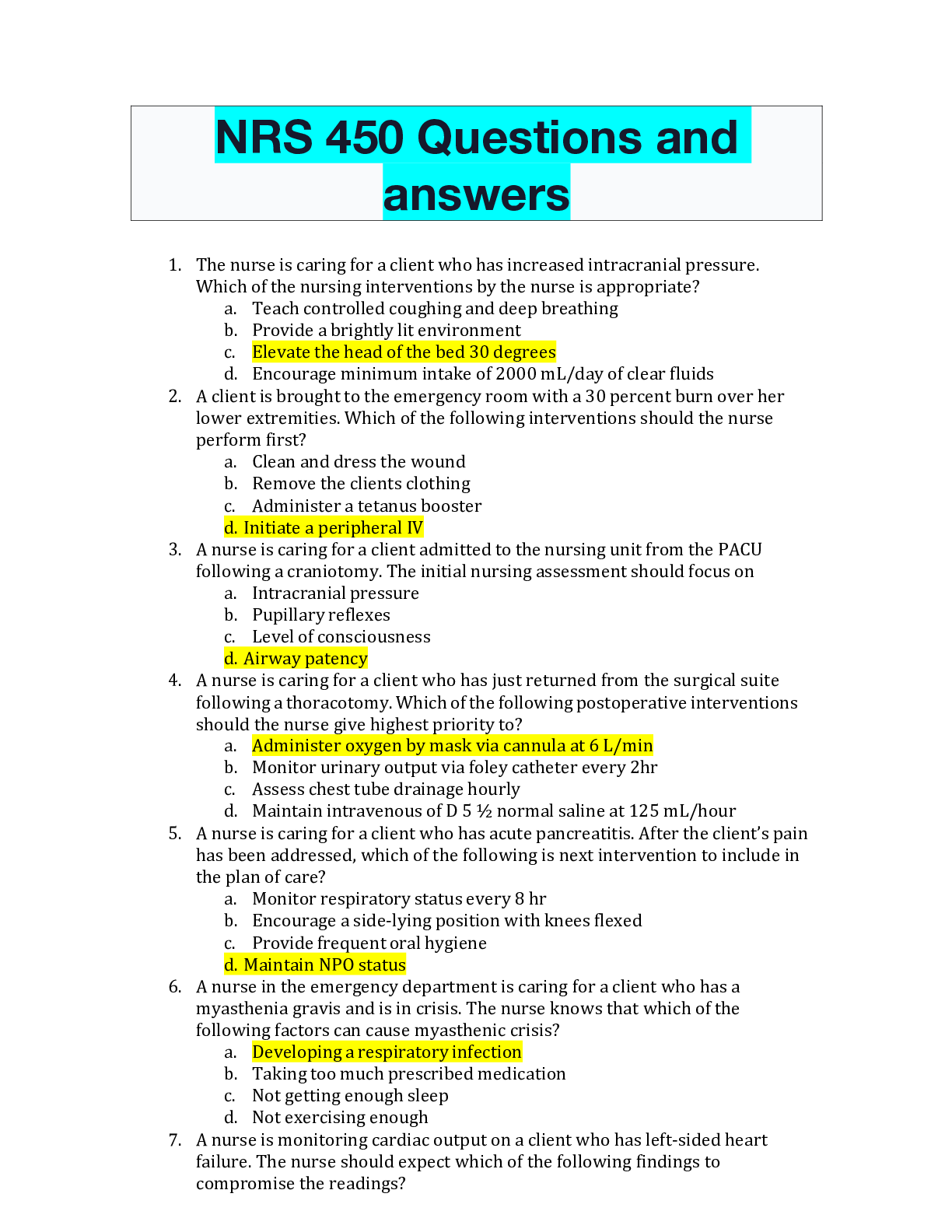
NRS 450 Questions and answers
Document Content and Description Below
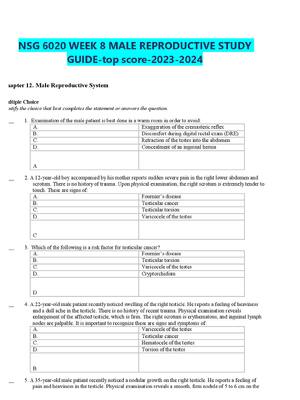
1. Which of the nursing interventions by the nurse is appropriate?
a. Teach controlled coughing and deep breathing
b. Provide a brightly lit environment
c. Elevate the head of the bed 30 degrees
d. Encourage minimum
...
[Show More]
Last updated: 3 years ago
Preview 1 out of 21 pages
Instant download
Buy this Document to get the Full Access Instantly
Provided by Students Who Aced it
We Verify Document Content to Gurantee Accuracy
Reviews( 0 )
Document information
Connected school, study & course
About the document
Uploaded On
Apr 07, 2022
Number of pages
21
Written in
All

Additional information
This document has been written for:
Uploaded
Apr 07, 2022
Downloads
0
Views
77
Topic Tags
Recommended For You
Get more on EXAM »
$16
27 Pages
(GCU) NRS-450 NURSING INFORMATICS FINAL EXAM GUIDE Q & A 2024

$11
27 Pages
(GCU) NRS-450 NURSING INFORMATICS FINAL EXAM GUIDE Q & A 2024

$5
2 Pages
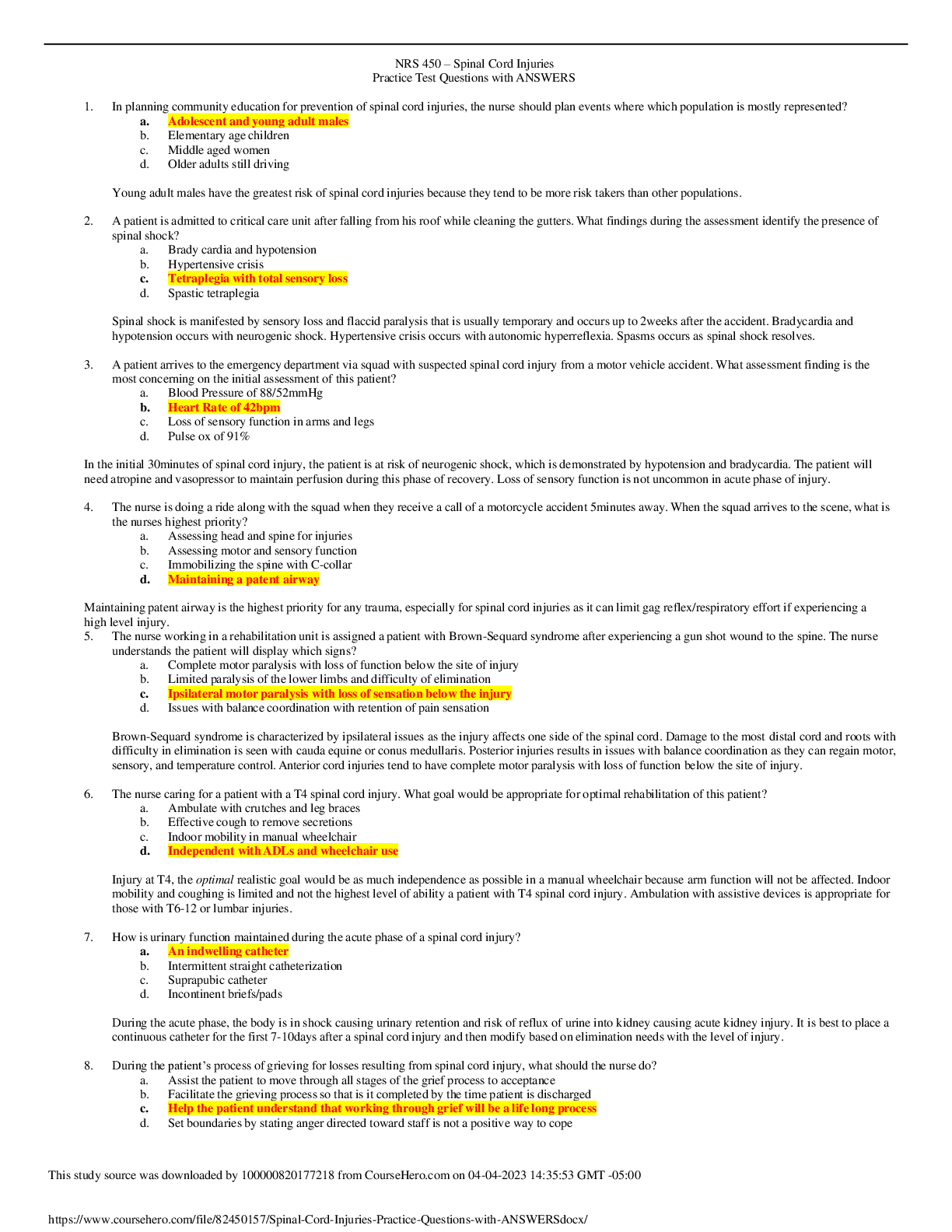
NRS 450 – Spinal Cord Injuries Practice Test Questions with An...

$15
27 Pages
(GCU) NRS-450 NURSING INFORMATICS FINAL EXAM GUIDE Q & A 2024

$10
9 Pages
NRS 450 Culture of Patient Safety Case Studies | Answered.
.png)
$67.5
424 Pages