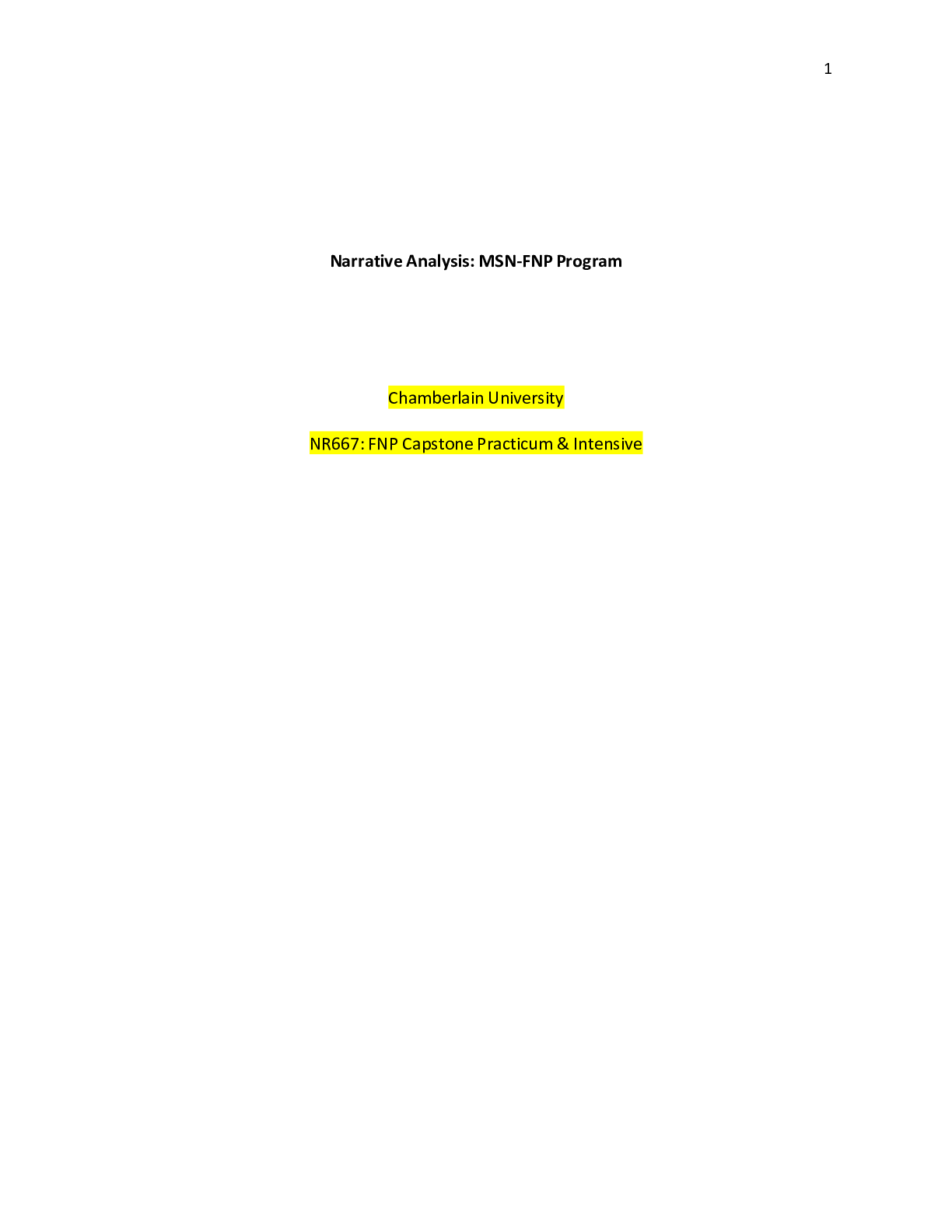
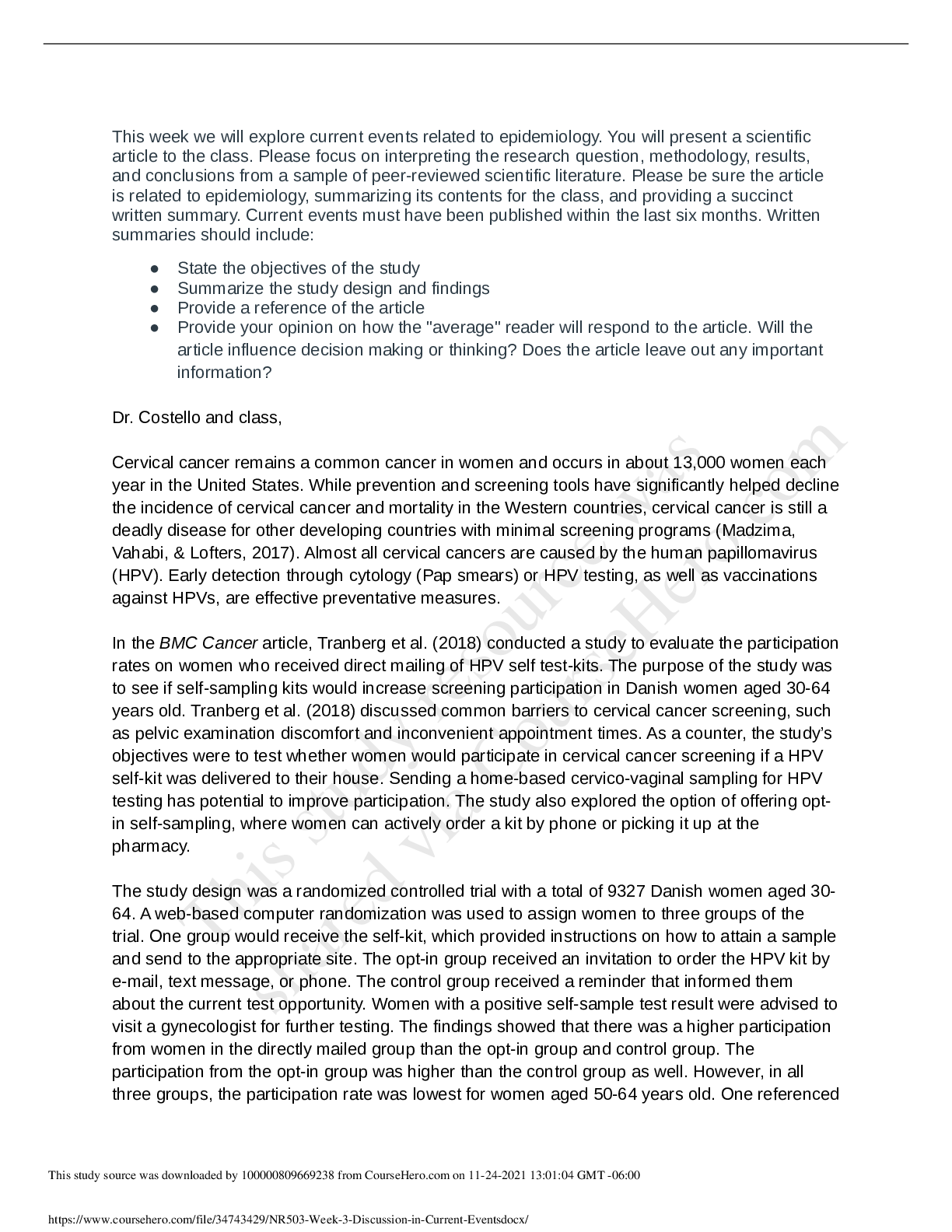
BUS 330 Assignment 5: Evaluating Contracts Essay.
Document Content and Description Below
Introduction
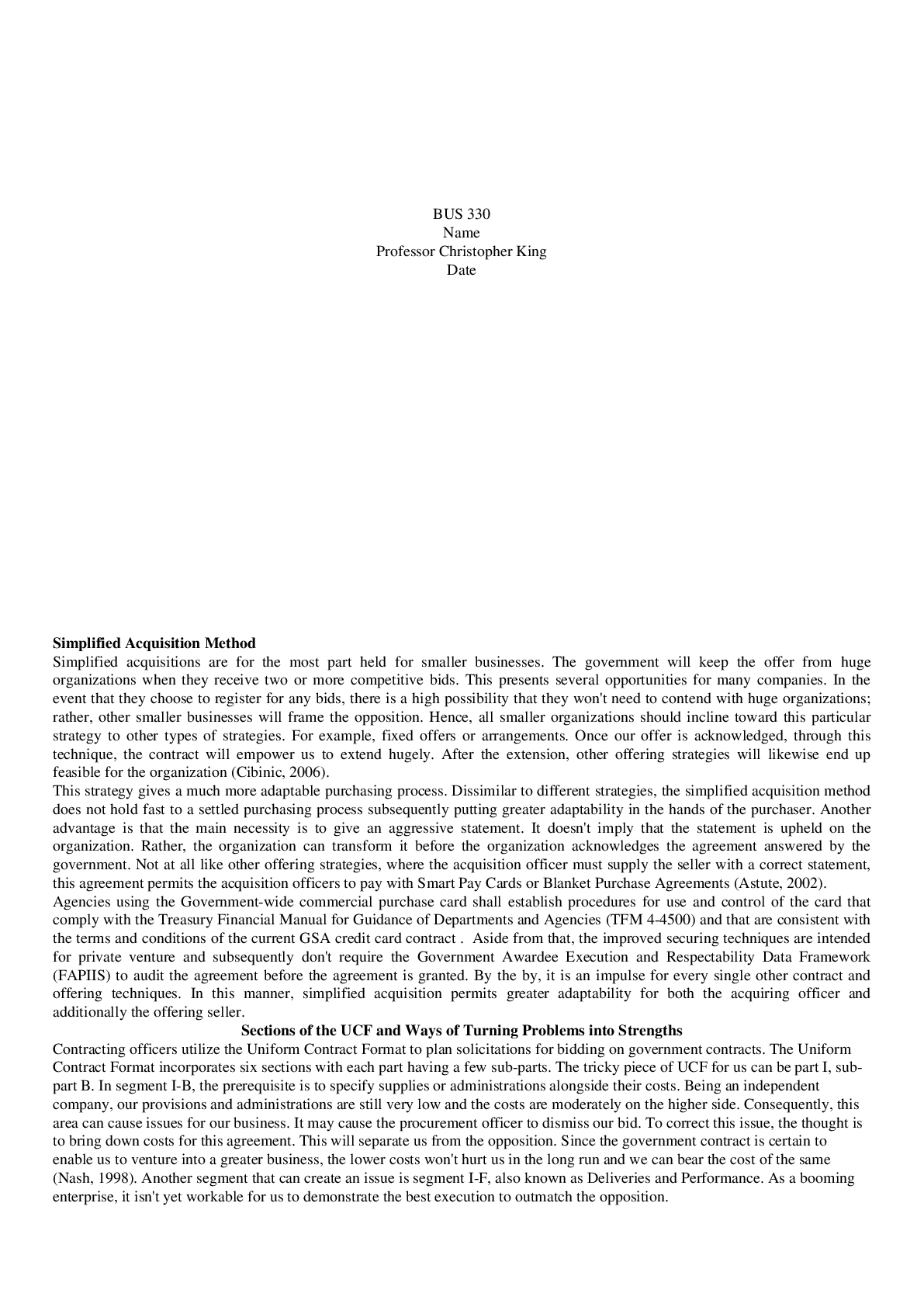
There are several advantages and drawbacks of Fixed-Price Contracts and Cost-Reimbursement Contracts. A fixed-price contract is a type of agreement whereby all payments are not dictated by the assets utiliz
...
[Show More]
Last updated: 3 years ago
Preview 1 out of 4 pages
Instant download
Buy this Document to get the Full Access Instantly
Provided by Students Who Aced it
We Verify Document Content to Gurantee Accuracy
Reviews( 0 )
Document information
Connected school, study & course
About the document
Uploaded On
Nov 01, 2020
Number of pages
4
Written in
All

Additional information
This document has been written for:
Uploaded
Nov 01, 2020
Downloads
0
Views
131
Topic Tags
Related Subjects & Courses
Explore similar study resources and related concepts.
Recommended For You
Get more on ESSAY »
.png)

$10
5 Pages
BUS330 Week 2 Assignment .docx BUS330 Week 2 Assignment €“ M...

$11
11 Pages
MARKETING bus 330 Mid-Term Exam 1 frequently tested Questions


$20
566 Pages
Pearson’s Federal Taxation 2023 Individuals, 36e Timothy Ruper...
$20
643 Pages
McGraw-Hill's Taxation of Business Entities 2023 Edition, 14e...

$32
2186 Pages
Business Law 17th Edition Langvardt Test Bank.Answers and chea...
$25
61 Pages
Business Ethics 5th Edition Crane, Matten, Glozer, Spence | Te...
More related documents below