Narcotics or Sepsis?
Pharmacology
Clinical Reasoning Case
Study
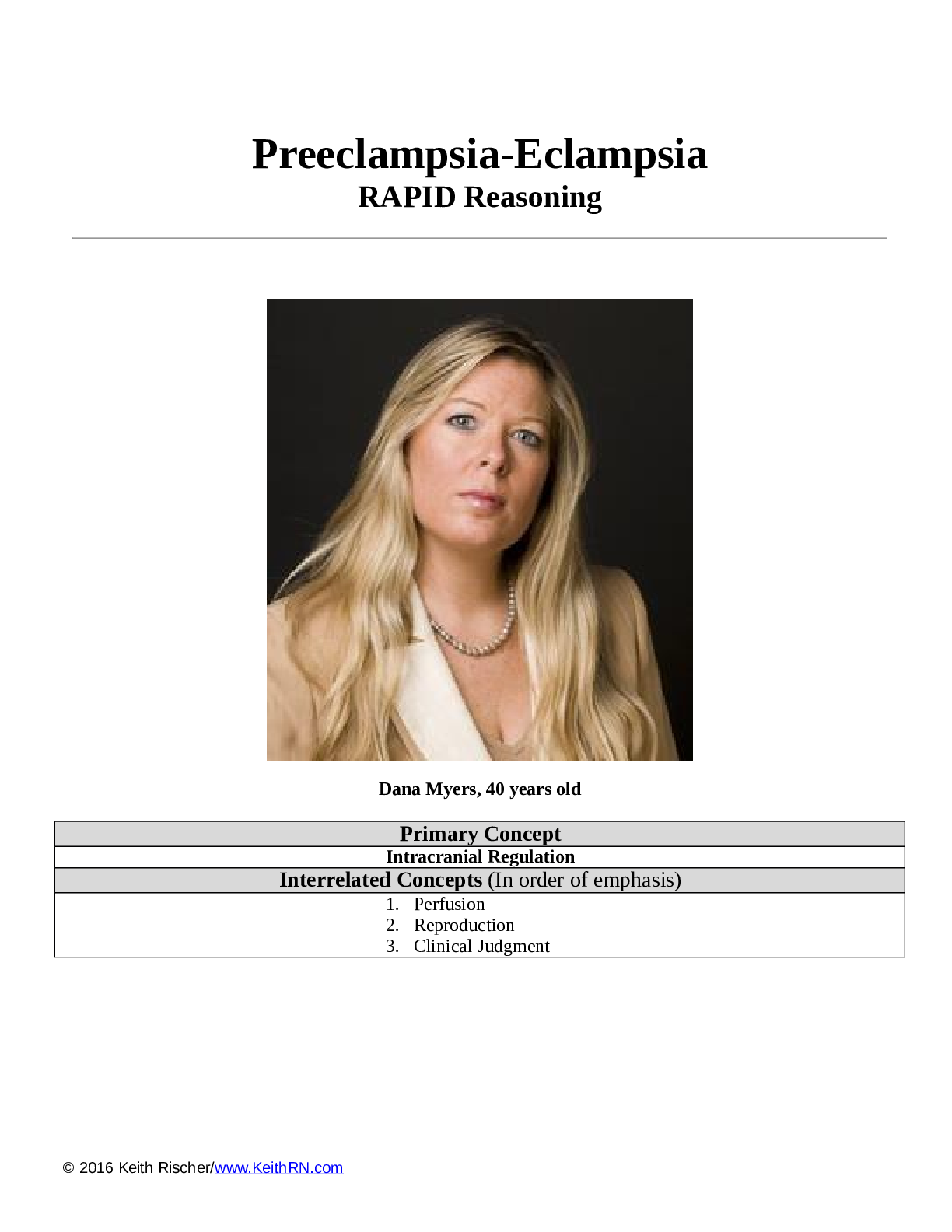
Brian Sanders, 34 years old
NCLEX Client Need Categories Percentage of Items from Each
Category/Subcategory
Covered in
Case Study
Safe and Effectiv
...
Narcotics or Sepsis?
Pharmacology
Clinical Reasoning Case
Study
Brian Sanders, 34 years old
NCLEX Client Need Categories Percentage of Items from Each
Category/Subcategory
Covered in
Case Study
Safe and Effective Care Environment
● Management of Care 17-23% ✔
● Safety and Infection Control 9-15%
Health Promotion and Maintenance 6-12% ✔
Psychosocial Integrity 6-12%
Physiological Integrity
● Basic Care and Comfort 6-12%
● Pharmacological and Parenteral Therapies 12-18% ✔
● Reduction of Risk Potential 9-15% ✔
● Physiological Adaptation 11-17% ✔
History of Present Problem:
Brian Sanders is a 34-year-old male who was evaluated in the emergency department (ED) earlier this morning for an
abscess that was drained from his left thigh. He was given two tablets of hydrocodone-acetaminophen 5-325 mg and sent
home with a prescription for #10 hydrocodone-acetaminophen 5-325 mg tablets to be taken PRN for pain every 4 hours.
Eight hours after being discharged from the ED, his mother became concerned and called 911 because he was more
lethargic and she had difficulty arousing him. The paramedics who brought him to the ED report that he took his
scheduled alprazolam 0.5 mg PO after returning home from the ED. He arouses and opens his eyes to loud verbal
commands, but falls back to sleep several seconds later. His last set of vital signs per paramedics were:
● P: 50 regular
● R:16 regular
● BP: 92/50-MAP 64
● O2 sat: 98% on room air
Personal/Social History:
Brian is currently unemployed and lives with his parents. He has struggled with bipolar depression, anxiety,
schizoaffective disorder and ETOH abuse in the past but denies current ETOH use.
Allergies:
NKDA
What data from the histories are RELEVANT and must be interpreted as clinically significant by the nurse?
(Reduction of Risk Potential)
What is the RELATIONSHIP of the past medical history and current medications? Why is your patient receiving these
medications? (Which medication treats which condition? Draw lines to connect)
RELEVANT Data from Present Problem: Clinical Significance:
-Took two tablets of hydrocodone-acetaminophen
5-325 mg in ED.
-Prescribed #10 hydrocodone-acetaminophen 5-325
mg PRN q 4 hours for pain.
-Eight hours later, became lethargic and difficult to
arouse.
-Took scheduled alprazolam 0.5 mg PO after he came
back from ED.
-Arouses and opens his eyes to loud verbal
commands but falls asleep several seconds later.
-P: 50 regular
-B/P: 92/50- MAP 64
-Medication administered at the hospital could negatively affect
home medications. This is why it's important to ask patients about
medications that they are currently taking.
- #10 hydrocodone-acetaminophen 5-325 mg PRN q 4 hrs
prescription can put the patient at risk of a possible overdose. Patient
education is important when sending medication home with the
patient.
-Signs of a potential med overdose.
- Alpazolam could have a negative interaction with the medication
prescribed in the ED. Question the medication and amount taken by
the patient.
- AVPU- Patient is alert to verbal stimuli
-May be due to med overdose, unless this is the patient's baseline
HR.
- Suggests i
[Show More]