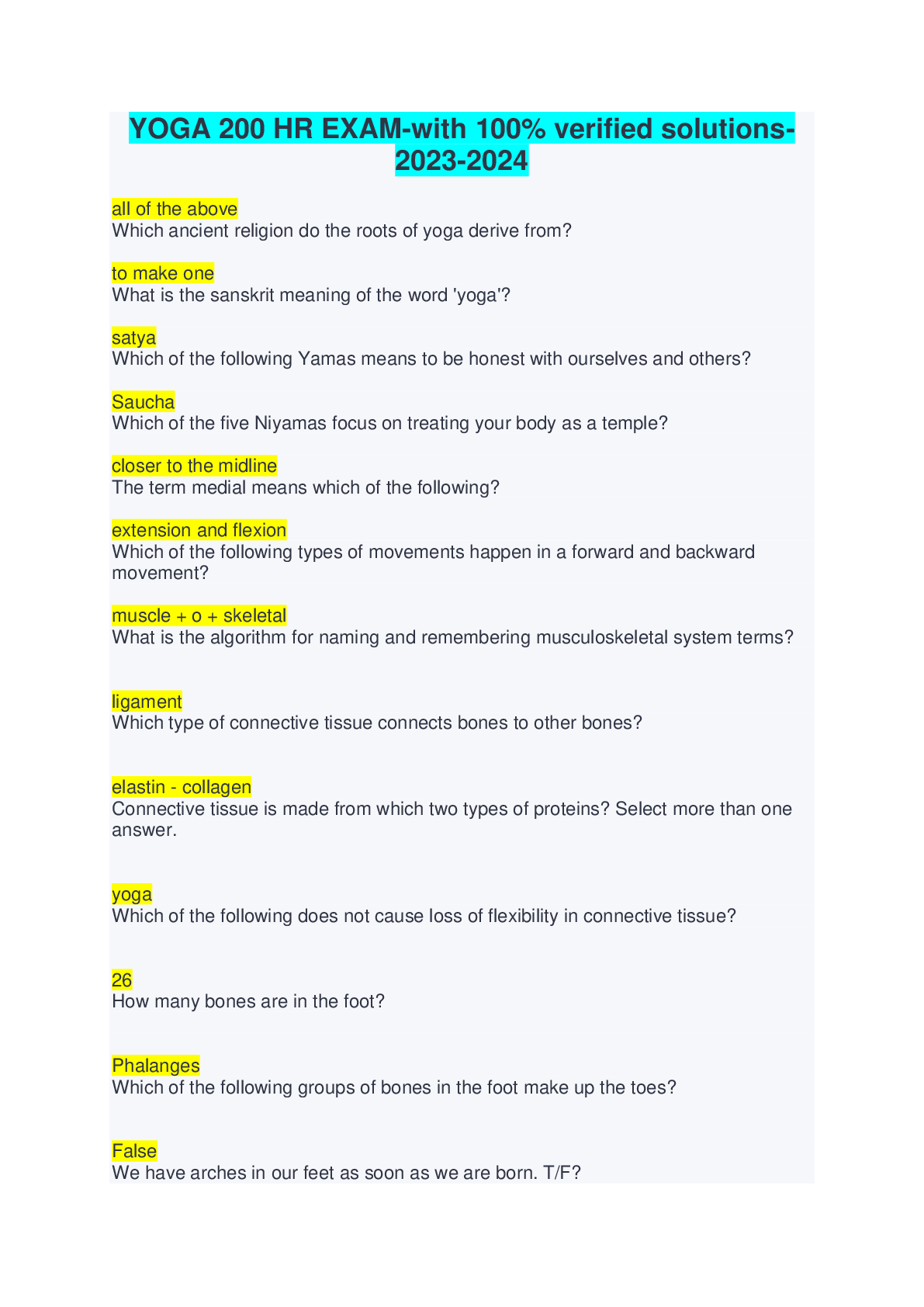
NURS 5334-Study Questions and Answers Exam 2
Document Content and Description Below
What are the basic mechanisms by which neuropharmocologic agents act?
o Can modify the disease process
o Act at the sites of actions which is the axons versus synapses and steps in synaptic transmission and effects of
...
[Show More]
Last updated: 3 years ago
Preview 1 out of 35 pages
Instant download

Buy this Document to get the Full Access Instantly
Provided by Students Who Aced it
We Verify Document Content to Gurantee Accuracy
Reviews( 0 )
Document information
Connected school, study & course
About the document
Uploaded On
Apr 11, 2022
Number of pages
35
Written in
All

Additional information
This document has been written for:
Uploaded
Apr 11, 2022
Downloads
0
Views
134
Topic Tags
Related Subjects & Courses
Explore similar study resources and related concepts.
Recommended For You
Get more on EXAM »
$16.5
9 Pages
UTA Nurs5334 Advanced Pharmacology Test 2 Latest 2025 Questio...


$10
14 Pages
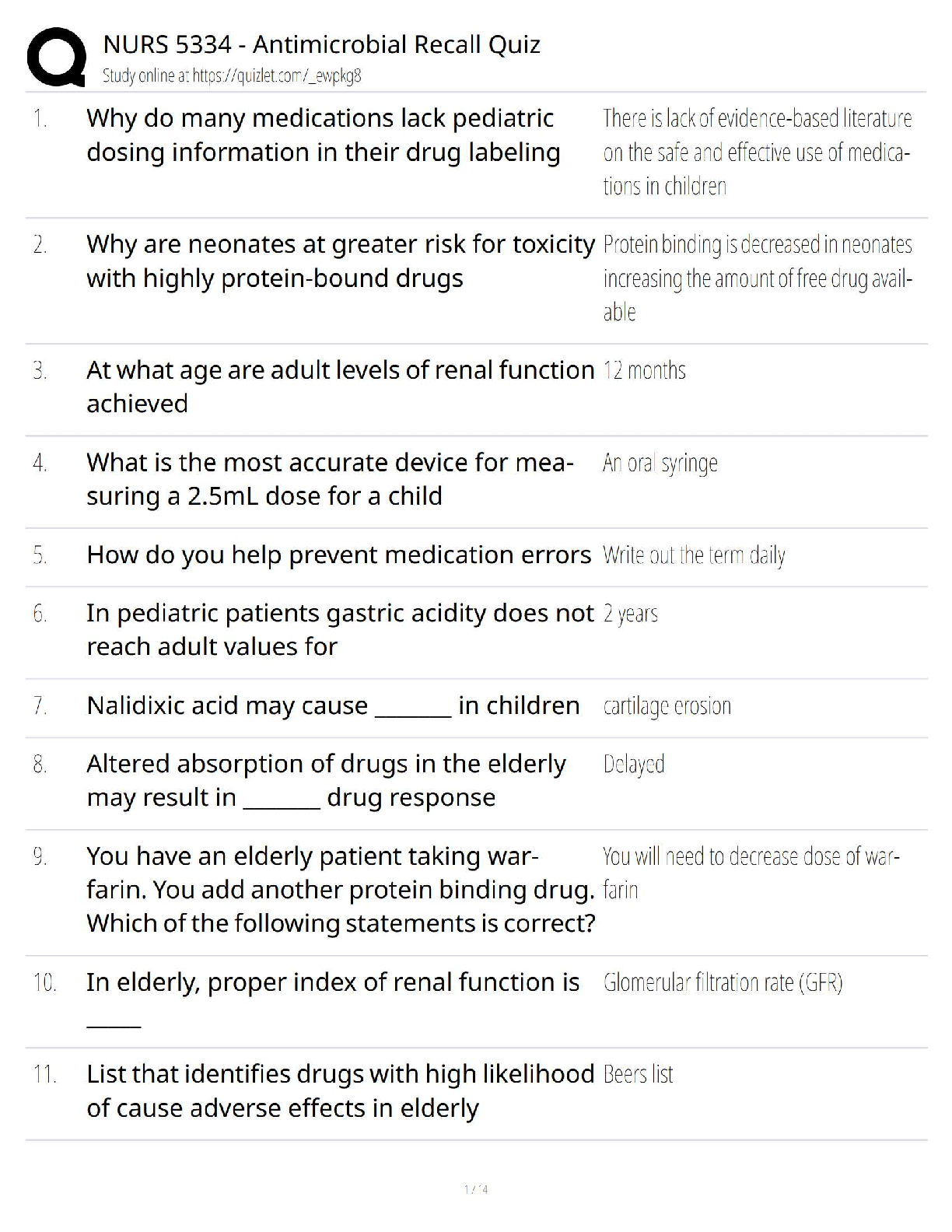
NURS 5334 – Antimicrobial Recall Quiz Test Bank & Practice Q...
$15.5
13 Pages
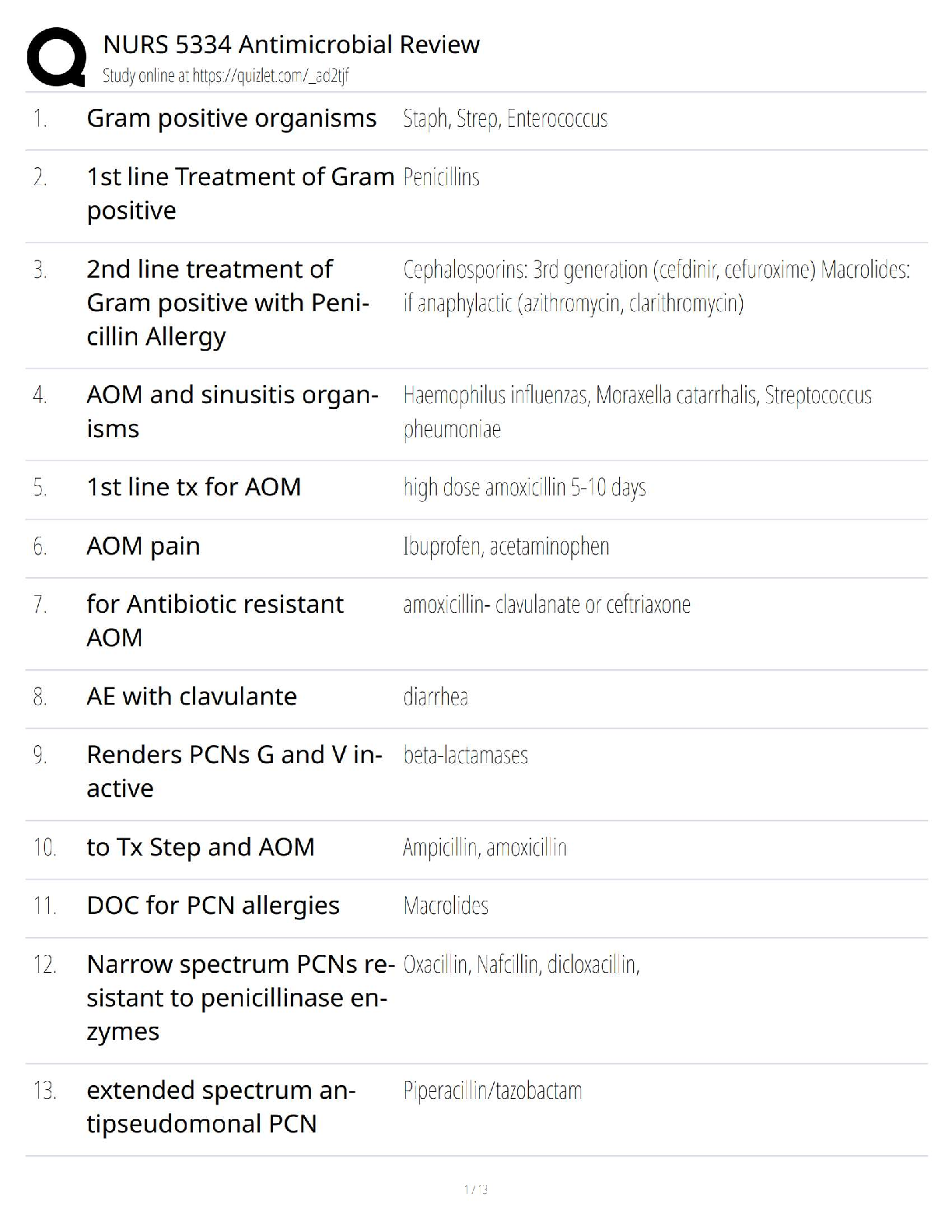
NURS 5334 – Antimicrobial Review / 2025 Advanced Pharmacology...
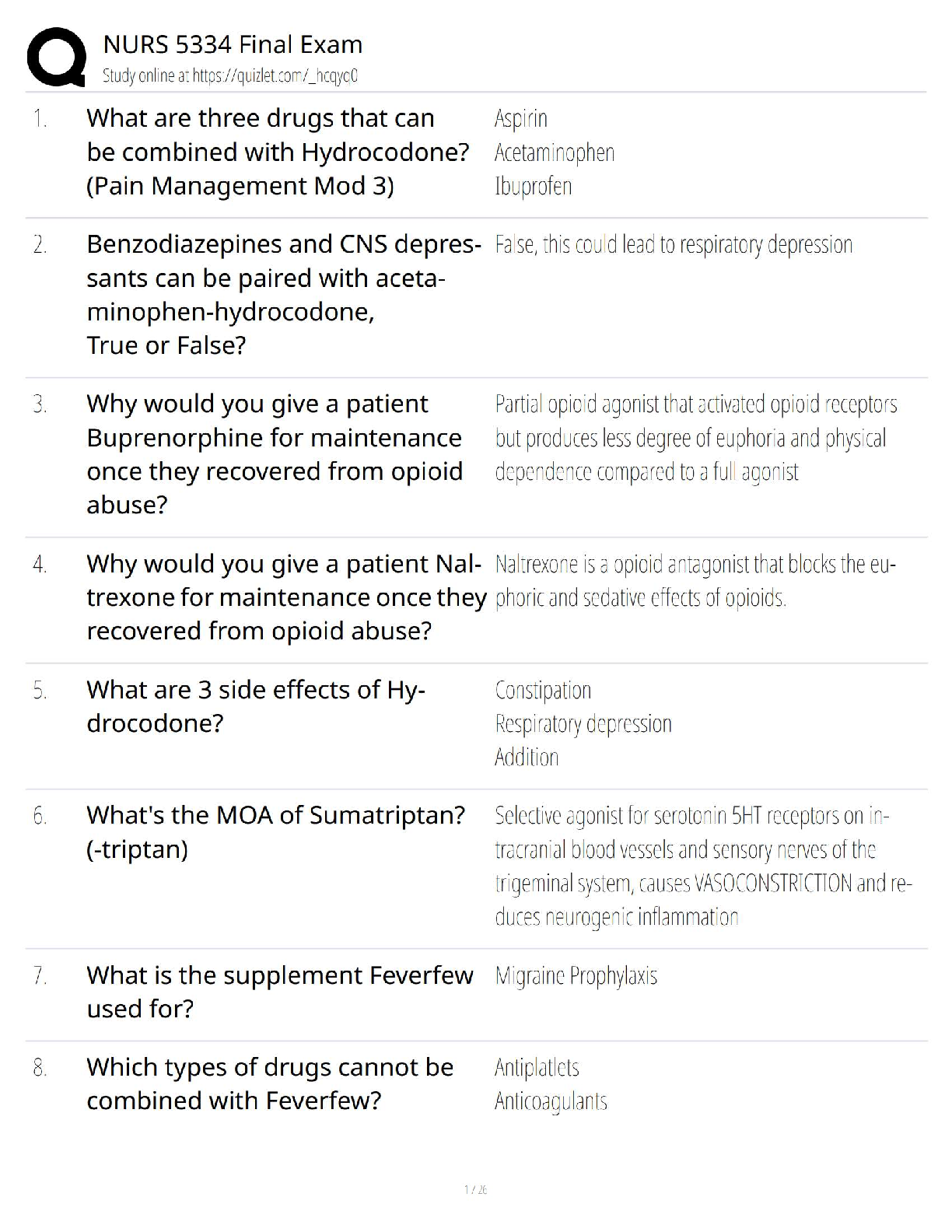

$16
10 Pages
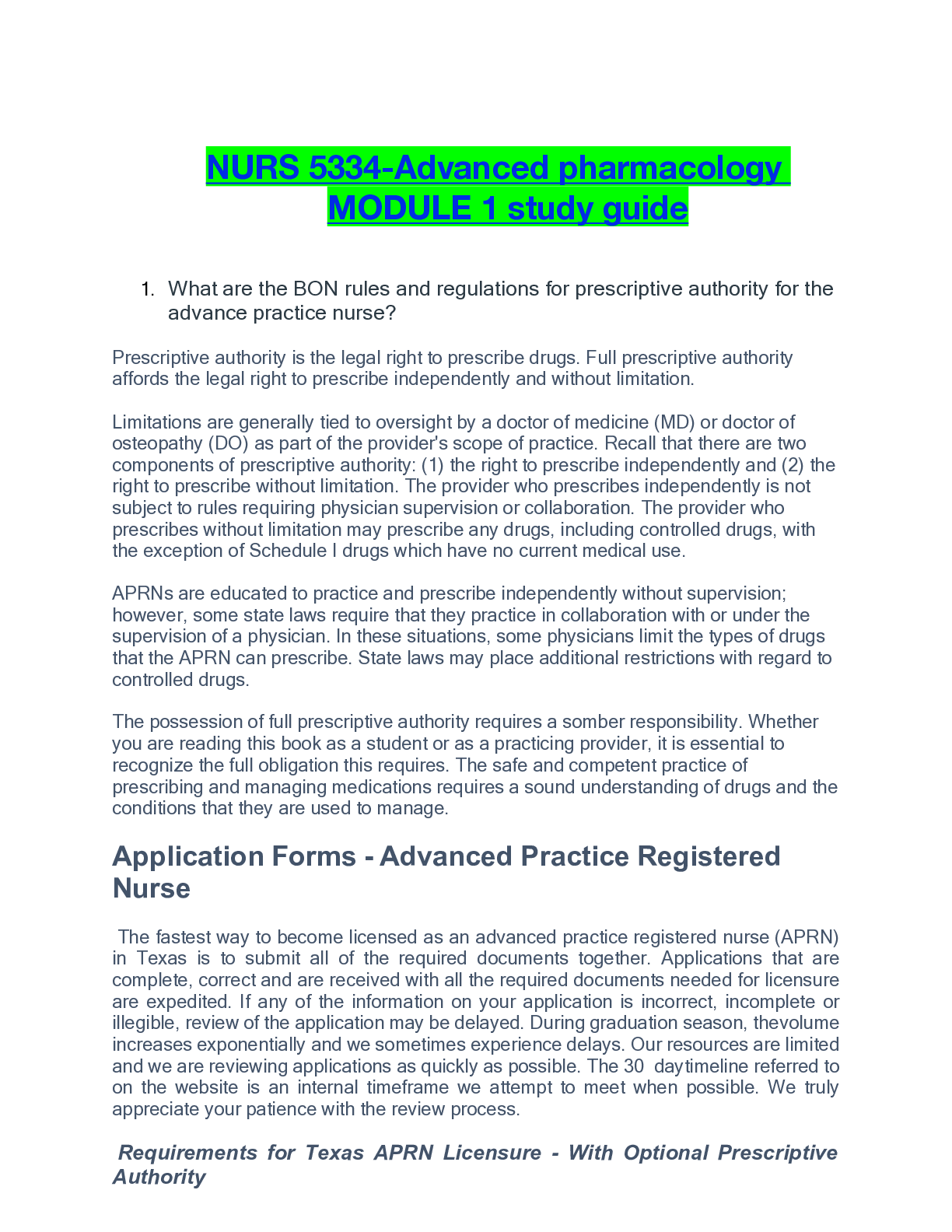
NURS 5334 MODULE 7 EXAM STUDY GUIDE NEW LATEST AND UPDATED (2...
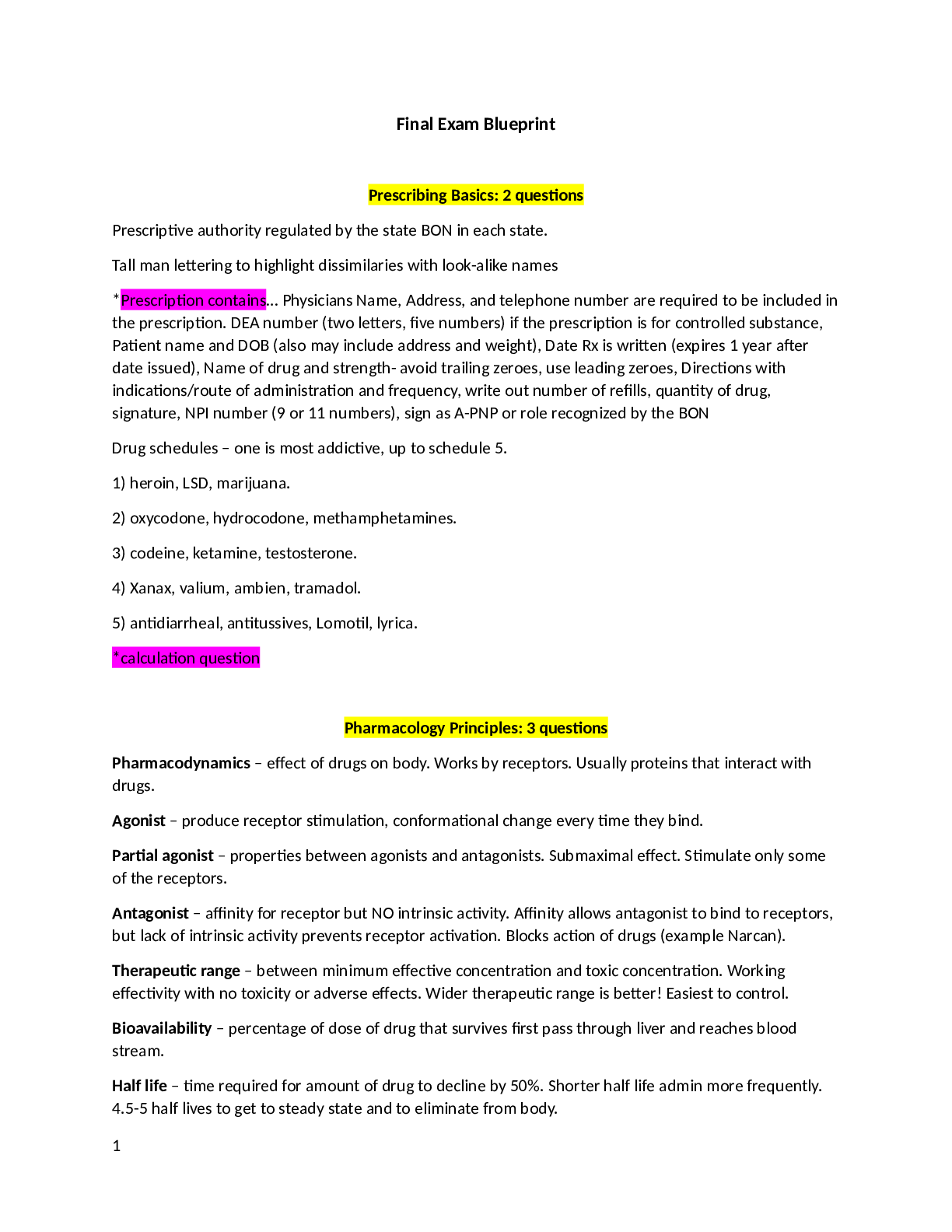
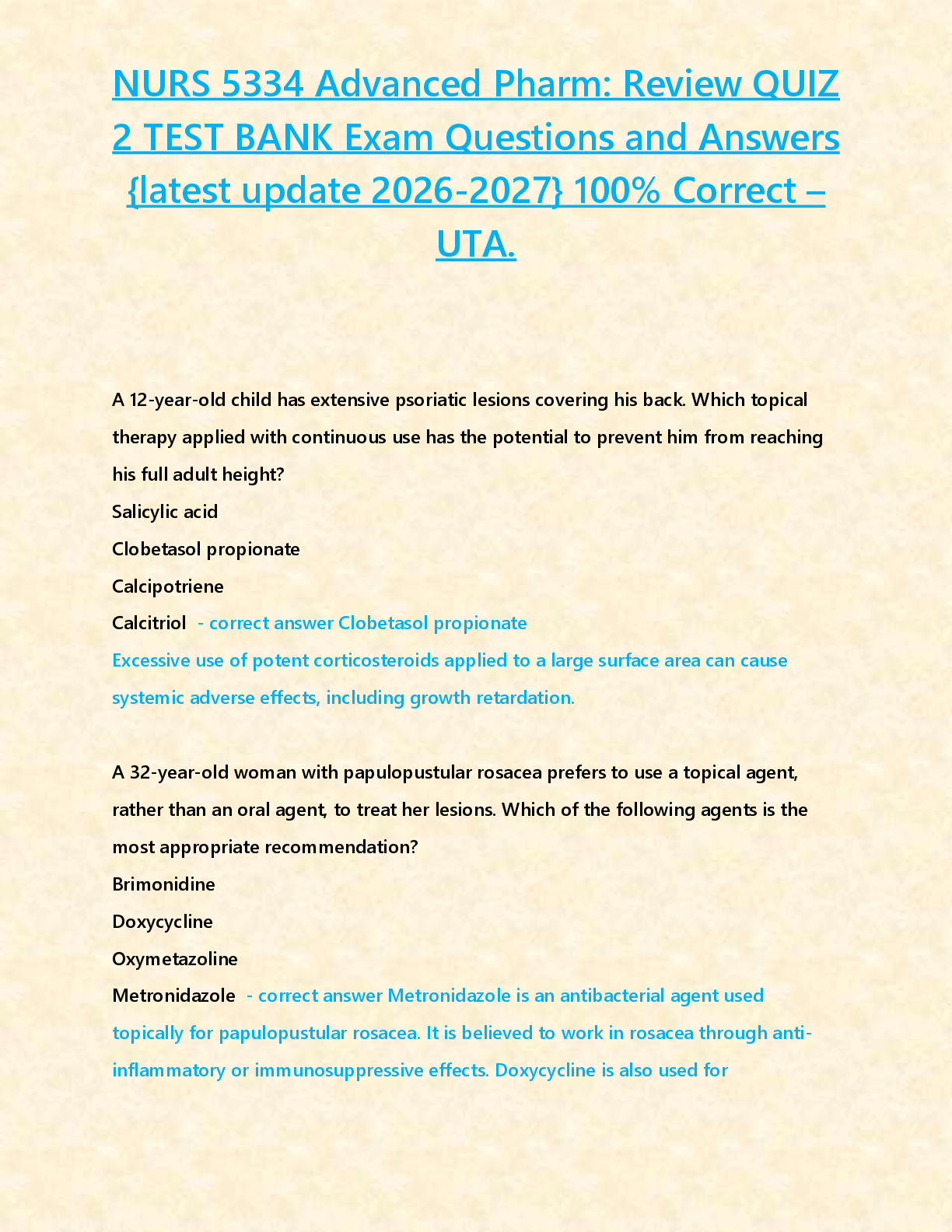
$7
131 Pages
NURS 5334 Advanced Pharm: Review QUIZ 2 TEST BANK Exam Questio...
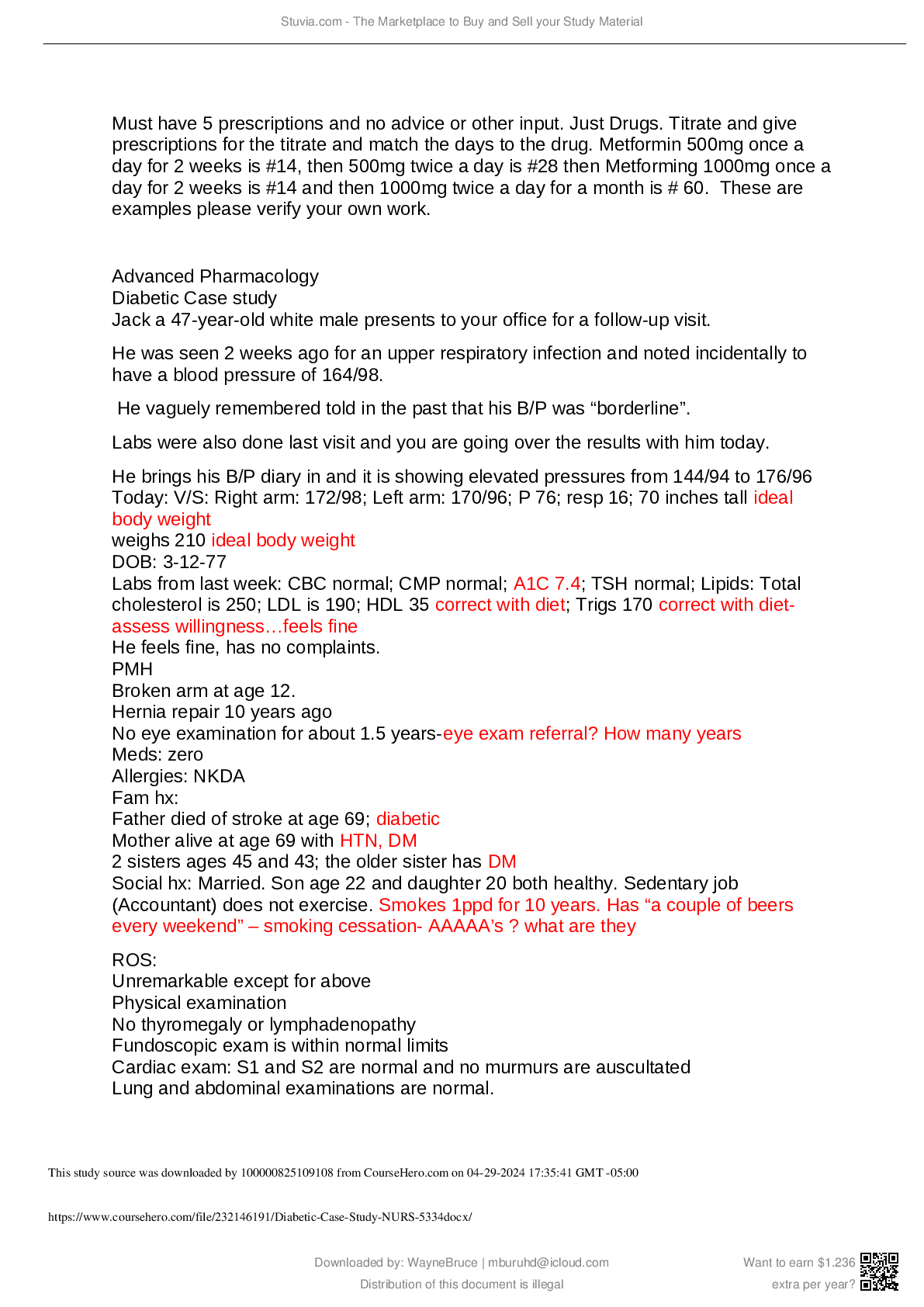
$9.5
8 Pages
Diabetic Case Study NURS 5334: Advanced Pharmacology Diabetic...

$7
26 Pages
The University of Texas at Arlington College of Nursing NURS 5...
$10
12 Pages
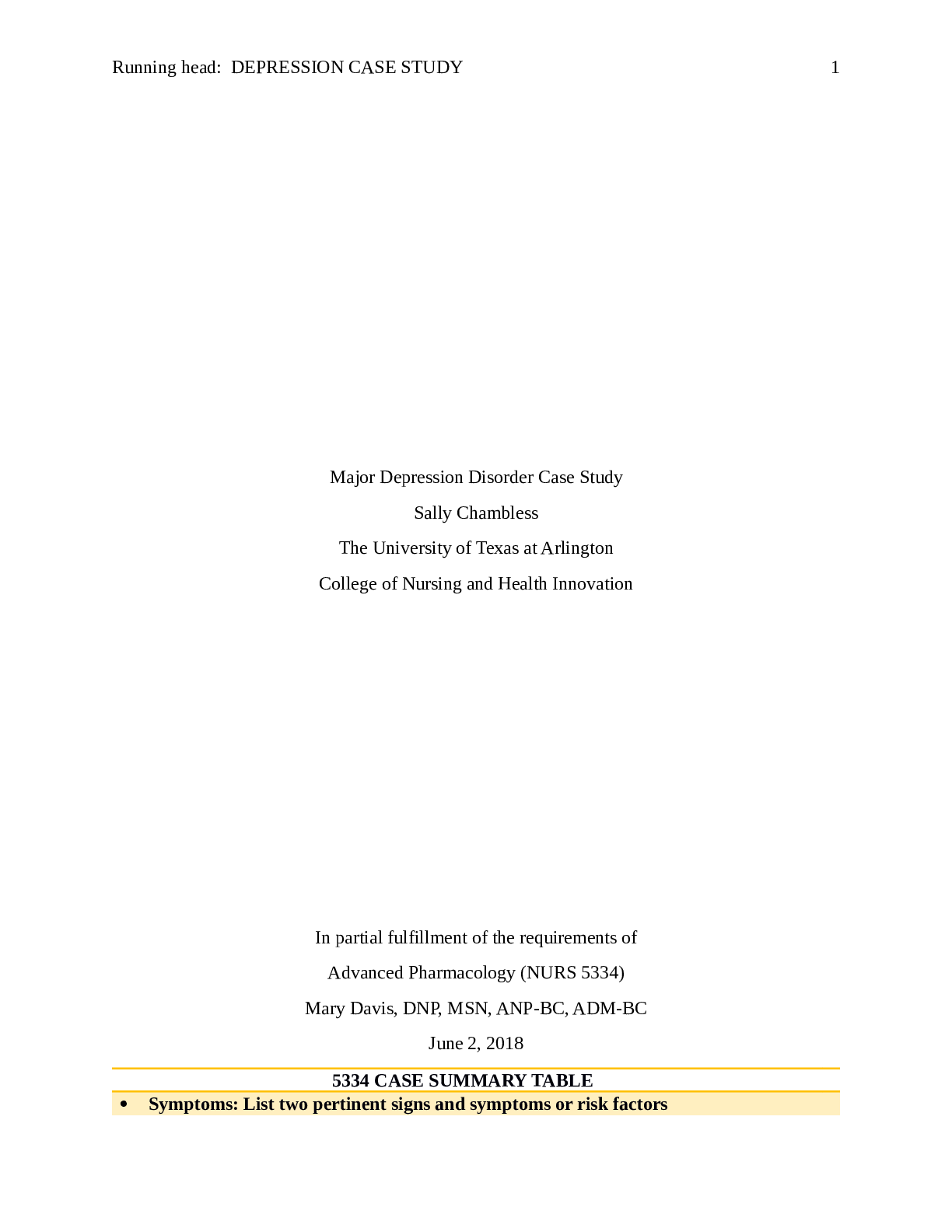
NURS 5334-Advanced Pharmacology Depression Case Study-Universi...
More related documents below