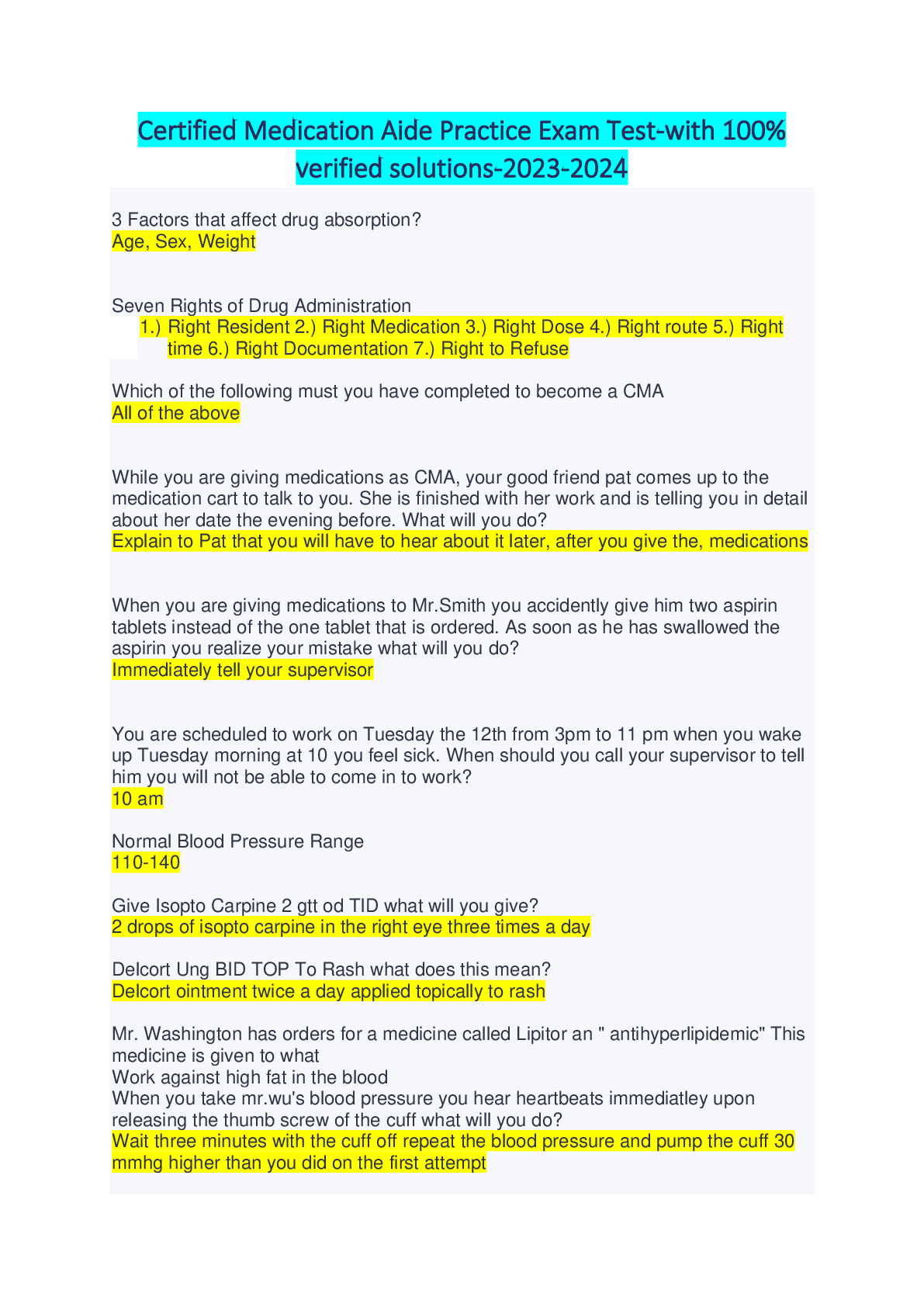
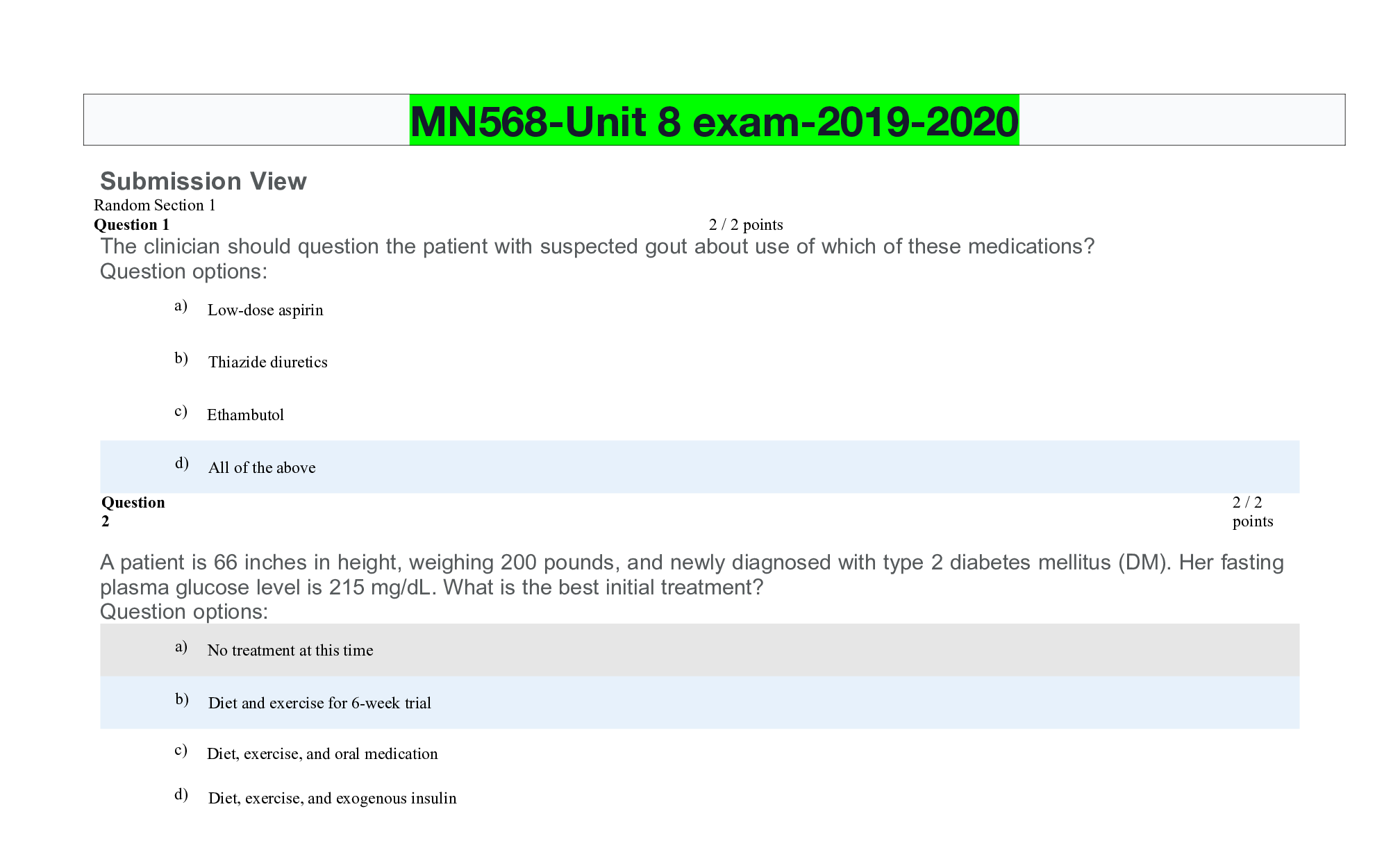
MN568-Unit 8 exam-2019-2020
Document Content and Description Below
WITH 50 Q&A
Question 1 2 / 2 points
The clinician should question the patient with suspected gout about use of which of these medications? Question options:
a) Low-dose aspirin
b) Thiazide diuretics
c) Ethambu
...
[Show More]
Last updated: 3 years ago
Preview 1 out of 25 pages
Instant download
Buy this Document to get the Full Access Instantly
Provided by Students Who Aced it
We Verify Document Content to Gurantee Accuracy
Reviews( 0 )
Document information
Connected school, study & course
About the document
Uploaded On
Apr 11, 2022
Number of pages
25
Written in
All

Additional information
This document has been written for:
Uploaded
Apr 11, 2022
Downloads
0
Views
101
Topic Tags
Recommended For You
Get more on EXAM »
$9
22 Pages
MN568 Unit 6 Exam / MN 568 Unit 6 Exam: Kaplan University (ANS...

$11
20 Pages
Kaplan University, Indiana - MN 568MN568-Unit 8 Quiz (2019/20)...

$10
26 Pages
MN568-Unit 6-Primary Care Across the Life Span-Exam Question
$17
46 Pages
MN 568 Final Exam / MN568 Final Exam (100 Q & A)/ MN 568 Unit...


$9
7 Pages
MN568-Unit 3-Primary Care Across the Life Span C.Nunn Case Stu...
$13
7 Pages
MN568-Unit 3-Primary Care Across the Life Span C.Nunn Case Stu...

$12
22 Pages
Purdue University - NURSING MN 568 Quiz 8 Sample Exam Study Gu...

$10
3 Pages
Purdue UniversityNURSING MN568SPowell- Seminar Synopsis- Unit...

$11
37 Pages
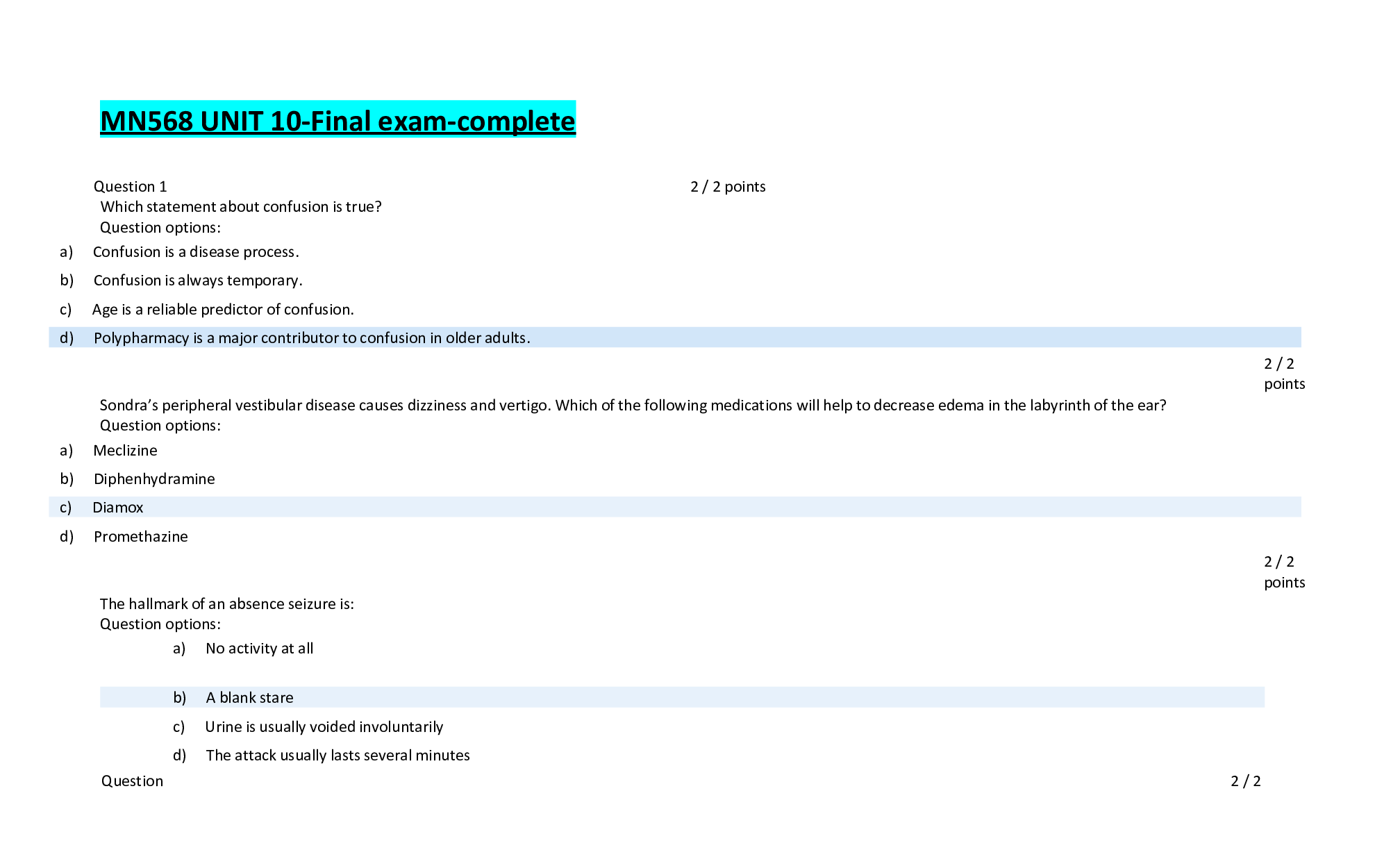
Kaplan University - MN 568 - MN568 unit 10 final. A+ Guide.
More related documents below