SCIENCE 101 > GIZMOS > Gizmo Student Exploration: Carbon Cycle Lab: Vocabulary: atmosphere, biomass, biosphere, carbon rese (All)
Gizmo Student Exploration: Carbon Cycle Lab: Vocabulary: atmosphere, biomass, biosphere, carbon reservoir, carbon sink, fossil fuel, geosphere, greenhouse gas, hydrosphere, lithosphere, photosynthesis
Document Content and Description Below
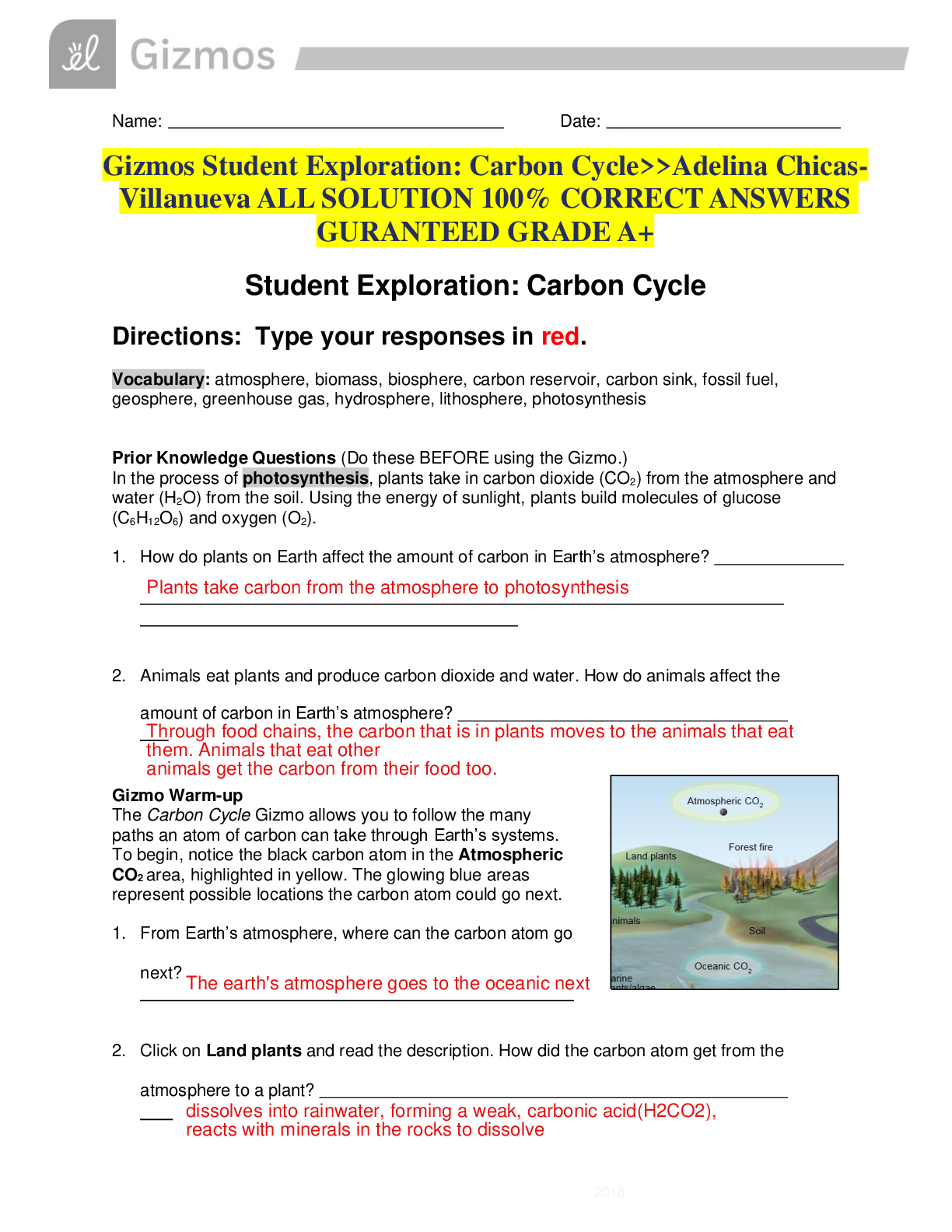
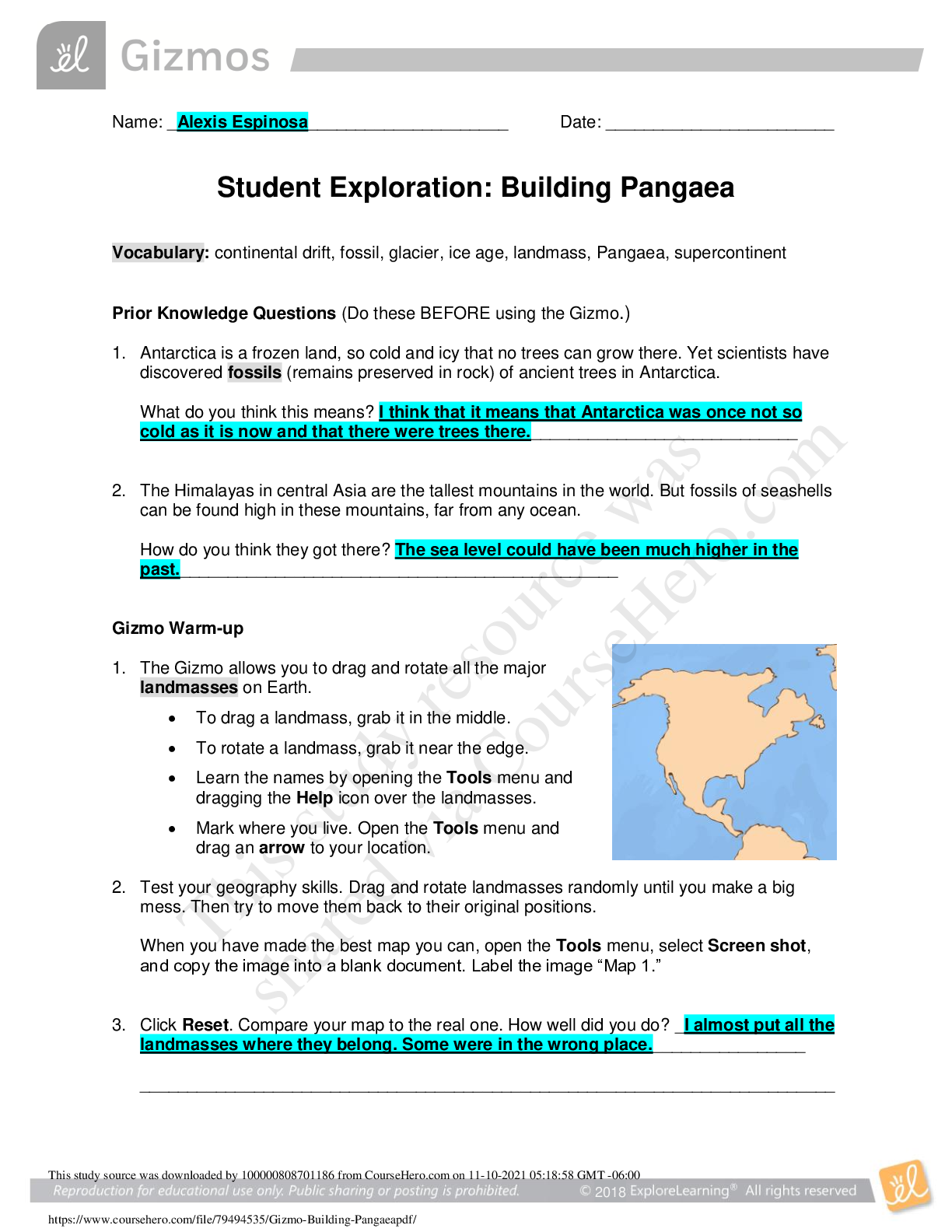
Vocabulary: atmosphere, biomass, biosphere, carbon reservoir, carbon sink, fossil fuel, geosphere, greenhouse gas, hydrosphere, lithosphere, photosynthesis Gizmo Student Exploration: Carbon Cycle L ... ab Vocabulary: atmosphere, biomass, biosphere, carbon reservoir, carbon sink, fossil fuel, geosphere, greenhouse gas, hydrosphere, lithosphere, photosynthesis Prior Knowledge Questions (Do these BEFORE using the Gizmo.) In the process of photosynthesis, plants take in carbon dioxide (CO2) from the atmosphere and water (H2O) from the soil. Using the energy of sunlight, plants build molecules of glucose (C6H12O6) and oxygen (O2). 1. How do plants on Earth affect the amount of carbon in Earth’s atmosphere? Plants help reduce carbon by absorbing carbon dioxide and making it into oxygen. 2. Animals eat plants and produce carbon dioxide and water. How do animals affect the amount of carbon in Earth’s atmosphere? The animals increase the amount of carbon dioxide. Gizmo Warm-up The Carbon Cycle Gizmo™ allows you to follow the many paths an atom of carbon can take through Earth’s systems. To begin, notice the black carbon atom in the Atmospheric CO2 area, highlighted in yellow. The glowing blue areas represent possible locations the carbon atom could go next. 1. From Earth’s atmosphere,where can the carbon atom go next? The land plants, exposed rocks and the ocean. 2. Click on Land plants and read the description. How did the carbon atom get from the atmosphere to a plant? Because of Photosynthesis. Select Land animals. How did the carbon atom get from land plants into the animal? Through the process of photosynthesis, carbon dioxide is pulled from the air to produce food made from carbon for plant growth. Carbon moves from plants to animals. Through food chains, the carbon that is in plants moves to the animals that eat them. Animals that eat other animals get the carbon from their food too. 4. Select Atmospheric CO2. How did the carbon atom get from land animals back to the atmosphere? The animal releases the carbon back into the air by the process of cellular resp [Show More]
Last updated: 3 years ago
Preview 1 out of 4 pages

Buy this document to get the full access instantly
Instant Download Access after purchase
Buy NowInstant download
We Accept:

Reviews( 0 )
$8.00
Can't find what you want? Try our AI powered Search
Document information
Connected school, study & course
About the document
Uploaded On
Apr 14, 2022
Number of pages
4
Written in
All

Additional information
This document has been written for:
Uploaded
Apr 14, 2022
Downloads
0
Views
151
.png)
.png)