At 10-weeks gestation, a high-risk multiparous client with a family history of Down syndrome is admitted for observation following a chorionic villi sampling (CVS) procedure. What assessment finding requires immediate in
...
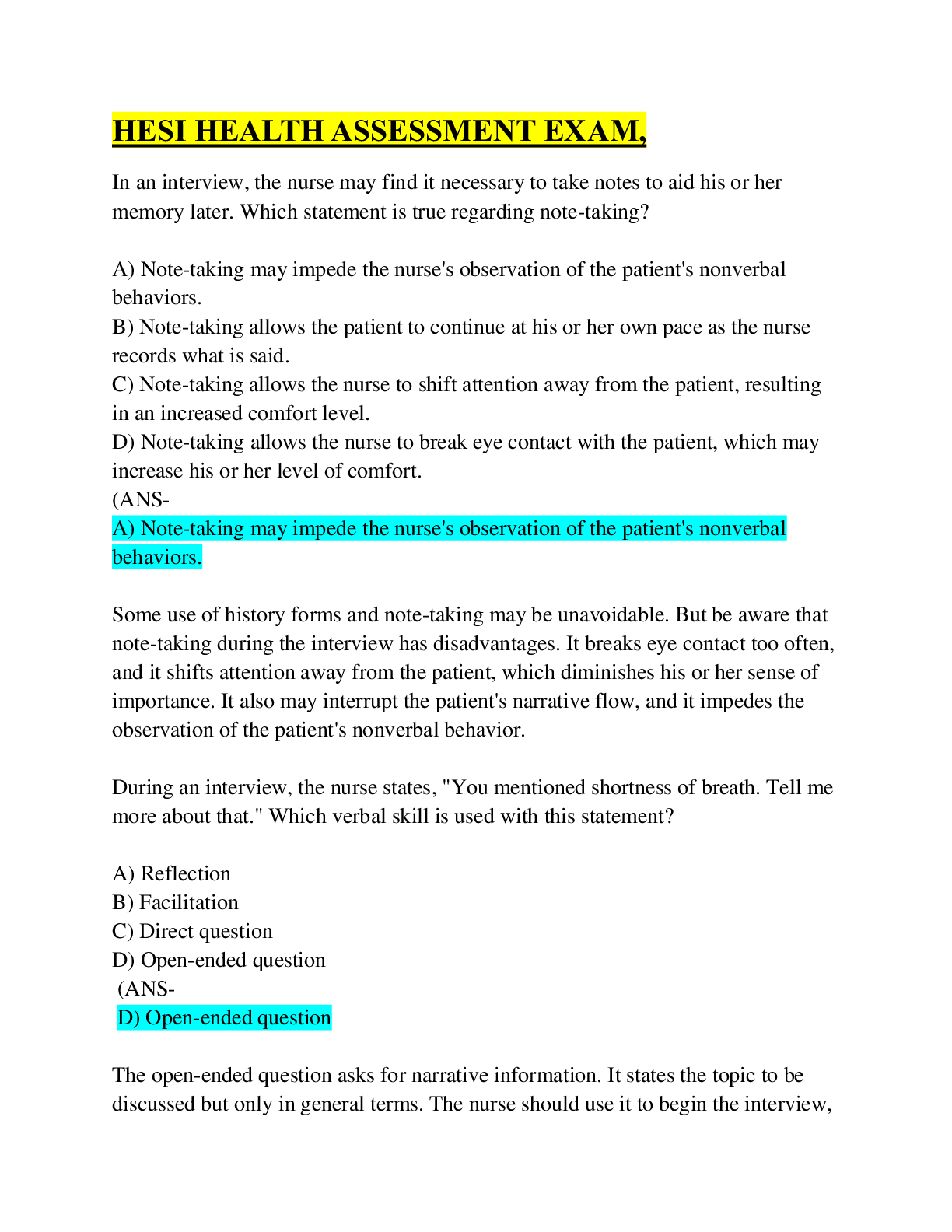
At 10-weeks gestation, a high-risk multiparous client with a family history of Down syndrome is admitted for observation following a chorionic villi sampling (CVS) procedure. What assessment finding requires immediate intervention?
-uterine cramping
-abdominal tenderness
-systolic bp <100 mmHg
-intermittent nausea (ANS- A. Uterine cramping
A client states, "During the three months I've been pregnant, it seems like I have had to go to the bathroom every five minutes." Which explanation should the nurse provide to this client?
-the client may have a bladder or kidney infection
-bladder capacity increases during pregnancy
-during pregnancy a woman is especially sensitive to body functions
-the growing uterus is putting pressure on the bladder (ANS- D. The growing uterus is putting pressure on the bladder.
The nurse assesses a male newborn and determines that he has the following vital signs: axillary temperature 95.1 F, heart rate 136 beats/minute, and a respiratory rate 48 breaths/minute. Based on these findings, which action should the nurse take first?
-check the infant's ABGs
-notify the pediatrician of the infants VS
-assess the infant's blood glucose level
-encourage the infant to take the breast or sugar water (ANS- C. Assess the infant's blood glucose level
An infant in respiratory distress is placed on pulse ox. The O2 sat is 85%. What is the priority nursing intervention?
-evaluate the blood pH
-begin humidified oxygen via hood
-stimulate infant crying
-place the infant under a radiant warmer (ANS- B. Begin humidified oxygen via hood
When assessing a newborn infant's heart rate, which technique is most important for the nurse to use?
-quiet the infant before counting the HR
-listen at the apex of the heart
-count the HR for at least one full minute
-palpate the umbilical cord (ANS- C. Count the heart rate for at least one full minute
The nurse prepares to administer an injection of vitamin K to a newborn infant. The mother tells the nurse, "Wait! I don't want my baby to have a shot." Which response would be best for the nurse to make?
-inform the mother that the injection was prescribed by the HCP
-explore the mother's concerns about the infant receiving an injection of vitamin K
-explain that vitamin K is required by state law and compliance is mandatory
-remind the mother that all babies receive this shot and it is relatively painless (ANS- B. Explore the mother's concerns about the infant receiving an injection of vitamin K
The nurse is teaching a new mother about diet and breastfeeding. Which instruction is most important to include in the teaching plan?
-avoid alcohol bc it is excreted in breast milk
-avoid spicy foods to prevent infant colic
-increase caloric intake by approx. 500 calories/day
-double prenatal milk intake to improve vitamin D transfer to the infant (ANS- A. Avoid alcohol because it is excreted in breast milk
[Show More]






![Preview of HESI Critical Care TEST BANK RN 2021 [50 Questions /Answers]](https://scholarfriends.com/storage/Critical_Care_HESI_notes___.png)