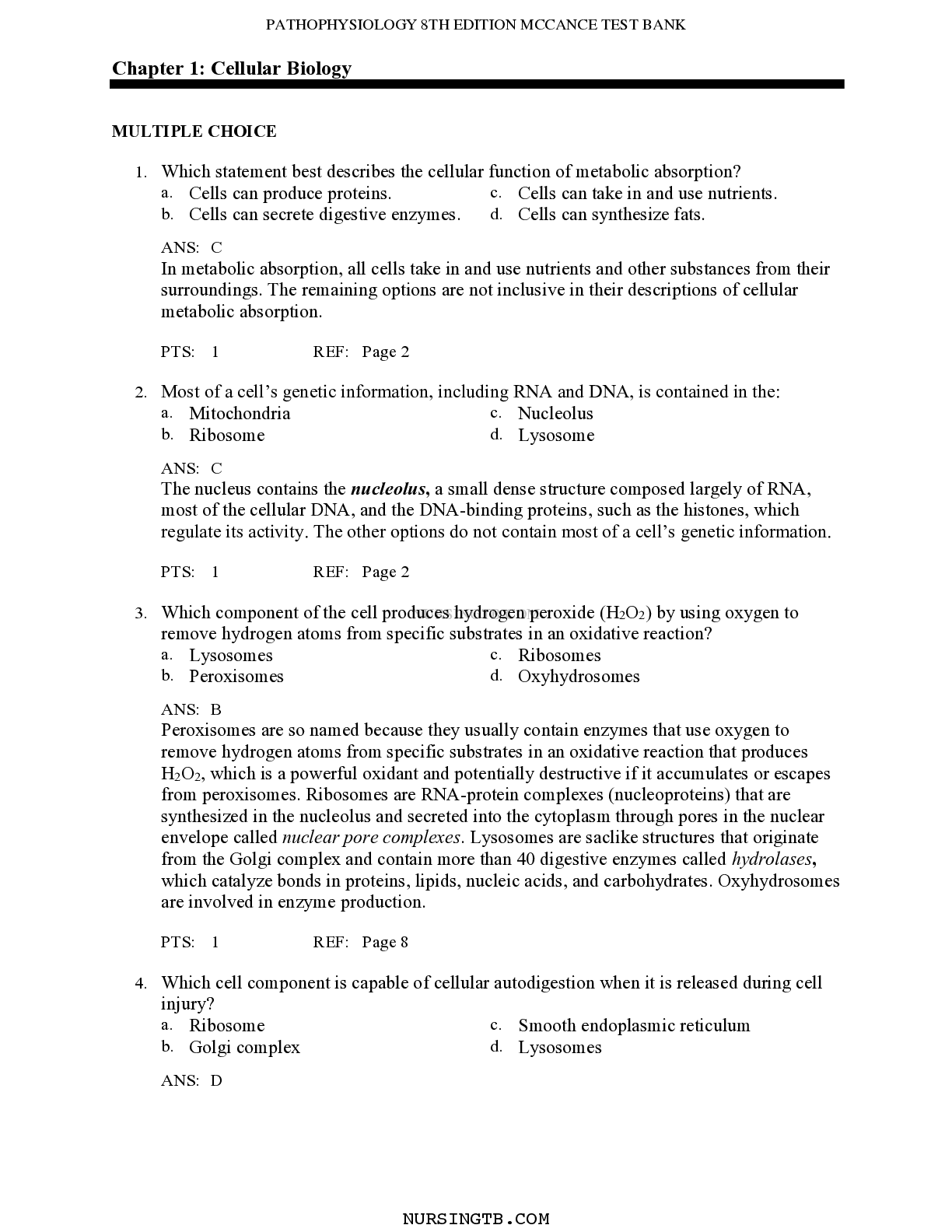
NURSING > QUESTIONS & ANSWERS > Chapter 01: Community-Oriented Nursing and Community-Based Nursing (All)
Chapter 01: Community-Oriented Nursing and Community-Based Nursing
Document Content and Description Below
Last updated: 3 years ago
Preview 1 out of 204 pages
Instant download

Buy this Document to get the Full Access Instantly
Provided by Students Who Aced it
We Verify Document Content to Gurantee Accuracy
Reviews( 0 )
Document information
Connected school, study & course
About the document
Uploaded On
Apr 27, 2022
Number of pages
204
Written in
All

Additional information
This document has been written for:
Uploaded
Apr 27, 2022
Downloads
0
Views
72
Document Keyword Tags
Recommended For You
Get more on QUESTIONS & ANSWERS »
TEST BANK FOR NURSING RESEARCH 9TH EDITION BY LOBIONDO-WOOD Ch...

ADVANCED PRACTICE TEST BANK 2022 - Chapter 01: The History and...
.png)
TEST BANK Chapter 01: Health Defined: Objectives for Promotion...

Test Bank - Psychiatric Mental Health Nursing by Mary Townsend...

Chapter 01: Using Evidence in Nursing Practice TEST BANK LATES...

NUR 255 TEST BANK.pdf - Chapter 01 Mental Health and Mental Il...

01: Nursing Today Chapter 01: Nursing Today Potter et al.: Fun...

Integrating Research, Evidence-Based Practice, and Quality Imp...
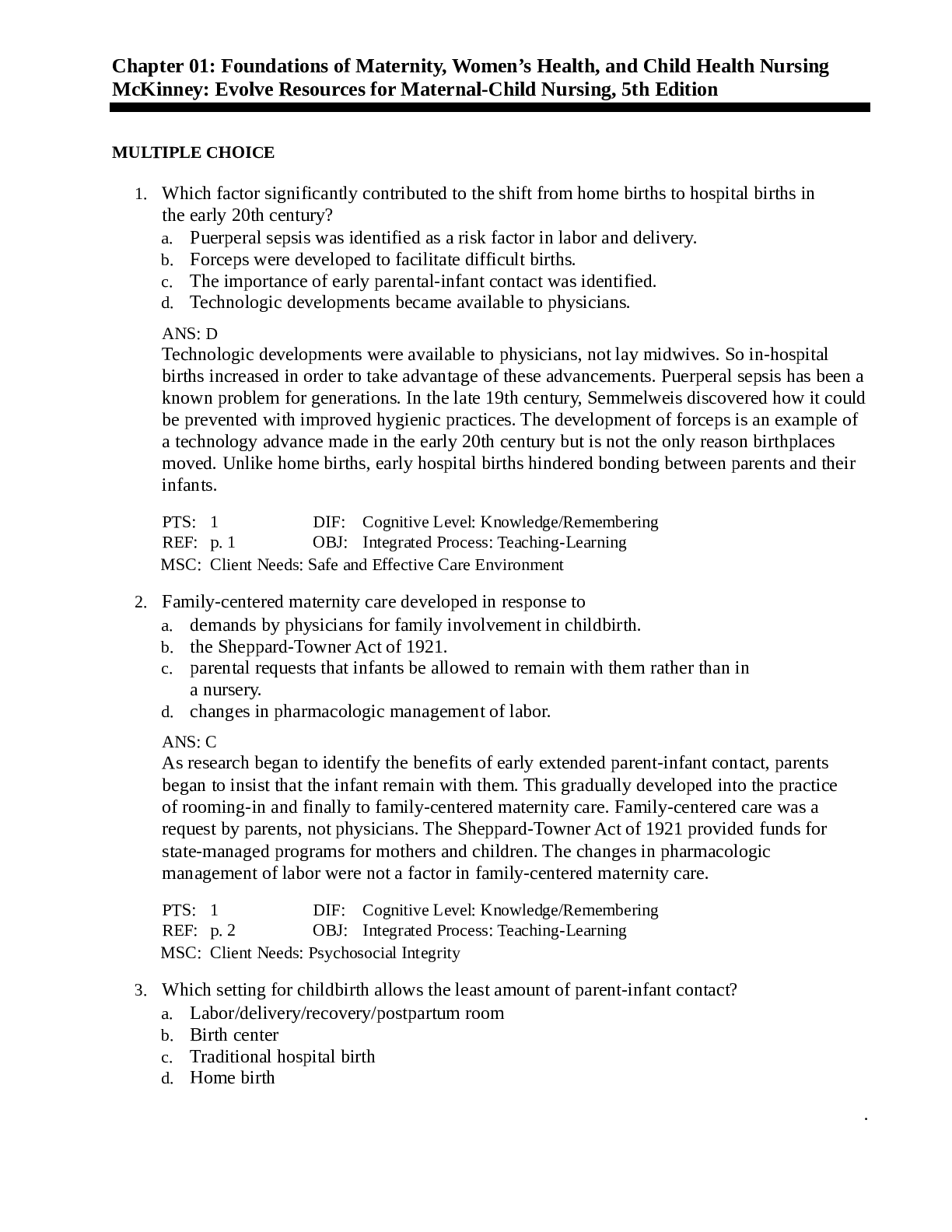
Chapter 01: Foundations of Maternity, Women’s Health, and Chil...

Chapter 01: 21st Century Maternity and Women’s Health NursingL...
.png)
Chapter 01: Perspectives of Pediatric Nursing Hockenberry: Won...

Chapter 01: The Nursing Process and Patient-Centered Care McCu...
McKinney: Evolve Resources for Maternal-Child Nursing, 5th Edi...
Chapter 01 - The Nature of Negotiation University of MemphisMG...
Chapter 01 / The Past Present Future / Score 100% (Study Guide...
Lilley’s Pharmacology Chapter 01 Study Guide / 2025 Update /...
Chapter 01 Full Solutions Manual for Foundations of CS 3rd Edi...