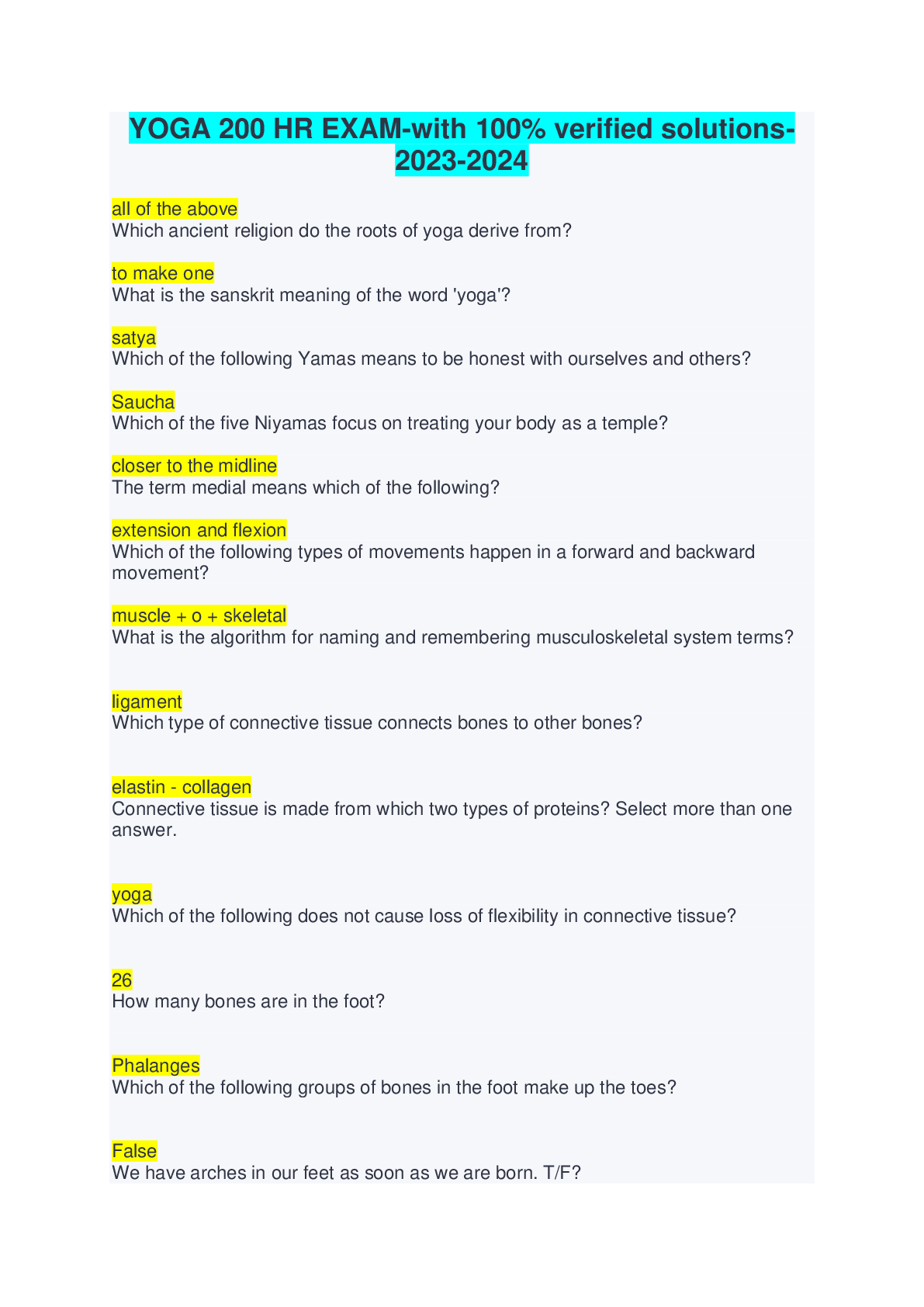
NURS 515-Chapter 11. Genitourinary System-graded 100%
Document Content and Description Below
Chapter 11. Genitourinary System
Multiple Choice
Identify the choice that best completes the statement or answers the question.
When performing a dipstick test on a patient’s urine sample, a positive leuko
...
[Show More]
Last updated: 3 years ago
Preview 1 out of 9 pages
Instant download
Buy this Document to get the Full Access Instantly
Provided by Students Who Aced it
We Verify Document Content to Gurantee Accuracy
Reviews( 0 )
Document information
Connected school, study & course
About the document
Uploaded On
Apr 29, 2022
Number of pages
9
Written in
All

Additional information
This document has been written for:
Uploaded
Apr 29, 2022
Downloads
0
Views
65
Topic Tags
Related Subjects & Courses
Explore similar study resources and related concepts.
Recommended For You
Get more on EXAM »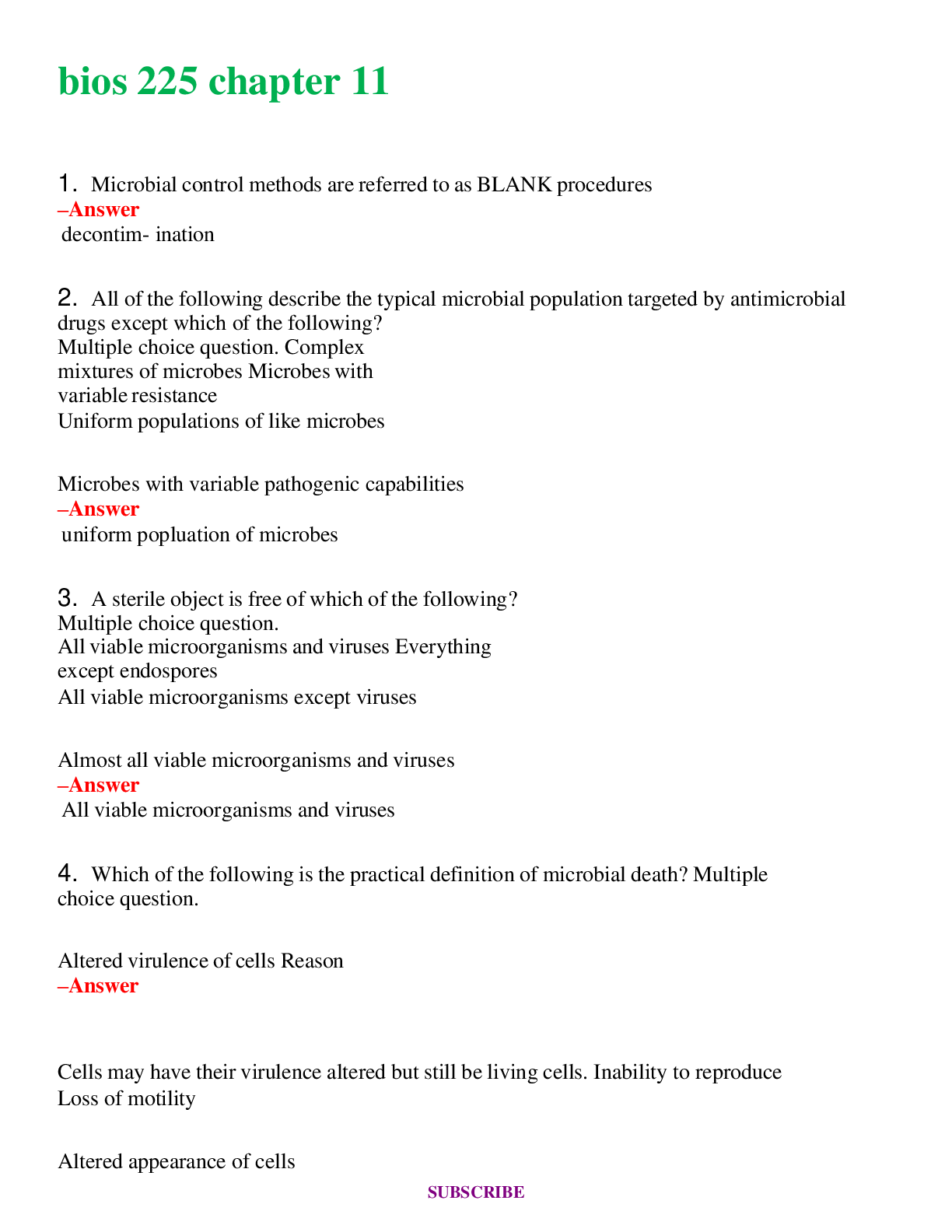
$12.5
16 Pages
BIOS 225 Chapter 11 Questions and Answers (Verified Answers...
$12.5
3 Pages
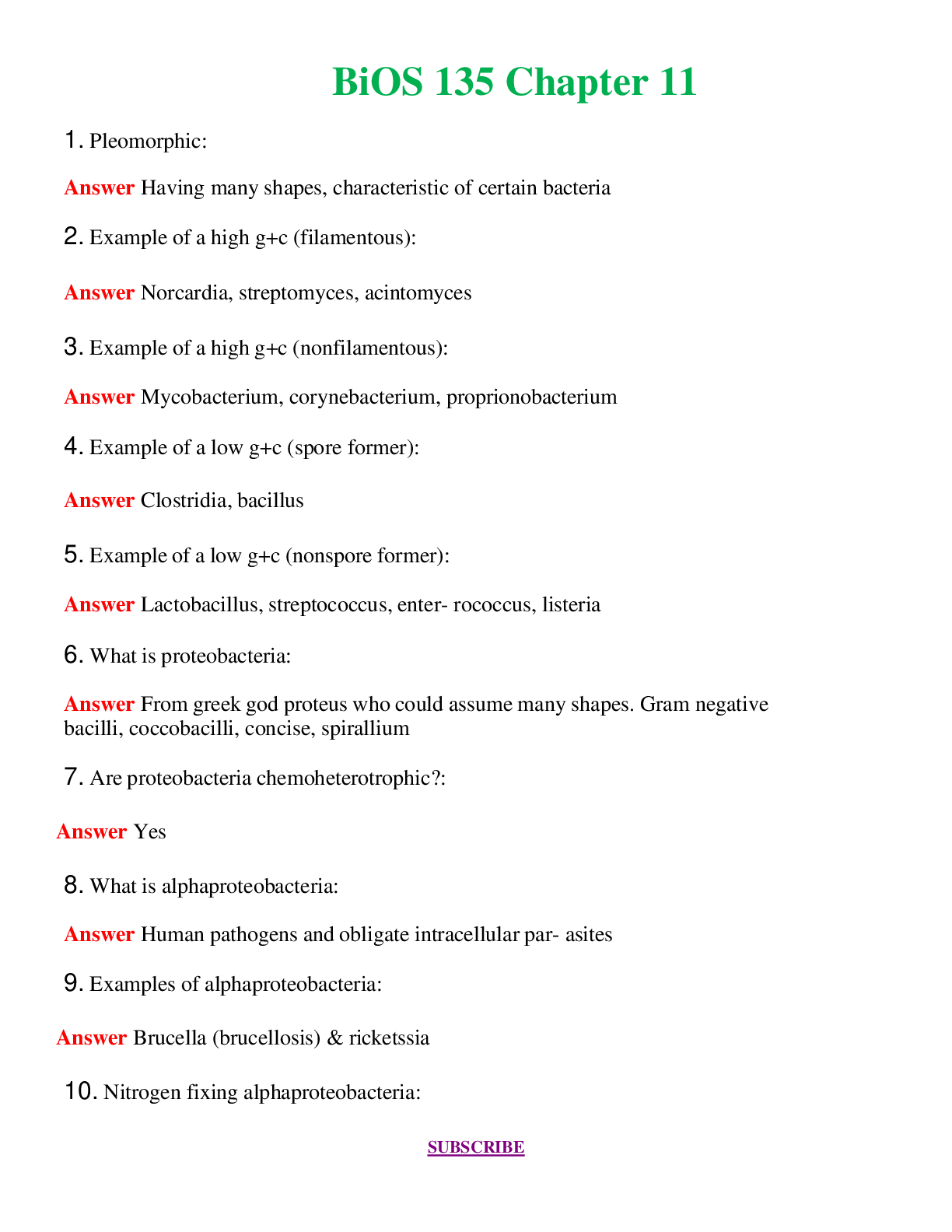
BIOS 135 Chapter 11 Questions and Answers (Verified Answers)

$35
69 Pages
NURSING 101-chapter 1-11 Exam Questions and Answers 100%Correc...
$19
179 Pages
Test Bank for Jonas and Kovners Health Care Delivery in the Un...
$45.5
153 Pages
Test Bank For LPN to RN Transitions 5th Edition By Lora Claywe...
$13.5
124 Pages
Test Bank For Phillips’s Manual of I.V. Therapeutics: Evidence...

$12
64 Pages
NR 601 Question Bank / NR601 Test Bank Chapter 1 - 19, 300 Q &...

$12
4 Pages
NR602:Chapter 11: Urological and Gynecological Disorders,100%...
$25
1014 Pages
Principles of Financial Accounting (chapter 1-18) 12e Jerry We...
$11
46 Pages
Chapter 11 Human Resource Management Finding and Keeping the B...

$6
14 Pages
CHAPTER 11 MEMBRANE STRUCTURE Southern Methodist University -...

$12
60 Pages
Columbia College - FINC 350FINC 350 Chapter 11 - Cost of Capit...

.png)
$8
16 Pages
Nova Southeastern University - ISM 5150Chapter 11-Managing IT...
More related documents below