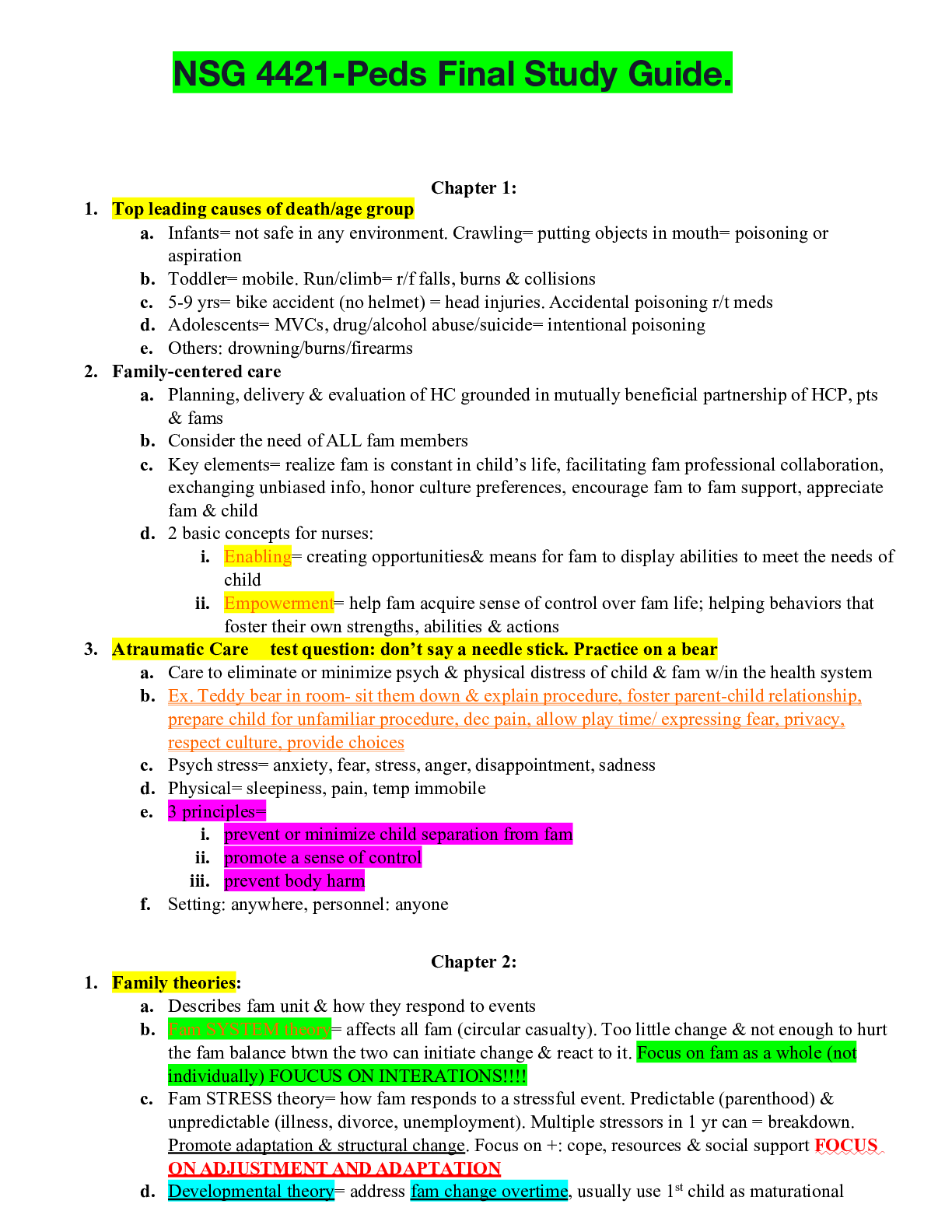
NSG 4421-Peds Final Study Guide.
Document Content and Description Below
Chapter 1:
1. Top leading causes of death/age group
a. Infants= not safe in any environment. Crawling= putting objects in mouth= poisoning or aspiration
b. Toddler= mobile. Run/climb= r/f falls, burns & collisions
c.
...
[Show More]
Last updated: 3 years ago
Preview 1 out of 121 pages
Instant download
Buy this Document to get the Full Access Instantly
Provided by Students Who Aced it
We Verify Document Content to Gurantee Accuracy
Reviews( 0 )
Document information
Connected school, study & course
About the document
Uploaded On
Apr 29, 2022
Number of pages
121
Written in
All

Additional information
This document has been written for:
Uploaded
Apr 29, 2022
Downloads
0
Views
74
Topic Tags
Related Subjects & Courses
Explore similar study resources and related concepts.
Recommended For You
Get more on EXAM »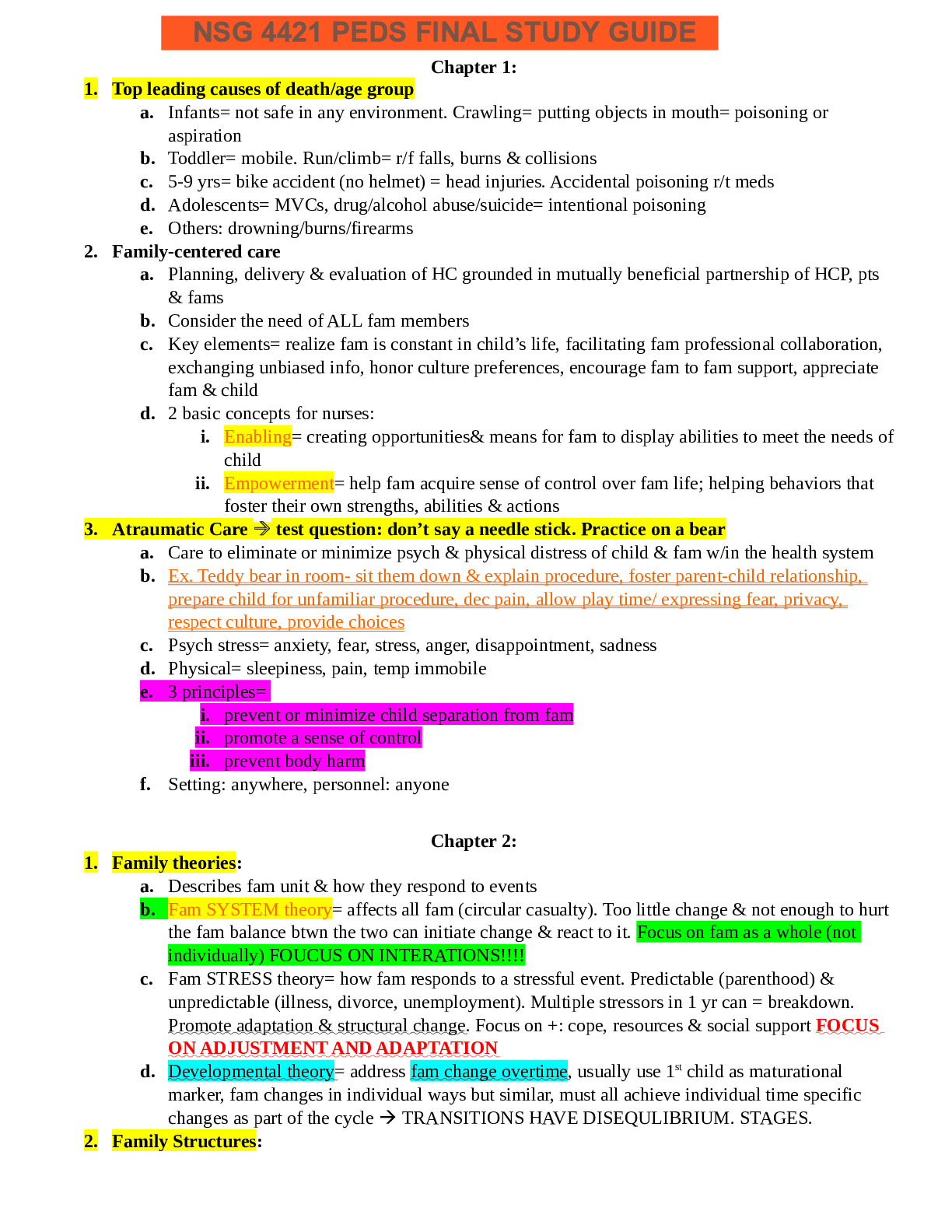
$14.5
106 Pages
NSG 4421 Professional Nursing Clinical / Peds Exam 4 Study Gui...
$11.5
106 Pages
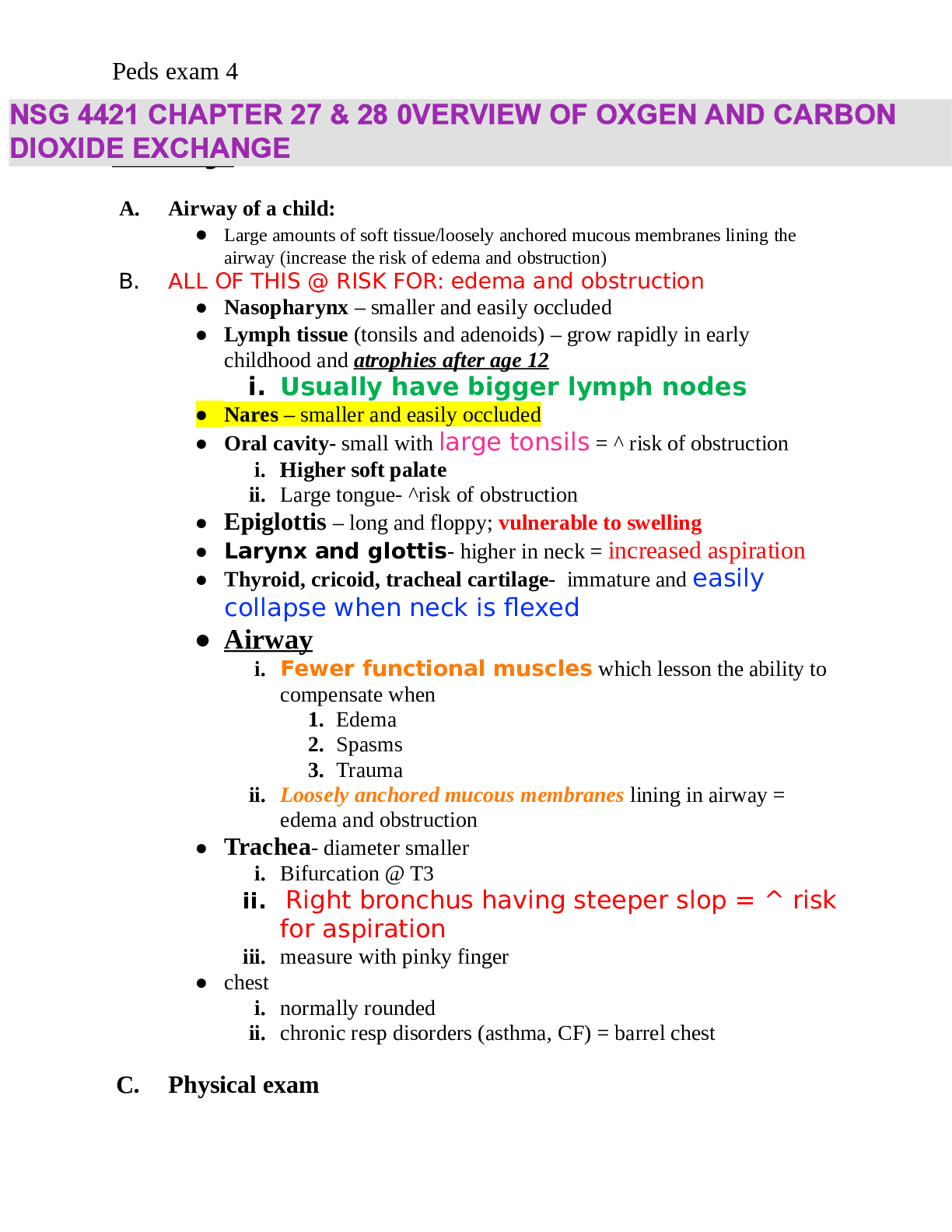
NSG 4421 CHAPTER 27 & 28 0VERVIEW OF OXGEN AND CARBON DIOXIDE...





$22.5
307 Pages
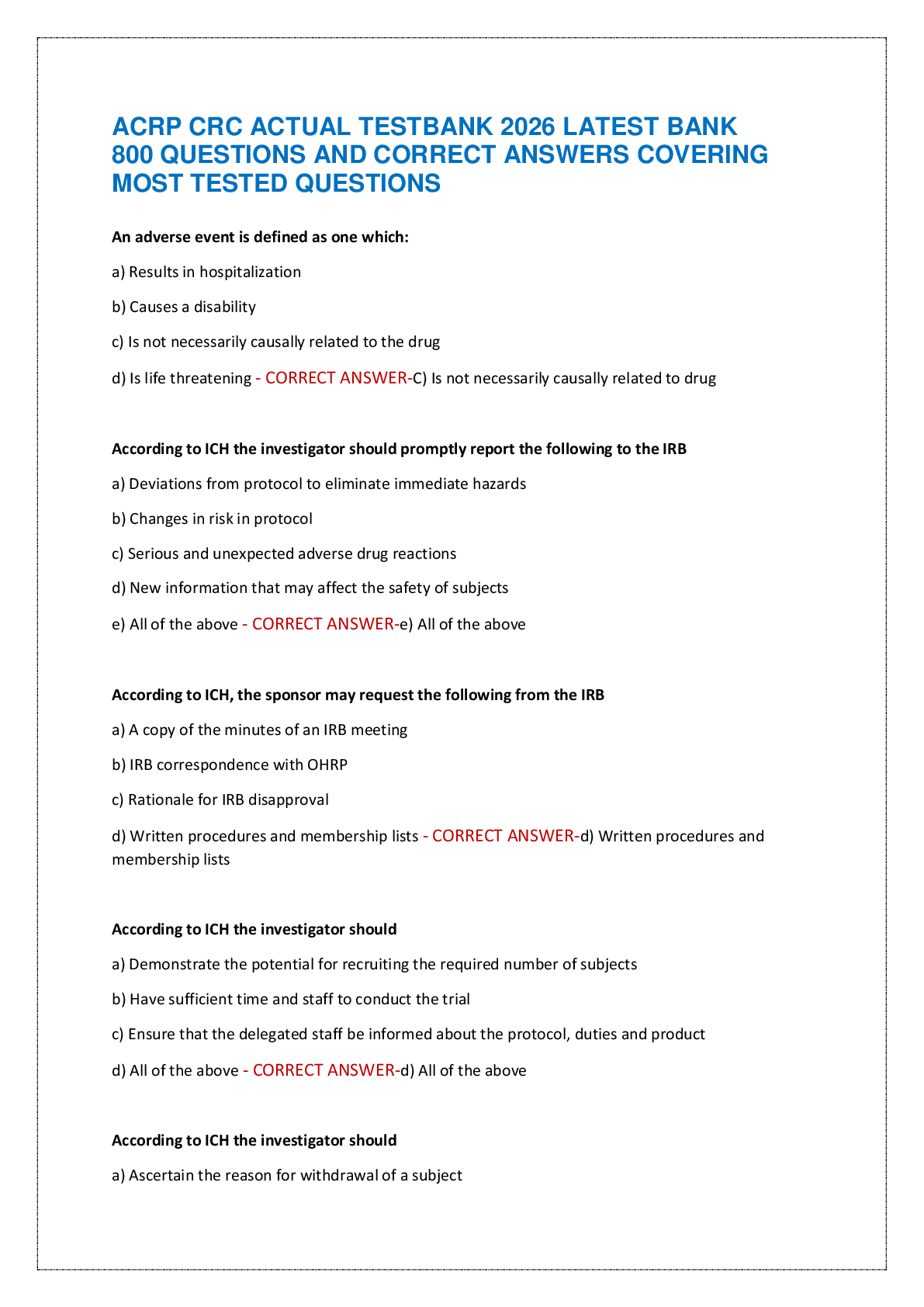
TEST BANK for Davis Advantage for Psychiatric Mental Health Nu...

$17
588 Pages
Test Bank For Fundamentals of Nursing 11th Edition Potter Perr...

$16
496 Pages
TEST BANK for Essentials of Psychiatric Mental Health Nursing:...

More related documents below