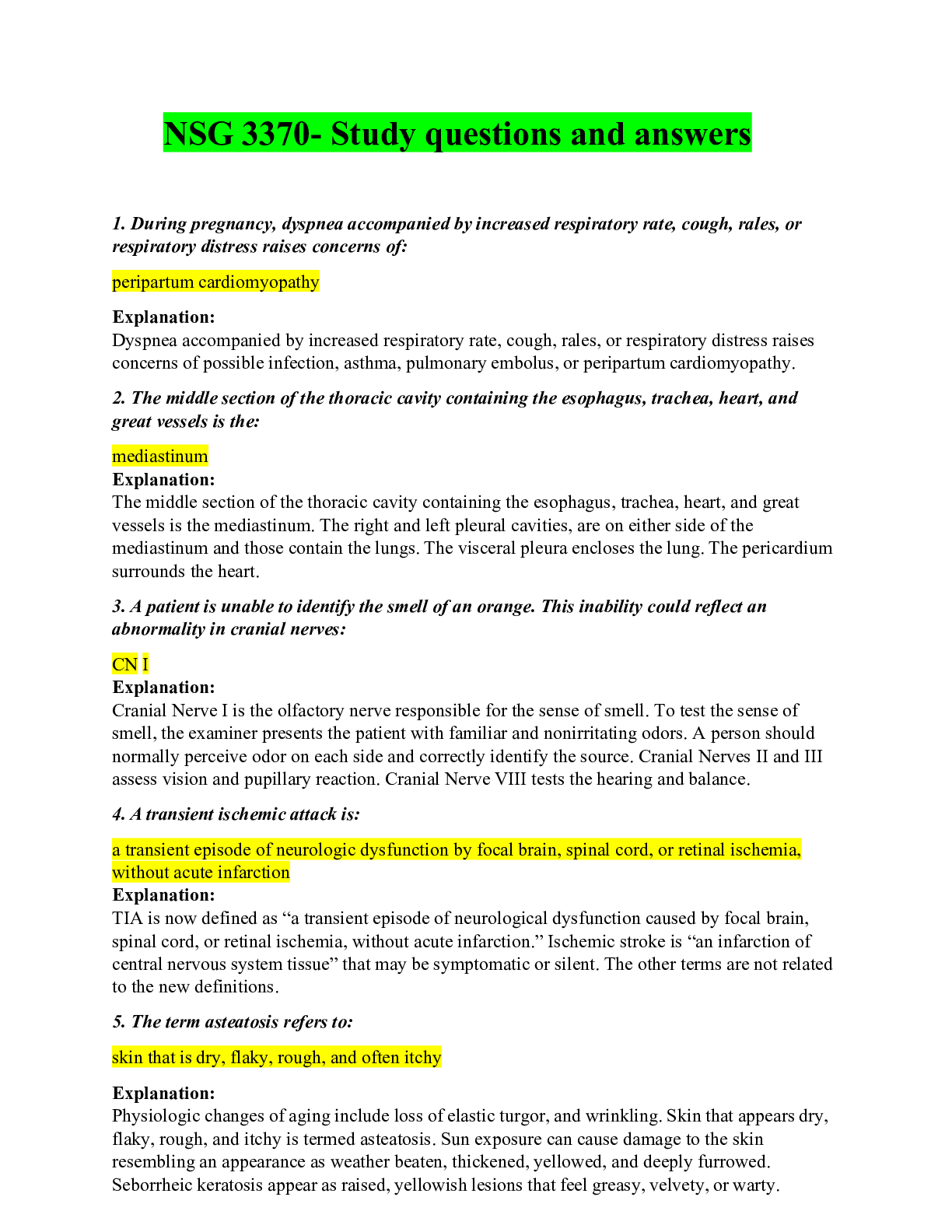
NSG 3370- Study questions and answers
Document Content and Description Below
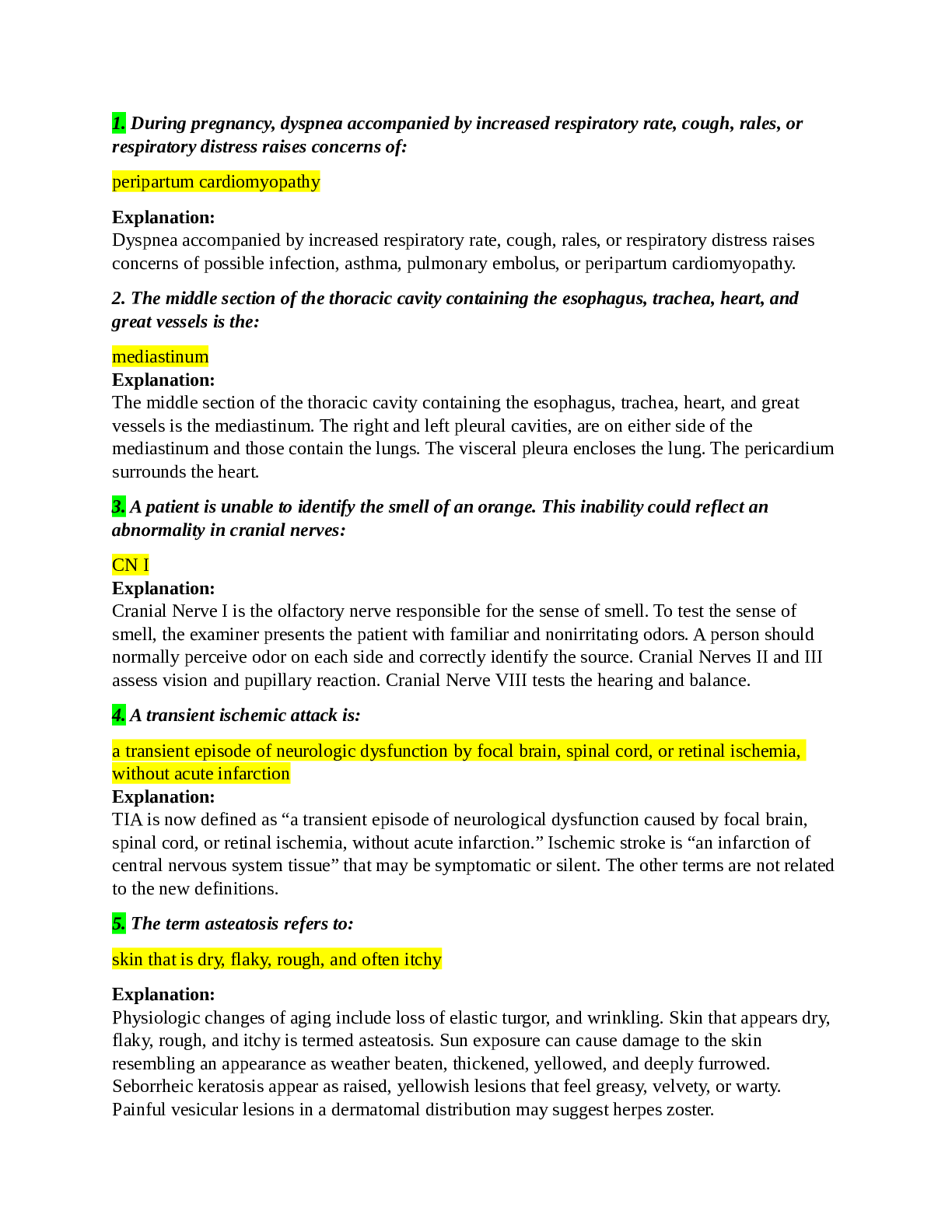
1. During pregnancy, dyspnea accompanied by increased respiratory rate, cough, rales, or respiratory distress raises concerns of:
peripartum cardiomyopathy
Explanation:
Dyspnea accompanied by increased respiratory rat
...
[Show More]
Last updated: 3 years ago
Preview 1 out of 72 pages
Instant download
Buy this Document to get the Full Access Instantly
Provided by Students Who Aced it
We Verify Document Content to Gurantee Accuracy
Reviews( 0 )
Document information
Connected school, study & course
About the document
Uploaded On
Apr 29, 2022
Number of pages
72
Written in
All

Additional information
This document has been written for:
Uploaded
Apr 29, 2022
Downloads
0
Views
119
Topic Tags
Recommended For You
Get more on EXAM »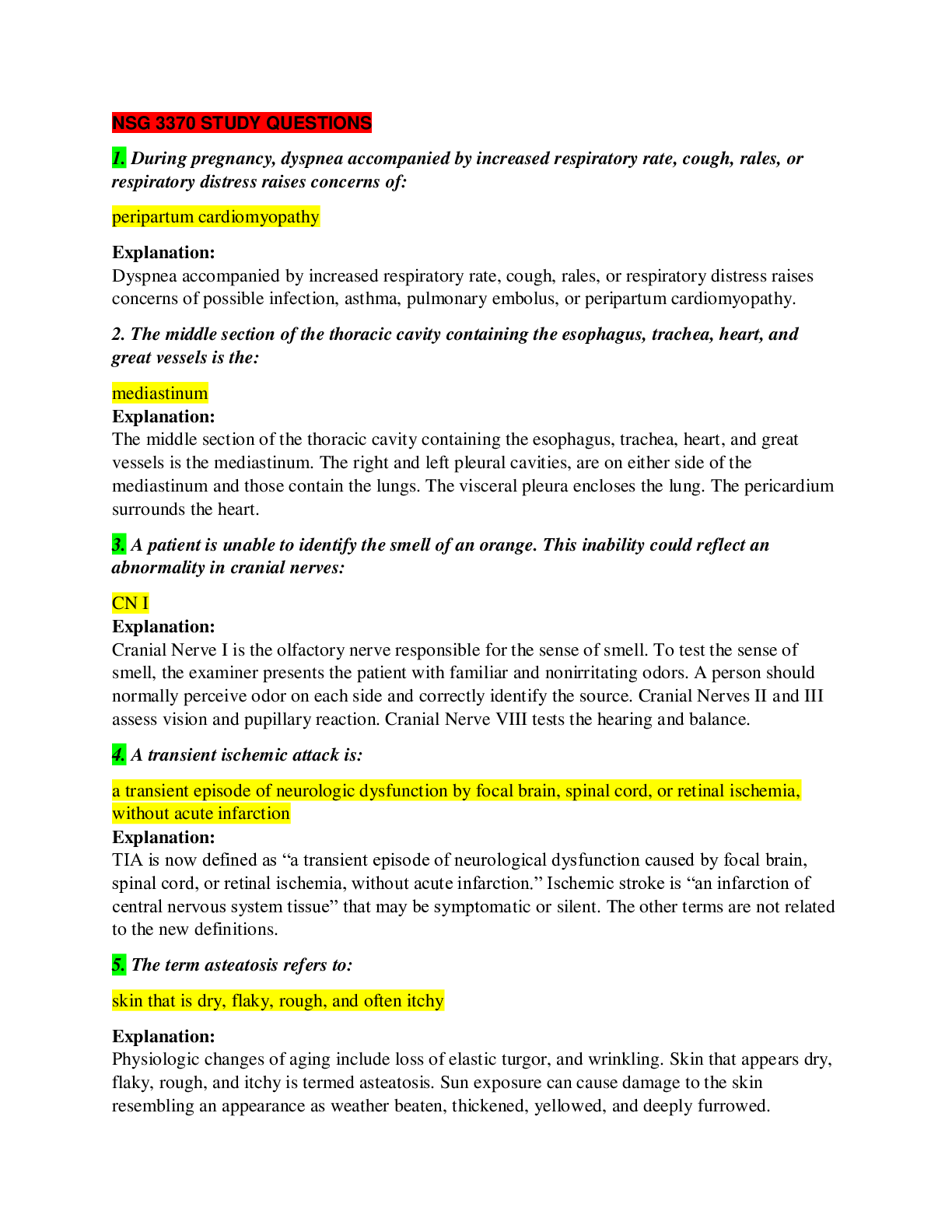
$13
71 Pages
NSG 3370 Study Questions and Answers Mostly Studied and Asked...
.png)
$20
71 Pages
NSG 3370_STUDY QUESTIONS AND ANSWERS DOWNLOAD TO SCORE AN A.

$17
71 Pages
NSG 3370 STUDY QUESTIONS AND ANSWERS (Troy University, Montgom...
$18
71 Pages
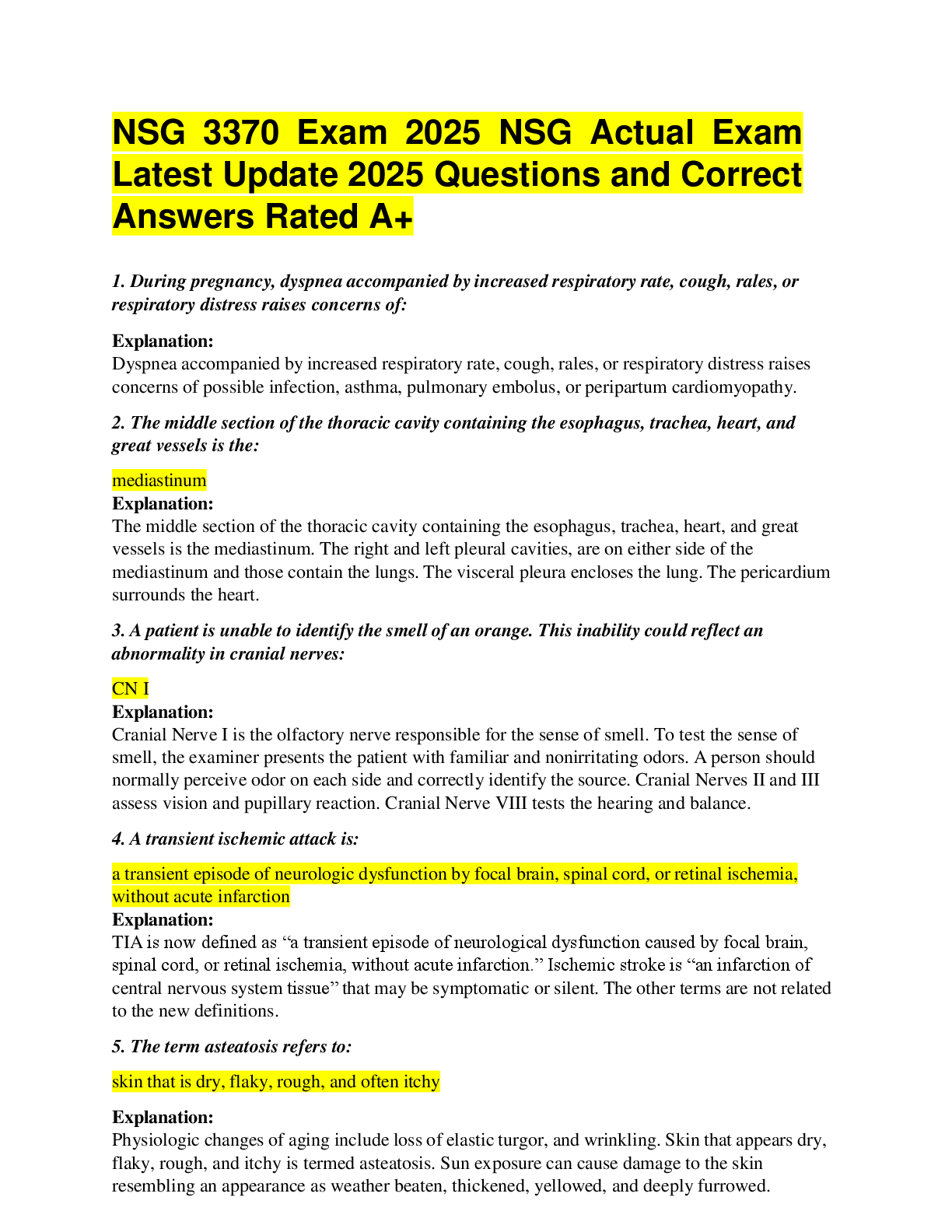
NSG 3370 Exam 2025 NSG Actual Exam Latest Update 2025 Questio...
$10.5
9 Pages
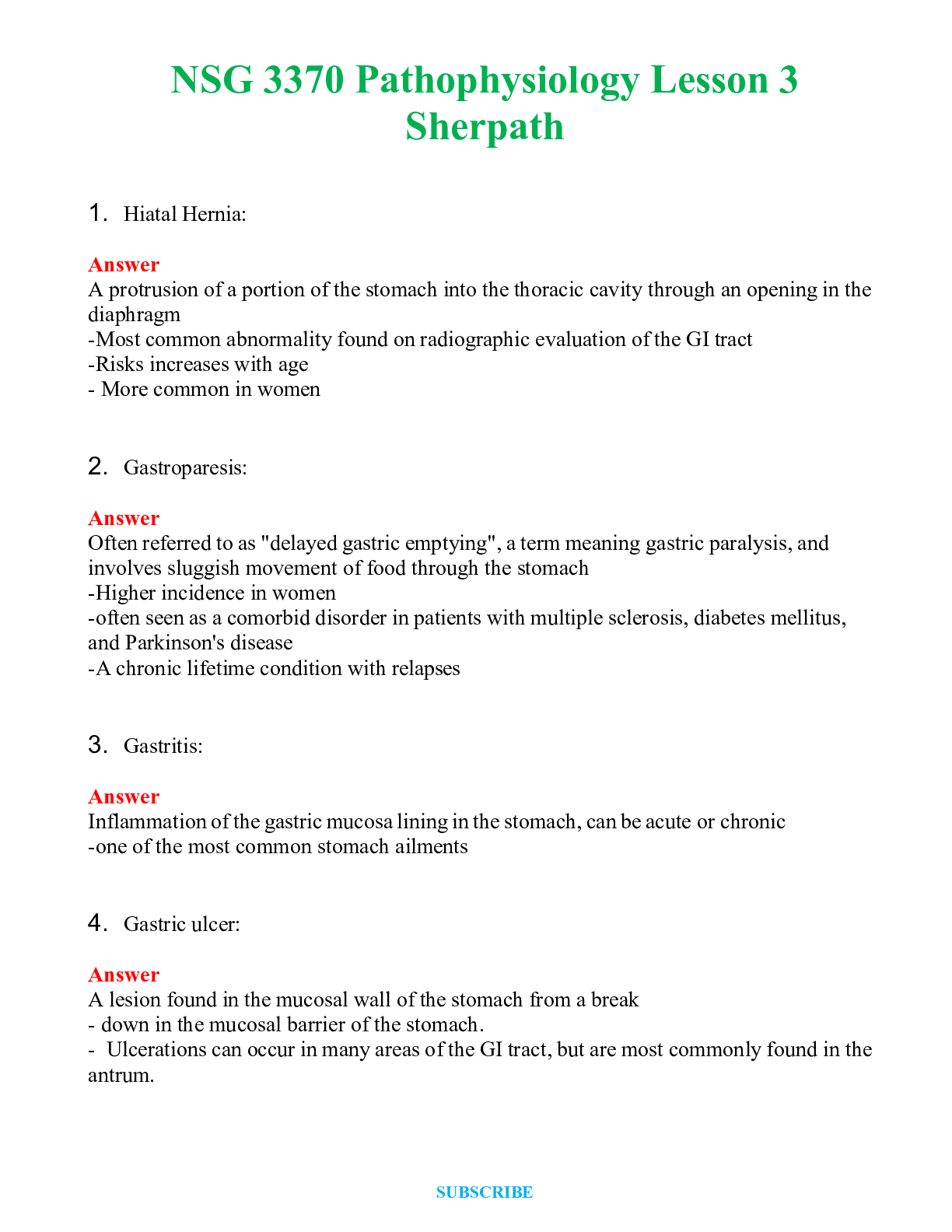
NSG 3370 Pathophysiology Lesson 3 Sherpath Actual Exam Q & A...
$10.5
13 Pages
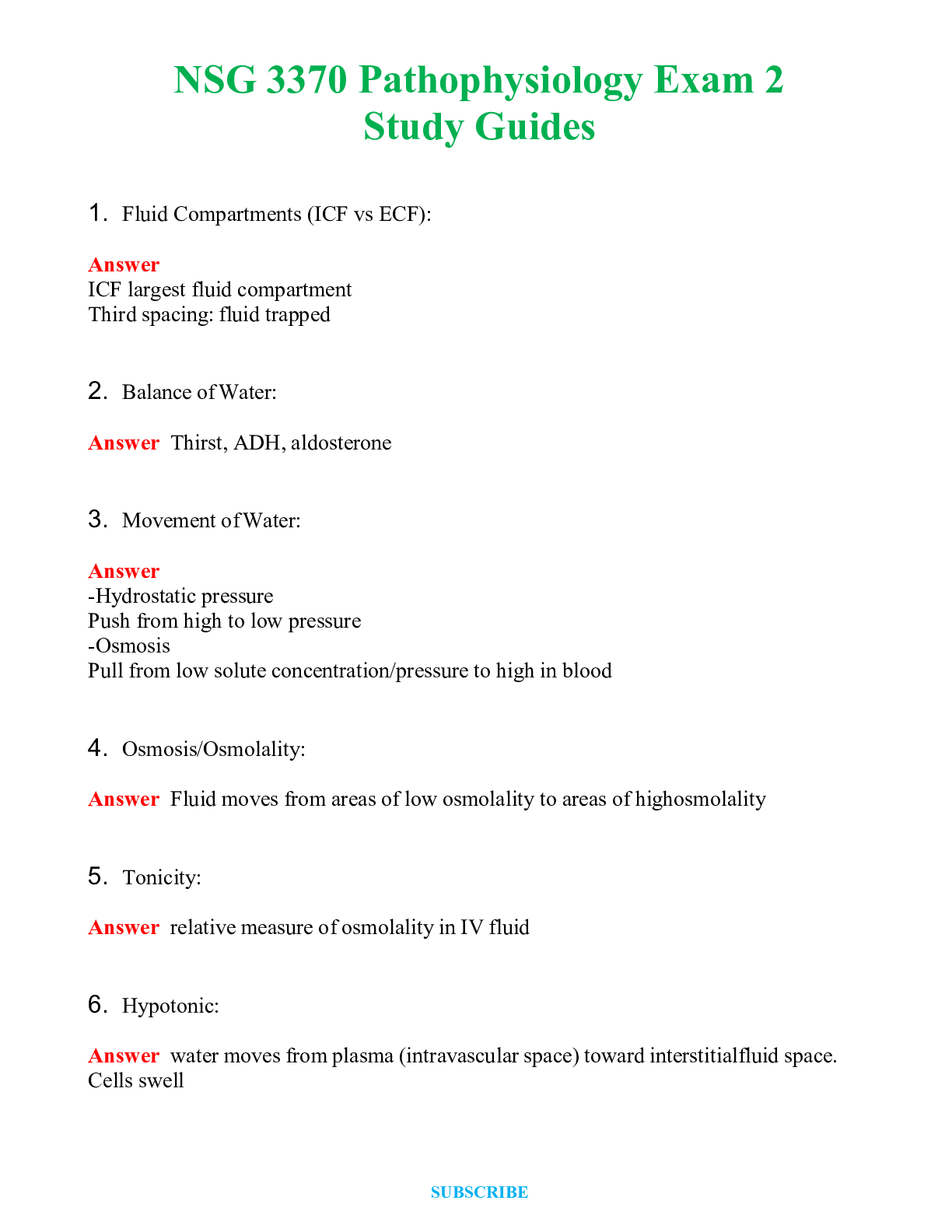
NSG 3370 Pathophysiology Exam 2 Study Guides Actual Exam Q &...
.png)
$12
71 Pages
NSG 3370 STUDY QUESTIONS AND ANSWERS(Graded A Study guide 2021...
$10.5
12 Pages
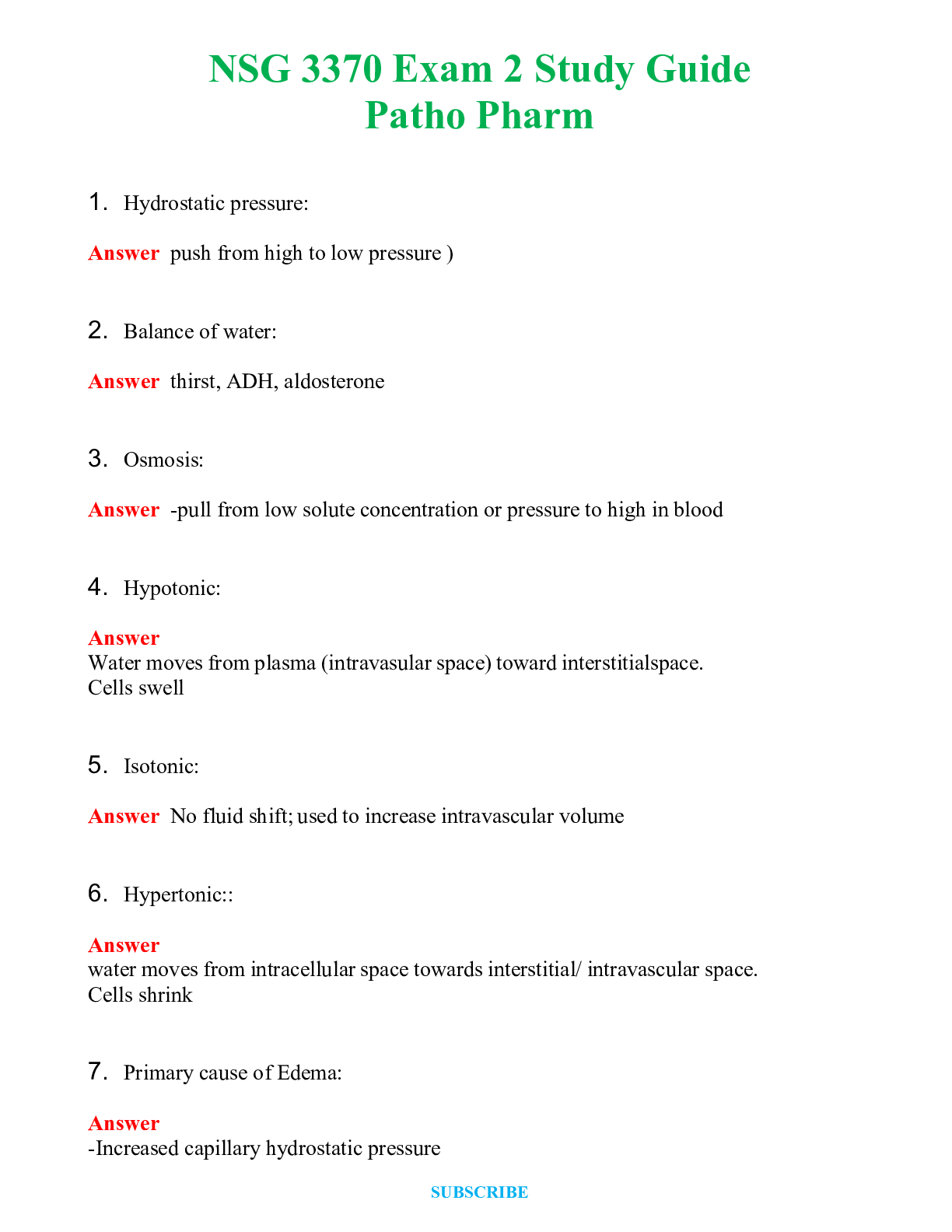
NSG 3370 Exam 2 Study Guide Patho Pharm Actual Exam Q & A (...
.png)
$27
72 Pages
NSG 3370 Study Guide – 317 Question and Answers with Explanati...


$12
71 Pages
NSG 3370 STUDY QUESTIONS AND ANSWERS(Graded A Study guide 2021...
$14
71 Pages
NSG3370 LATEST UPDATED STUDY GUIDE COMPLETE,APPROVED AND GRADE...


More related documents below