PRACTICE EXAM 6 [TEST MODE]
1. Which finding is the best indication that a client with ineffective airway clearance needs suctioning?
A. Oxygen saturation
B. Respiratory rate
C. Breath sounds
D. Arterial blood g
...
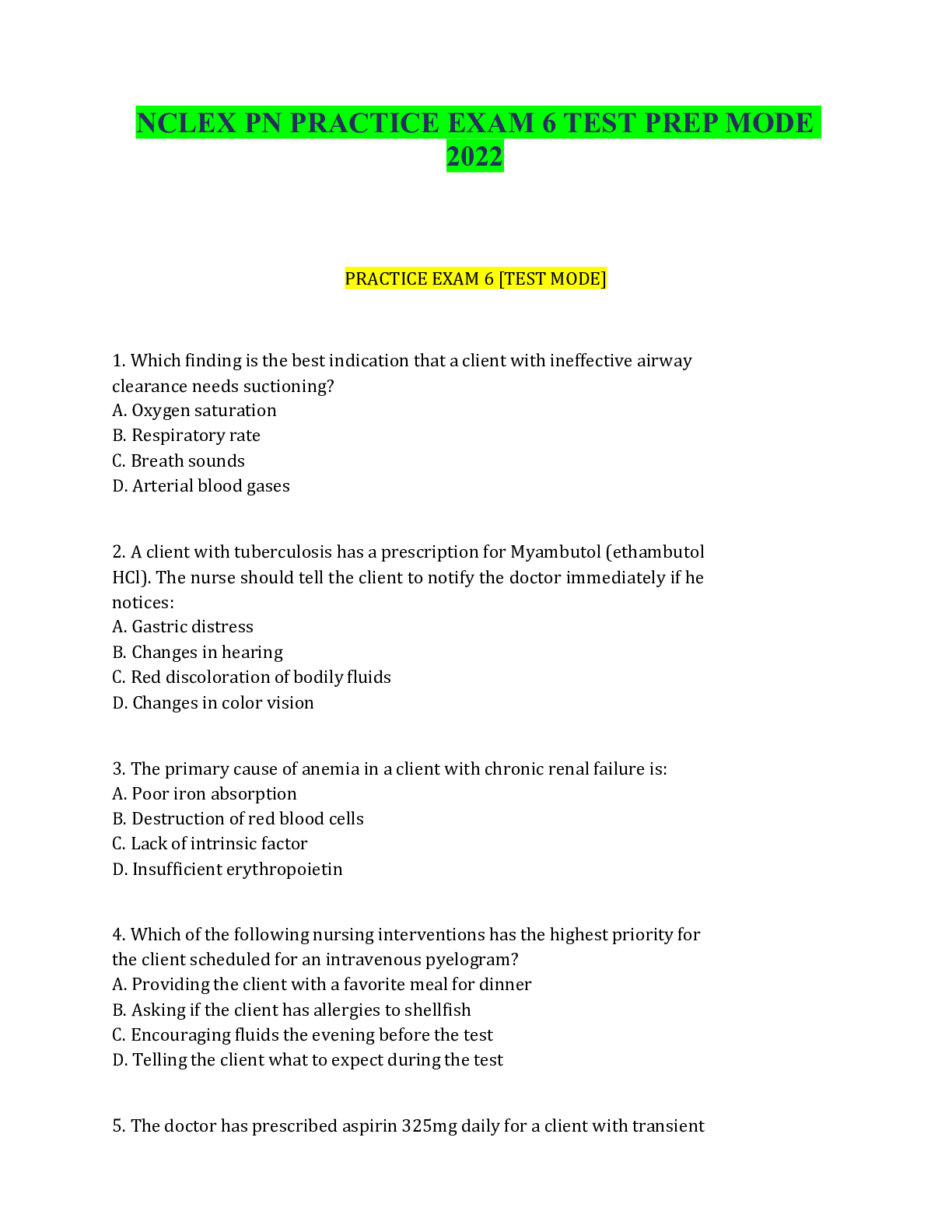
PRACTICE EXAM 6 [TEST MODE]
1. Which finding is the best indication that a client with ineffective airway clearance needs suctioning?
A. Oxygen saturation
B. Respiratory rate
C. Breath sounds
D. Arterial blood gases
2. A client with tuberculosis has a prescription for Myambutol (ethambutol HCl). The nurse should tell the client to notify the doctor immediately if he notices:
A. Gastric distress
B. Changes in hearing
C. Red discoloration of bodily fluids
D. Changes in color vision
3. The primary cause of anemia in a client with chronic renal failure is:
A. Poor iron absorption
B. Destruction of red blood cells
C. Lack of intrinsic factor
D. Insufficient erythropoietin
4. Which of the following nursing interventions has the highest priority for the client scheduled for an intravenous pyelogram?
A. Providing the client with a favorite meal for dinner
B. Asking if the client has allergies to shellfish
C. Encouraging fluids the evening before the test
D. Telling the client what to expect during the test
5. The doctor has prescribed aspirin 325mg daily for a client with transient
ischemic attacks. The nurse knows that aspirin was prescribed to:
A. Prevent headaches
B. Boost coagulation
C. Prevent cerebral anoxia
D. Keep platelets from clumping together
6. A client with tuberculosis who has been receiving combined therapy with INH and Rifampin asks the nurse how long he will have to take medication. The nurse should tell the client that:
A. Medication is rarely needed after 2 weeks.
B. He will need to take medication the rest of his life.
C. The course of combined therapy is usually 6 months.
D. He will be re-evaluated in 1 month to see if further medication is needed.
7. Which development milestone puts the 4-month-old infant at greatest risk for injury?
A. Switching objects from one hand to another
B. Crawling
C. Standing
D. Rolling over
8. A client taking Dilantin (phenytoin) for tonic-clonic seizures is
preparing for discharge. Which information should be included in the client’s discharge care plan?
A. The medication can cause dental staining.
B. The client will need to avoid a high-carbohydrate diet.
C. The client will need a regularly scheduled CBC.
D. The medication can cause problems with drowsiness.
9. Assessment of a newborn male reveals that the infant has hypospadias. The nurse knows that:
A. The infant should not be circumcised.
B. Surgical correction will be done by 6 months of age.
C. Surgical correction is delayed until 6 years of age.
D. The infant should be circumcised to facilitate voiding.
10. The nurse is providing dietary teaching for a client with elevated
cholesterol levels. Which cooking oil is not suggested for the client on a lowcholesterol diet?
A. Safflower oil
B. Sunflower oil
C. Coconut oil
D. Canola oil
11. The nurse is caring for a client with stage III Alzheimer’s disease. A characteristic of this stage is:
A. Memory loss
B. Failing to recognize familiar objects
C. Wandering at night
D. Failing to communicate
12. The doctor has prescribed Cortone (cortisone) for a client with systemic lupus erythematosis. Which instruction should be given to the client?
A. Take the medication 30 minutes before eating.
B. Report changes in appetite and weight.
C. Wear sunglasses to prevent cataracts.
D. Schedule a time to take the influenza vaccine.
13. The nurse is caring for a client with an above-the-knee amputation (AKA). To prevent contractures, the nurse should:
A. Place the client in a prone position 15–30 minutes twice a day
B. Keep the foot of the bed elevated on shock blocks
C. Place trochanter rolls on either side of the affected leg
D. Keep the client’s leg elevated on two pillows
14. The mother of a 6-month-old asks when her child will have all his baby teeth. The nurse knows that most children have all their primary teeth by age:
CONTINUED.........
[Show More]