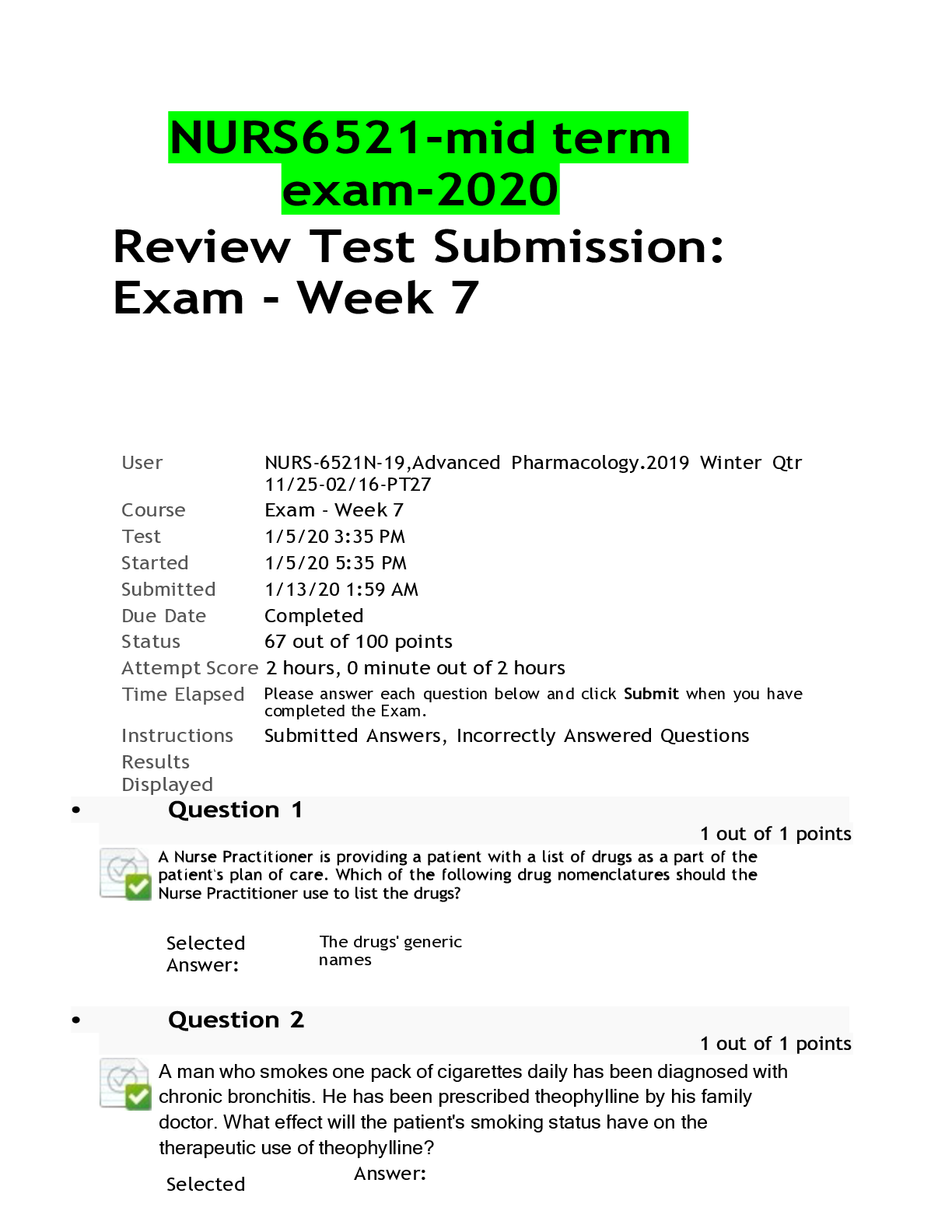
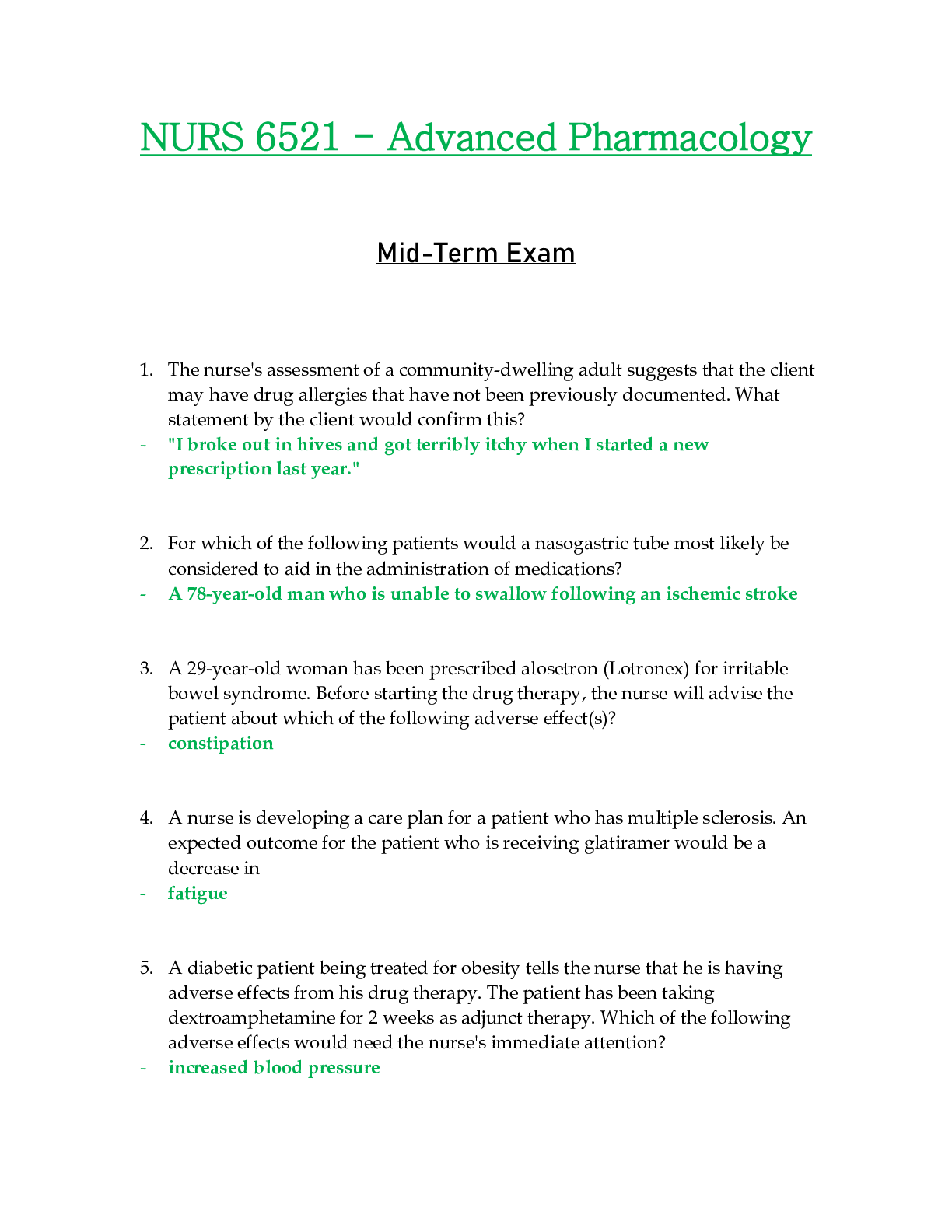
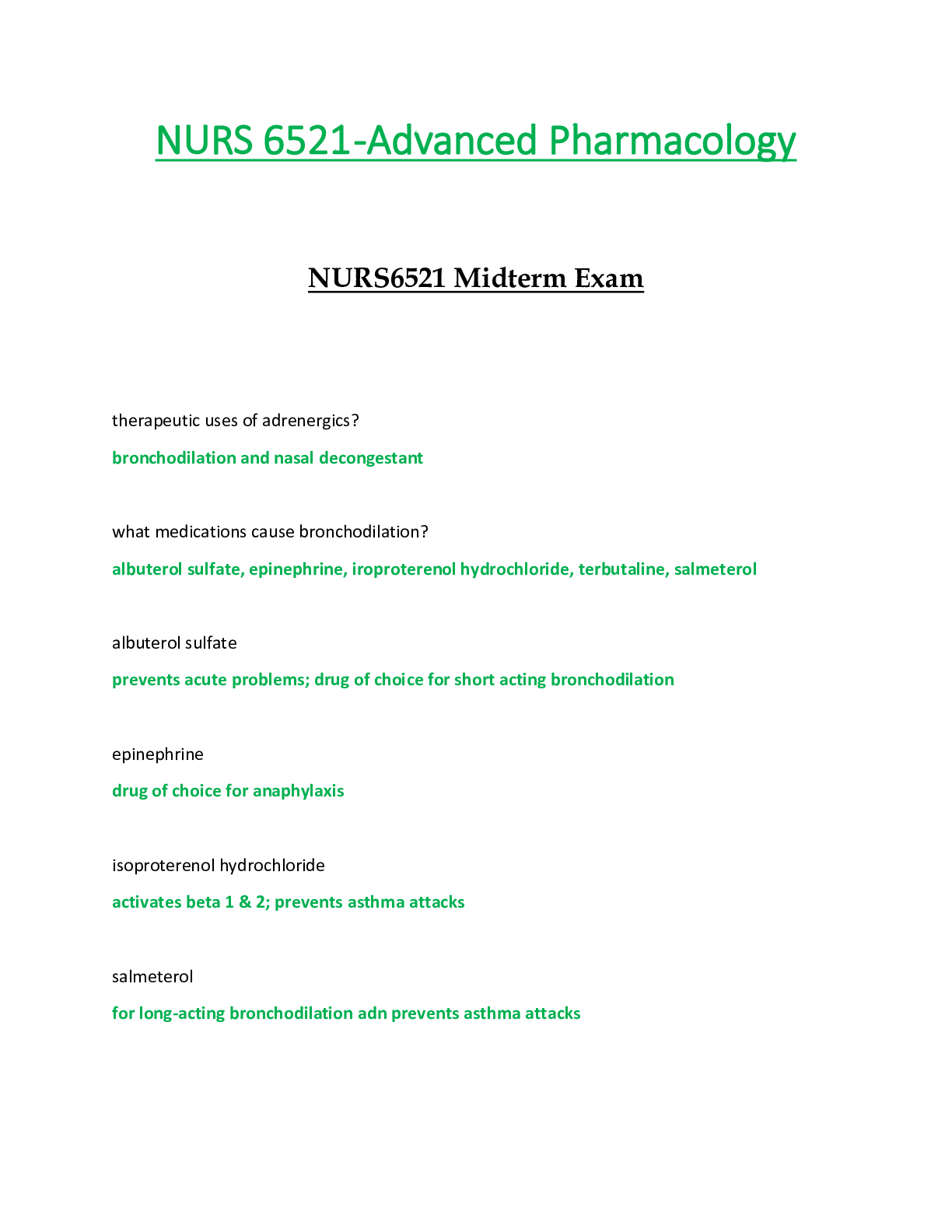
NURS6521-mid term exam-2020
Document Content and Description Below
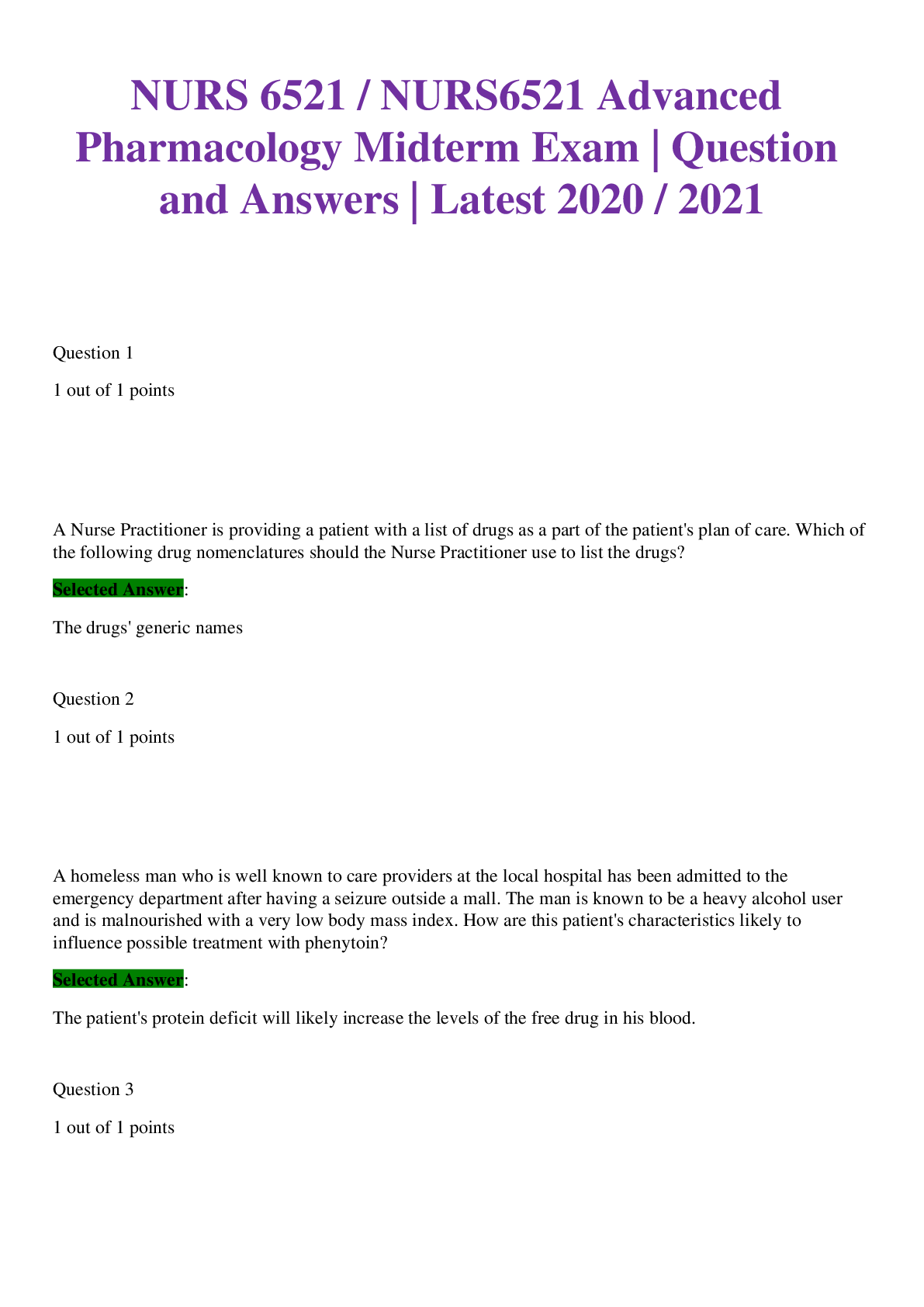
A Nurse Practitioner is providing a patient with a list of drugs as a part of the patient's plan of care. Which of the following drug nomenclatures should the Nurse Practitioner use to list the drugs?
Selected Answe
...
[Show More]
Last updated: 3 years ago
Preview 1 out of 24 pages
Instant download
Buy this Document to get the Full Access Instantly
Provided by Students Who Aced it
We Verify Document Content to Gurantee Accuracy
Reviews( 0 )
Document information
Connected school, study & course
About the document
Uploaded On
May 03, 2022
Number of pages
24
Written in
All

Additional information
This document has been written for:
Uploaded
May 03, 2022
Downloads
0
Views
84
Topic Tags
Recommended For You
Get more on EXAM »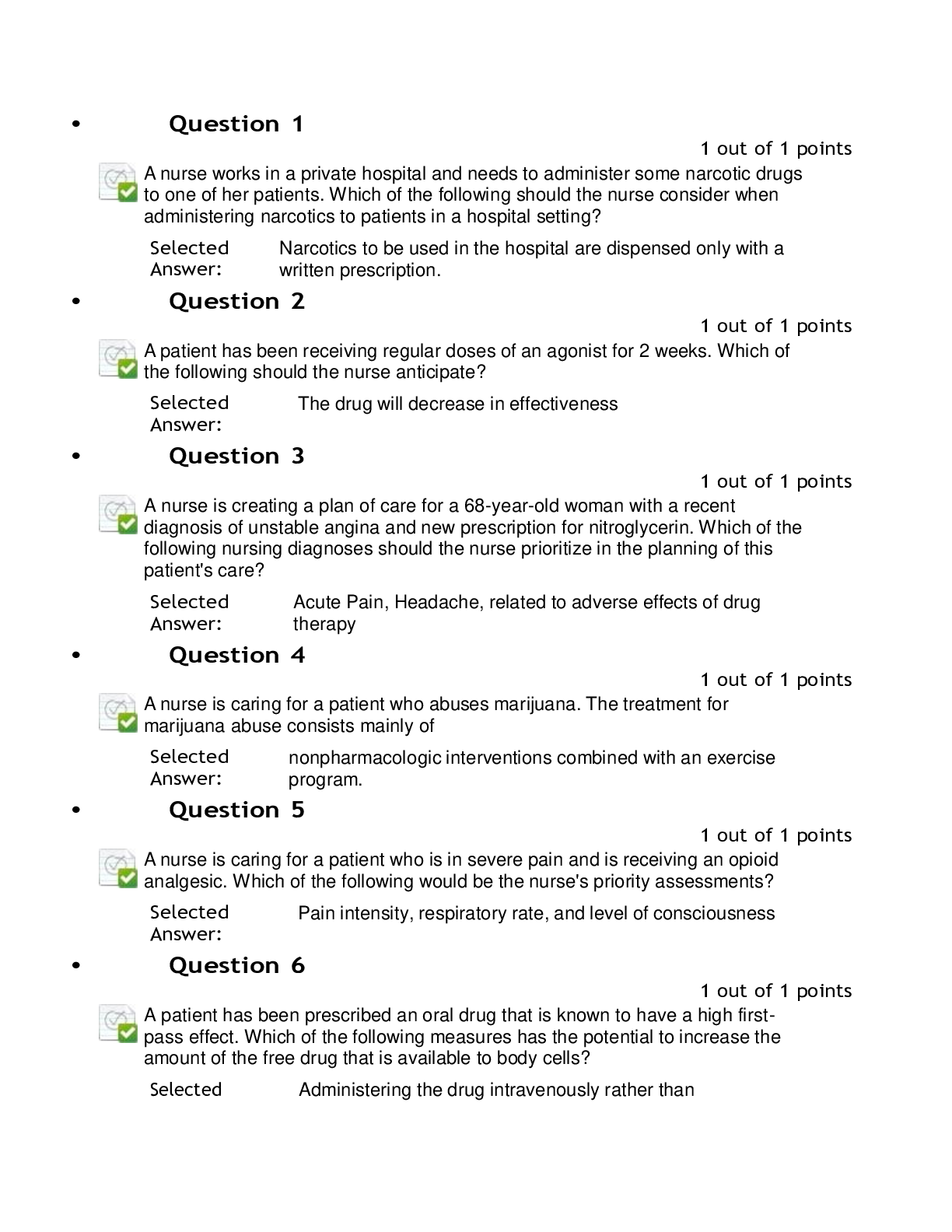
$11
19 Pages
NURS6521 / NURS 6521 Mid-term Exam (Latest): Advanced Pharmaco...
$9.5
11 Pages
NURS6521 / NURS 6521 Midterm Exam (Latest): Advanced Pharmacol...

$14
17 Pages
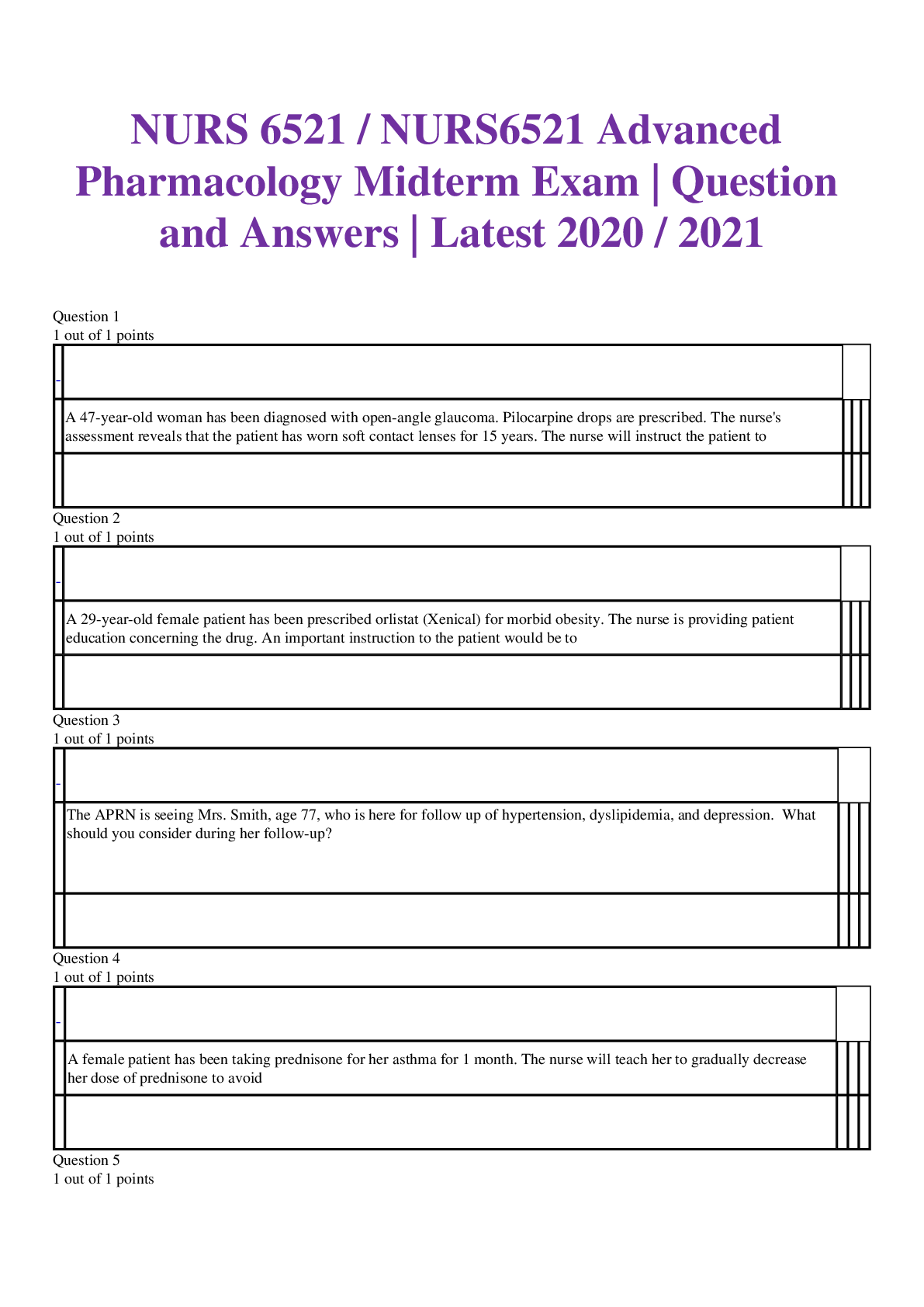
NURS 6521 / NURS6521 Advanced Pharmacology Mid-term Exam Revie...
$10
18 Pages
NURS 6521 / NURS6521 Advanced Pharmacology Midterm Exam | Ques...
$11
32 Pages
NURS 6521 / NURS6521 Advanced Pharmacology Midterm Exam | Ques...

$11
19 Pages
NURS 6521 / NURS6521 Advanced Pharmacology Midterm Exam | Ques...


$14
27 Pages
NURS 6521 Week 7 Midterm Exam (100% Correct August 2022/2023)

$26
100 Pages
NURS 6521 Final Exam Version 1, Version 2, Version 3, Version...

$30.5
203 Pages
NURS 6521 Final Exam Version 1, Version 2, Version 3, Version...

$9
19 Pages
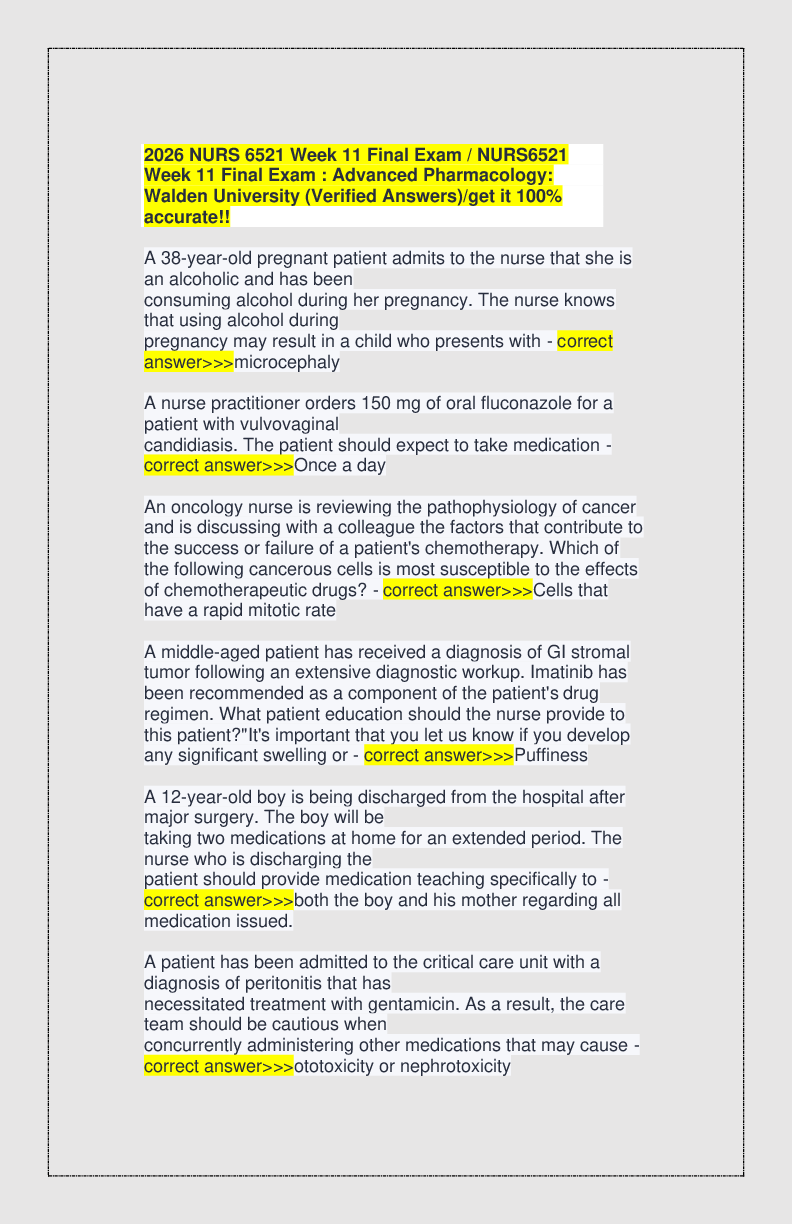
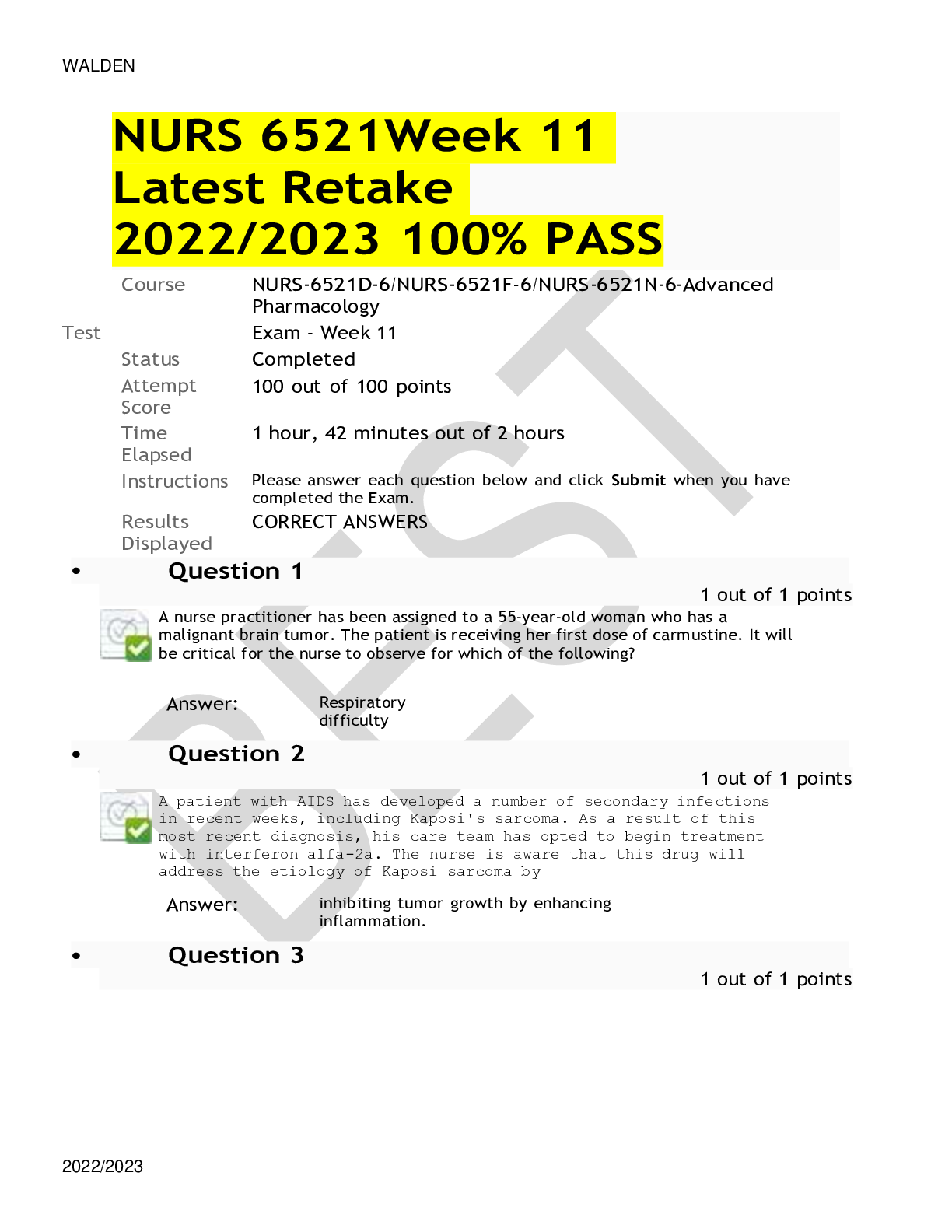
NURS 6521 Week 11 Final Exam / NURS6521 Week 11 Final Exam : A...

$15
17 Pages
NURS6521 / NURS 6521 Final Exam (Latest Update): Advanced Phar...

$9.5
17 Pages
NURS6521 / NURS 6521 Final Exam (Latest): Advanced Pharmacolog...
More related documents below