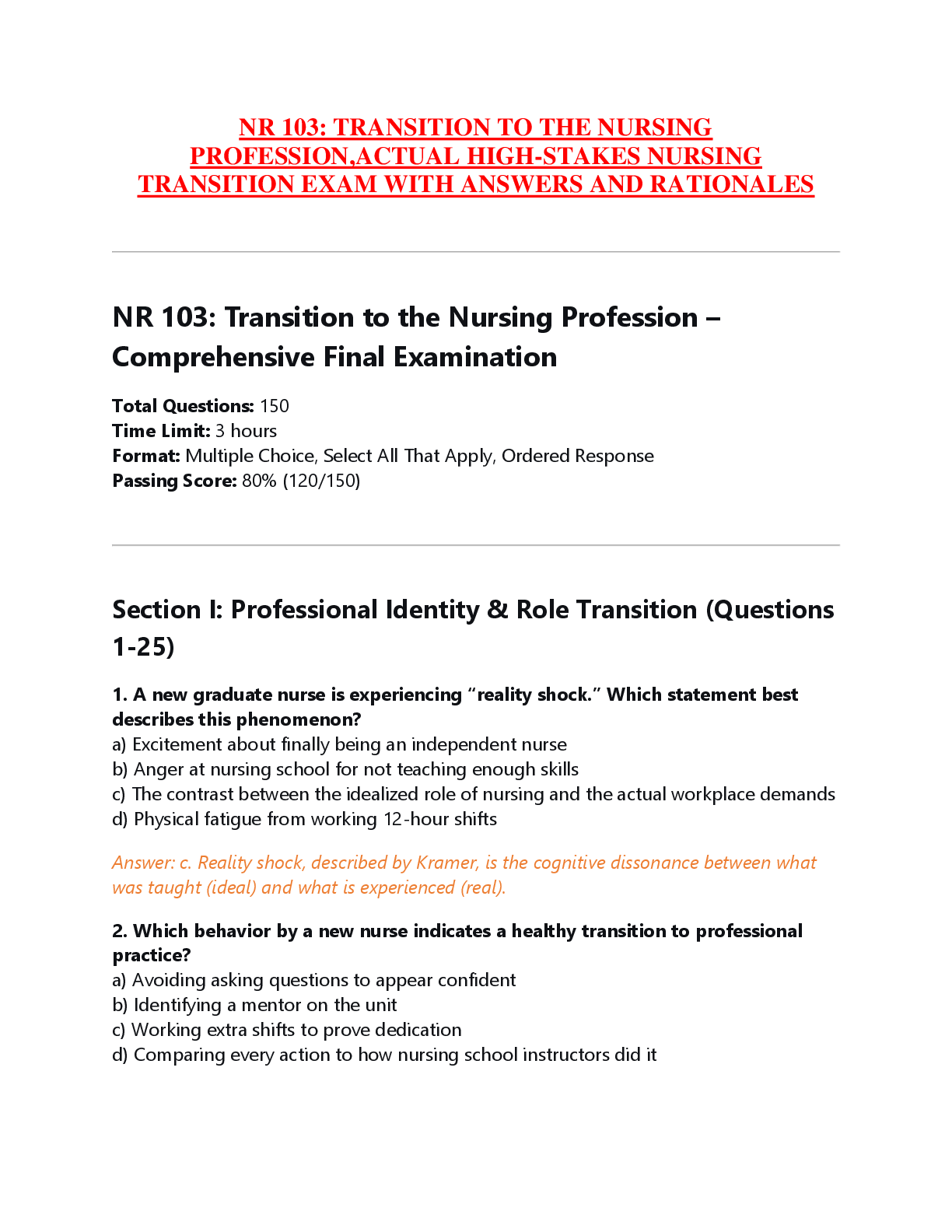
1. While caring for a child with bacterial pneumonia, the nurse examines the child’s respiratory system. What is an expected assessment finding for bacterial pneumonia?
a. Respiratory rate of 20 heard on auscultation
b
...
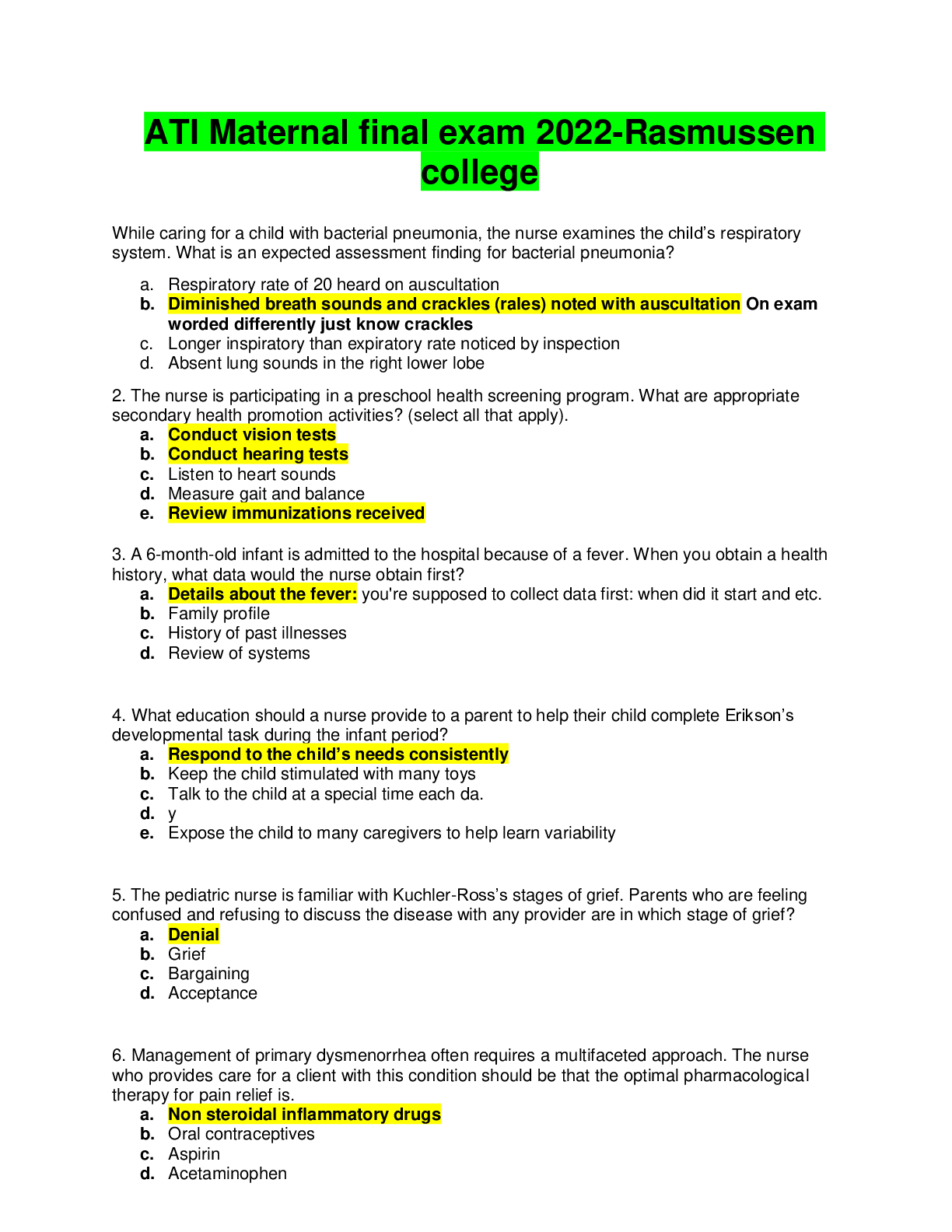
1. While caring for a child with bacterial pneumonia, the nurse examines the child’s respiratory system. What is an expected assessment finding for bacterial pneumonia?
a. Respiratory rate of 20 heard on auscultation
b. Diminished breath sounds and crackles (rales) noted with auscultation On exam worded differently just know crackles
c. Longer inspiratory than expiratory rate noticed by inspection
d. Absent lung sounds in the right lower lobe
2. The nurse is participating in a preschool health screening program. What are appropriate secondary health promotion activities? (select all that apply).
a. Conduct vision tests
b. Conduct hearing tests
c. Listen to heart sounds
d. Measure gait and balance
e. Review immunizations received
3. A 6-month-old infant is admitted to the hospital because of a fever. When you obtain a health history, what data would the nurse obtain first?
a. Details about the fever: you're supposed to collect data first: when did it start and etc.
b. Family profile
c. History of past illnesses
d. Review of systems
4. What education should a nurse provide to a parent to help their child complete Erikson’s developmental task during the infant period?
a. Respond to the child’s needs consistently
b. Keep the child stimulated with many toys
c. Talk to the child at a special time each da.
d. y
e. Expose the child to many caregivers to help learn variability
5. The pediatric nurse is familiar with Kuchler-Ross’s stages of grief. Parents who are feeling confused and refusing to discuss the disease with any provider are in which stage of grief?
a. Denial
b. Grief
c. Bargaining
d. Acceptance
6. Management of primary dysmenorrhea often requires a multifaceted approach. The nurse who provides care for a client with this condition should be that the optimal pharmacological therapy for pain relief is.
a. Non steroidal inflammatory drugs
b. Oral contraceptives
c. Aspirin
d. Acetaminophen
7. A nurse is reviewing discharge instructions with the family of a child diagnosed with a urinary tract infection. Which instruction should the nurse include with discharge teaching regarding medications?
a. Complete the entire course of antibiotics ordered by the provider.
b. The child may choose to take the antibiotics or stop once he or she feels better.
c. As long as the fever does not return, the antibiotics have worked, and the parent may stop giving them to the child.
d. Save the remainder, if there is any left, in case the child has another infection and could use the rest of the prescription.
8. Which technique should the nurse use to administer eardrops to a 4-year-old child?
a. Press the pinna of the ear forward
b. Pull the pinna of the ear downward
c. Pull the pinna of the ear up and back
d. Lift the pinna of the ear down and back
9. A nurse performs an admission assessment on a child and suspects physical abuse. Based on the suspicion, the primary legal nursing responsibility is to do which of the following?
a. Refer the family to the appropriate support groups
b. Assist the family in identifying resources and support systems
c. Report the case in which the abuse is suspected to the local authorities and your supervisor or charge nurse
d. Coordinate information with the primary physician so he may report the findings
10. Which statement by the nurse is most likely to gain the cooperation of a young child?
a. Do you want to take your medicine now
b. It is time for you to drink your medicine now
c. If you take this medicine, I can get you a popsicle *
d. If you don’t drink this medicine, you will need to get a shot
11. A 6-year-old has a diagnosis of streptococcal pharyngitis. When planning care, the nurse evaluates the client’s symptomes for which of the following dangerous outcomes?
a. Swelled lymph nodes which obstruct the airway
b. Infection, which may cause tooth abscess
c. Development of rheumatic fever
d. Nephrosis of the kidney
12. Which fluid should the nurse offer to help keep a post tonsillectomy child orally hydrated?
a. Milk
b. Juice
c. Ice chips
d. Ginger ale
13. The nurse is concerned that a school-age child is developing pneumonia. What did the nurse most likely assess in this client? (Select all that apply)
CONTINUED...........................
[Show More]