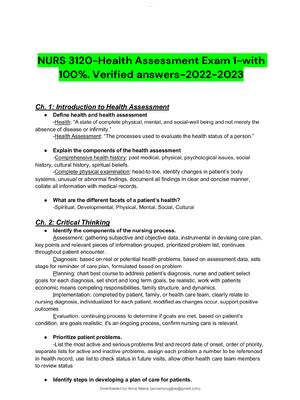
NURS 5366-PRINC OF RESEARCH IN NURSING- Module 2 Quiz-2022
Document Content and Description Below
• Question 1
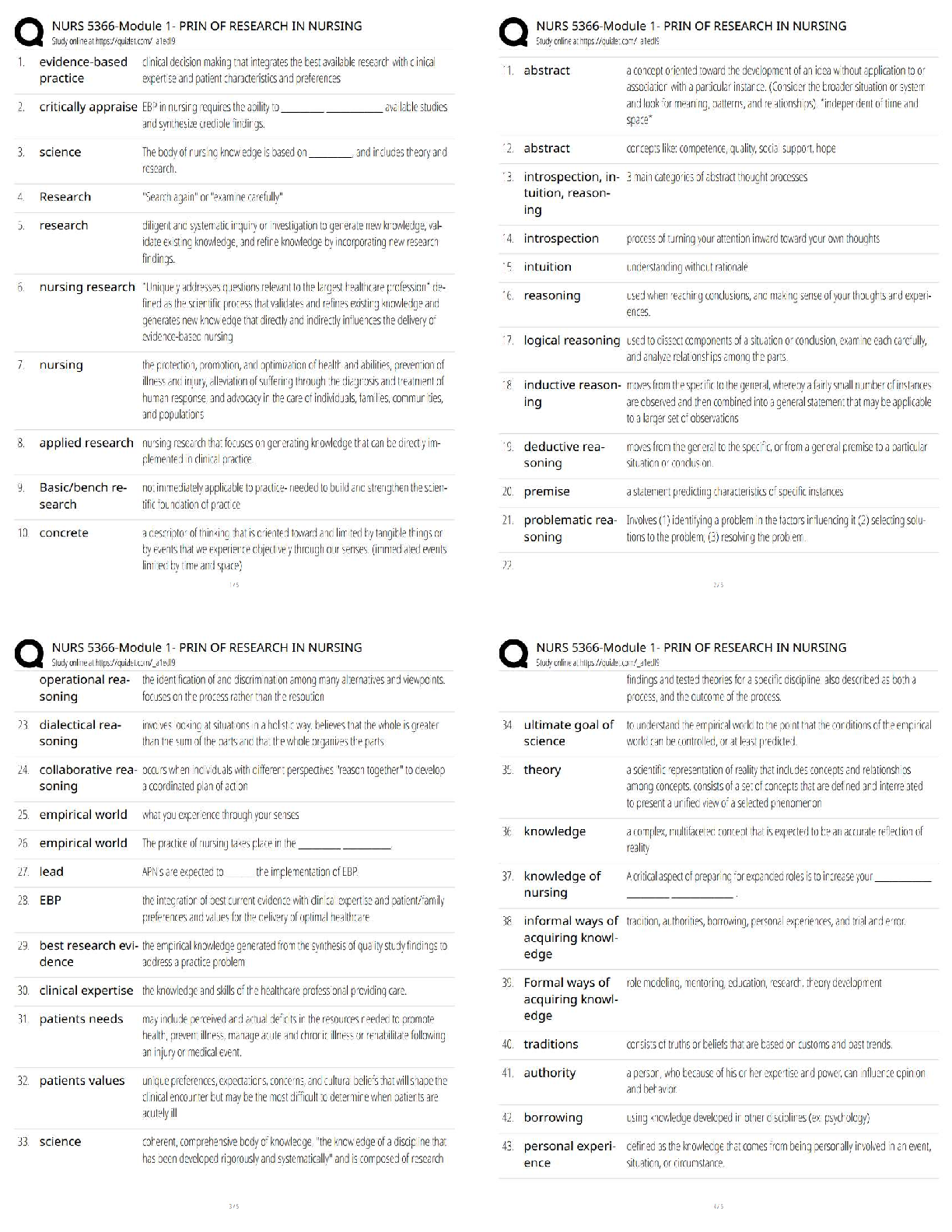
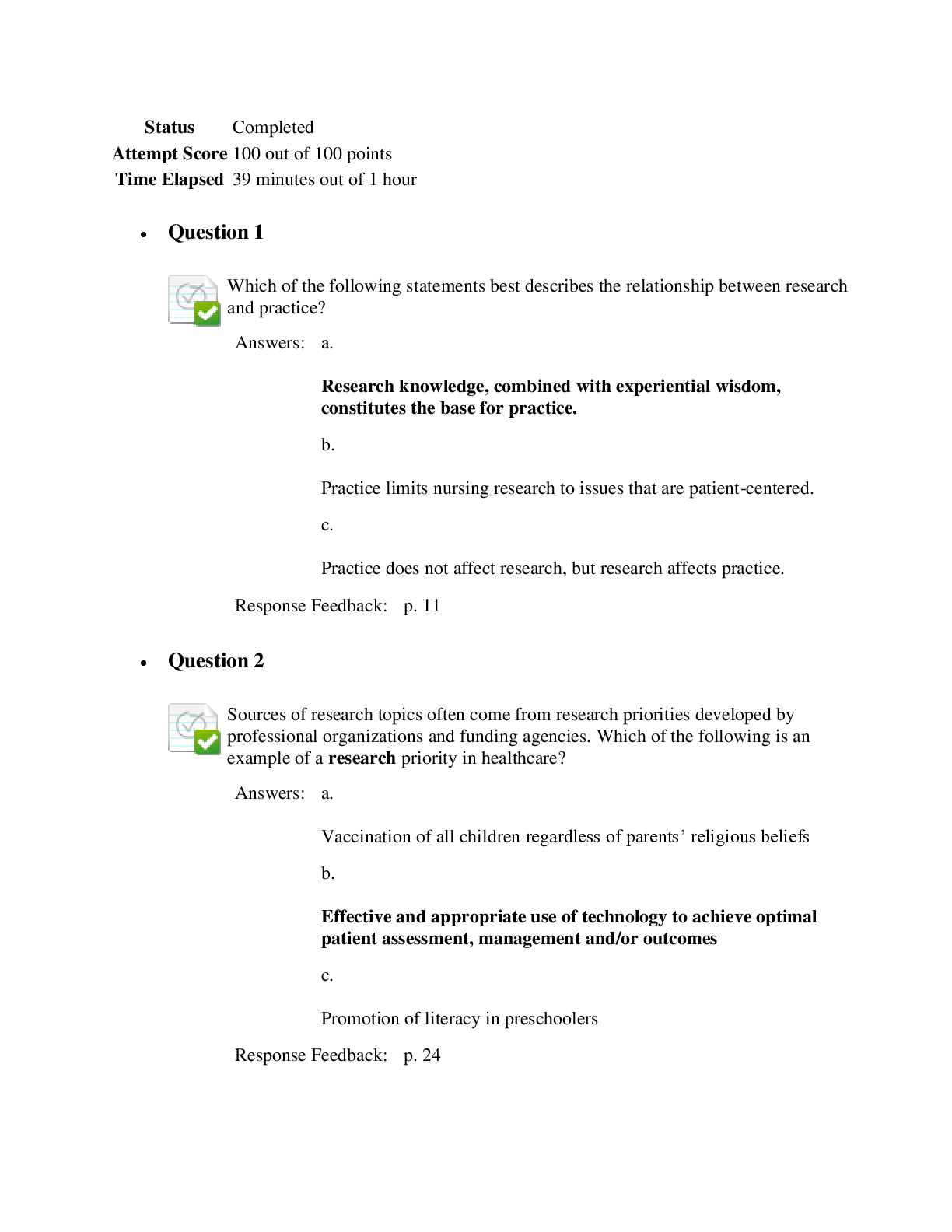
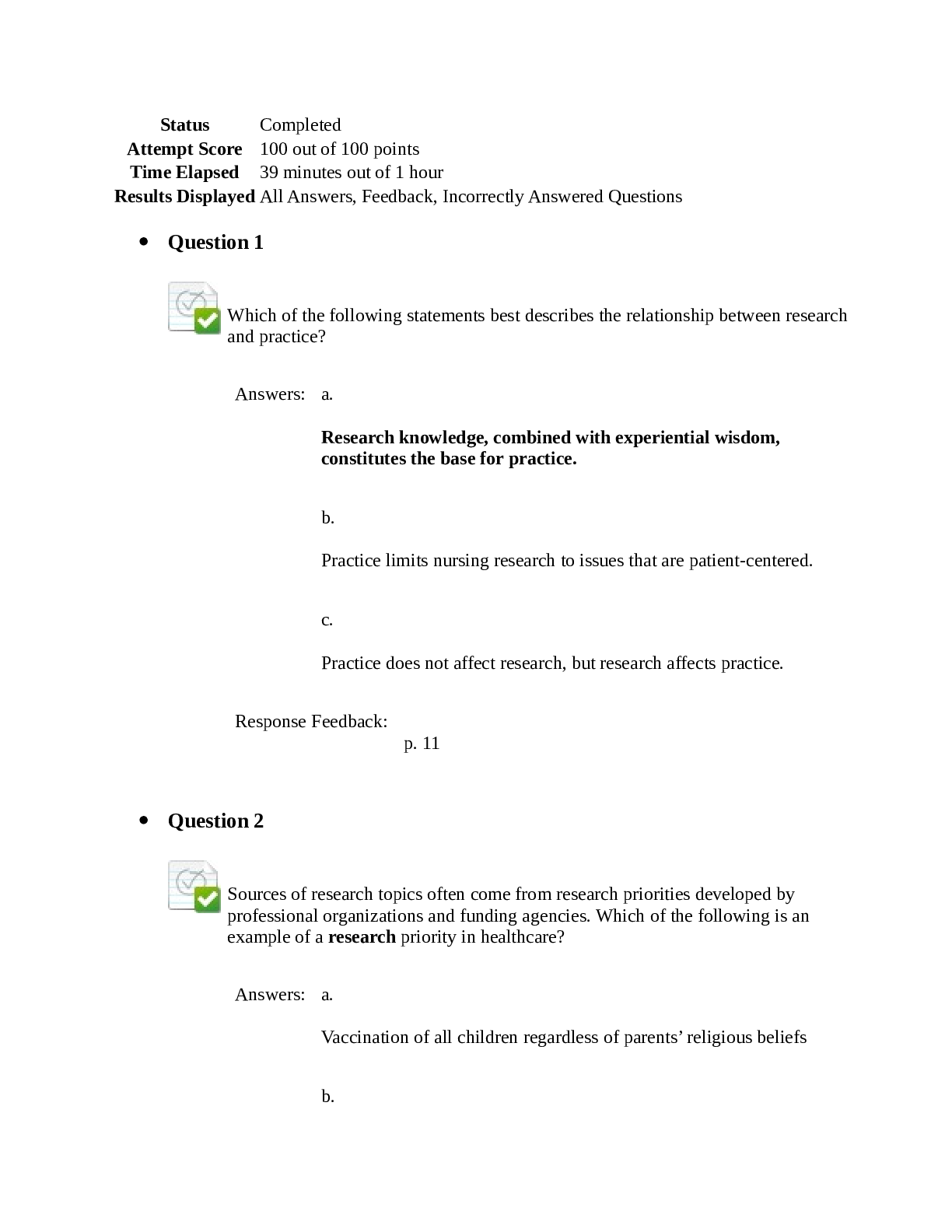
The report of a research study on a new medication to treat hypertension included this statement: “There was no significant difference in gender or age between the treatment and control groups.” Based on
...
[Show More]
Last updated: 4 years ago
Preview 1 out of 21 pages
Instant download
Buy this Document to get the Full Access Instantly
Provided by Students Who Aced it
We Verify Document Content to Gurantee Accuracy
Reviews( 0 )
Document information
Connected school, study & course
About the document
Uploaded On
May 11, 2022
Number of pages
21
Written in
All

Additional information
This document has been written for:
Uploaded
May 11, 2022
Downloads
0
Views
138
Topic Tags
Recommended For You
Get more on EXAM »
$12
14 Pages
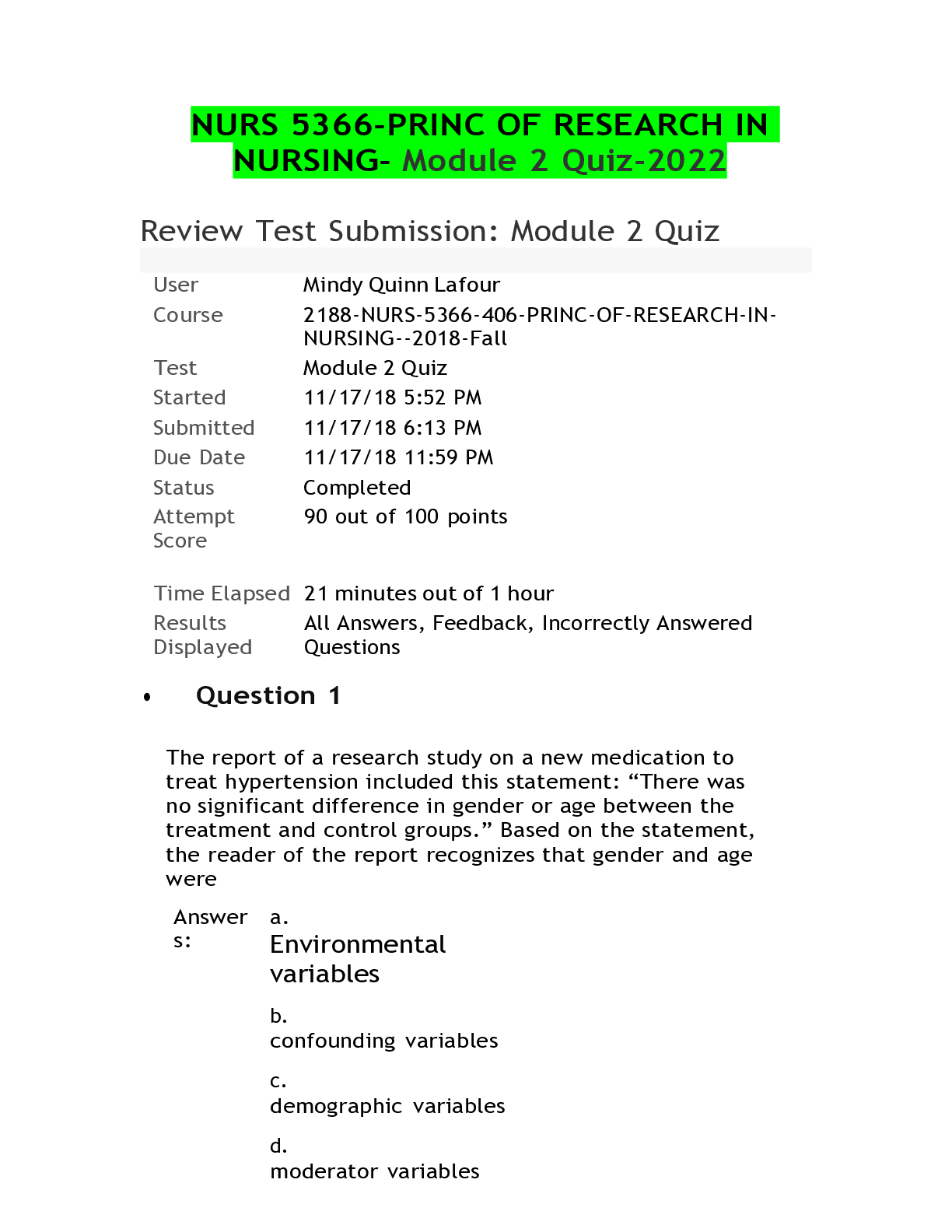
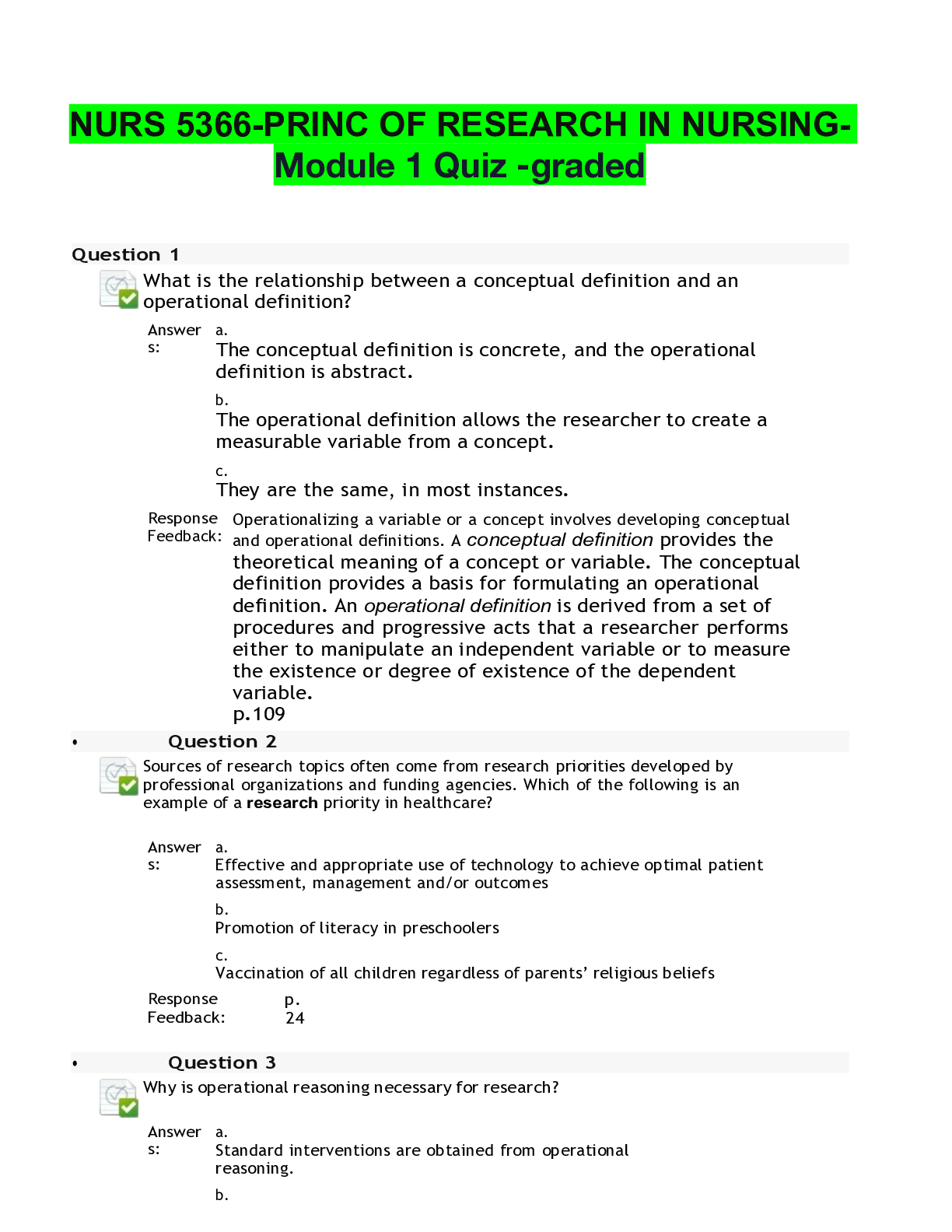
NURS 5366-PRINC OF RESEARCH IN NURSING-Module 2 Quiz -graded
$13
12 Pages
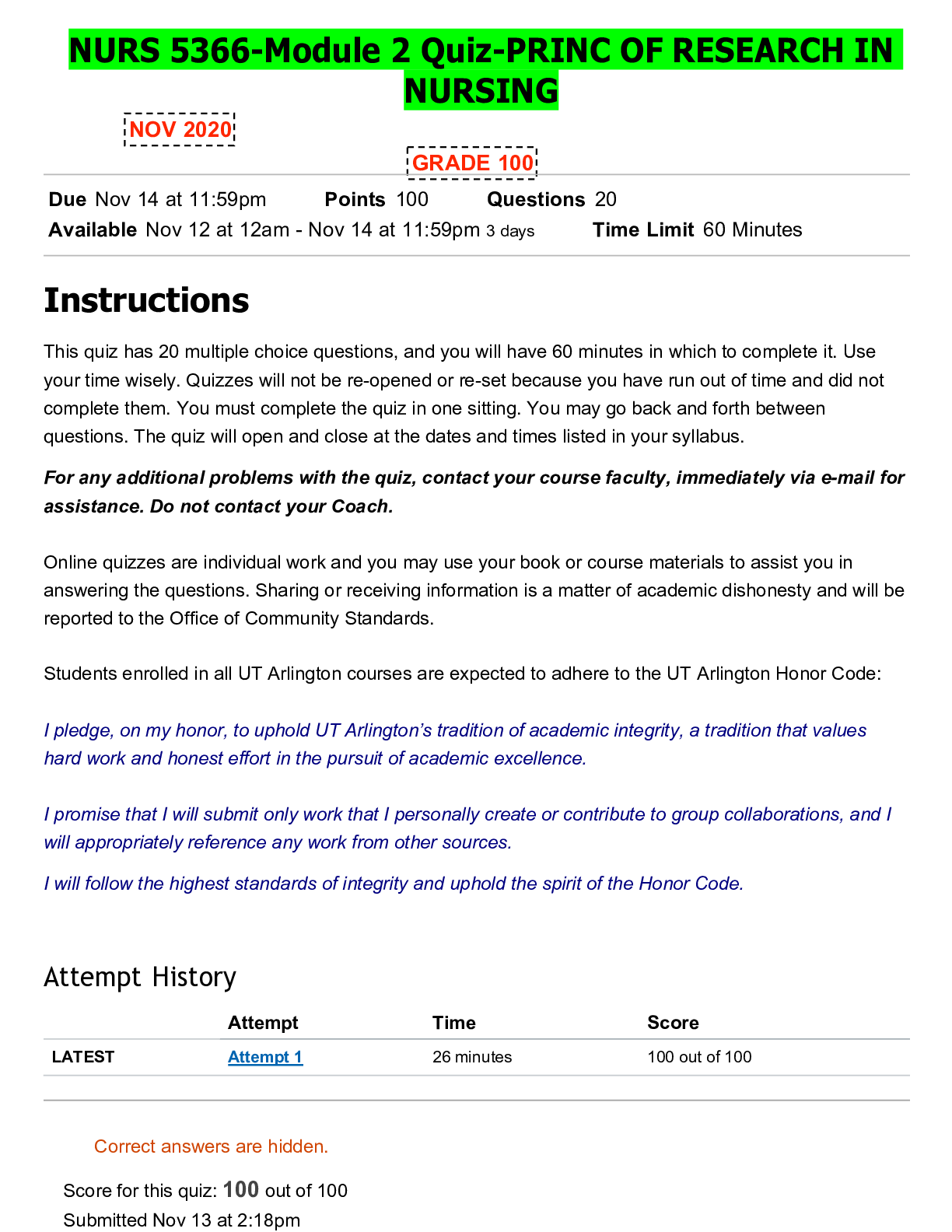
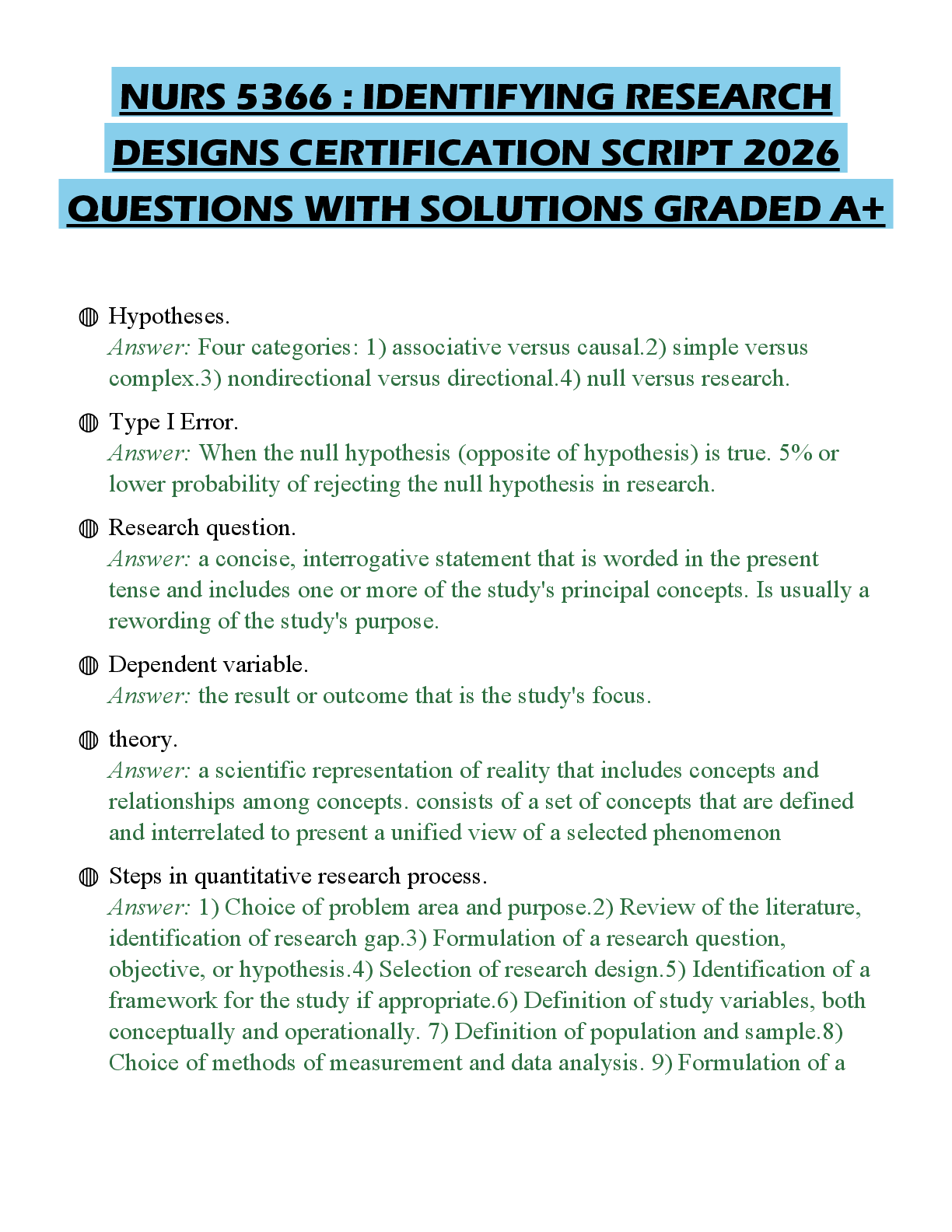
NURS 5366-PRINC OF RESEARCH IN NURSING- Module 1 Quiz -graded

$8
19 Pages
|SOLVED|NURS-5366 PRINC-OF-RESEARCH-IN-NURSING-Test 1 Study Gu...
$8
19 Pages
|SOLVED|NURS-5366 PRINC-OF-RESEARCH-IN-NURSING-Test 1 Study Gu...
$8
19 Pages
|SOLVED|NURS-5366 PRINC-OF-RESEARCH-IN-NURSING-Test 1 Study Gu...



$100.5
996 Pages
ATI TEAS 7 | 4 Versions for Reading, Math, Science, English, A...
$19
635 Pages
Test Bank For Community Public Health Nursing Promoting the He...

More related documents below