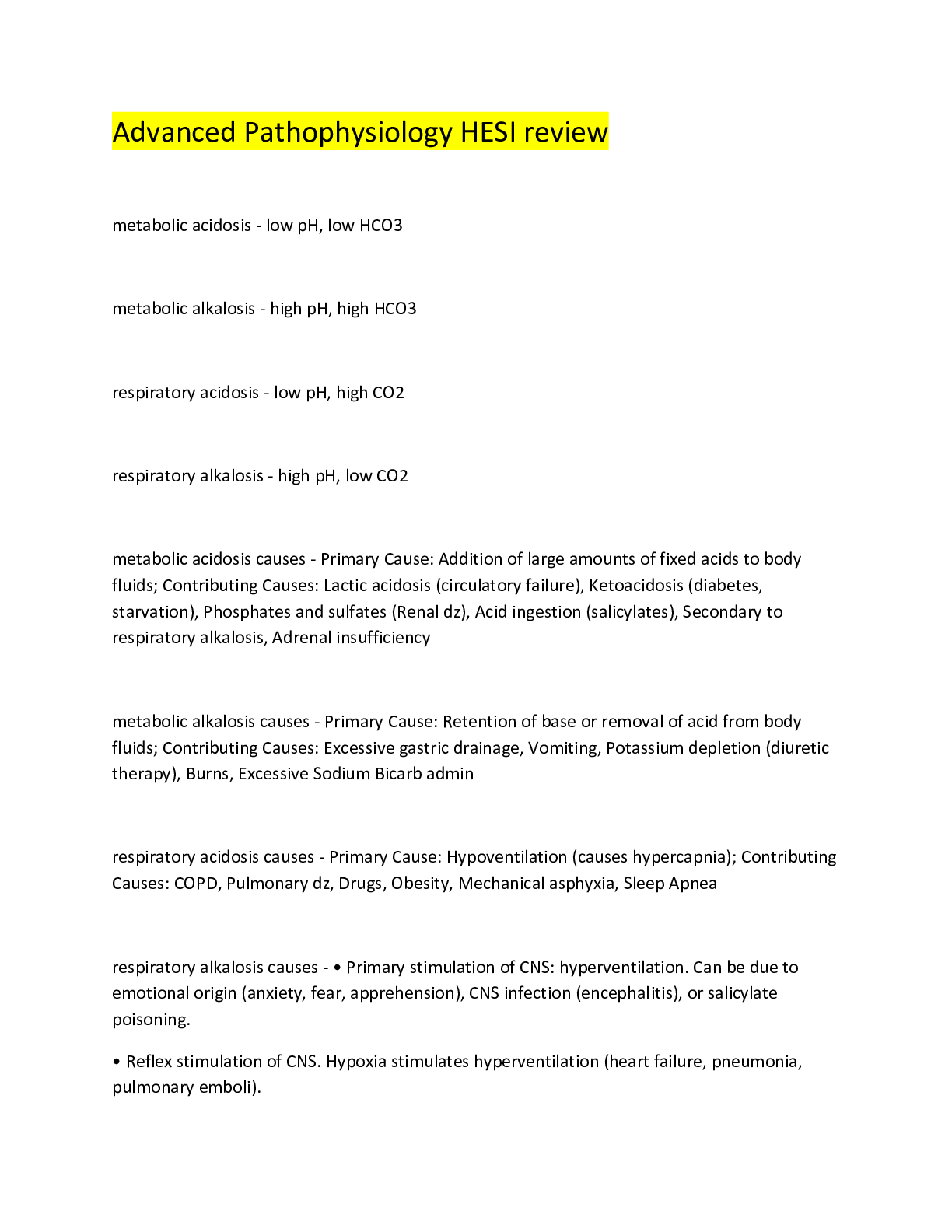
Advanced Pathophysiology HESI review
questions and answer. Predictor
questions
metabolic acidosis - low pH, low HCO3
metabolic alkalosis - high pH, high HCO3
respiratory acidosis - low pH, high CO2
respiratory alka
...
Advanced Pathophysiology HESI review
questions and answer. Predictor
questions
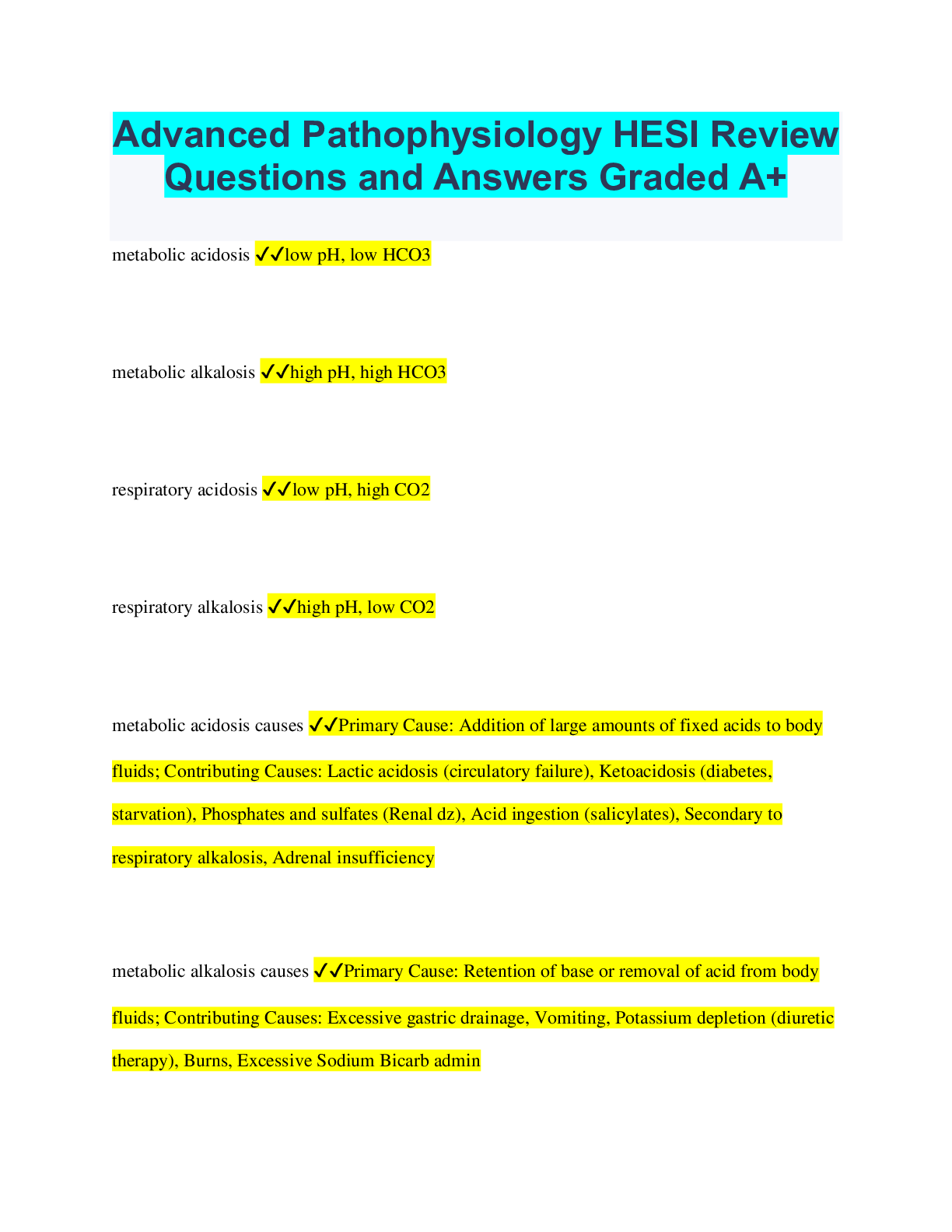
metabolic acidosis - low pH, low HCO3
metabolic alkalosis - high pH, high HCO3
respiratory acidosis - low pH, high CO2
respiratory alkalosis - high pH, low CO2
metabolic acidosis causes - Primary Cause: Addition of large amounts of fixed acids to body fluids;
Contributing Causes: Lactic acidosis (circulatory failure), Ketoacidosis (diabetes, starvation), Phosphates
and sulfates (Renal dz), Acid ingestion (salicylates), Secondary to respiratory alkalosis, Adrenal
insufficiency
metabolic alkalosis causes - Primary Cause: Retention of base or removal of acid from body fluids;
Contributing Causes: Excessive gastric drainage, Vomiting, Potassium depletion (diuretic therapy), Burns,
Excessive Sodium Bicarb admin
respiratory acidosis causes - Primary Cause: Hypoventilation (causes hypercapnia); Contributing Causes:
COPD, Pulmonary dz, Drugs, Obesity, Mechanical asphyxia, Sleep Apnea
respiratory alkalosis causes - • Primary stimulation of CNS: hyperventilation. Can be due to emotional
origin (anxiety, fear, apprehension), CNS infection (encephalitis), or salicylate poisoning.
• Reflex stimulation of CNS. Hypoxia stimulates hyperventilation (heart failure, pneumonia, pulmonary
emboli).
Can also be stimulated by fever.
• Mechanical hyperventilation, resulting in "over breathing."Neuro exams include: - -hand strength, limb strength
-ability to follow commands
-ability to move eyes in equal and uniform fashion
-deep pain stimulus response
-symmetrical and coordinated movement
-clear, speech.
Acute Bronchitis patho - infection or inflammation of the bronchi. In more than 90% of individuals, this is
a self-limiting disorder caused by viruses.
will not have high fevers and will have only scattered coarse wheezes on examination without evidence
of pulmonary consolidation.
Chest X-ray examination is usually normal.
Chronic Bronchitis patho sequence - The chronic bronchitis pathophysiologic sequence of events is as
follows:
Hypersecretion of bronchial mucus, which leads to
Recurrent respiratory infections, which lead to
Airway inflammation, which leads to
Bronchospasm and irreversible airway obstruction
chronic bronchitis patho - characterized by chronic inflammation with recruitment of neutrophils,
macrophages, and lymphocytes to the lung, with progressive damage to airways and the lung
parenchyma.
hyperplasia of the mucus-producing goblet cells of the bronchial epithelium occurs, resulting in the
production of large amounts of mucus in the airways.
Mucus accumulation facilitates the colonization and growth of bacteria, which further contributes to
airway inflammation, bronchospasm, and eventual scarring.Narrowed airways cause v/q mismatching and expiratory airway obstruction with air trapping, resulting
in both hypoxemia and hypercapnia.
CAD risk factors pathological - Major:
Advanced age
Gender (men > women before age 55, women > men after age 55)
Dyslipidemia
Hypertension
Smoking
Diabetes mellitus and insulin resistance
Obesity
Sedentary lifestyle
Metabolic syndrome
Atherogenic diet
Non traditional:
Markers of inflammation
C-reactive protein (CRP)
Fibrinogen
Protein C
Others
Troponin I
Adipokines
Chronic kidney disease
Air pollution & ionizing radiation
Medications
Coronary artery calcification and carotid artery wall thicknessatherosclerosis pathophysiology - -Inflammatory response
-Injury to endothelial lining
-LDL penetrates vessel wall
-inflammation/macrophage adhesion
-cytokines released
-release enzymes & oxygen radicals that oxidize LDL
-foam cells occur that form fatty streak
-collagen deposits & makes firm plaque
[Show More]