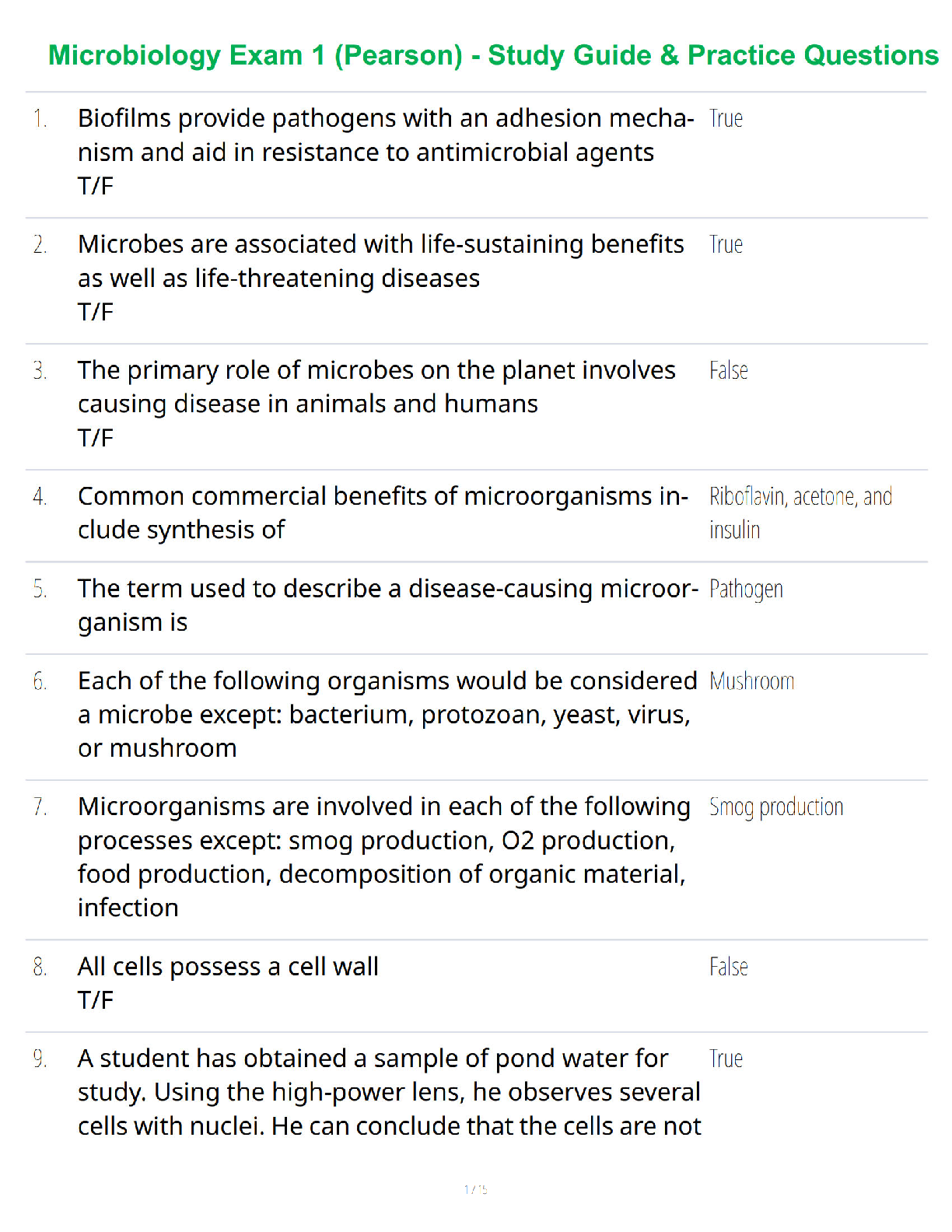
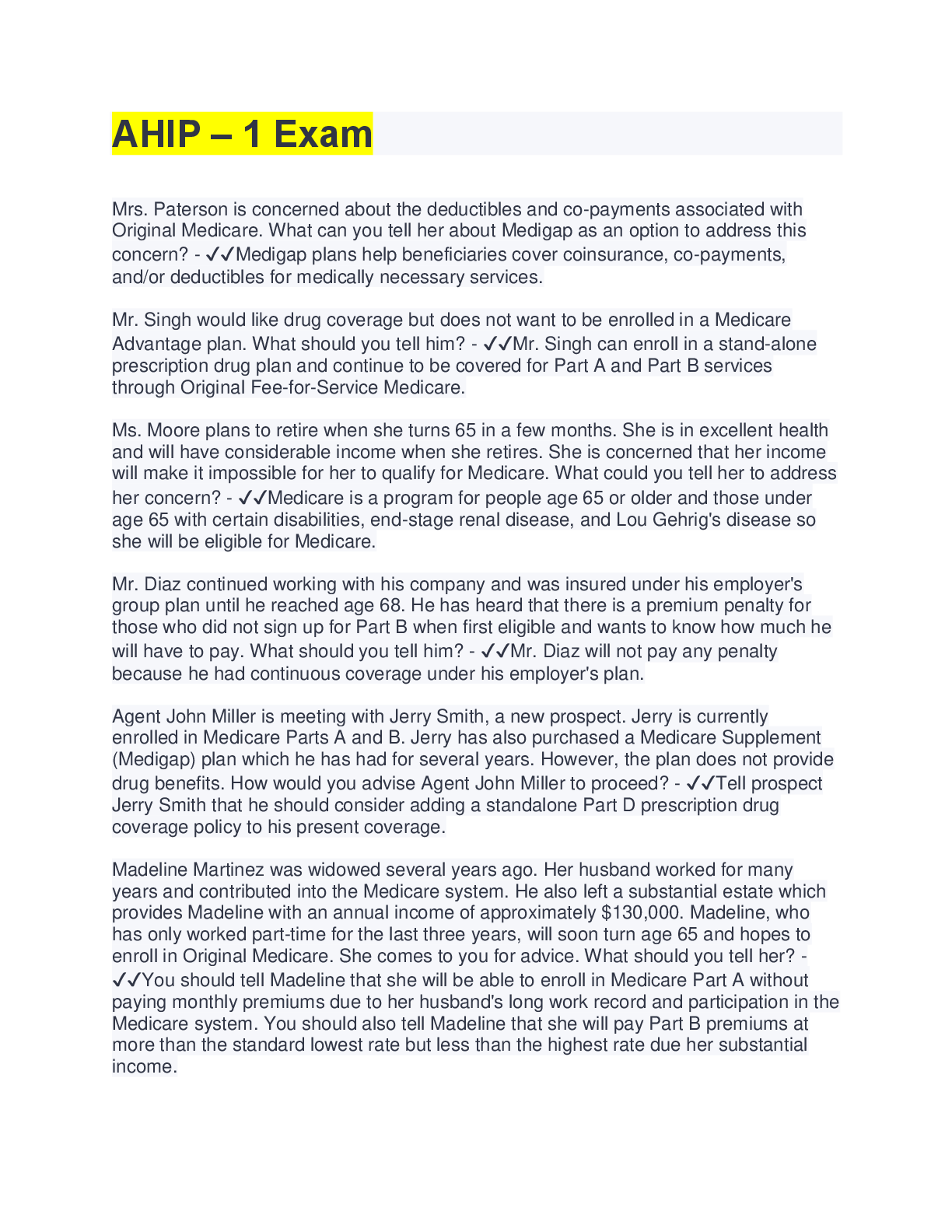
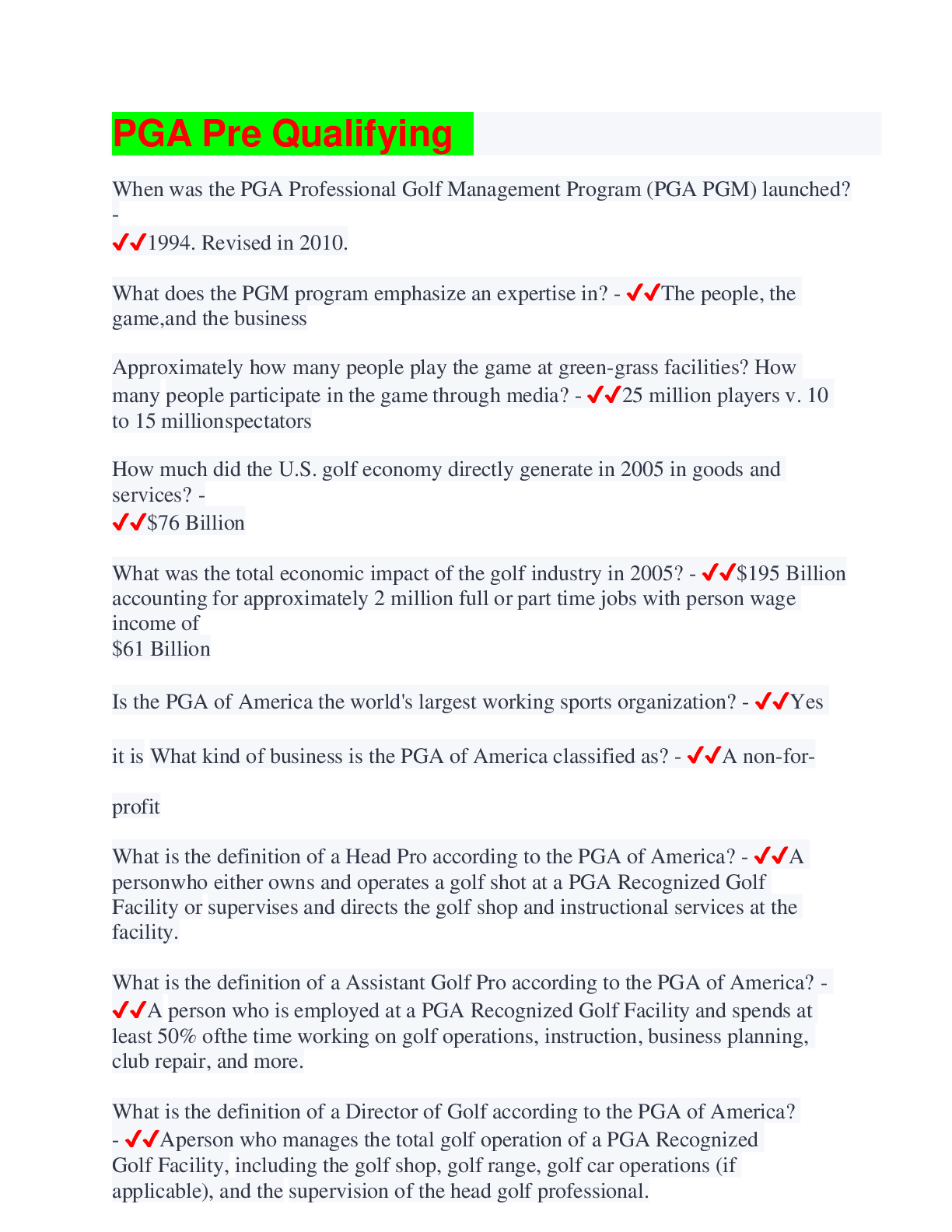
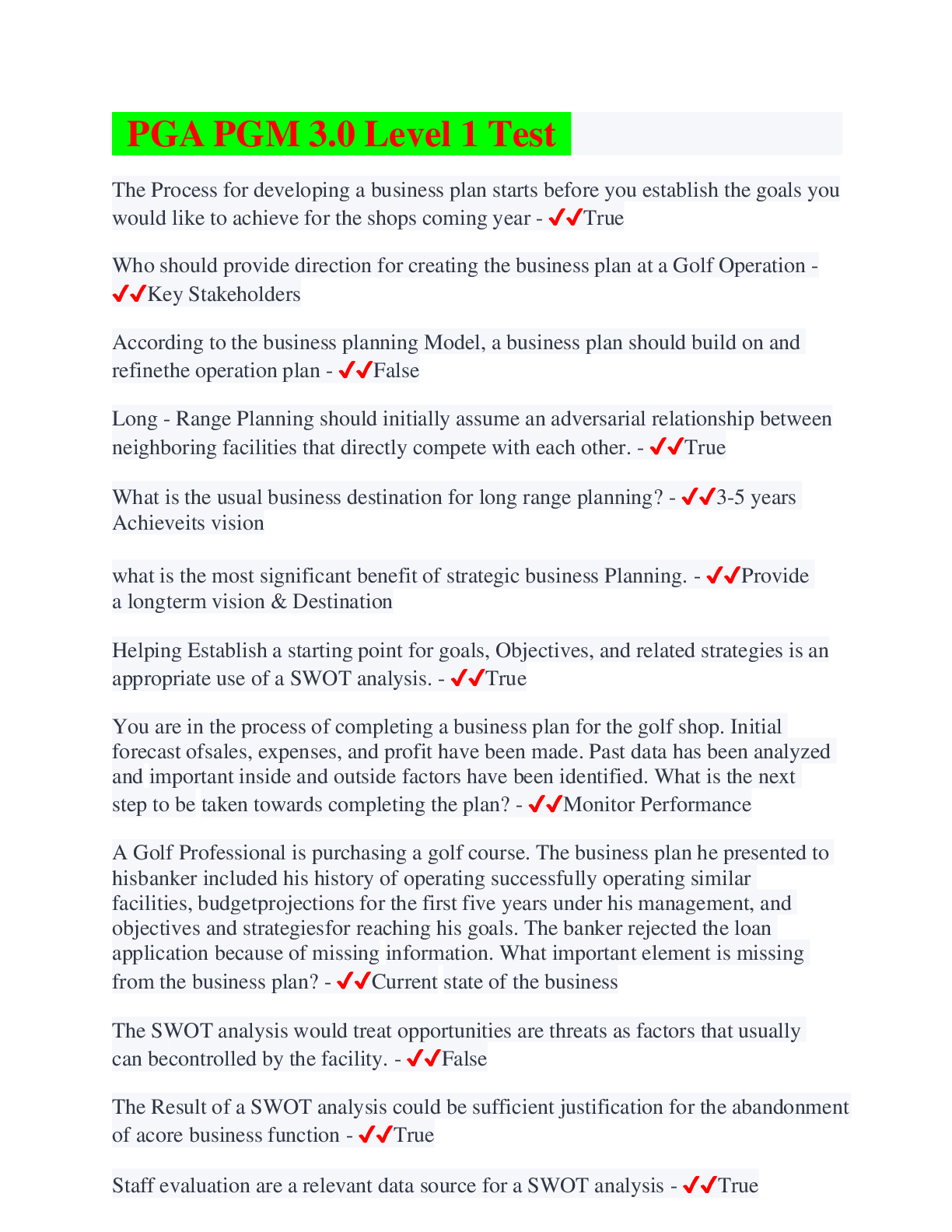
Micro Biology > EXAM > STRAIGHTERLINE Microbiology BIO 250L Lab 1 Introduction to Science 2022 COMPLETE LAB WORKSHEET (All)
STRAIGHTERLINE Microbiology BIO 250L Lab 1 Introduction to Science 2022 COMPLETE LAB WORKSHEET
Document Content and Description Below
Last updated: 3 years ago
Preview 1 out of 10 pages
Instant download

Buy this Document to get the Full Access Instantly
Provided by Students Who Aced it
We Verify Document Content to Gurantee Accuracy
Also available in bundle (1)
Click Below to Access Bundle(s)
Bundle for COMPLETE STRAIGHTERLINE MICROBIOLOGY BIO 250L LAB WORKSHEETS & QUIZZES LABS 1, 2, 3, 4, 5, 6, 7 & 8 (MULTIPLE VERSIONS) LATEST 2022
Bundle for COMPLETE STRAIGHTERLINE MICROBIOLOGY BIO 250L LAB WORKSHEETS & QUIZZES LABS 1, 2, 3, 4, 5, 6, 7 & 8 (MULTIPLE VERSIONS) LATEST 2022
By Tessa 4 years ago
$30
23
Reviews( 0 )
Document information
Connected school, study & course
About the document
Uploaded On
May 24, 2022
Number of pages
10
Written in
All

Additional information
This document has been written for:
Uploaded
May 24, 2022
Downloads
0
Views
469
Topic Tags
Recommended For You
Get more on EXAM »
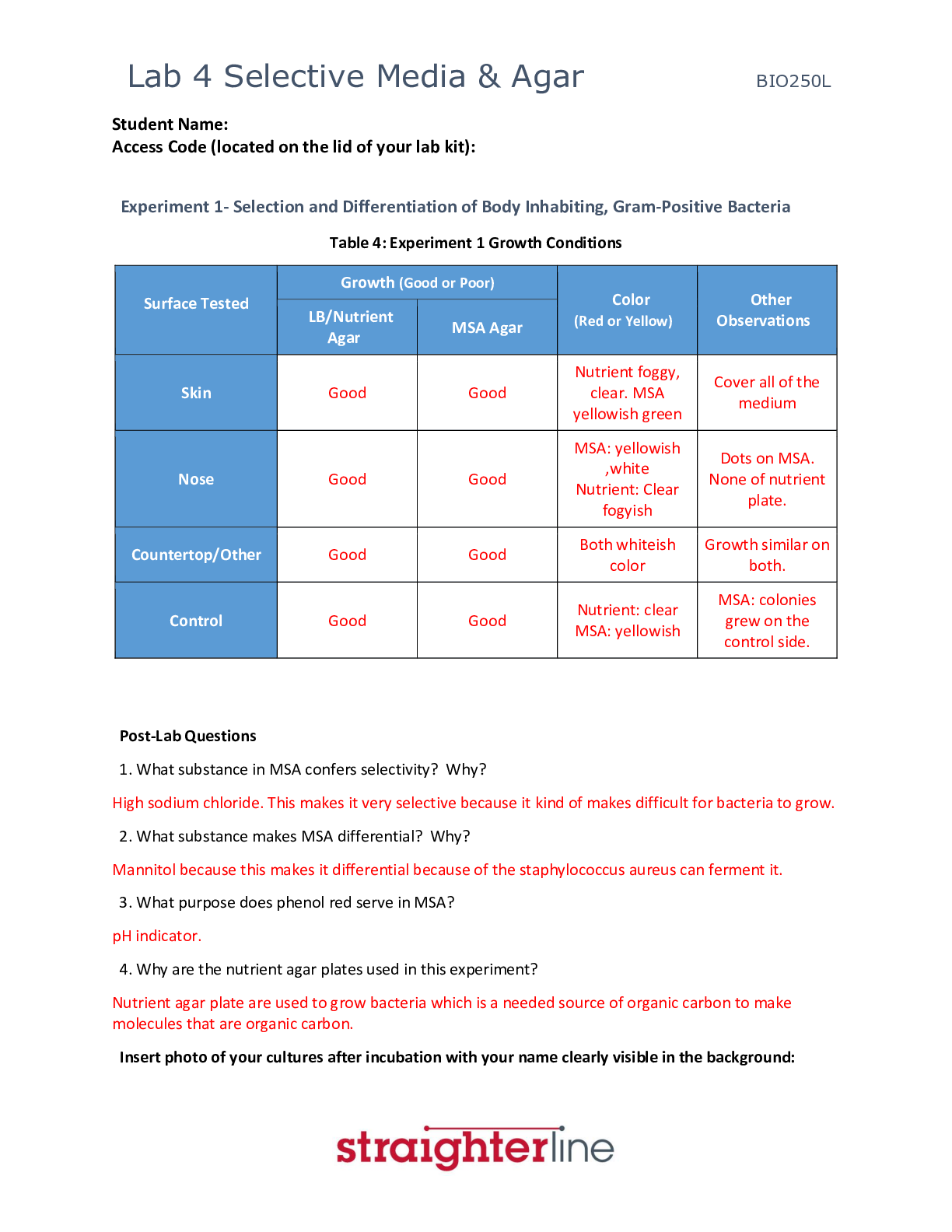
STRAIGHTERLINE-Microbiology-BIO-250L-Lab-8| Identifying an Unk...
STRAIGHTERLINE-Microbiology-BIO-250L-Lab-3| Quantification-of-...
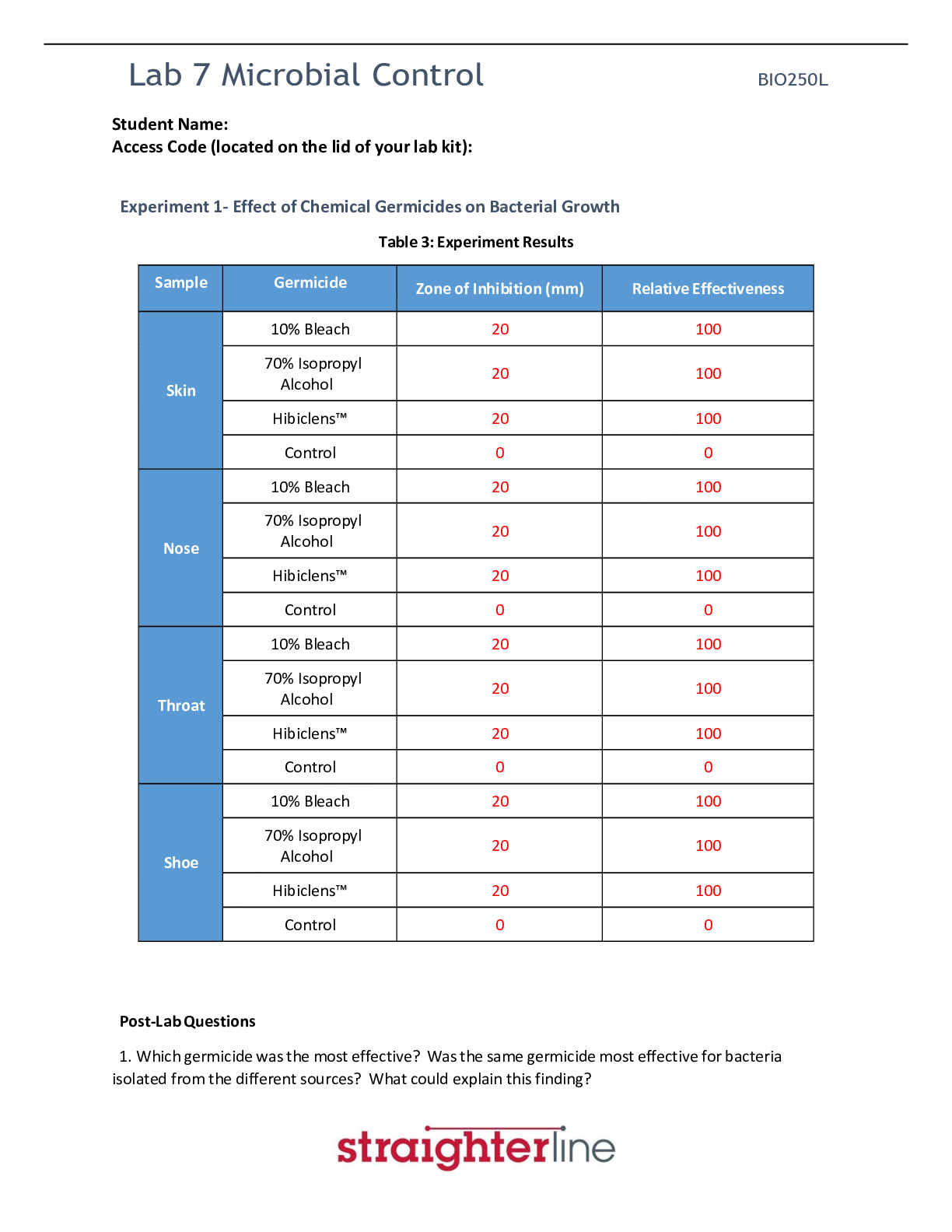
STRAIGHTERLINE-Microbiology-BIO-250L-Lab-7-Microbial-Control....
.png)
BIO 250 Microbiology Midterm Exam (100% Correct solution) | Do...
.png)
BIO 250 Microbiology : 180 past midterm (GRADED A) questions a...

BIO 250 Microbiology Questions from Quiz Assignments 1-4 (3 of...

BIO 250 Microbiology Midterm Exam {2022} - Straighterline | BI...

BIO 250 Microbiology Midterm Exam (2022) - Straighterline | BI...

TEST BANK for Microbiology: AN EVOLVING SCIENCE 2nd Edition By...
TEST BANK for Microbiology An Evolving Science 3rd Edition By...
Test Bank for Microbiology An Evolving Science 3e by Joan Slon...

TEST BANK for Talaro’s Foundations in Microbiology, 10th Editi...

Prescott's Microbiology, 12th Edition by Willey, Sandman, Wood...

Talaro's Foundations in Microbiology, 11th Edition by Chess an...
University of Alberta - MICRB 265microbio lab 8 report. Using...