NURSING > EXAM > Shadow Health Respiratory Concept Lab: (NURS612) Advanced Health Assessment (Solved) (All)
Shadow Health Respiratory Concept Lab: (NURS612) Advanced Health Assessment (Solved)
Document Content and Description Below
Last updated: 3 years ago
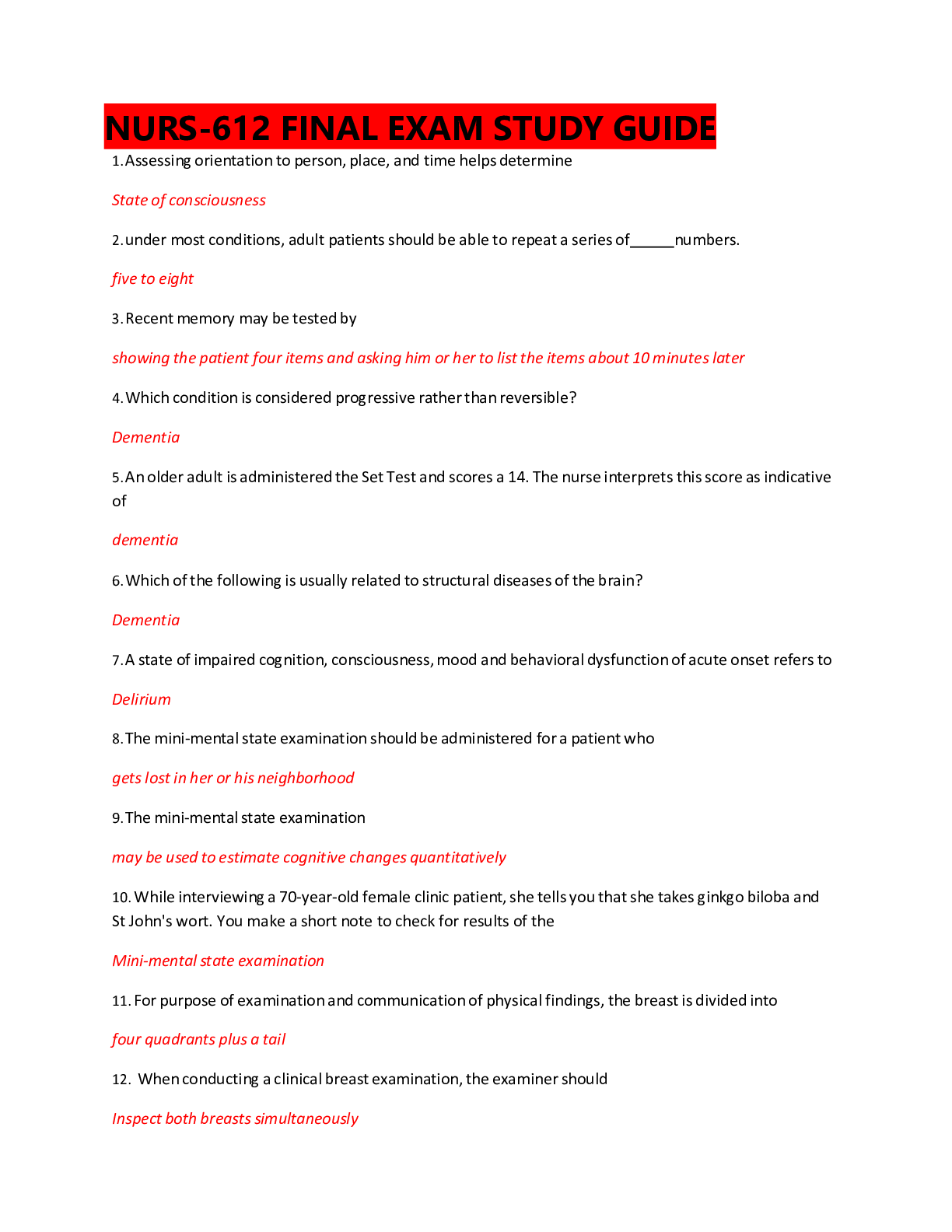
Preview 1 out of 4 pages
Instant download

Buy this Document to get the Full Access Instantly
Provided by Students Who Aced it
We Verify Document Content to Gurantee Accuracy
Reviews( 0 )
Document information
Connected school, study & course
About the document
Uploaded On
May 28, 2022
Number of pages
4
Written in
All

Additional information
This document has been written for:
Uploaded
May 28, 2022
Downloads
0
Views
162
Topic Tags
Recommended For You
Get more on EXAM »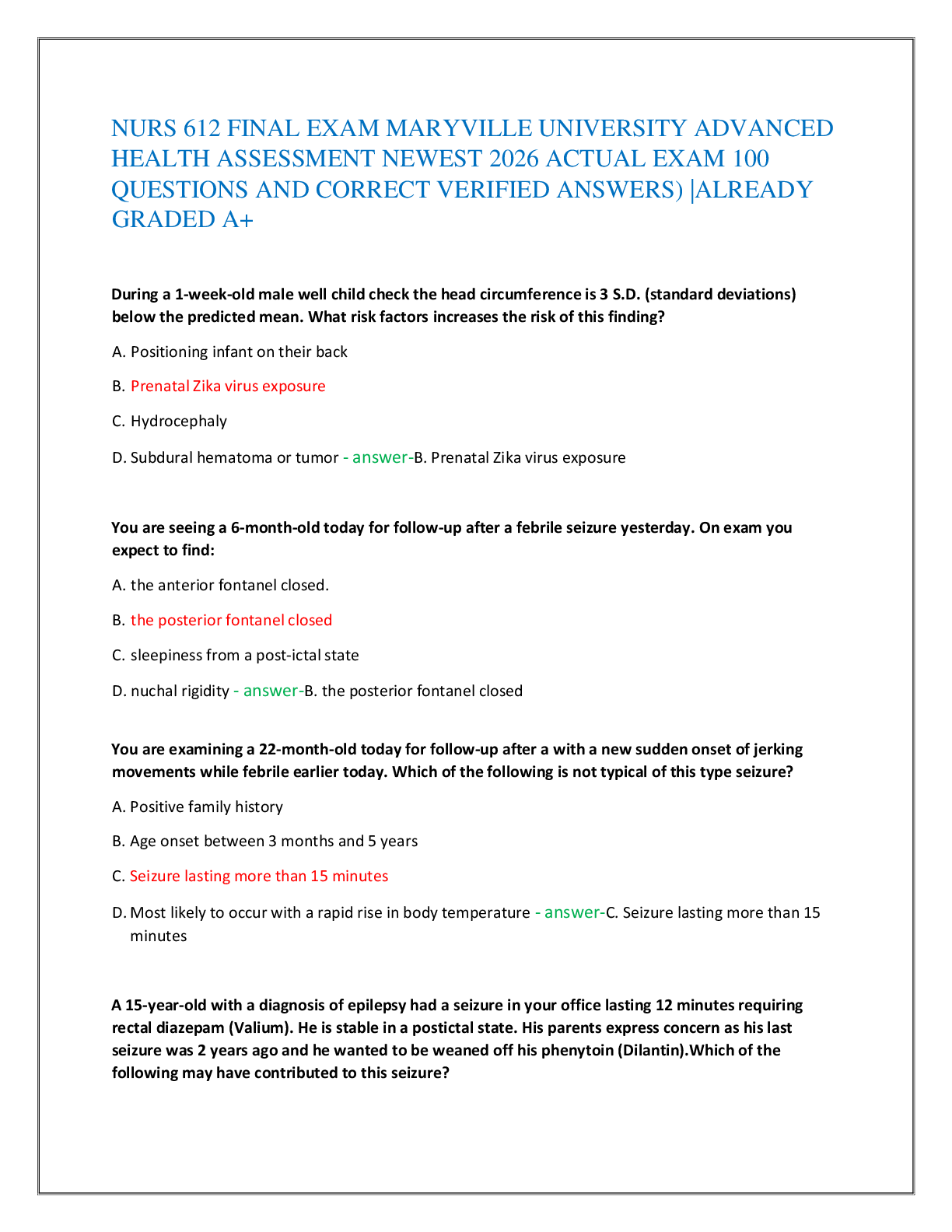
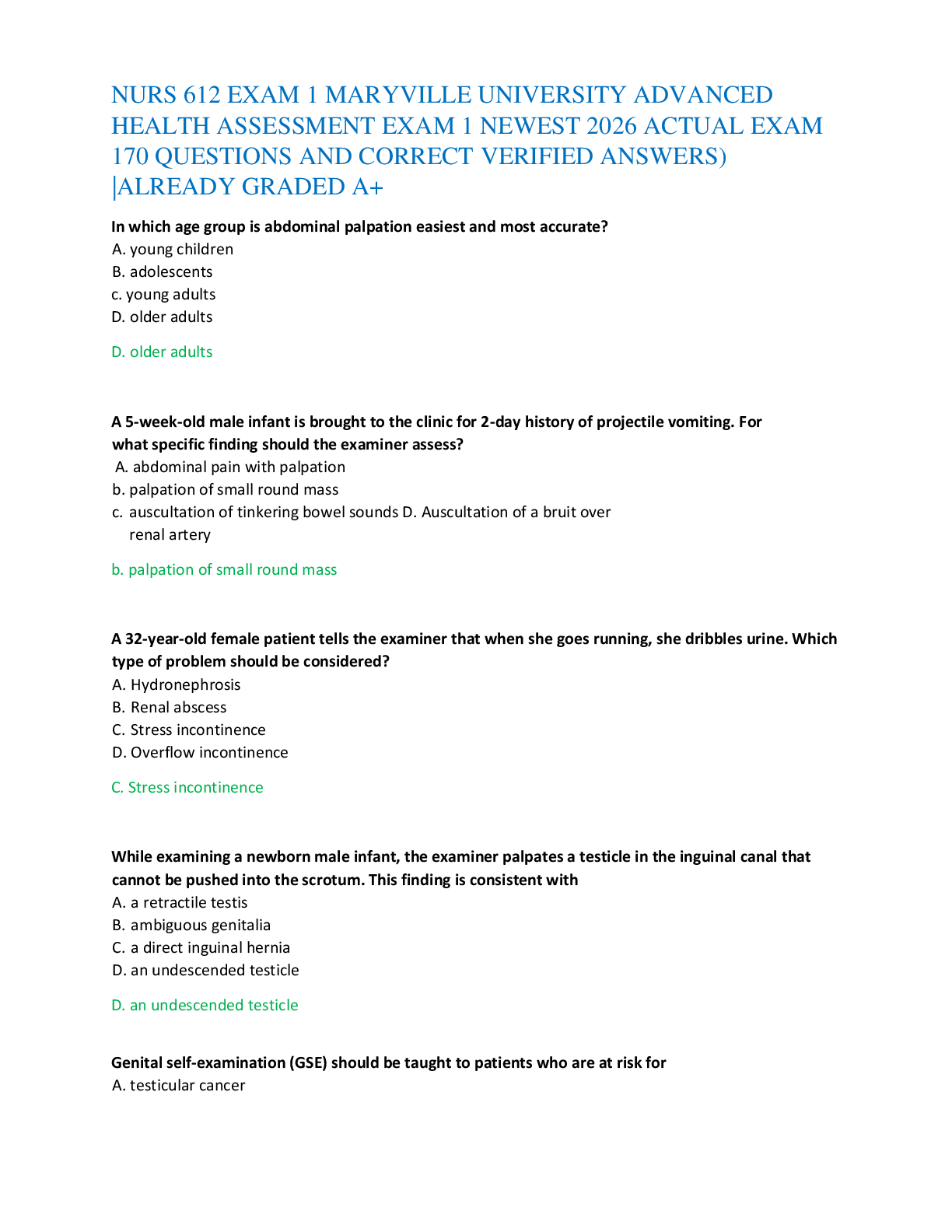
NURS 612 Shadow Health All Modules Cases Instructor Keys ADVAN...
NURS 612 Shadow Health All Modules Cases Instructor Keys 2024...
NURS 612 Shadow Health All Modules Cases Instructor Keys
NURS 612 Shadow Health All Modules Cases Instructor Keys, Comp...
NURS 612 TEST BANK QUESTIONS FOR NCLEX RN V12.35 865 questions...

NURS612 Key Points to Review for Exam 2-comprehensive study gu...

TINA JONES NURS 612 ADVANCED HEALTH ASSESSMENT Health History...
NURS 612 Shadow Health All Modules Cases Instructor Keys