NURSING 4710 adolescent exam- graded with rationale- 2022
Document Content and Description Below
Question 1 See full question
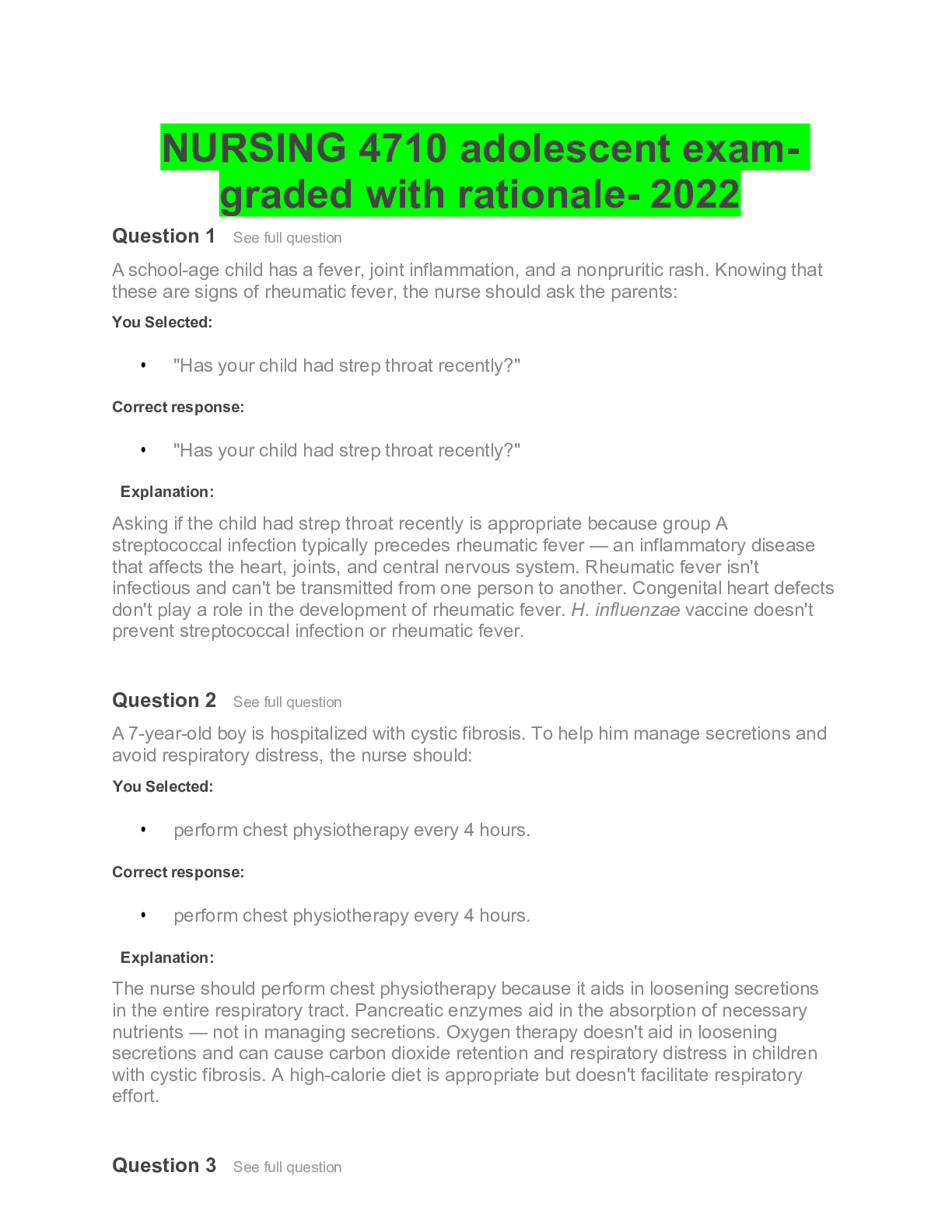
A school-age child has a fever, joint inflammation, and a nonpruritic rash. Knowing that these are signs of rheumatic fever, the nurse should ask the parents:
You Selected:
• "Has your c
...
[Show More]
Last updated: 3 years ago
Preview 1 out of 41 pages
Instant download
Buy this Document to get the Full Access Instantly
Provided by Students Who Aced it
We Verify Document Content to Gurantee Accuracy
Reviews( 0 )
Document information
Connected school, study & course
About the document
Uploaded On
May 30, 2022
Number of pages
41
Written in
All

Additional information
This document has been written for:
Uploaded
May 30, 2022
Downloads
0
Views
91
Topic Tags
Recommended For You
Get more on EXAM »
$15
80 Pages
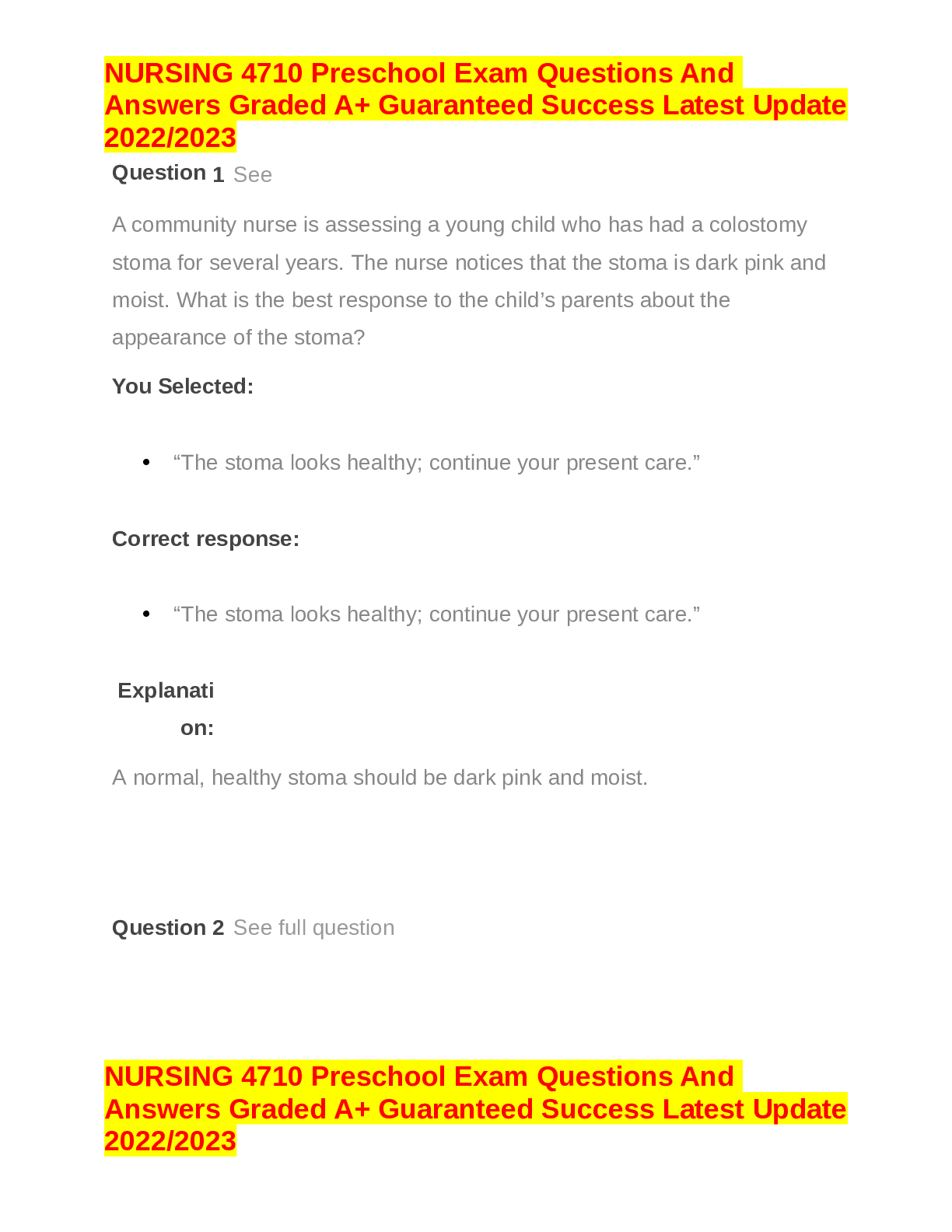
NURSING 4710 Preschool Exam Questions AndAnswers Graded A+ Gua...

$18
80 Pages
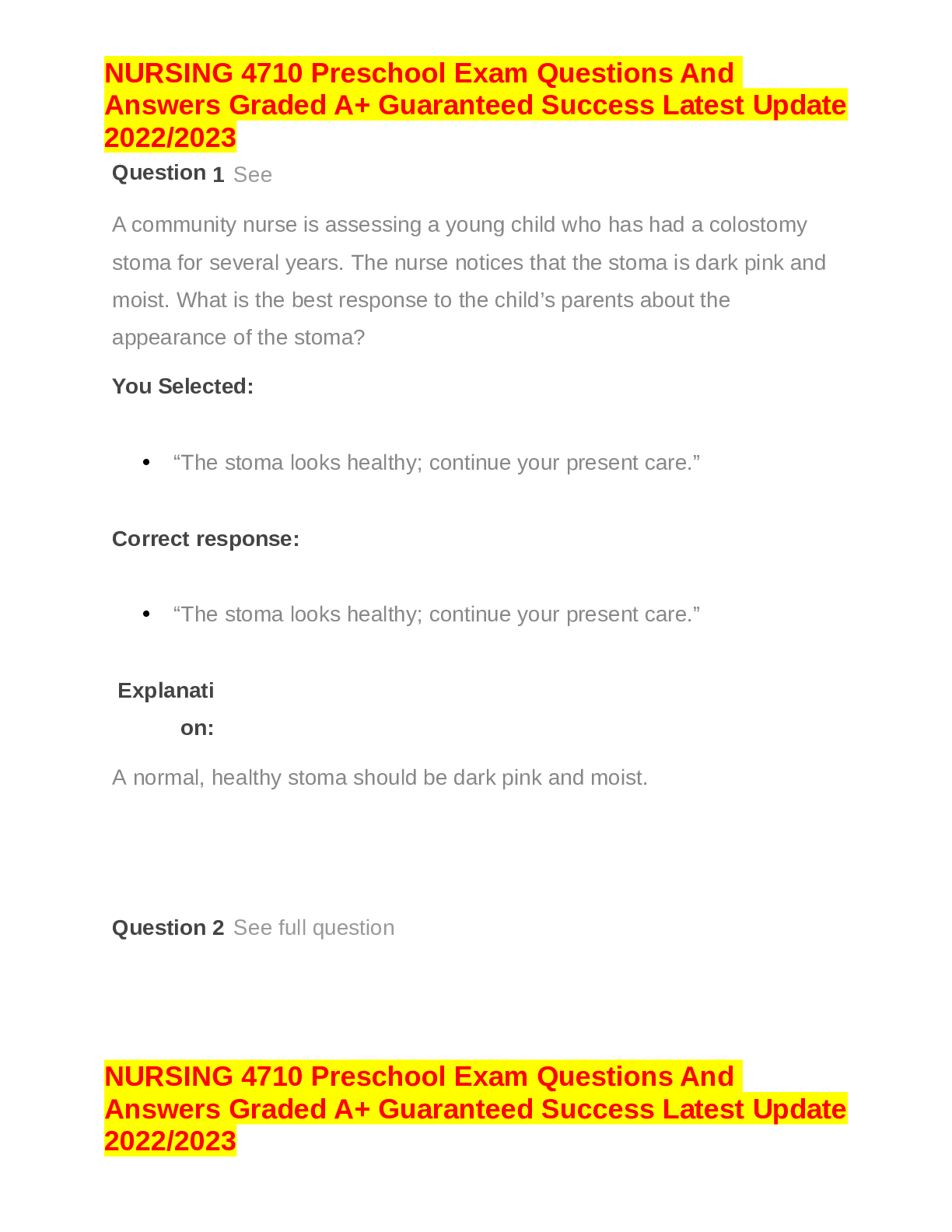
NURSING 4710 Preschool Exam Questions AndAnswers Graded A+ Gua...
$15
80 Pages
NURSING 4710 Preschool Exam Questions AndAnswers Graded A+ Gua...

$11
80 Pages
NURSING 4710 Preschool Exam Questions AndAnswers Graded A+ Gua...

$17
80 Pages
NURSING 4710 Preschool Exam Questions AndAnswers Graded A+ Gua...


$100.5
996 Pages
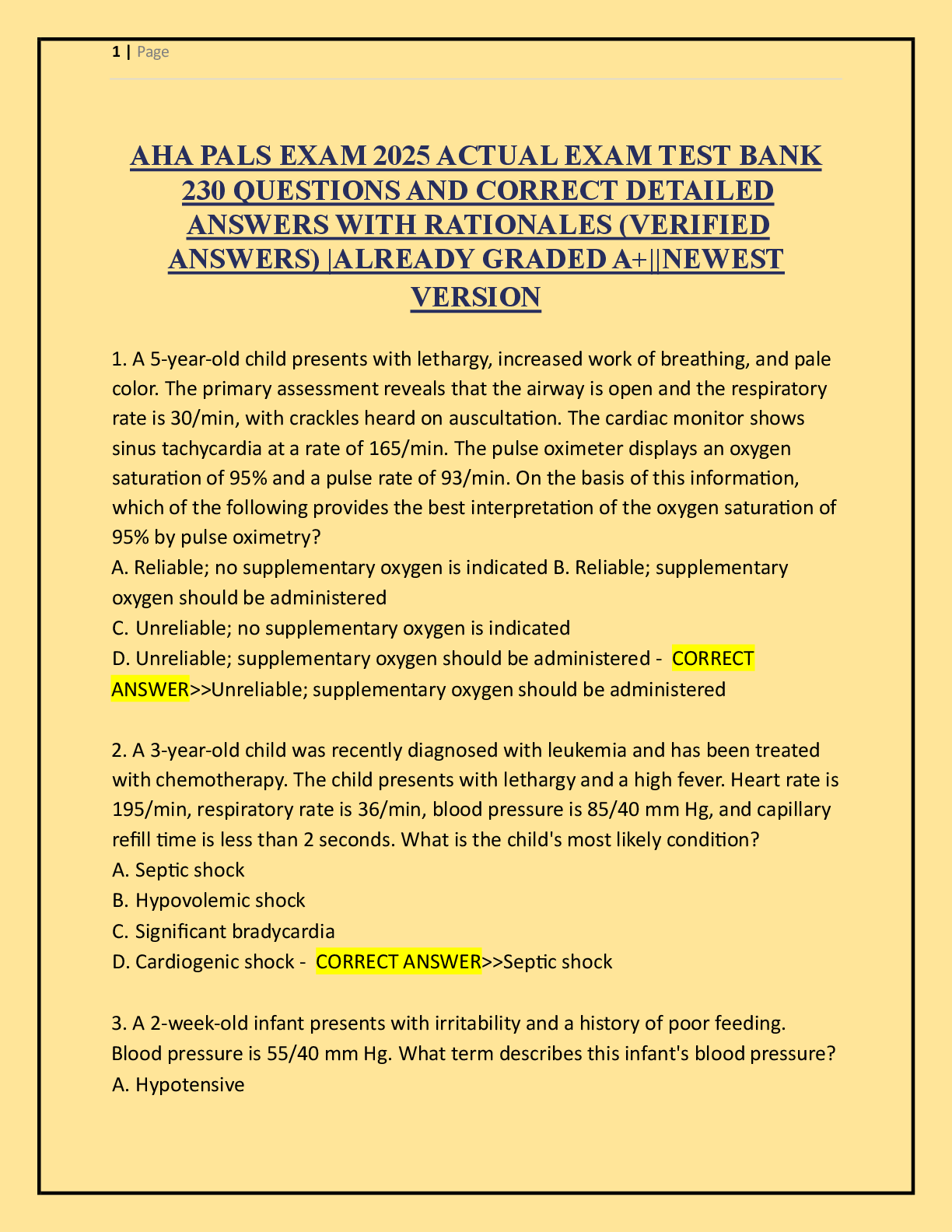
ATI TEAS 7 | 4 Versions for Reading, Math, Science, English, A...

$19
635 Pages
Test Bank For Community Public Health Nursing Promoting the He...
More related documents below