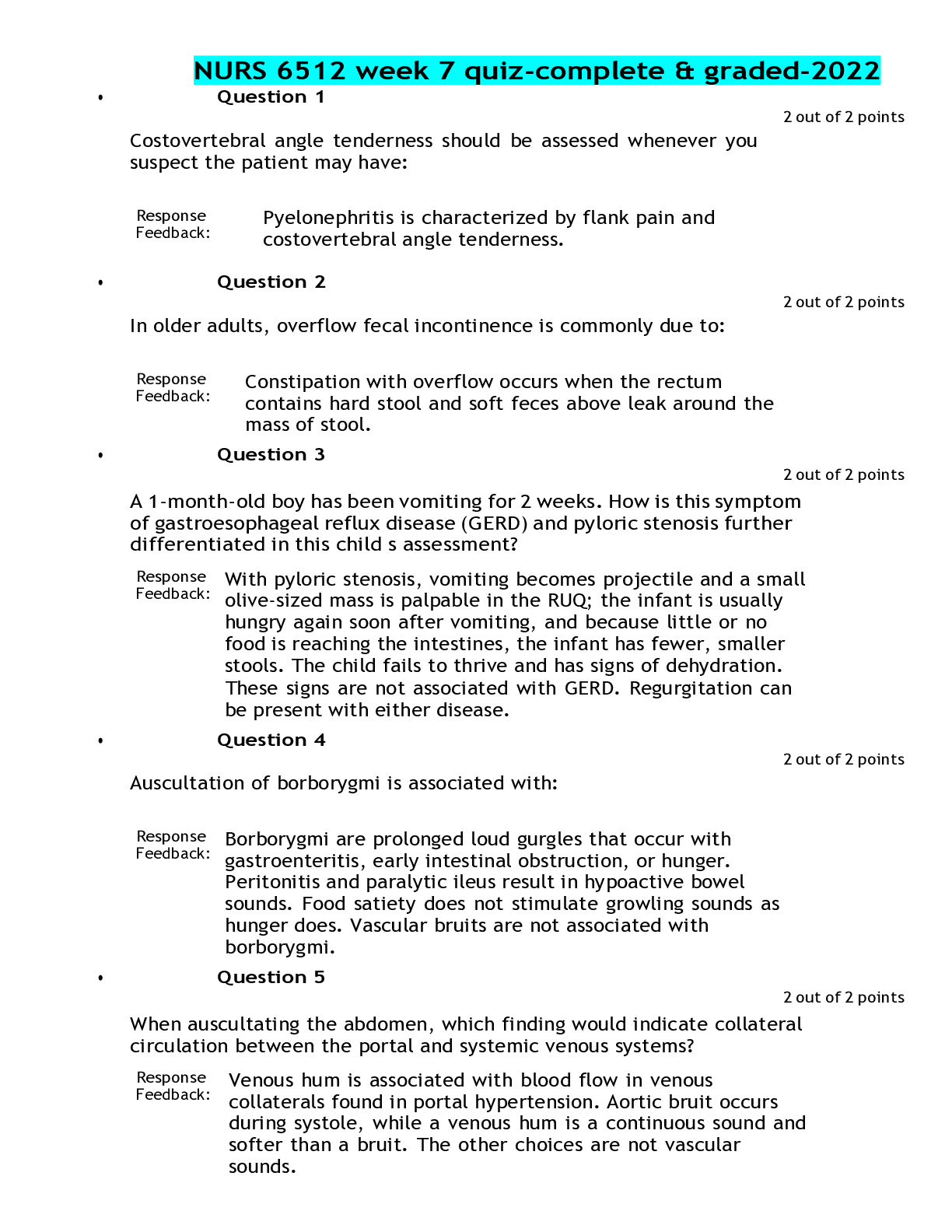
NURS 6512 week 7 quiz-complete & graded-2022
Document Content and Description Below
• Question 1
Costovertebral angle tenderness should be assessed whenever you suspect the patient may have:
2 out of 2 points
Response Feedback:
Pyelonephritis is characterized by flank pain and costovert
...
[Show More]
Last updated: 3 years ago
Preview 1 out of 22 pages
Instant download
Buy this Document to get the Full Access Instantly
Provided by Students Who Aced it
We Verify Document Content to Gurantee Accuracy
Reviews( 0 )
Document information
Connected school, study & course
About the document
Uploaded On
Jun 02, 2022
Number of pages
22
Written in
All

Additional information
This document has been written for:
Uploaded
Jun 02, 2022
Downloads
0
Views
70
Topic Tags
Recommended For You
Get more on EXAM »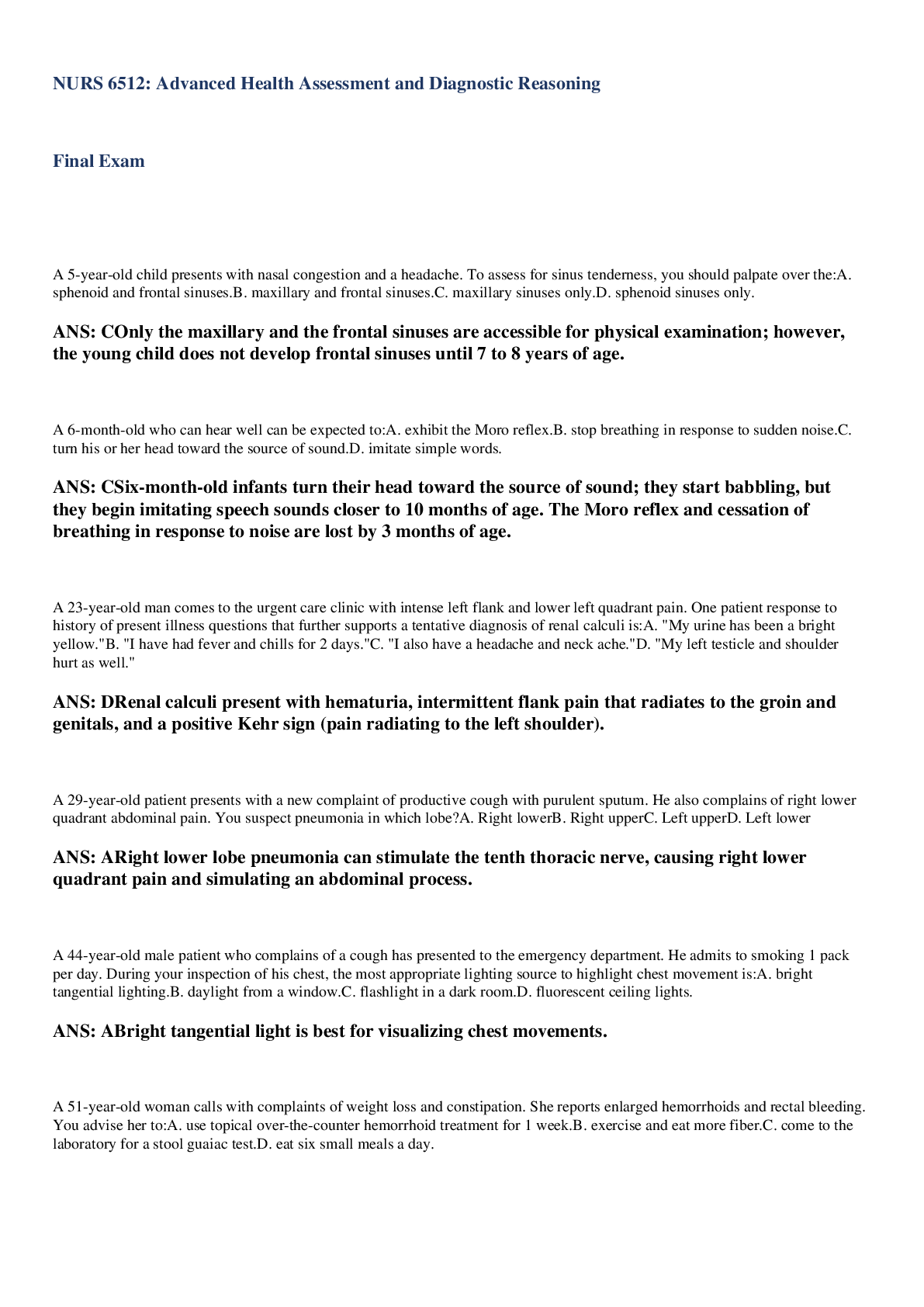
$18.5
22 Pages
NURS 6512 / NURS6512: Advanced Health Assessment and Diagnosti...

$15
15 Pages
NURS-6512N-53, Advanced Health Assessment.2020 FINAL EXAM
$15
47 Pages
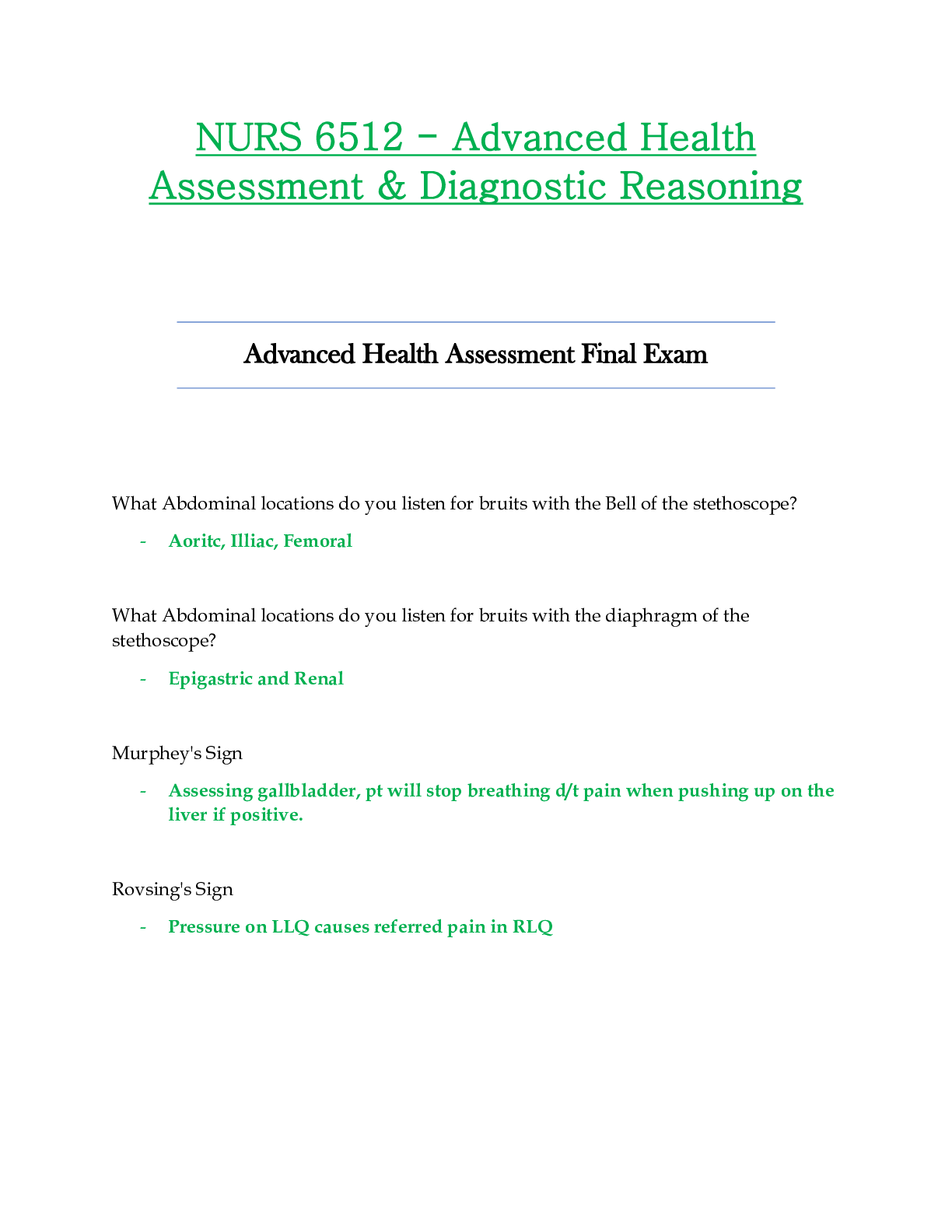
NURS 6512 / NURS6512 Final Exam (Latest): Advanced Health Asse...
$10.5
17 Pages
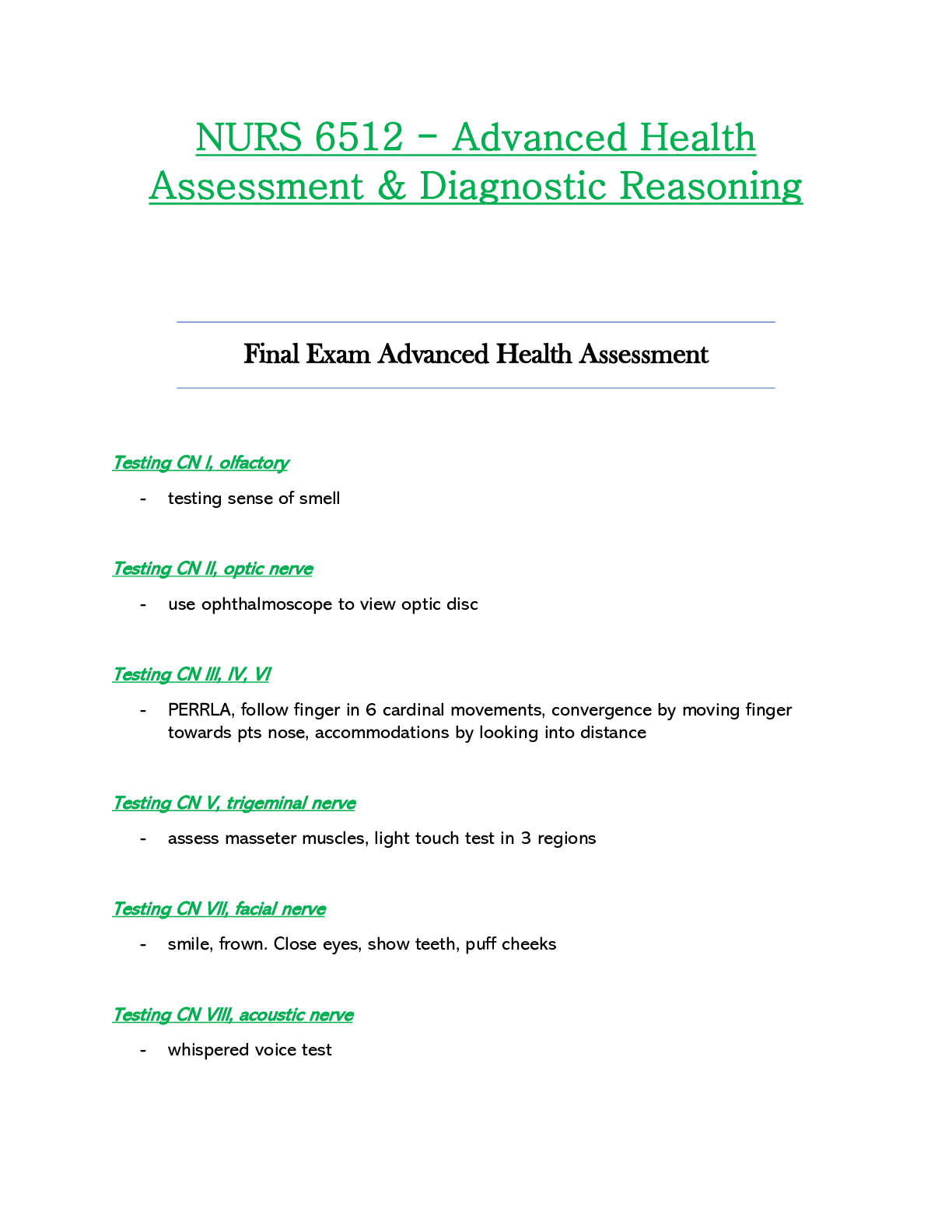
NURS 6512 / NURS6512 Final Exam (Latest): Advanced Health Asse...
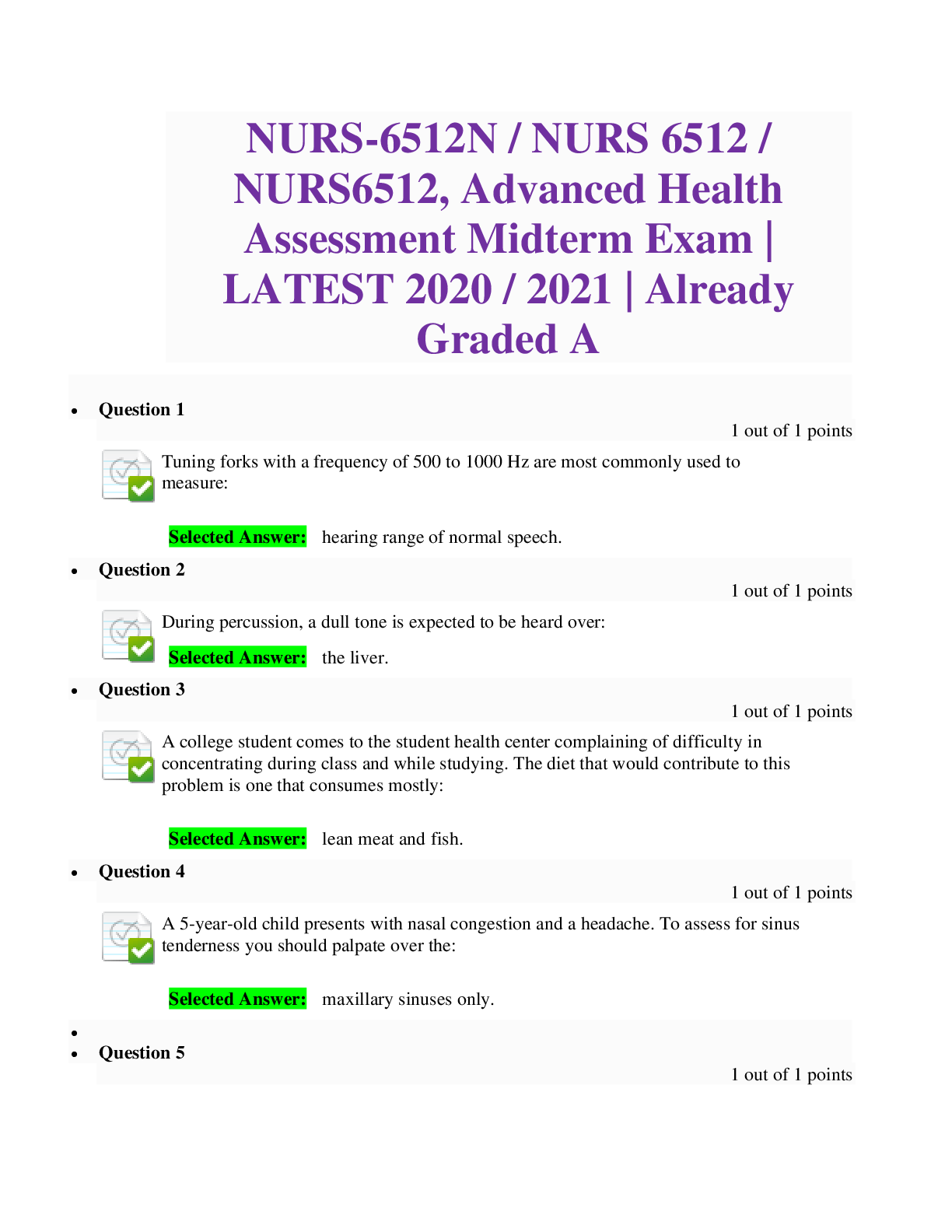
$10
16 Pages
NURS-6512N / NURS 6512 / NURS6512, Advanced Health Assessment...
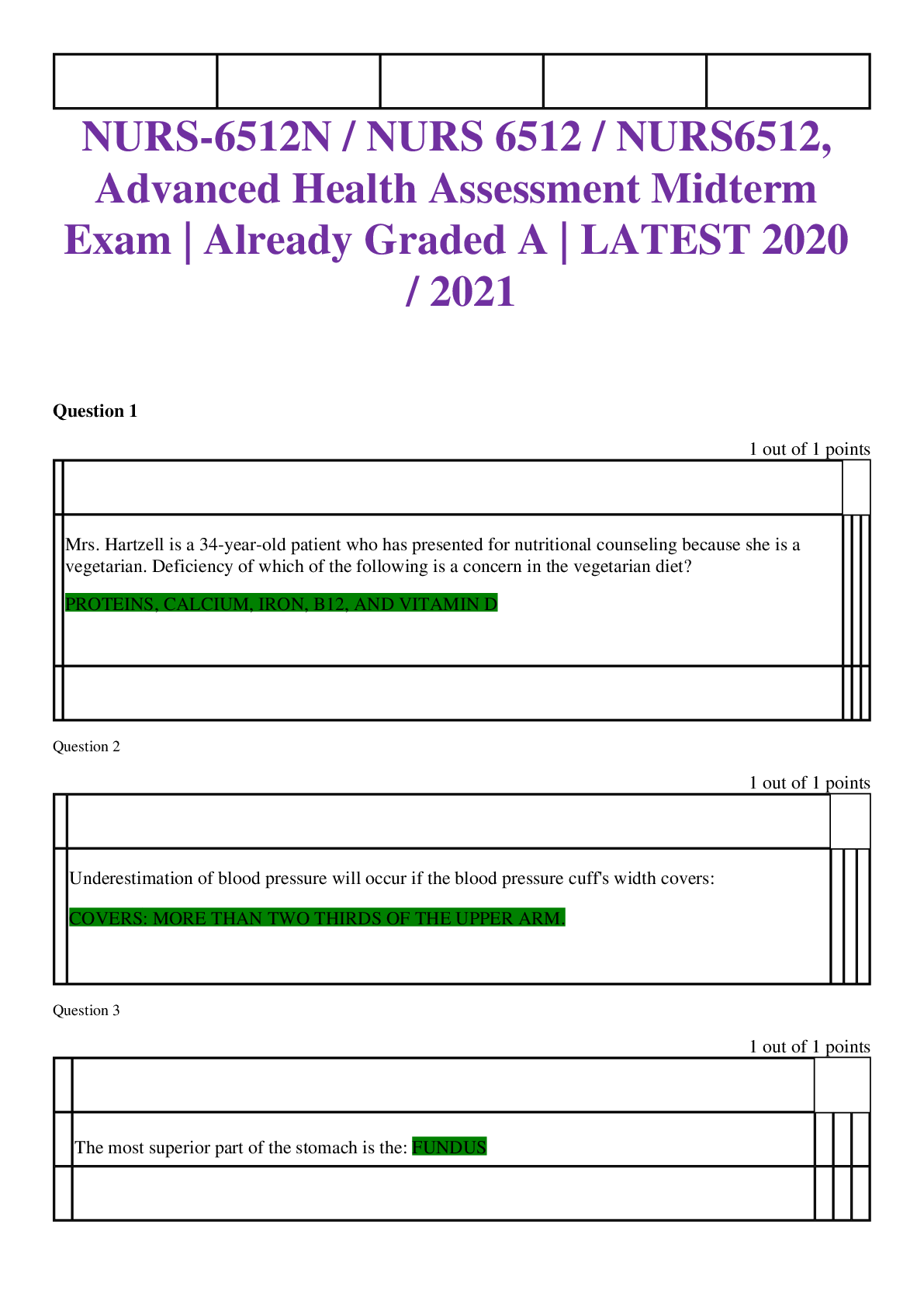
$10
26 Pages
NURS-6512N / NURS 6512 / NURS6512, Advanced Health Assessment...

$10
4 Pages
NURS-6512N / NURS 6512 / NURS6512, Advanced Health Assessment...

$26
345 Pages
eBook [PDF] Barash, Cullen, and Stoelting's Clinical Anesthesi...

$29
1067 Pages
eBook [PDF] Burns' Pediatric Primary Care 7th Edition BY Dawn...

$16
137 Pages
Test Bank for Burns' Pediatric Primary Care 7th Edition by Daw...
$15
135 Pages
Burns Pediatric Primary Care 7th Edition All Chapters Complete...
$26
209 Pages
Burns' Pediatric Primary Care, 7th Edition by Garzon, Barber S...
More related documents below