Economics > QUESTIONS & ANSWERS > ESOC 316 FA19 001 Quiz 4. Graded A (All)
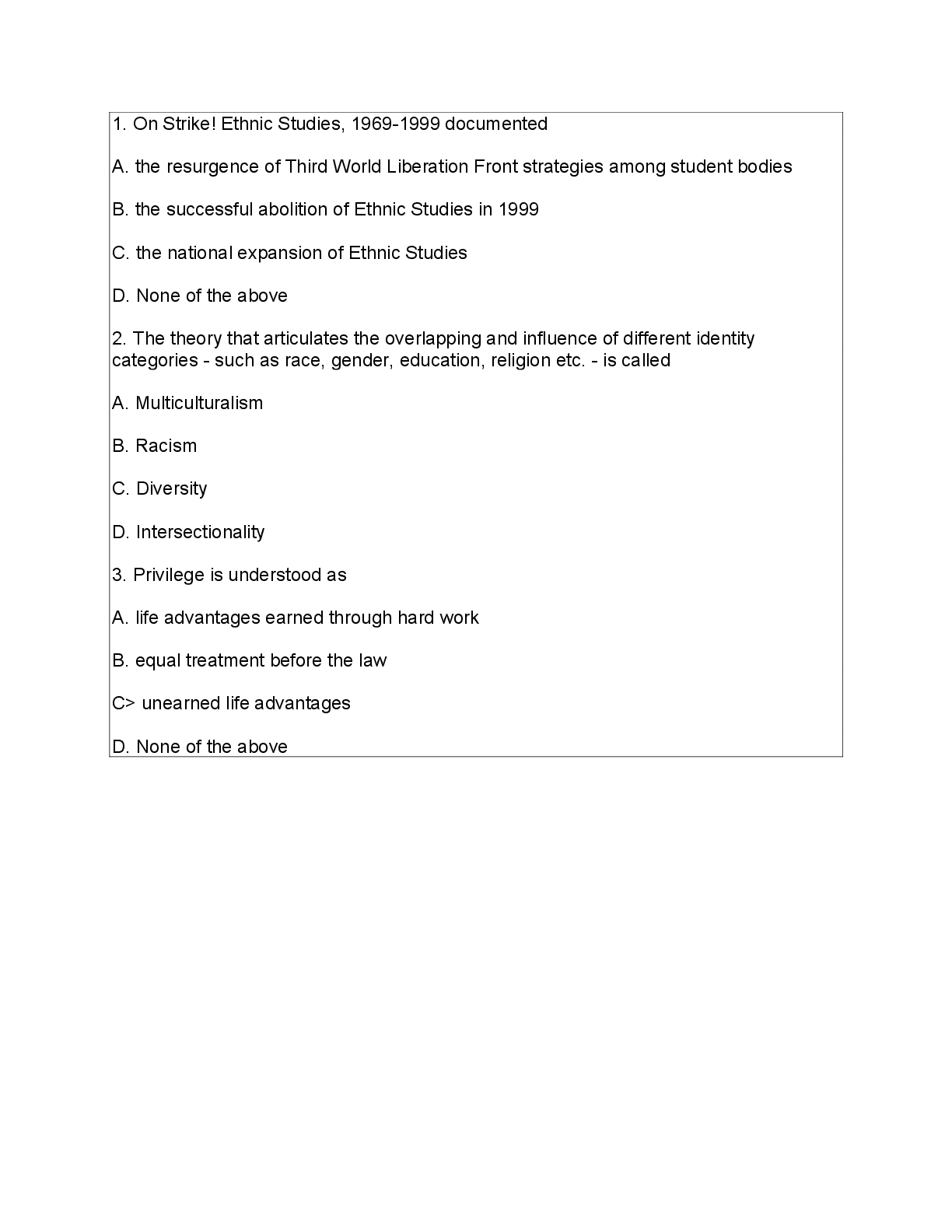
ESOC 316 FA19 001 Quiz 4. Graded A
Document Content and Description Below
Last updated: 3 years ago
Preview 1 out of 2 pages
Instant download

Buy this Document to get the Full Access Instantly
Provided by Students Who Aced it
We Verify Document Content to Gurantee Accuracy
Reviews( 0 )
Document information
Connected school, study & course
About the document
Uploaded On
Dec 09, 2019
Number of pages
2
Written in
All

Additional information
This document has been written for:
Uploaded
Dec 09, 2019
Downloads
0
Views
413
Topic Tags
Related Subjects & Courses
Explore similar study resources and related concepts.
Recommended For You
Get more on QUESTIONS & ANSWERS »

KOR 352 FA19 01 Week7 Quiz. 100% Graded | University Of Arizon...


University of California, Berkeley - CS 70FA19hw08sol CS 70 Di...


University of California, BerkeleyCS 70FA19hw13sol.Discrete Ma...

University of California, Berkeley - CS 70FA19hw11sol Fall 20...
Essentials of Economics 5th Edition, By Stanley Brue, Campbell...
Test Bank Economics: Principles, Problems, and Policies, 19th...
MicroEconomics A Contemporary Introduction 11th Edition By Wil...
MicroEconomics A Contemporary Introduction 11th Edition By Wil...
TEST BANK for Introduction to Econometrics 2nd Second Edition...
Economic Development, 13th edition by Michael Todaro; Stephen...
TEST BANK for Contemporary Labor Economics 12th Edition by McC...