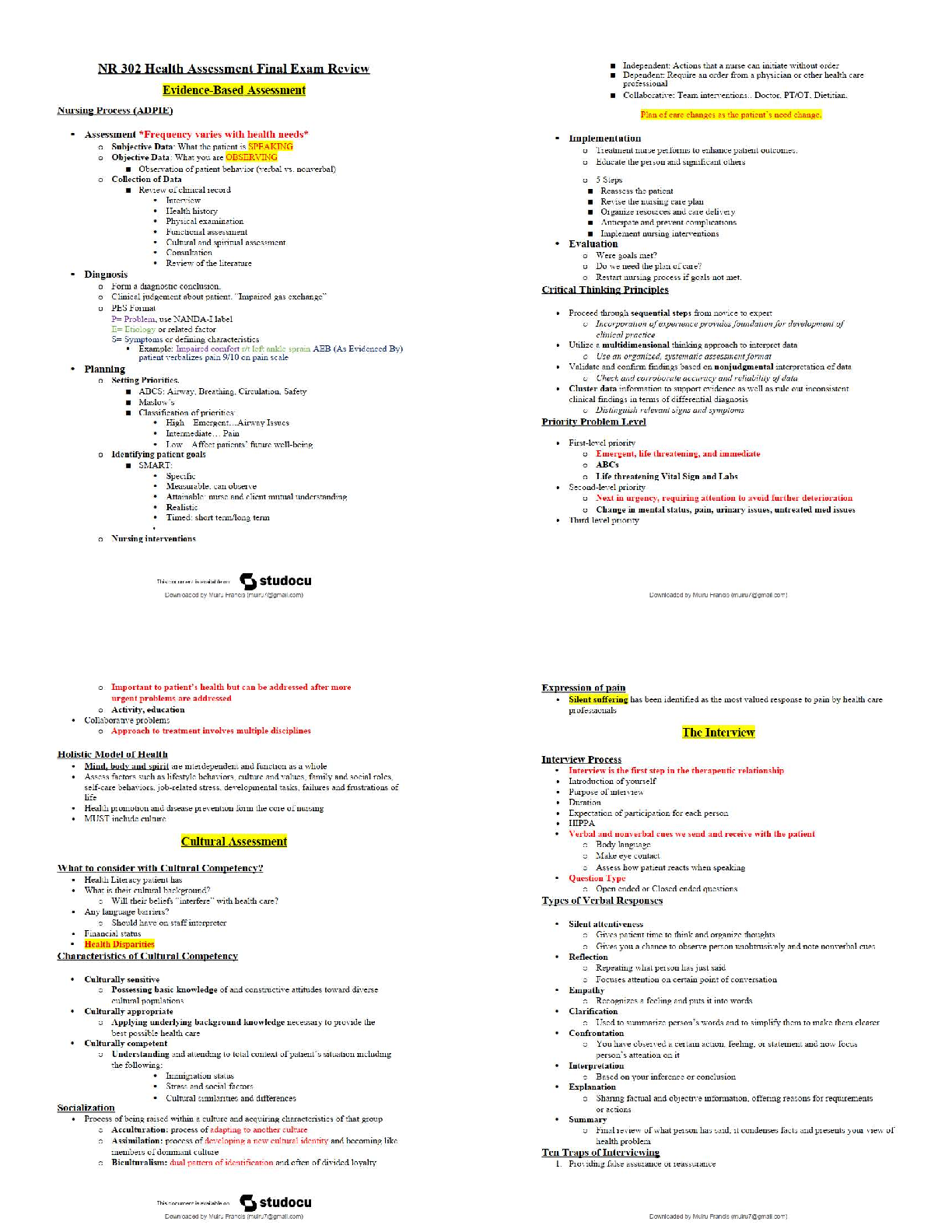
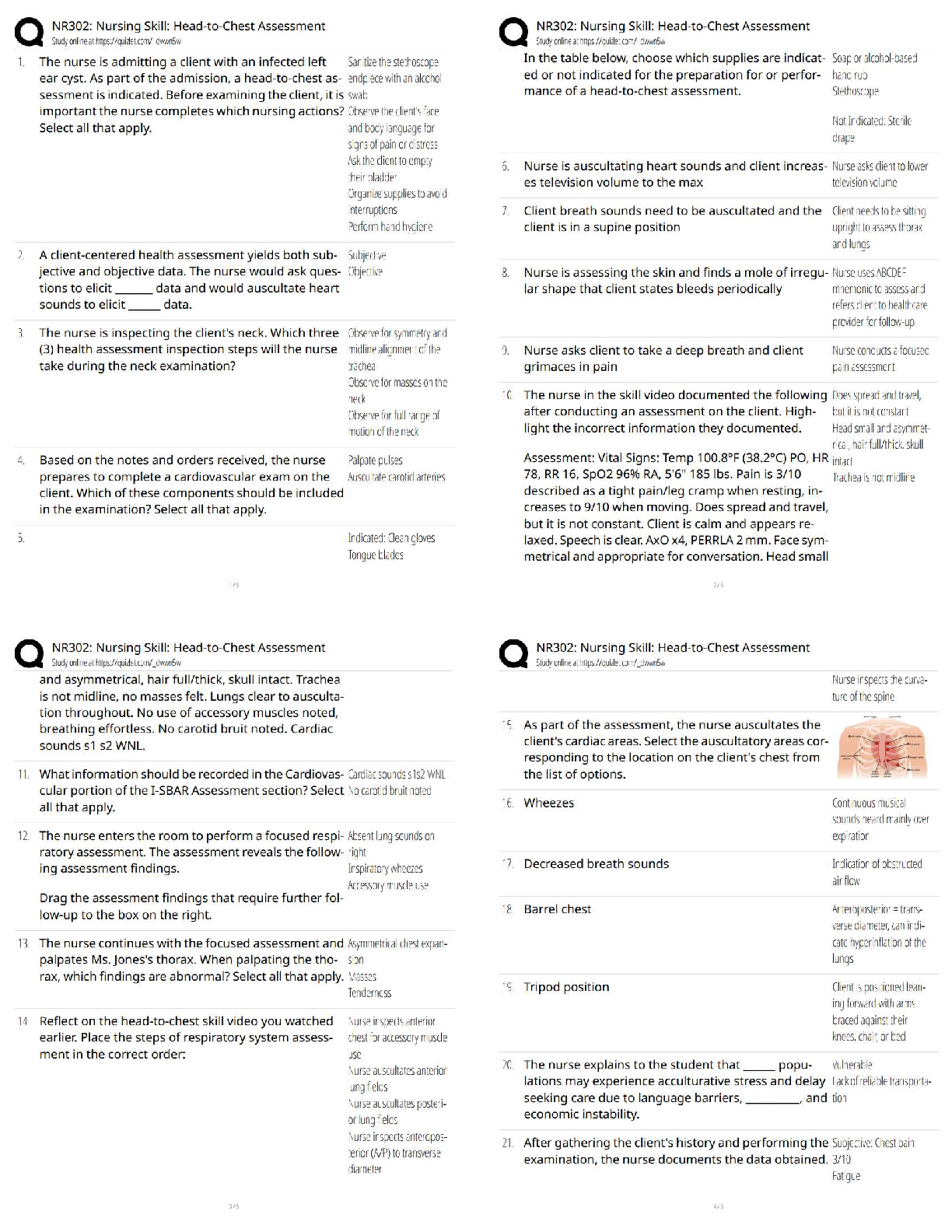
NR 302 Practice NCLEX questions and answers Exam 1-2022
Document Content and Description Below
1. Which of the following is an example of objective data?
a. Alert and oriented
b. Dizziness
c. An earache
d. A sore throat
2. When completing a health assessment, which of the following actions most demonstrates
...
[Show More]
Last updated: 3 years ago
Preview 1 out of 3 pages
Instant download

Buy this Document to get the Full Access Instantly
Provided by Students Who Aced it
We Verify Document Content to Gurantee Accuracy
Reviews( 0 )
Document information
Connected school, study & course
About the document
Uploaded On
Jun 16, 2022
Number of pages
3
Written in
All

Additional information
This document has been written for:
Uploaded
Jun 16, 2022
Downloads
0
Views
117
Topic Tags
Recommended For You
Get more on EXAM »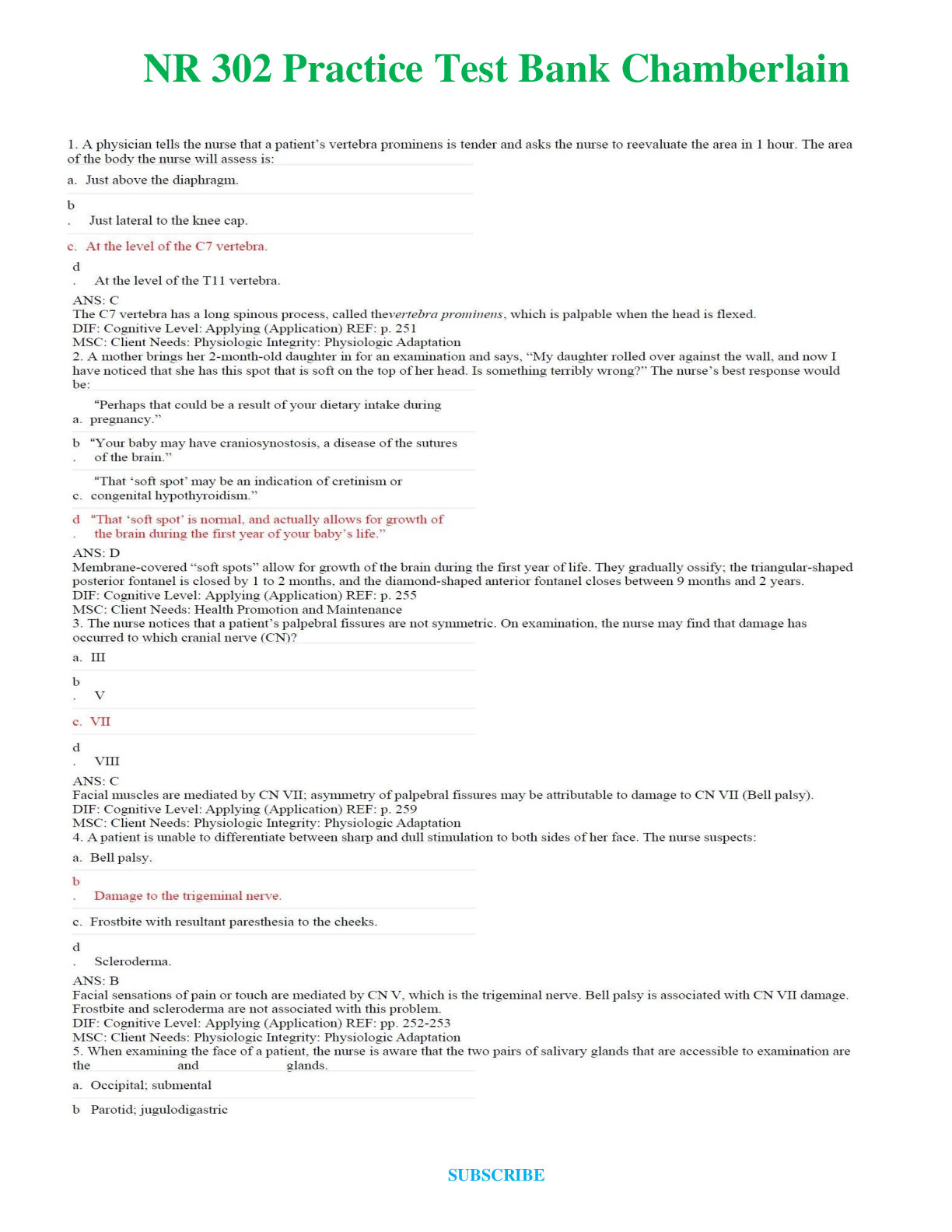
$12.5
187 Pages
NR 302 Practice Test Bank Chamberlain Questions and Answers...

$9
6 Pages
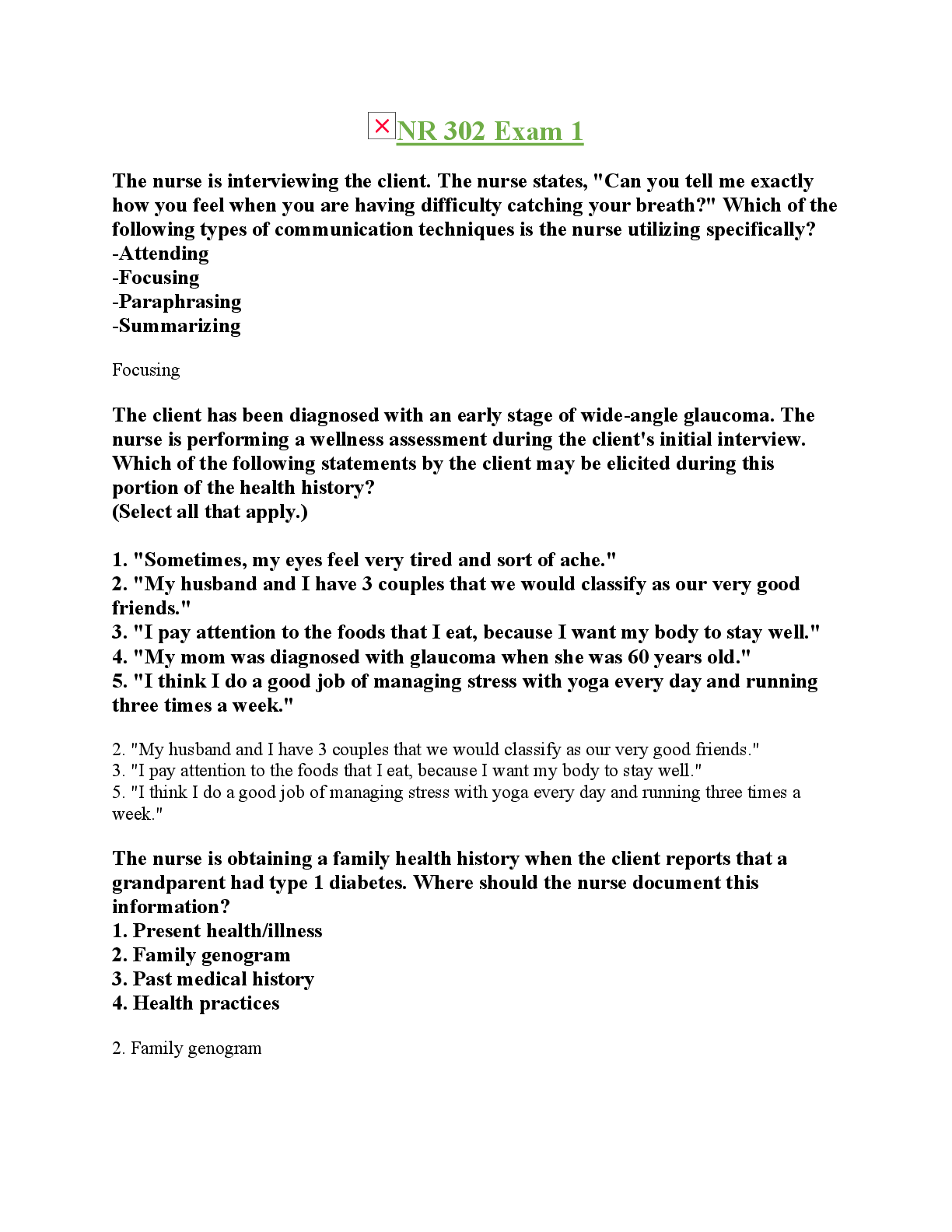
NR302 / NR 302 Health Assessment Exam 2 Latest Update Chamberl...

$9
26 Pages
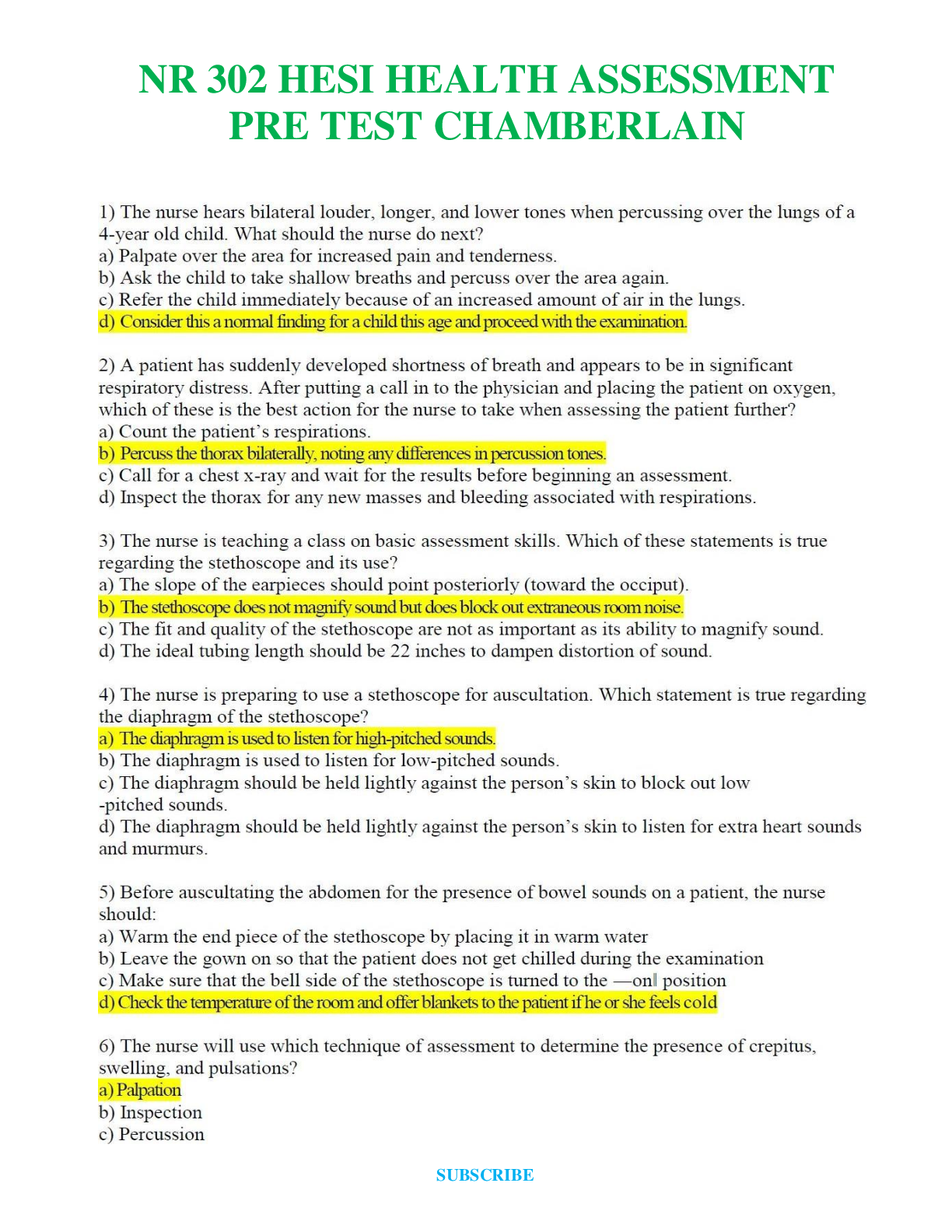
NR302 / NR 302 Final Exam Q & A Health Assessment - Chamberlai...
$12.5
32 Pages
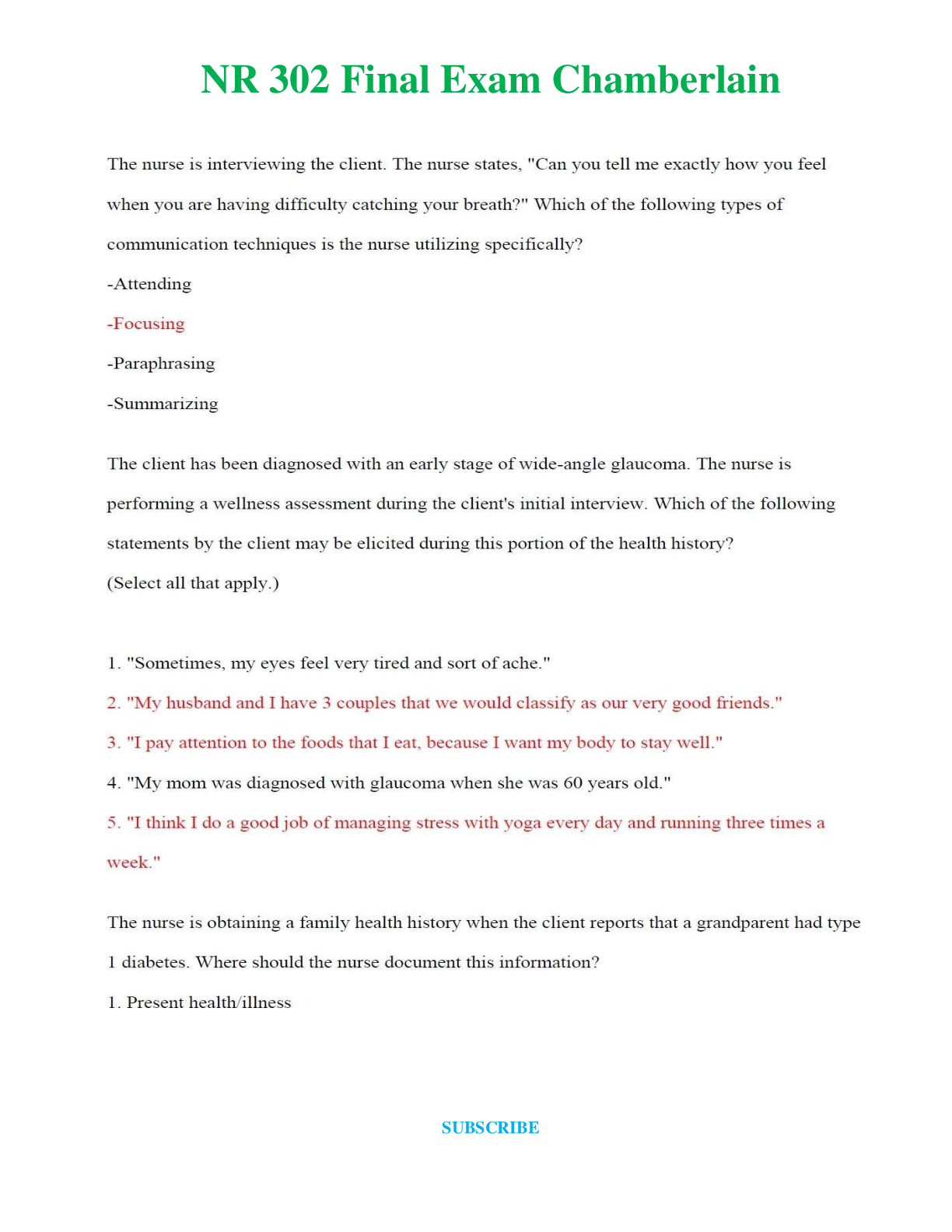
NR 302 HESI HEALTH ASSESSMENT PRE TEST CHAMBERLAIN Question...
$12.5
32 Pages
NR 302 Final Exam Chamberlain Questions and Answers (Verifi...
$9
15 Pages
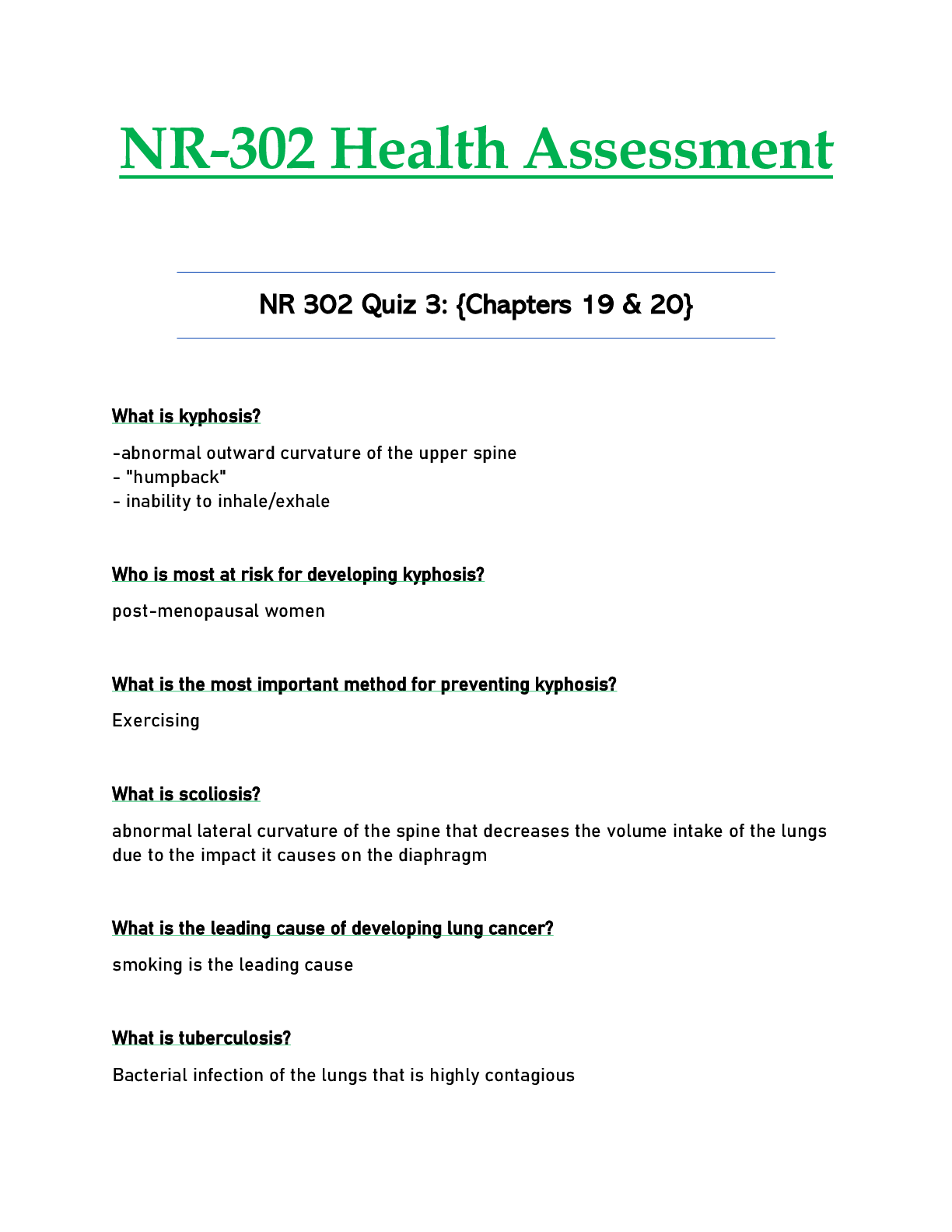
NR302 / NR 302 Quiz 3 Updated: Health Assessment - Chamberlain


$7.5
11 Pages
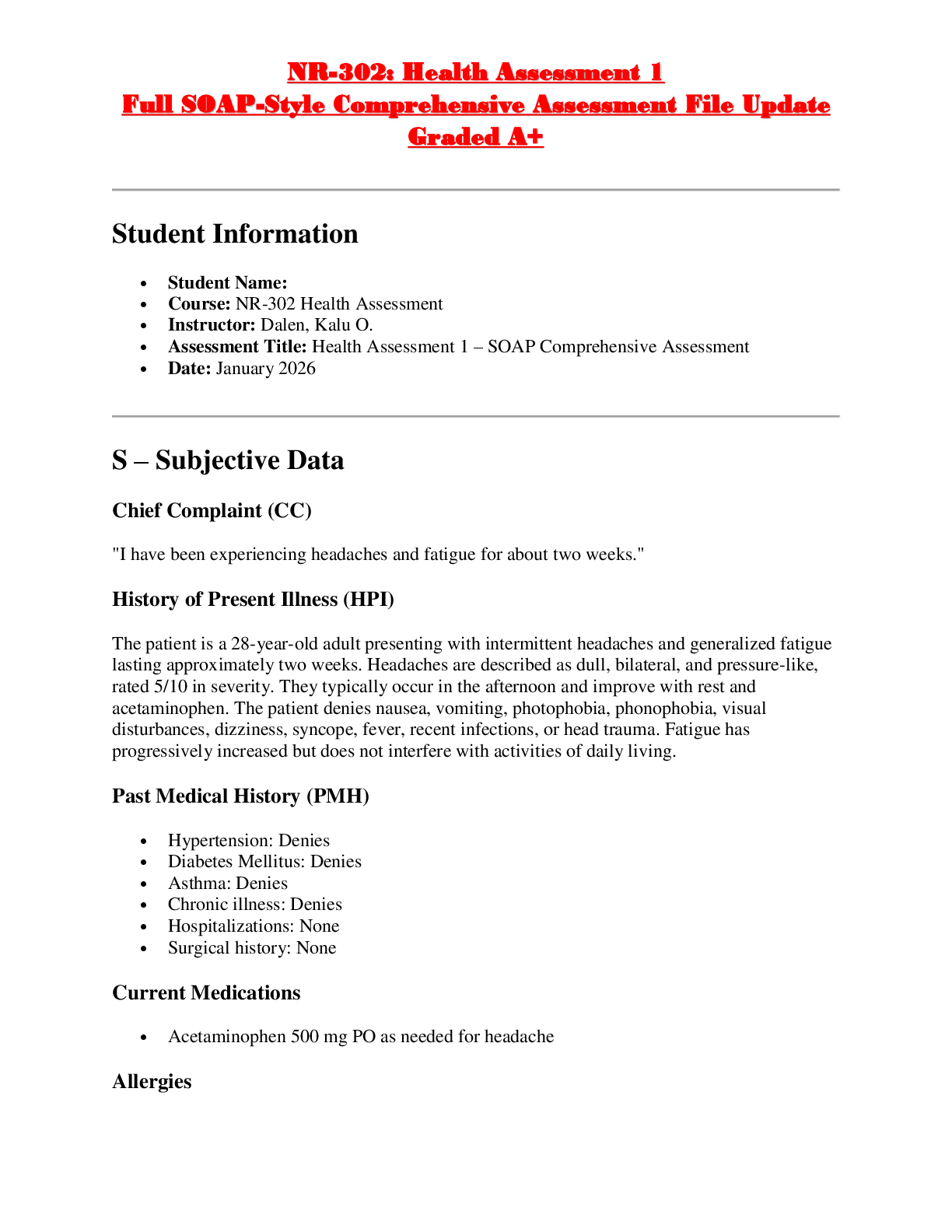
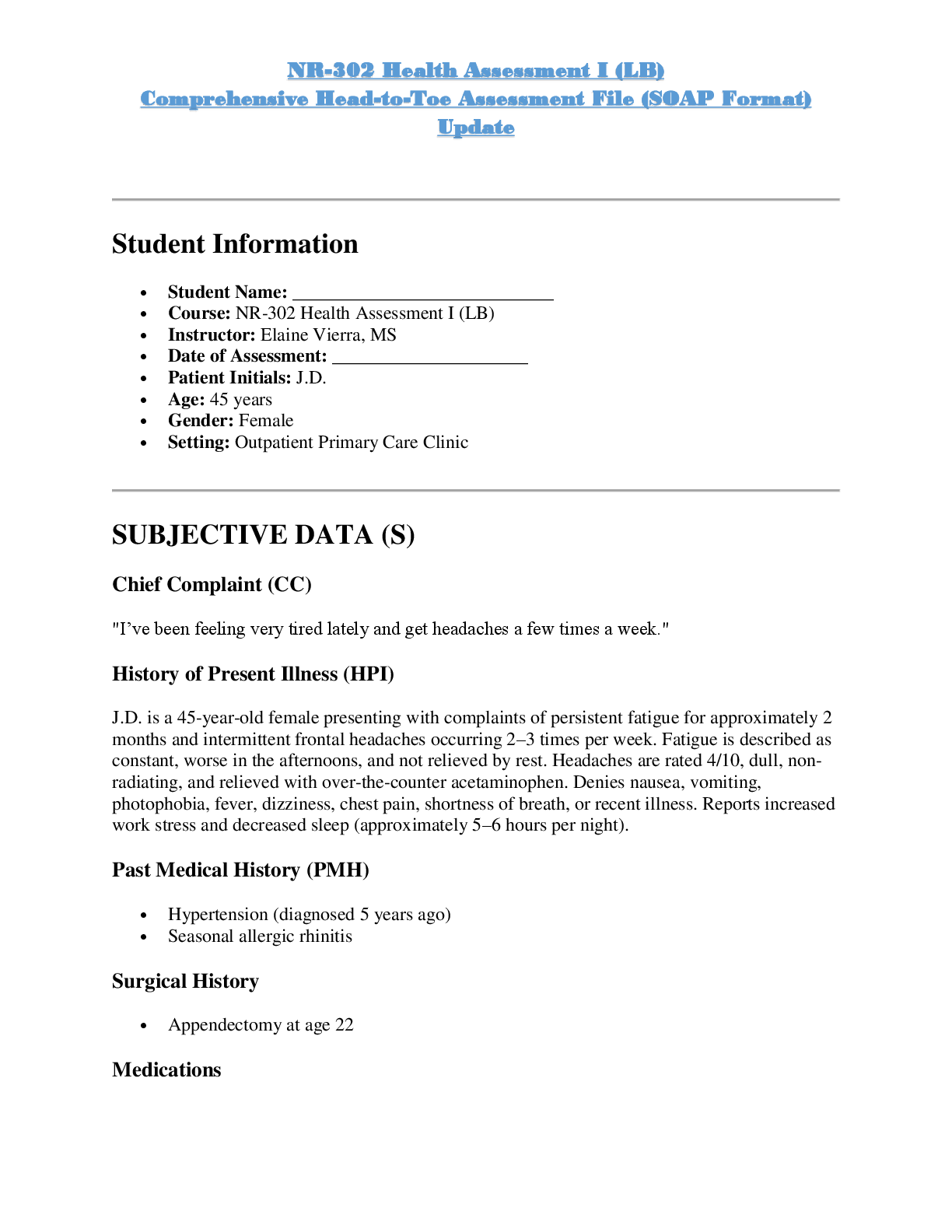
Health History RUA NR302 Health Assessment I Answered Fall 202...



More related documents below