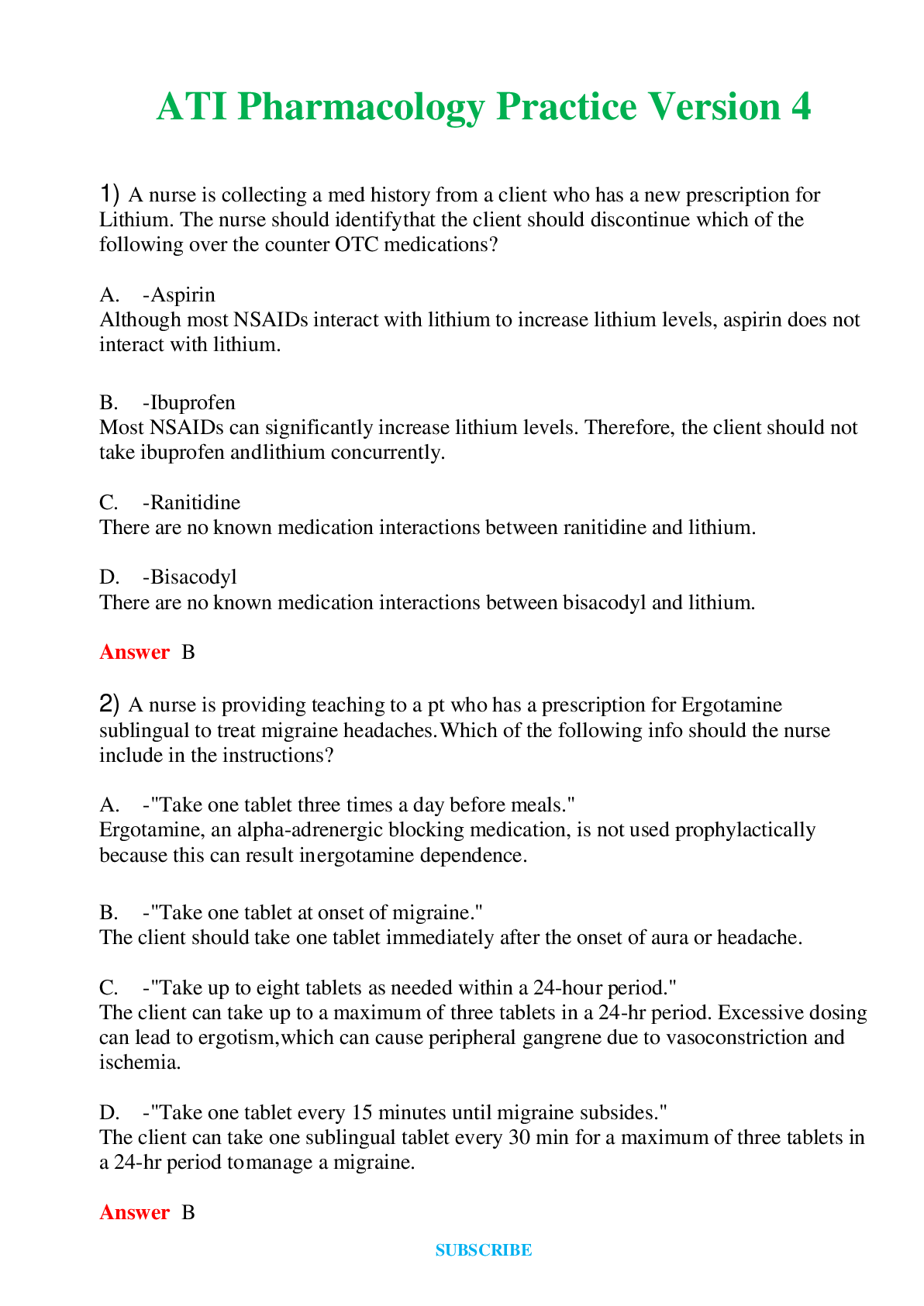
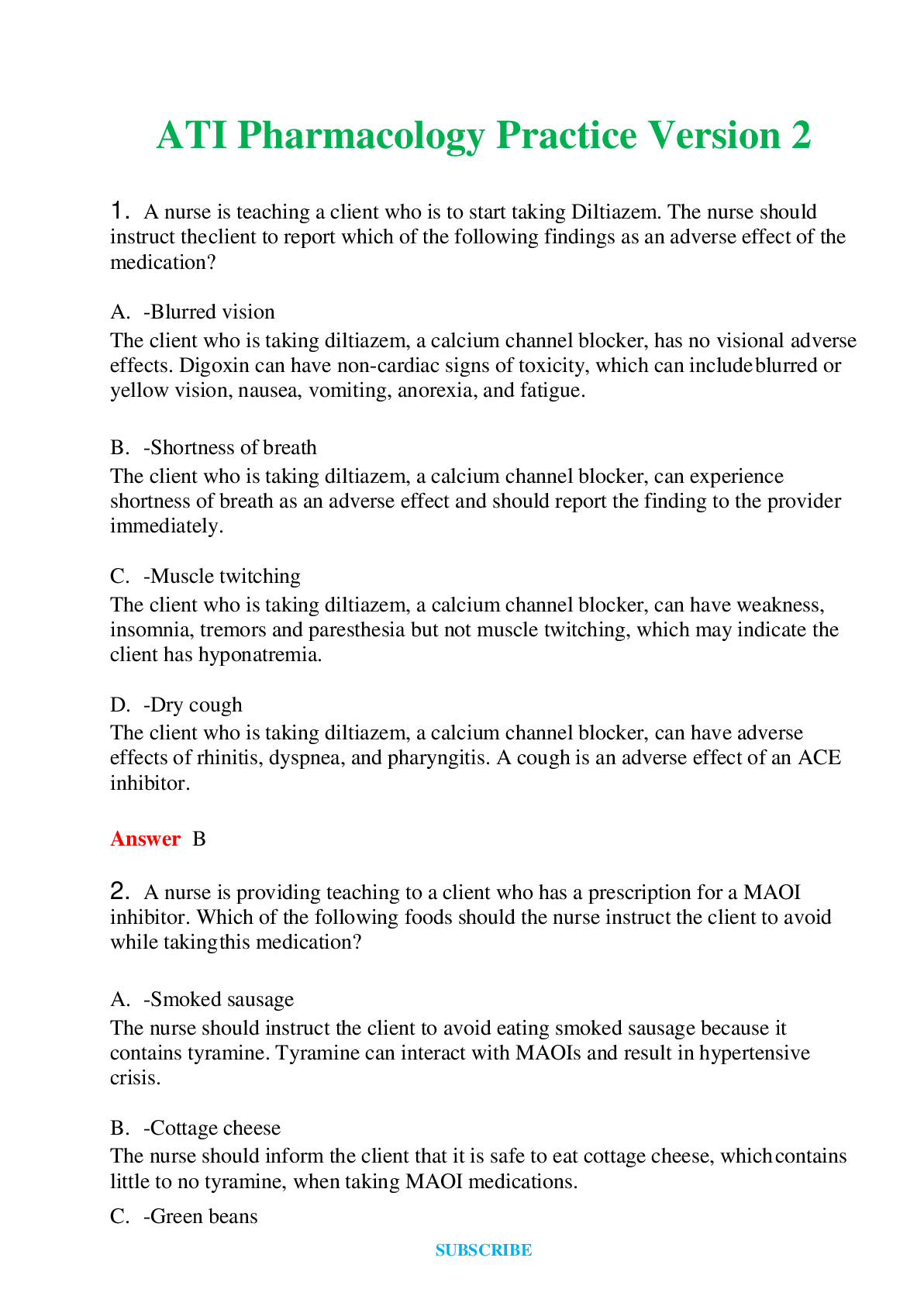
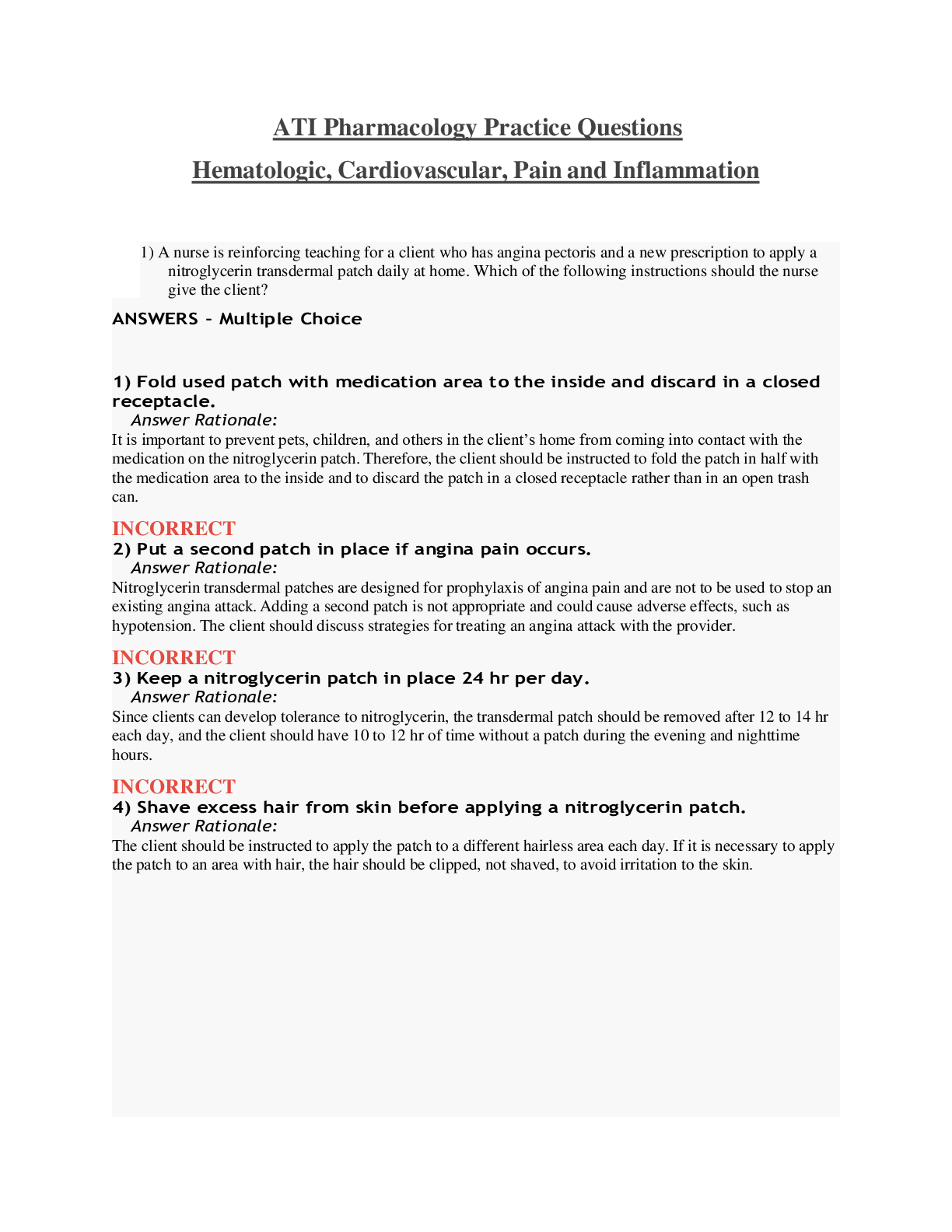
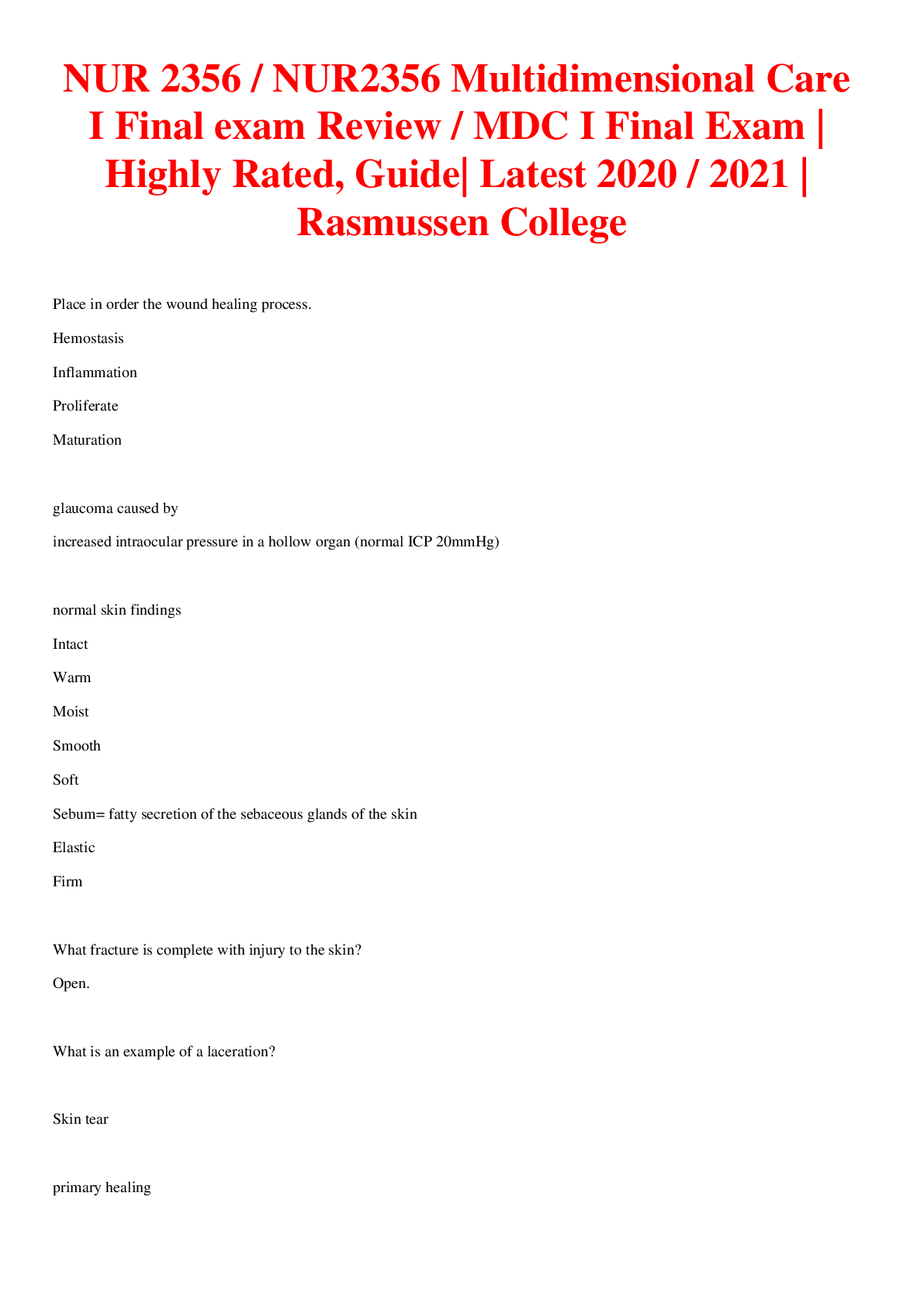
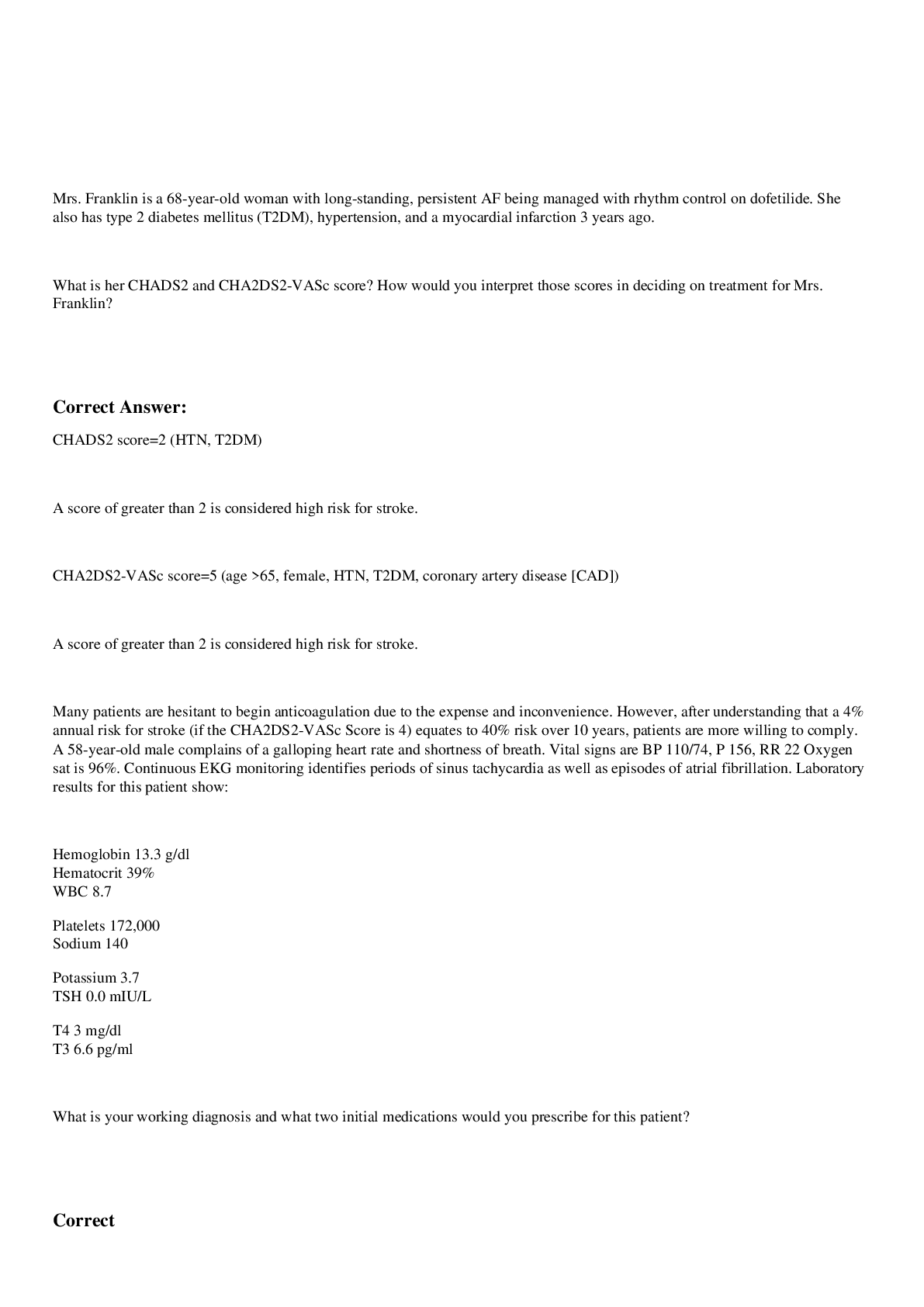
ATI Pharmacology Practice Version 2 | LATEST, Questions and Answers 1. A nurse is teaching a client who is to start taking Diltiazem. The nurse should instruct the client to report which of the fol ... lowing findings as an adverse effect of the medication? -Blurred vision The client who is taking diltiazem, a calcium channel blocker, has no visional adverse effects. Digoxin can have non-cardiac signs of toxicity, which can include blurred or yellow vision, nausea, vomiting, anorexia, and fatigue. -Shortness of breath = CORRECT ANSWER The client who is taking diltiazem, a calcium channel blocker, can experience shortness of breath as an adverse effect and should report the finding to the provider immediately. -Muscle twitching The client who is taking diltiazem, a calcium channel blocker, can have weakness, insomnia, tremors and paresthesia but not muscle twitching, which may indicate the client has hyponatremia. -Dry cough The client who is taking diltiazem, a calcium channel blocker, can have adverse effects of rhinitis, dyspnea, and pharyngitis. A cough is an adverse effect of an ACE inhibitor. 2. A nurse is providing teaching to a client who has a prescription for a MAOI inhibitor. Which of the following foods should the nurse instruct the client to avoid while taking this medication? -Smoked sausage = CORRECT ANSWER The nurse should instruct the client to avoid eating smoked sausage because it contains tyramine. Tyramine can interact with MAOIs and result in hypertensive crisis. -Cottage cheese The nurse should inform the client that it is safe to eat cottage cheese, which contains little to no tyramine, when taking MAOI medications. -Green beans The nurse should inform the client that it is safe to eat green beans, which contain little to no tyramine, when taking MAOI medications. -Apple pie The nurse should inform the client that it is safe to eat apple pie, which contains little to no tyramine, when taking MAOI medications. 3. A nurse is providing teaching to a client who is to start taking Lisinopril. Which of the following findings is an adverse effect that the nurse should instruct the client to monitor and report to the provider? -Hair loss Alopecia, or hair loss, is not an adverse effect of lisinopril. -Ringing in the ears Tinnitus, or ringing in the ears, is not an adverse effect of lisinopril. -Facial flushing Facial flushing is not an adverse effect of lisinopril. However, facial edema is a serious effect that the client should report to the provider. -Dry cough = CORRECT ANSWER A buildup of bradykinin from taking lisinopril can cause a client to have a dry cough and lead to life-threatening consequences. The client should report the finding to the provider. 4. A nurse is providing teaching to a client who is to start taking Sumatriptan. Which of the following adverse effects should the nurse instruct the client to monitor for and report to the provider? -Chest pressure Sumatriptan is an antimigraine agent which can cause coronary vasospasms, resulting in angina. The client should report chest pressure or heavy arms to the provider. -White patches on the tongue White patches on the tongue can indicate a fungal infection, which is not an adverse effect of sumatriptan. [Show More]
Last updated: 3 years ago
Preview 1 out of 31 pages
Buy this document to get the full access instantly
Instant Download Access after purchase
Buy NowInstant download
We Accept:
Can't find what you want? Try our AI powered Search
Connected school, study & course
About the document
Uploaded On
Nov 25, 2020
Number of pages
31
Written in
All
This document has been written for:
Uploaded
Nov 25, 2020
Downloads
0
Views
131
Scholarfriends.com Online Platform by Browsegrades Inc. 651N South Broad St, Middletown DE. United States.
We're available through e-mail, Twitter, Facebook, and live chat.
FAQ
Questions? Leave a message!
Copyright © Scholarfriends · High quality services·