NSG 5003 | NSG5003- Advanced Pathophysiology Exam 3 practice questions
Document Content and Description Below
The primary characteristic that differentiates the immune response from other protective mechanisms is
that the immune response is:
specific to the antigen that initiates it.
B lymphocytes mature and undergo changes t
...
[Show More]
Last updated: 3 years ago
Preview 1 out of 12 pages
Instant download

Buy this Document to get the Full Access Instantly
Provided by Students Who Aced it
We Verify Document Content to Gurantee Accuracy
Reviews( 0 )
Document information
Connected school, study & course
About the document
Uploaded On
Jul 05, 2022
Number of pages
12
Written in
All

Additional information
This document has been written for:
Uploaded
Jul 05, 2022
Downloads
0
Views
101
Topic Tags
Recommended For You
Get more on EXAM »
$10
25 Pages
NSG5003 / NSG 5003: Advanced Pathophysiology Final Exam Week 1...

$10
22 Pages
NSG5003 / NSG 5003: Advanced Pathophysiology Midterm Exam Late...
$15
19 Pages
NSG 5003 Advanced Pathophysiology Midterm Exam-Questions and A...
$13
12 Pages
NSG 5003- Advanced Pathophysiology Exam 3 Practice Questions.
$15.5
18 Pages
NSG 5003 Advanced Pathophysiology Midterm Exam-Questions and A...
$13
91 Pages
NSG 5003 Advanced Pathophysiology Week 1-9 Quiz Knowledge Chec...
$15
289 Pages
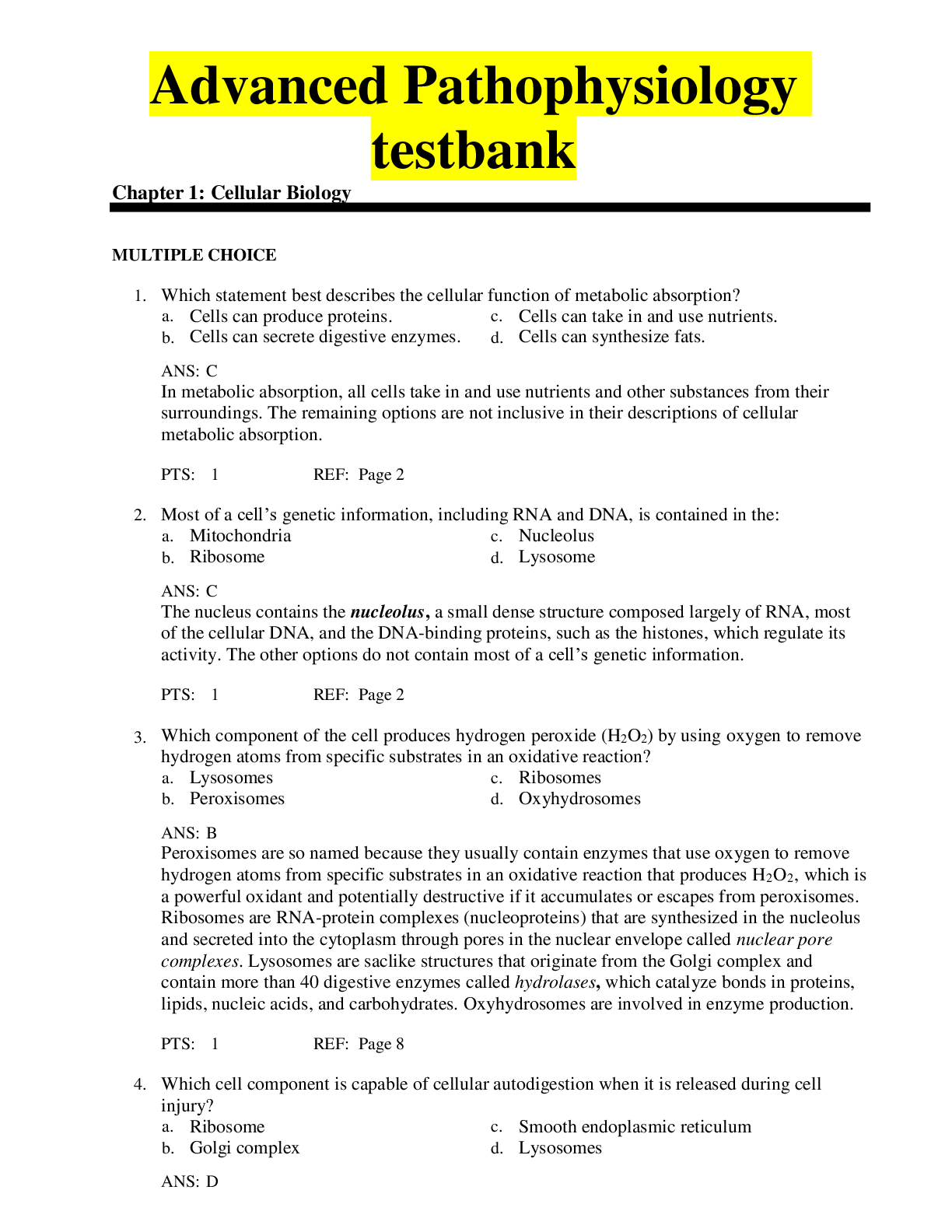
NSG 5003 pharmacology | Advanced Pathophysiology testbank, Lat...
$10
11 Pages
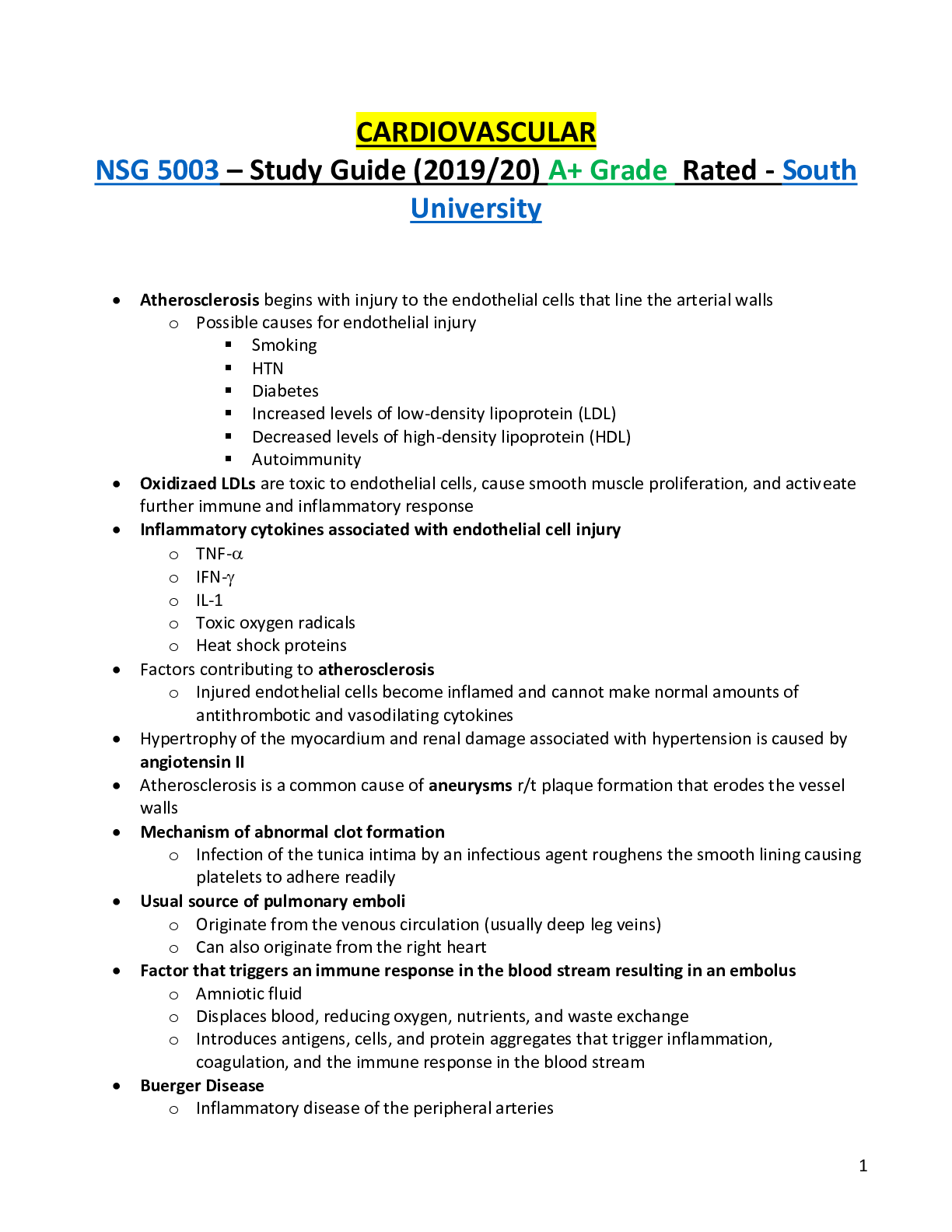
South University > NSG 5003 : CARDIOVASCULAR - Study Guide (20...

$10
9 Pages
NSG 5003 APEA CARDIO Advanced Pathophysiology | South Universi...

$10.5
16 Pages
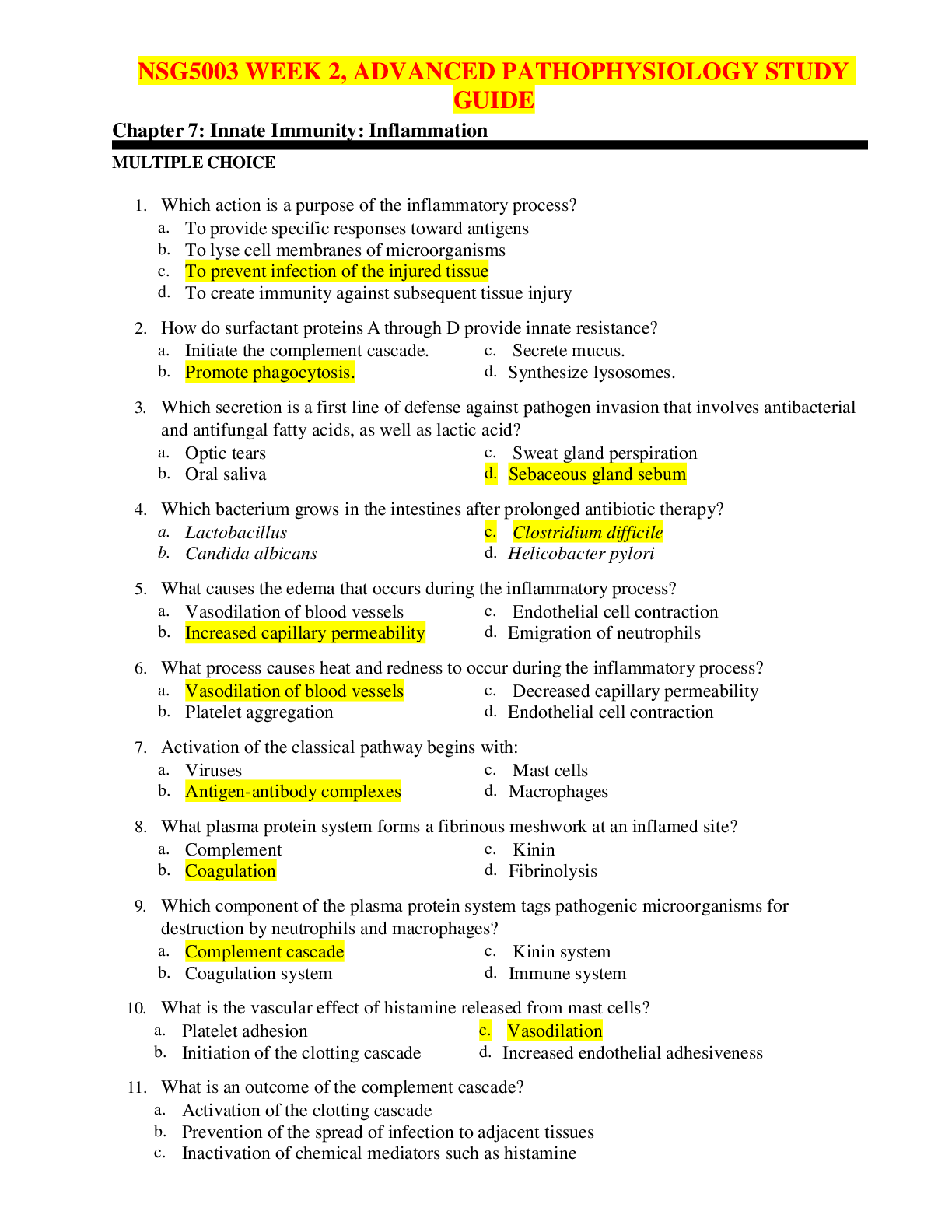
NSG5003 Week 4 Study guide, All Exam Questions & Answers

$14
7 Pages
Musculoskeletal Case Study | Week 10 Discussion NSG 5003, Late...
$29
289 Pages
NSG 5003 Test Bank, 2021 Questions and Answers with Explanatio...
.png)
$14
3 Pages
South University NSG 5003 Advanced Pathophysiology Week 3 Assi...



More related documents below