New Question Set
1. 1.ID: 20120683614
The triage nurse is assessing a victim of a stab wound. According to the paramedics, the victim was stabbed by a male attacker. The knife blade is 6 inches (7.2 cm)
...
New Question Set
1. 1.ID: 20120683614
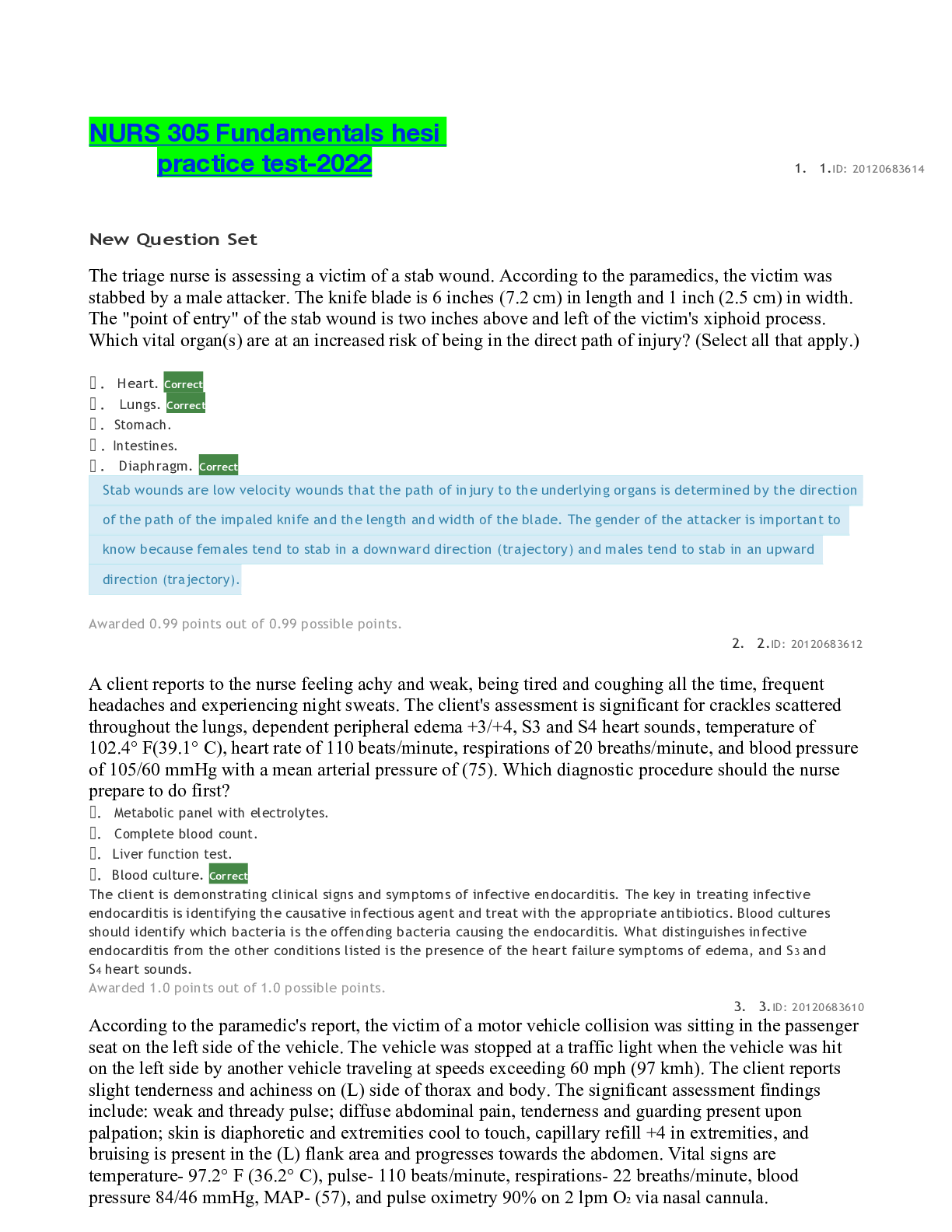
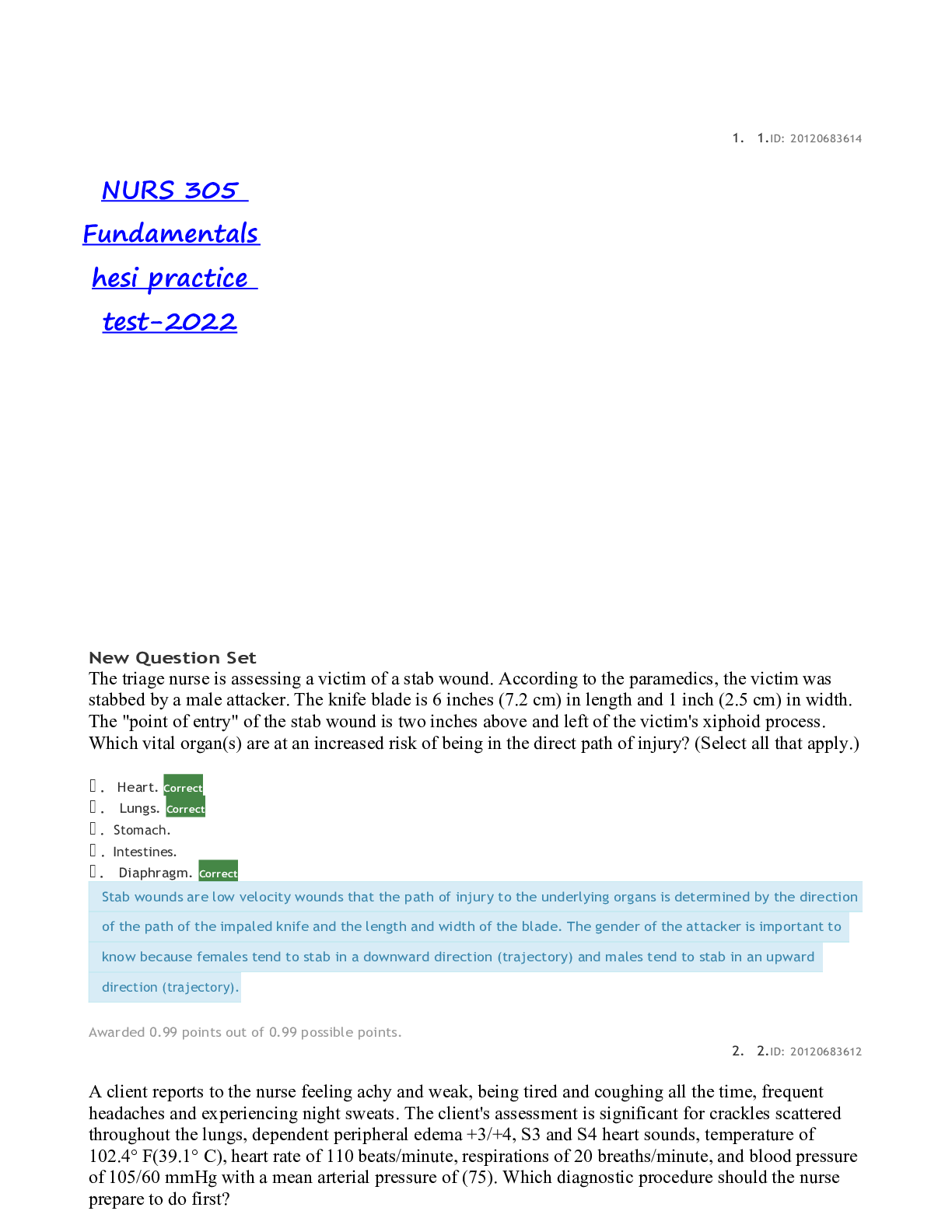
The triage nurse is assessing a victim of a stab wound. According to the paramedics, the victim was stabbed by a male attacker. The knife blade is 6 inches (7.2 cm) in length and 1 inch (2.5 cm) in width. The "point of entry" of the stab wound is two inches above and left of the victim's xiphoid process.
Which vital organ(s) are at an increased risk of being in the direct path of injury? (Select all that apply.)
. Heart. Correct
. Lungs. Correct
. Stomach.
. Intestines.
. Diaphragm. Correct
Stab wounds are low velocity wounds that the path of injury to the underlying organs is determined by the direction
of the path of the impaled knife and the length and width of the blade. The gender of the attacker is important to
know because females tend to stab in a downward direction (trajectory) and males tend to stab in an upward
direction (trajectory).
Awarded 0.99 points out of 0.99 possible points.
2. 2.ID: 20120683612
A client reports to the nurse feeling achy and weak, being tired and coughing all the time, frequent headaches and experiencing night sweats. The client's assessment is significant for crackles scattered throughout the lungs, dependent peripheral edema +3/+4, S3 and S4 heart sounds, temperature of 102.4° F(39.1° C), heart rate of 110 beats/minute, respirations of 20 breaths/minute, and blood pressure of 105/60 mmHg with a mean arterial pressure of (75). Which diagnostic procedure should the nurse prepare to do first?
. Metabolic panel with electrolytes.
. Complete blood count.
. Liver function test.
. Blood culture. Correct
The client is demonstrating clinical signs and symptoms of infective endocarditis. The key in treating infective endocarditis is identifying the causative infectious agent and treat with the appropriate antibiotics. Blood cultures should identify which bacteria is the offending bacteria causing the endocarditis. What distinguishes infective endocarditis from the other conditions listed is the presence of the heart failure symptoms of edema, and S3 and S4 heart sounds.
Awarded 1.0 points out of 1.0 possible points.
3. 3.ID: 20120683610
According to the paramedic's report, the victim of a motor vehicle collision was sitting in the passenger seat on the left side of the vehicle. The vehicle was stopped at a traffic light when the vehicle was hit on the left side by another vehicle traveling at speeds exceeding 60 mph (97 kmh). The client reports slight tenderness and achiness on (L) side of thorax and body. The significant assessment findings include: weak and thready pulse; diffuse abdominal pain, tenderness and guarding present upon palpation; skin is diaphoretic and extremities cool to touch, capillary refill +4 in extremities, and bruising is present in the (L) flank area and progresses towards the abdomen. Vital signs are temperature- 97.2° F (36.2° C), pulse- 110 beats/minute, respirations- 22 breaths/minute, blood pressure 84/46 mmHg, MAP- (57), and pulse oximetry 90% on 2 lpm O2 via nasal cannula.
CONTINUED........
[Show More]