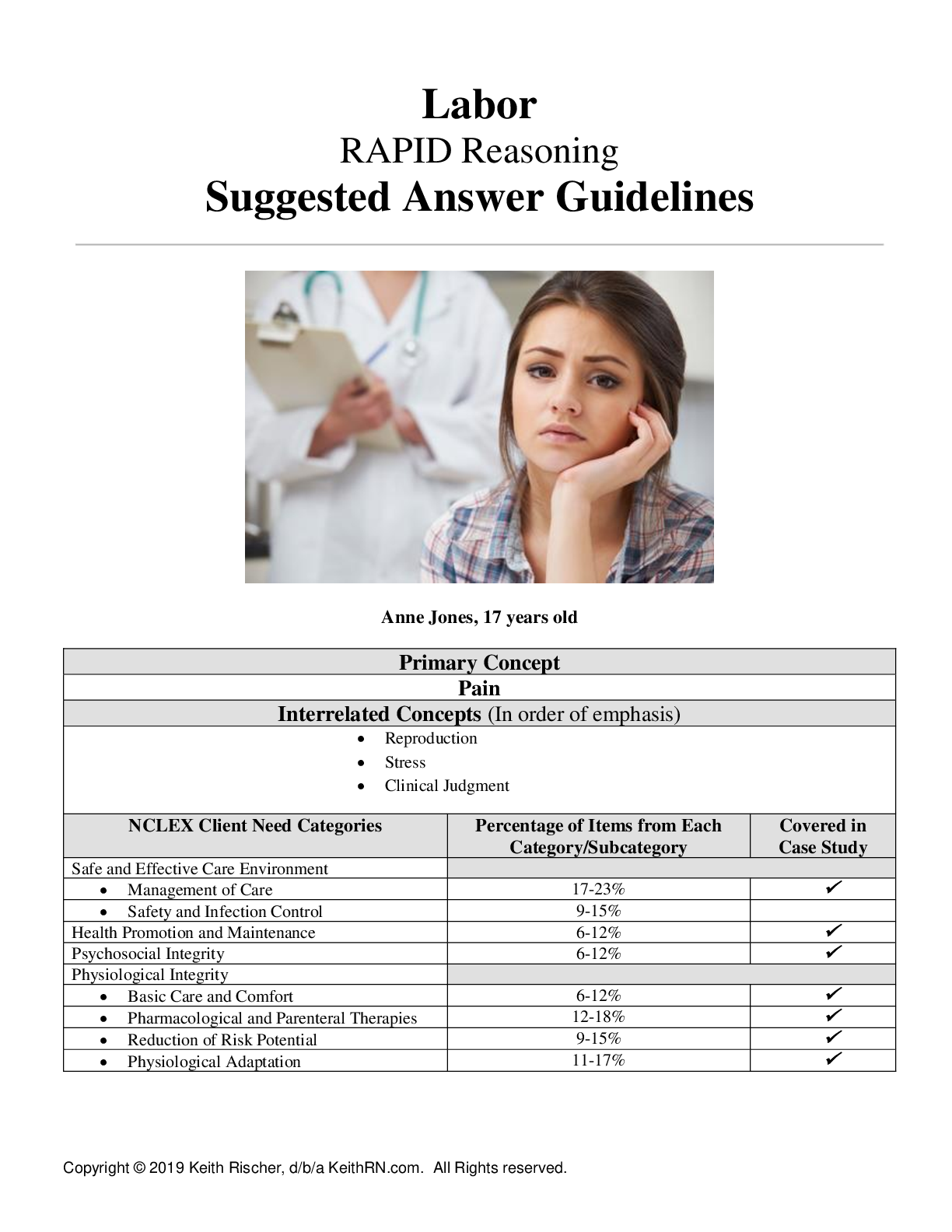
Health Care > CASE STUDY > NUR 641E Week 3 Assignment Acid-based and Electrolyte Case Study (All)
NUR 641E Week 3 Assignment Acid-based and Electrolyte Case Study
Document Content and Description Below
Last updated: 3 years ago
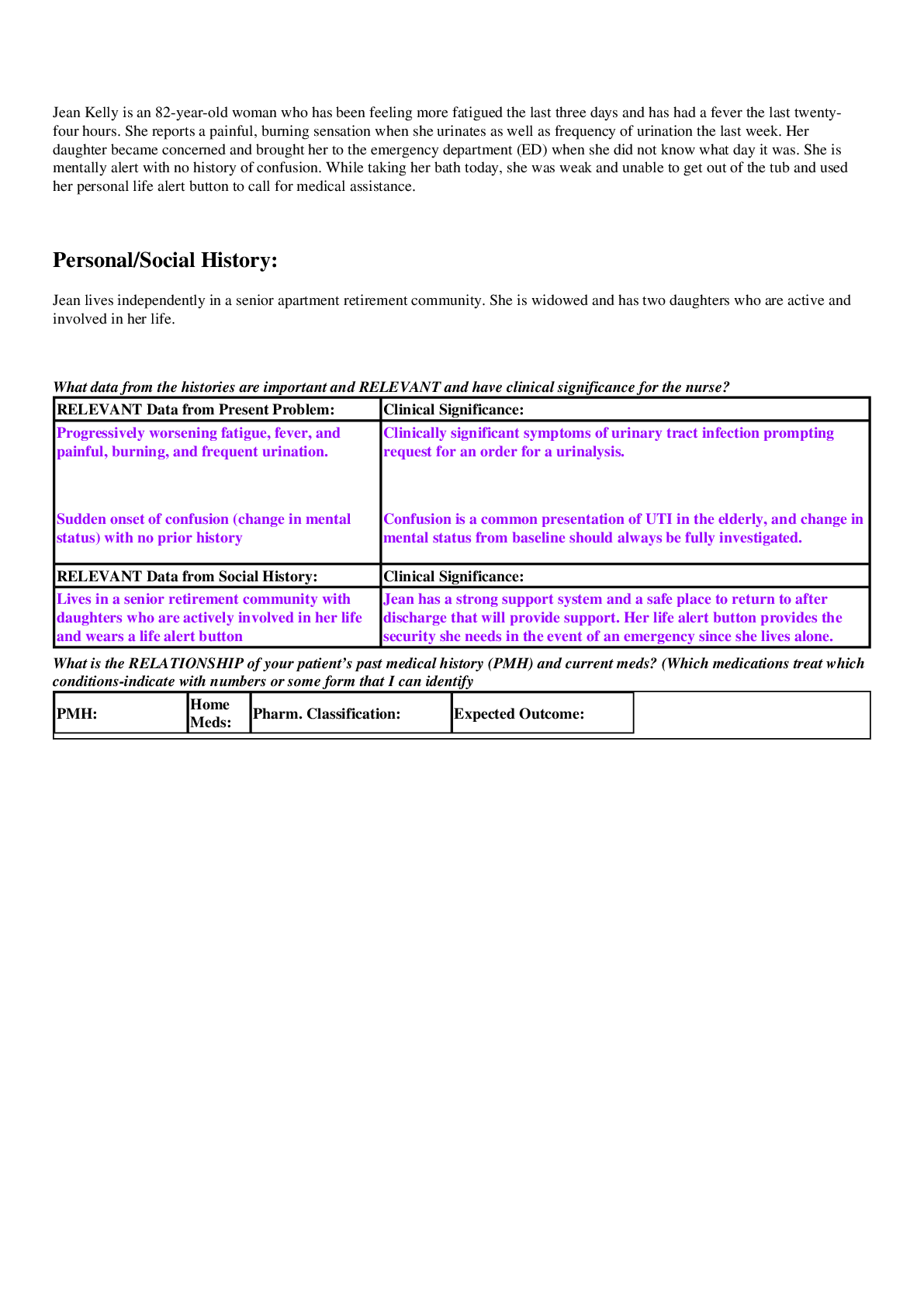
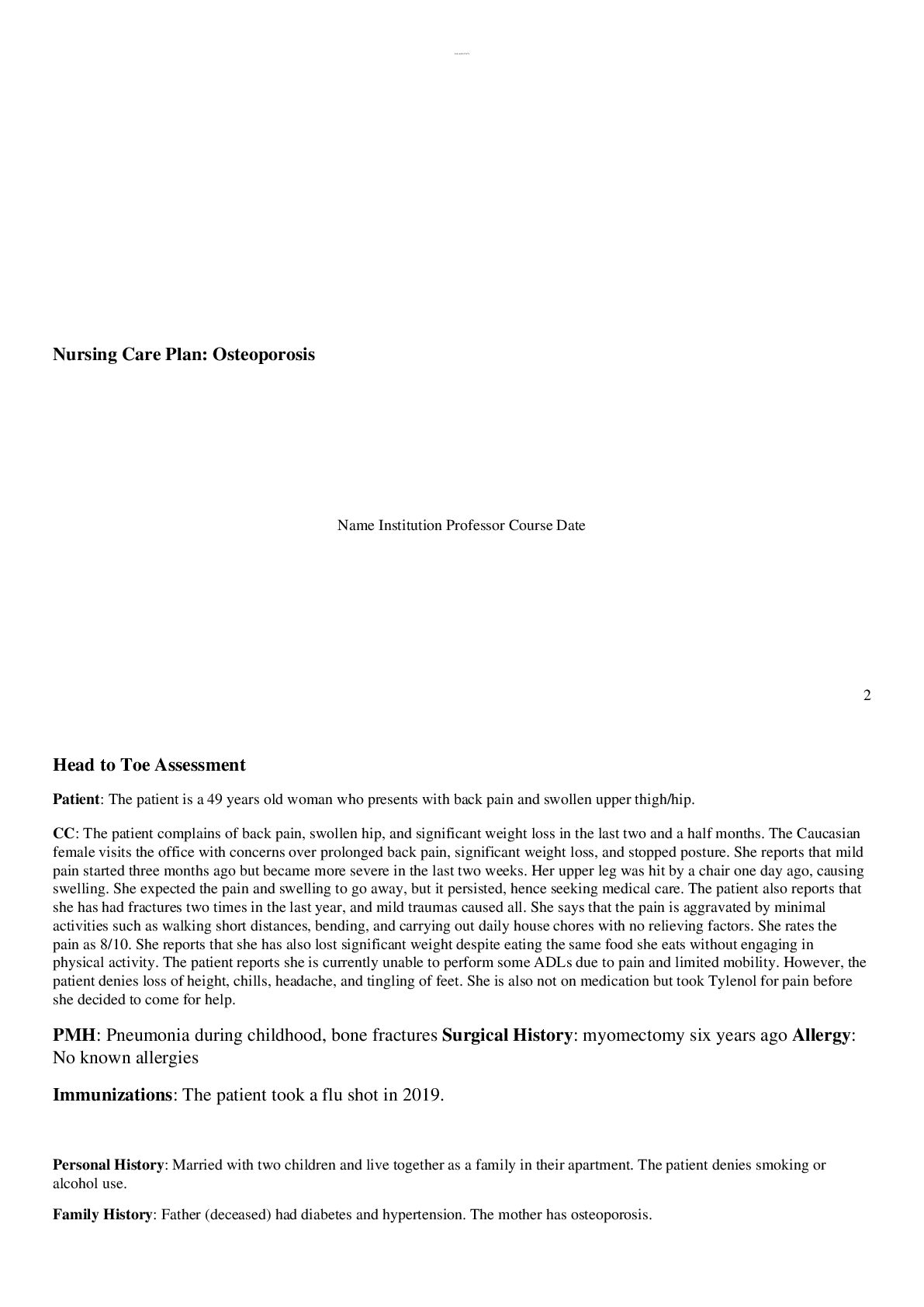
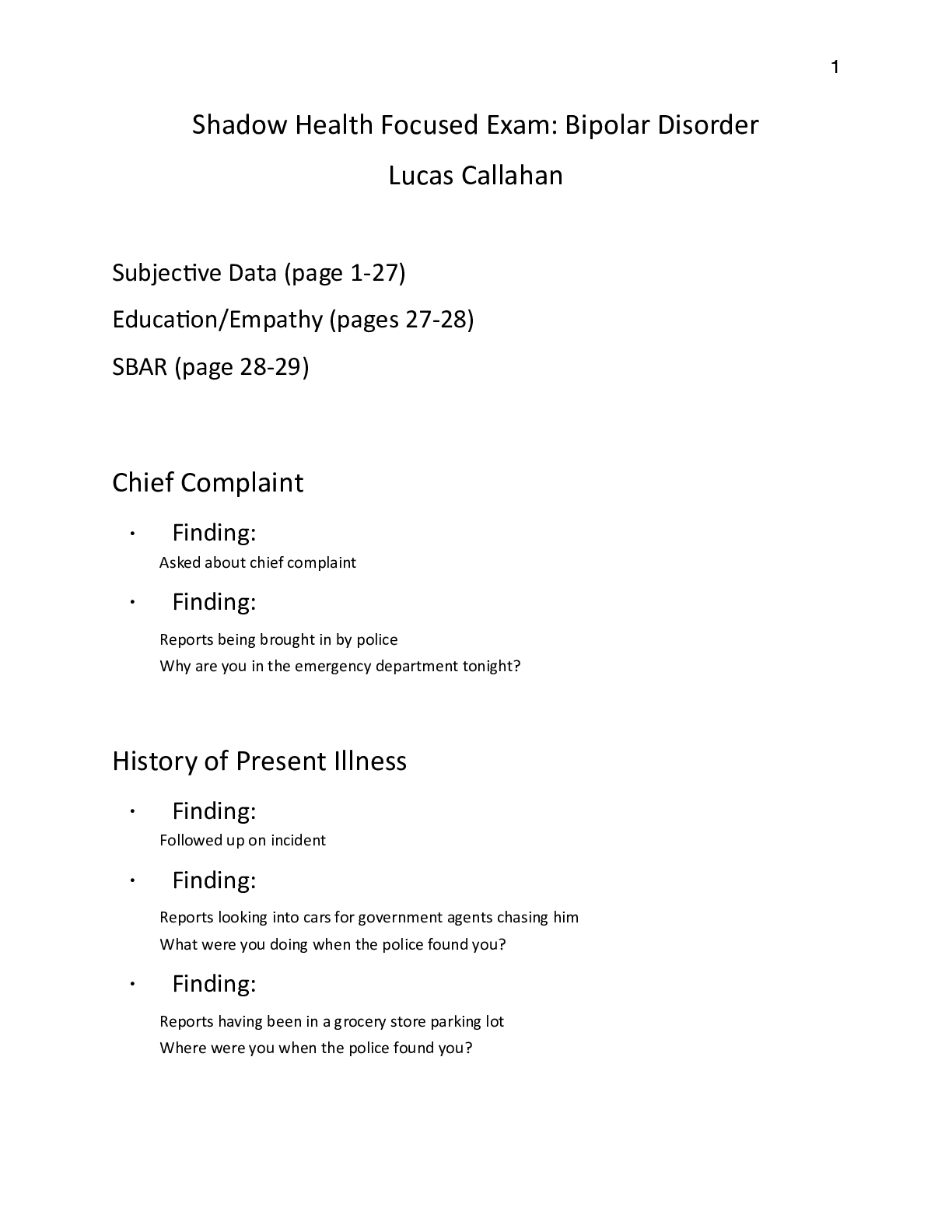
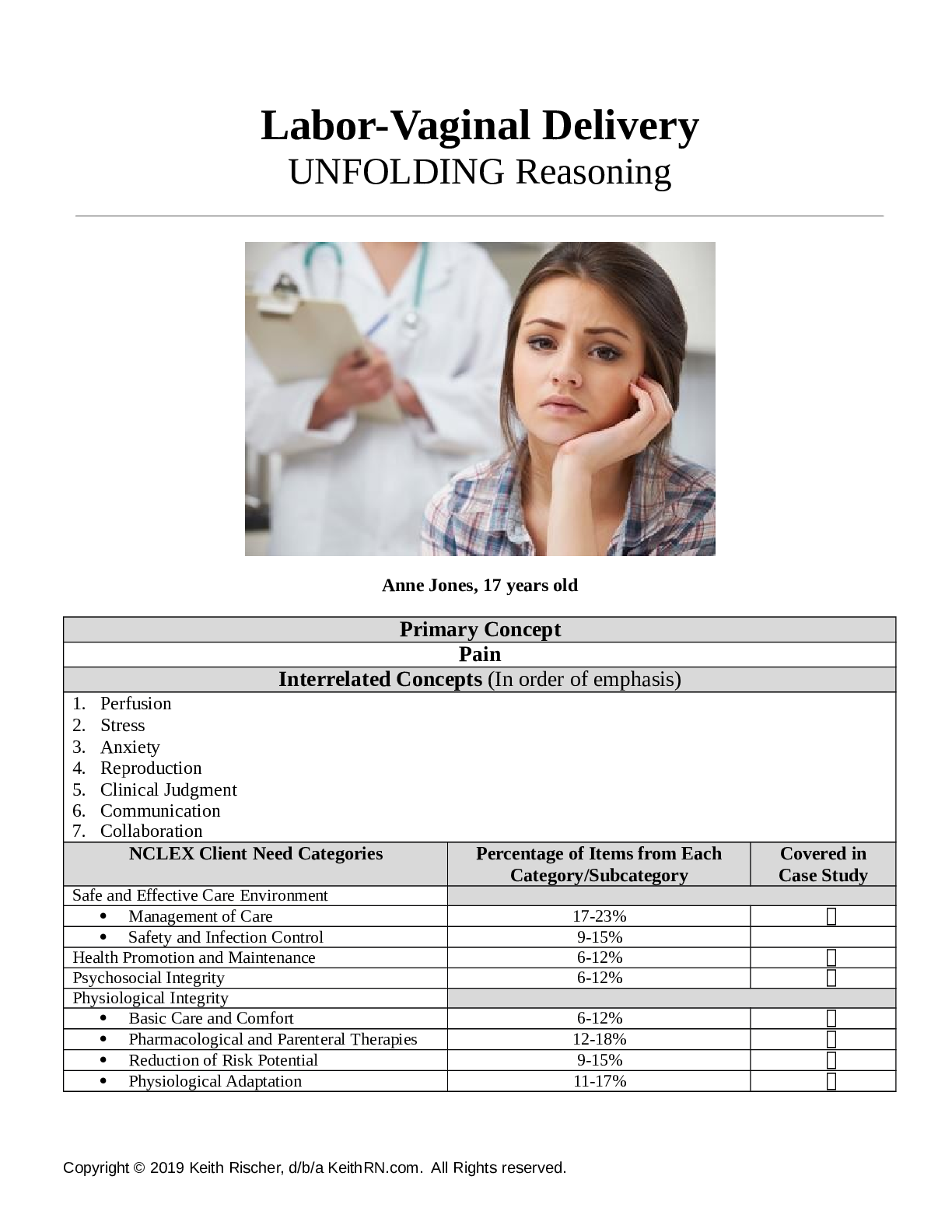
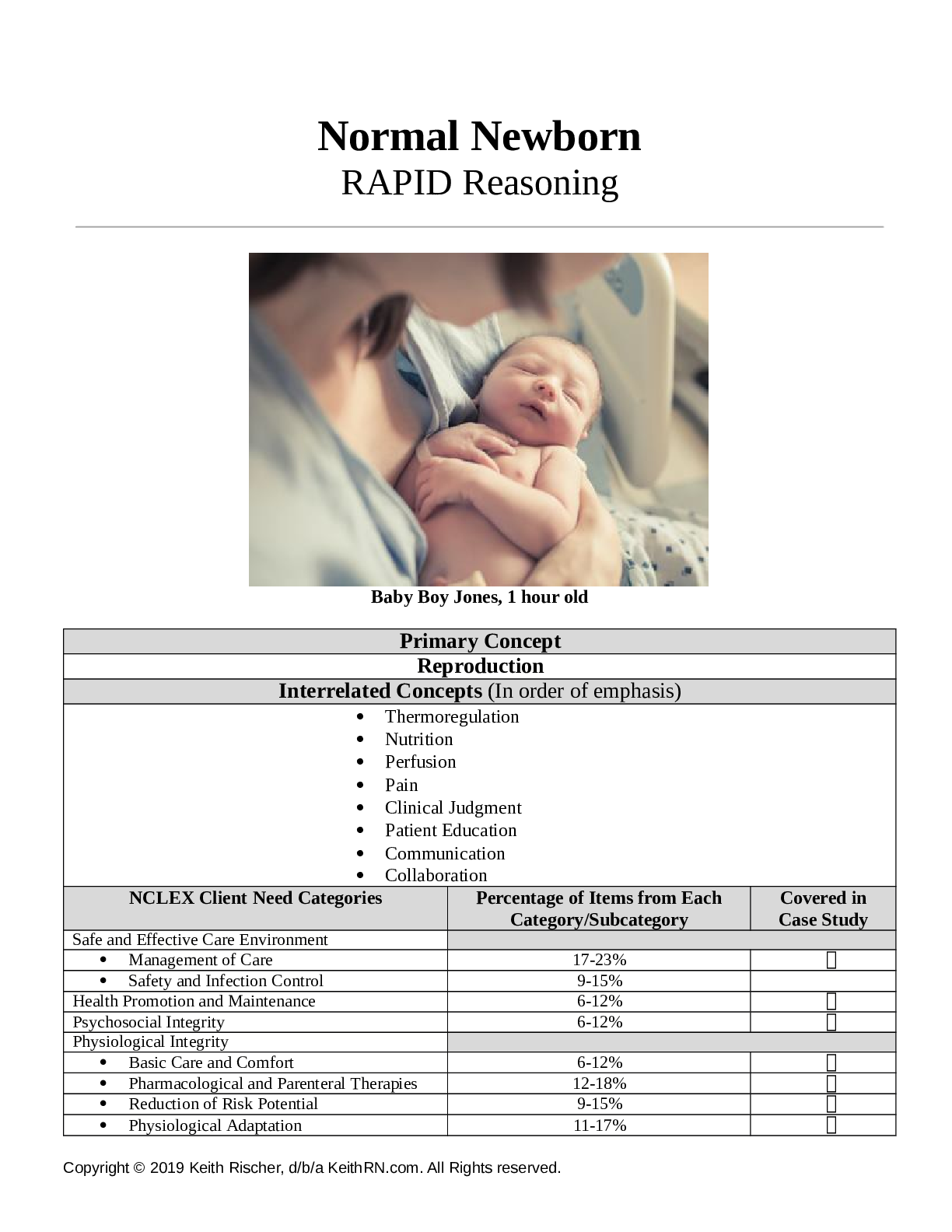
Preview 1 out of 7 pages
Instant download

Buy this Document to get the Full Access Instantly
Provided by Students Who Aced it
We Verify Document Content to Gurantee Accuracy
Reviews( 0 )
Document information
Connected school, study & course
About the document
Uploaded On
Jul 07, 2022
Number of pages
7
Written in
All

Additional information
This document has been written for:
Uploaded
Jul 07, 2022
Downloads
0
Views
288
Topic Tags
Recommended For You
Get more on CASE STUDY »
NUR 641E Final Exam 2023 | Advanced for the Nurse Educator wit...
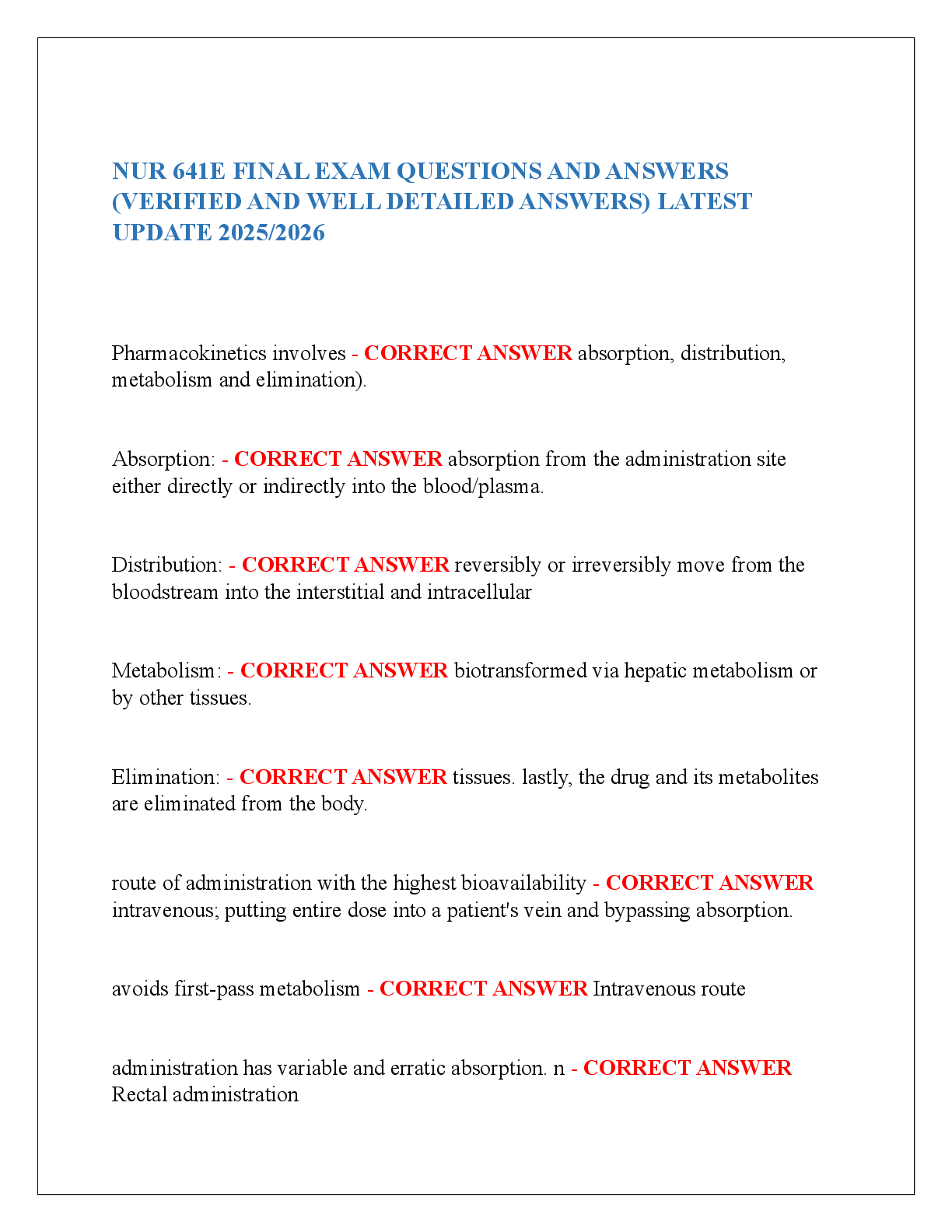
NUR 641E FINAL EXAM QUESTIONS AND ANSWERS (VERIFIED AND WELL...
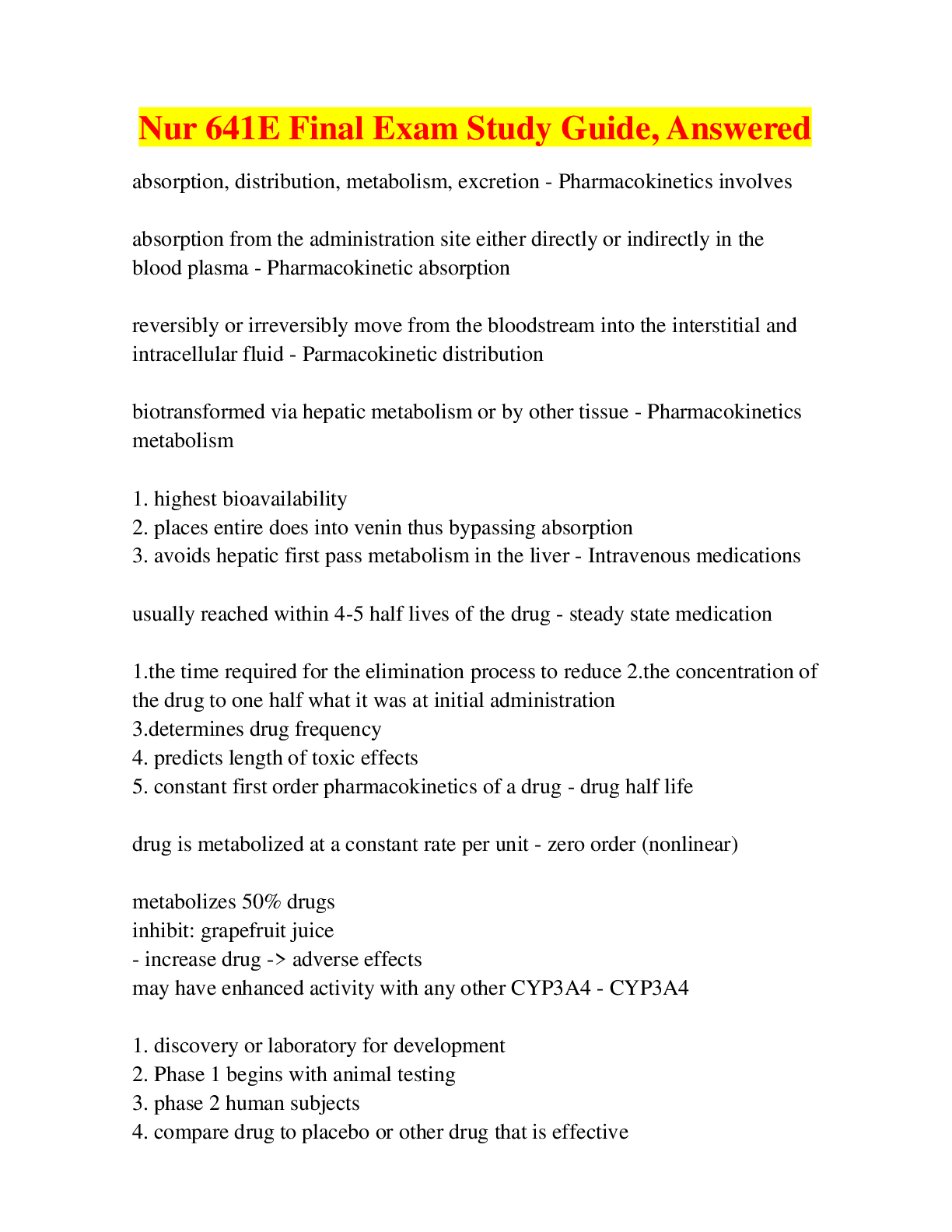

GCU NUR641E Midterm Exam (New) Updated version (All are correc...
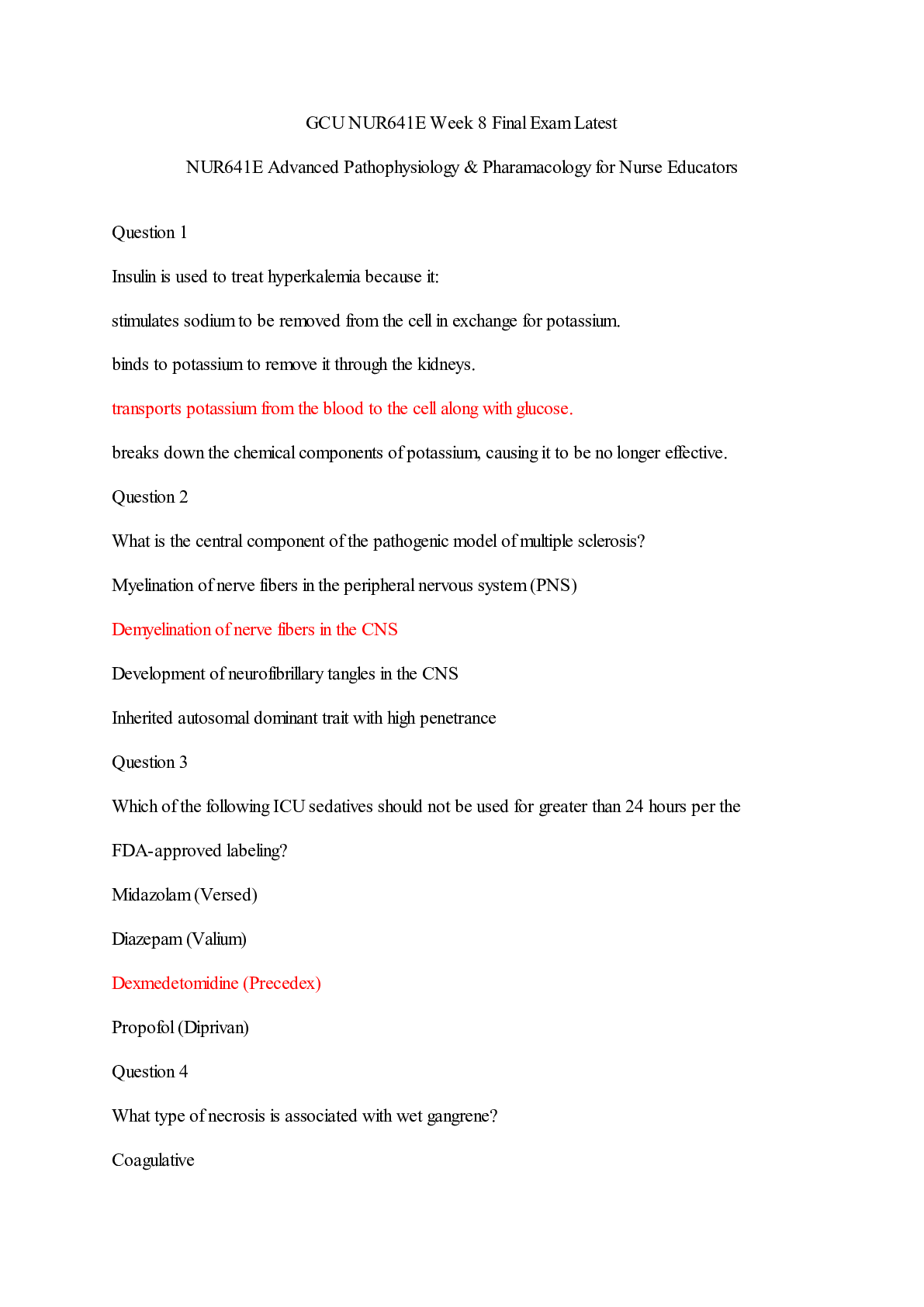
GCU NUR641E Week 8 Final Exam Latest (NUR641E Advanced Pathoph...

NUR 641E Midterm Exam Study Guide | GRAND CANYON UNIVERSITY Sc...
NUR-641E Study Guide 1.midterm ALL ANSWERS 100% CORRECT GUARAN...
NUR 641 Week 3 Assignment Acid-based and Electrolyte Case Stud...
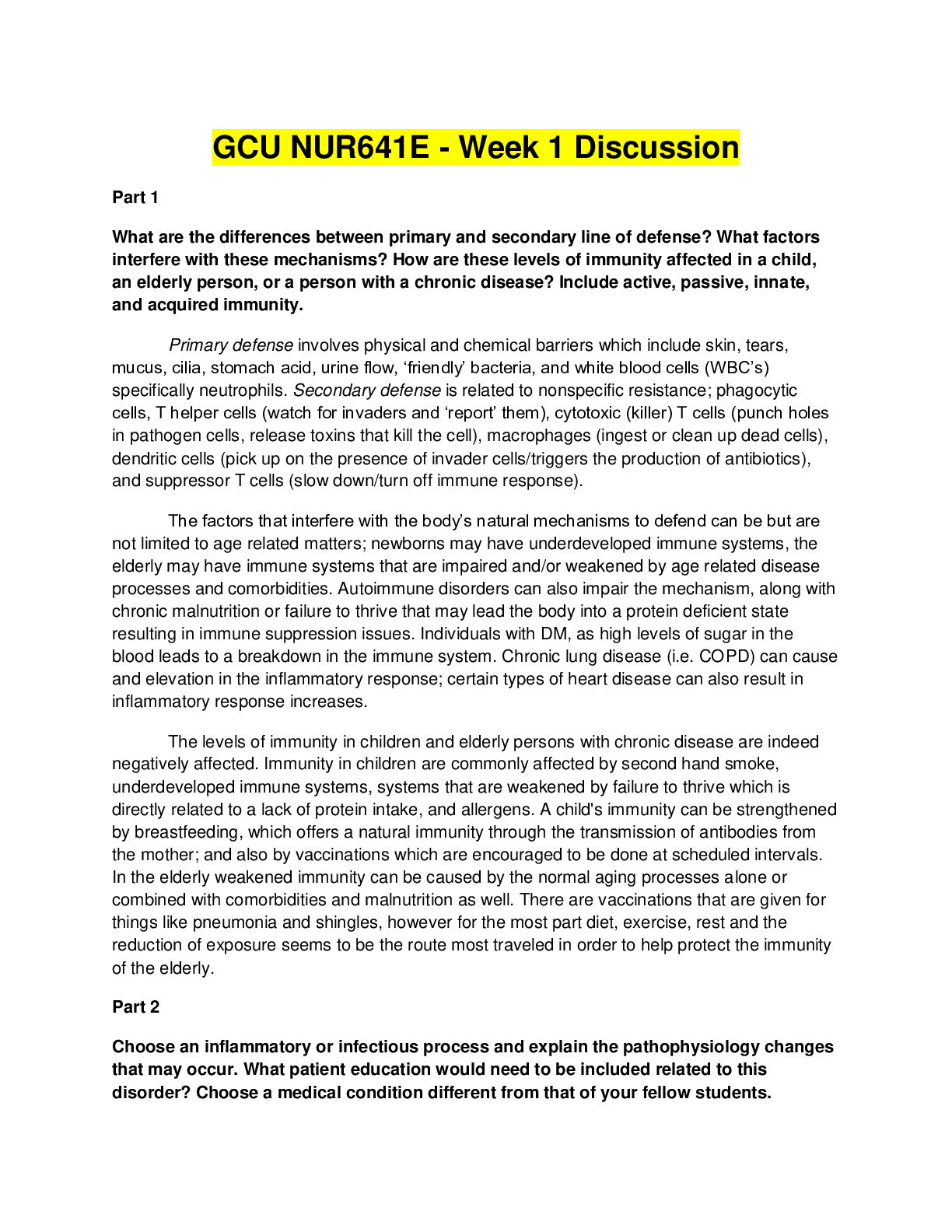
NUR 641E Advanced Pathophysiology & Pharamacology for Nurse Ed...