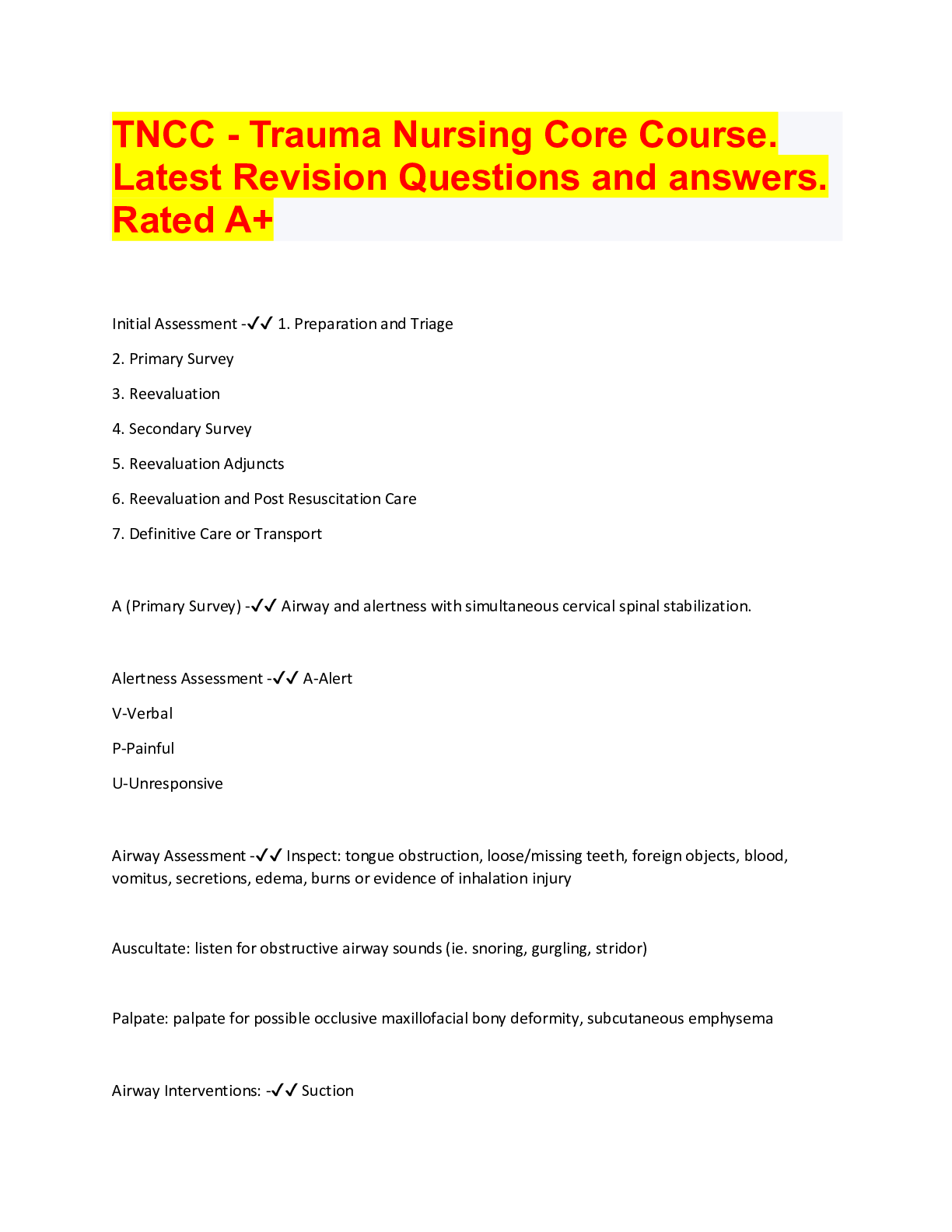
algorithm for TCCC - ✔✔MARCH - PAWS - 9 Line
tasks in "M" - ✔✔Gain fire superiority/return fire
"Are you hurt? Can you fight? Can you treat yourself? Can you move?
Tourniquet for massive hemorrhage
Move off X
check
...
algorithm for TCCC - ✔✔MARCH - PAWS - 9 Line
tasks in "M" - ✔✔Gain fire superiority/return fire
"Are you hurt? Can you fight? Can you treat yourself? Can you move?
Tourniquet for massive hemorrhage
Move off X
check tourniquet
sweep all extremites for obvious active bleeds (big pipes/little pipes
Steps in Care Under FIre - ✔✔Gain fire superiority/return fire
Are you hurt?
Can you fight?
Can you treat yourself?
Can you move yourself?
tourniquet for massive bleeds only
move off X
"M" - ✔✔Care Under fire:
-gain fire superiority/return fire
Are you hurt?
Can you fight?
Can you treat yourself?
Can you move yourself?
Tourniquet for massive hemorrhage only (leave controlled bleeding for later
Move off XRecheck tourniquets post movement
sweep head/extremities for big pipes/little pipes
"A" - ✔✔head tilt/chin lift, jaw thrust
look, listen, feel
inspect airway for trauma/burns/obstruction/maxillofacial trauma
Interventions: NPA, I-Gel, Cri-key
best airway if expecting bird transport - ✔✔I-Gel b/c won't expand with elevation due to gas laws
best airway if facial burns/swelling - ✔✔cri-key early
"R" interventions - ✔✔expose chest, search wounds w/ "tiger claw" or spreading skin
**cover sites over nickel in size w/occlusive dressing
pelvic stability
back side tiger claw/skin spread
spine check for stepoffs
credit card swipe
**cover sites w/occclusive dressing. vented if over a nickel size
lay down on litter w/blanket
recheck interventions since rolled
look listen feel
check for pneumo and dart if needed
reassess post dart
needle size for thoracentesis - ✔✔10 gague or 14 gague3 1/4 inch
"C" - ✔✔sweep all limbs again for trauma (DCAPBTLS)
combat gauze/wound pack to small active bleeds
bilateral pulse check - for shock
start IV if shock
ruggedized IV, EZ-IO, FAST 1
TXA, IVF
when do you start an IV - ✔✔in circulation after the all extremity blood sweep and pulse check
identifying shock
intervention post starting IV - ✔✔TXA
IVF - whole blood, blood products, hextand, LR
TXA purpose - ✔✔to preserve clots already formed
TXA dose/rate - ✔✔1 gram
in 100ml bag
over 10 minutes
IVF in trauma - ✔✔whole blood
other blood products
Hextand
LR
important thing to remember about giving solutions through IV - ✔✔TXA and Hextand aren't
compatable
crystallizeneed a good flush
probably should start second IV
"H" - ✔✔Head/Hypothermia
"H" interventions - ✔✔DCAPTBLS
CSF from nose/ears w/halo test
PERRL (pupils equal, round, reactive to light)
visual acuity
LOBBS (lacerations, obstructions, broken teeth, bleeding, swelling
battle signs/raccoon eyes
"P" - ✔✔Triple Option
1. Combat Pill Pack (consciuos/can swallow)
*TYlenol 1300mg (2tab) Q8hr
*Mobic 15mg po QID
2. Fentanyl Lollypop 80mcg
3. Ketamine
IM/IN -50mg IM/IN Q30 minutes
IV/IO- 20mg Q20 minutes
pain options if conscious and can swallow - ✔✔"Combat Pill Pack
Tylenol 1300mg (2 650mg tabs) Q8hr
MObic 15 mg QID
contraindications for fentanyl lollypop - ✔✔shock/high risk of shockrespiratory distress/high risk of respiratory distress
unconscious
severe TBI/head trauma
allergic/narcoti intolerant
Ketamine IM/IN - ✔✔50mg q30 minutes
Ketamine IV/IO - ✔✔20mg q20 minutes
"A" (PAWS) - ✔✔Combat pill pack = Moxifloxacin 400mg po QID
Ertapenem 1gram IV/IM QD
"A" in PAWS if can tolerate po - ✔✔combat pill pack = Moxifloxacin 400mg QID
"A" in PAWS if cannot tolerate po - ✔✔Ertapenem 1gram IV QD
"W" - ✔✔treat minor wounds
"S" - ✔✔splinting.
PMS heck before and after
final step of TCCC - ✔✔9 line
-Urgent, Priority, Routine
-special needs like blood/ventilator/OR capability/Neuro capability
-Liter or ambulatory pt
www.deployedmedicine.com - ✔✔Deployed Medicine App - ✔✔
Youtube TCCC MARCHPAWS F(nal TEst OUt - ✔✔
benefit of TCCC training - ✔✔documented lower incidents
IV cutdown - ✔✔
stopgap - ✔✔
eschelon - ✔✔
common injury from IED attack - ✔✔junctional hemorrhage
goals of TCCC - ✔✔Treat the casualty
Prevent additional casualties
Complete the mission
Joint Trauma System - ✔✔
best way to help a person who can't breathe but is conscious - ✔✔let them sit up/lean forward
assume any position that is comfortable
what do medics often overlook - ✔✔simple interventions like airway positioning
-people have died b/c the medics would not let them assume the most comfortable position = die b/c
drown in hemothroax
USAISR Report - ✔✔TCCC COmbat Eval 2005TCCC studies - ✔✔
what has made a big difference in battle survival between now and 2001 - ✔✔in 2001, no one in the
military carried a tourniquet
important thing to remember about medical ethics in combat - ✔✔good medicine can be bad tactics
% of combat deaths that are potentially preventable - ✔✔up to 24% of combat deaths are potentially
preventable
3 phases of T CCC - ✔✔care under fire
Tactile Field Care
TACEVAC care
second stage of TCCC care - ✔✔tactile field care
third stage of TCCC care - ✔✔TACEVAC care
only authorized things to do in Care Under Fire - ✔✔gain fire superiority
tourniquet for massive bleeding
"enemy isn't stupid. wait and detonate. lots of rounds on first responders"
aka victim - ✔✔casualty
point of injury - ✔✔on teh X
on the X - ✔✔point of injurybest way for a casualty to be moved off the X - ✔✔have him move himself
Entebbe - ✔✔
intervention if a firefight is actively going on - ✔✔no treatment in care under fire
best medicine on the battlefield - ✔✔fire superiority
ideal movement - ✔✔casualty moves themself
casualty can't move and is unresponsive - ✔✔likely beyond help and moving while under fire might not
be worth the risk
not worth it to do a "medal of honor" run
how to rescue a casualty if they can't move - ✔✔plan in advance
-# of rescuers
-how to cover
-how to move
0-where to cover
-use suppression fire/smoke to best advance
-recover casualty's weapon if possible
what is not performed in care under fire - ✔✔no airway or c-spine interventions if penetrating trauma
-yes if blunt trauma like fall
intervention if burn - ✔✔stop burning process
Nomex material - ✔✔only intervention in Care Under Fire - ✔✔stop life-threatening bleedintg w/tourniquet
move off X
time it takes to bleed out frtom a femoral artery bleed - ✔✔3 minutes
placement of a tourniquet - ✔✔tourniquet should be easily placed on top of pack so casualty can reach
it for themself from either hand
first choice for bleeding - ✔✔tourniquet
when should you not use a tourniquet - ✔✔non=-life threatening bleeds
-can use combat gauze/wound pack for other bleeds
application of tourniquet and unform - ✔✔apply over uniform in care under fire
can cut away clothes later
how to place a tourniquet in your pack - ✔✔on top so you can reach it from either hand
pulse and tourniquet - ✔✔tourniquet should eliminate pulse
how to tell if a tourniquet is working - ✔✔should eliminate pulse
stop bleeding completely
CAT - ✔✔combat application tourniquet
intervention if a CAT tourniquet is too long - ✔✔can't cut excess length b/c the ribbon goes through the
entire length. if cut, it becomes as effective as a loose braceletCoTCCC - ✔✔
marking tourniquet time - ✔✔directly on the tourniquet
T on the pt's head
on the documentation card
important thing to remember during Tactical Field Care - ✔✔prepare to reengage w/the enemy
transport versus treatment - ✔✔never delay transport for treatment
need need eschelon of care more
why is preventing hypothermia a priority - ✔✔worsens TBI
worsens coagulopathy
assumptions you can make if they have an amputation - ✔✔need tourniquet even if not bleeding badly
prepare for shock/need for IV access
TXA/blood products
assume they will become hypothermic
usually tapped to be the triage officer - ✔✔Dentists
intervention if pt has an altered mental status - ✔✔take weapons and radio devices away
causes of trauma altered mental status - ✔✔TBI
shock
shypoxia
pain medications
"idiot brain" when they are on the fentanyl lollypoptourniquet conversion - ✔✔convert tourniquet at 2 hours.
if conversion fails, keep it on
do not convert tourniquet -5 - ✔✔shock
traumatic amputation
over 6hrs
not able to monitor the site
will be at the next eschelon of care in under the 2hr mark
example of junction tourniquet - ✔✔SAM
purpose of the blue stripe on combat gauze - ✔✔see on Xray
letting up pressure on a wound - ✔✔don't let up direct pressure to check the wound until you are
prepared to control the bleeding w/tourniquet or junctional
types of gauze to pack wound - ✔✔Combat Gauze (1st choice)
Chito gauze/Celox (doesn't cause a shellfish allery problem)
how to pack a wound - ✔✔hold pressure against bone towards heart
-hold bleeder while youpack. ensure bleed doesn't let up pressure.
-cover combat gauze w/pressure dressing
how to identify the bleeding vessel when you pack a wound - ✔✔feel for pulsatile vessel.
put pressure on bone in direction of heart. then pack with a 1 to 1 swap
*if can't identify the site of the bleed, cover potential site w/multiple fingers then let up one at a time to
see where it is. then cover that site once you identifyform used to document casualty care - ✔✔DD 1380
how to hold wrap when you are packing a wound - ✔✔don't throw it over shoulder or let it traiil
syringe w/sponges - ✔✔Xstat
-syringe w/tiny sponges. minisponges rapidly expand on contact w/blood causing a tamponade effect
-all sponges have a xray stamp
-20seconds
contraindications for Xstat - ✔✔Xstat = syringe w/tiny sponges to provide tamponade upon contact
w/blood
pleural, abd, ...
things to remember about Xstat - ✔✔Xstat = syringe w/tiny sponges to provide a tamponade effect
upon contact w/blood
not popular b/c combat gauze is more versatile
significant ccavitation may need 3 syringes
injury to expect w/IED blast - ✔✔junctional hemorrhage
bifurcate - ✔✔
types of junctional tourniquests - ✔✔SAM, JETT
where do you apply the JETT tourniqut - ✔✔apply at teh level of the greater trocanterJETT tourniquet - ✔✔
SAM splint - ✔✔
how to pack a neck wound - ✔✔pack wound, put gauze rap under armpit and over shoulder
aka armpitq - ✔✔Ax pocket
how to pack an axilla pocket wound - ✔✔make an "X" across the back b/c it will slip if you just wrap
around arm. so wrap arm under first then wrap once around back. can put hand in pocket or bind to side
for added pressure
how to keep wound packing in place if it is at risk for slipping - ✔✔make an "X" to keep high femoral..
neck arm from sliding down
-only need to make one X
where should you not do wound packing - ✔✔no wound poacking into chest
how to do a high femoral wound packing/wrap - ✔✔warp =
make an X across the side
1. loose wrap
2. tighter
3. make one X around to hold it all in place
4. go oppoiste direction
how to do wound packing to an inguinal space - ✔✔can use a belt/make a diaper suaped
differences between the JETT and SAM junctional - ✔✔JETT = moveable pucks
SAM - BP cuff bulb to pump up the puckfeature of the JETT junctional - ✔✔has moveable pucks
feature of the SAM junctional - ✔✔BP cuff bulb to pump up the pucks
semper paratus - ✔✔
"the scene is safe" in TCCC - ✔✔fire superiority
hostile combatant is rendered incapacitated and safe by not us
Q's to ask ptt - ✔✔"where were you hit"
"can you move"
**This assesses airway, LOC, if chan moe/shoot, or get them to craw to your, tell them to put direct
pressure
first preference to move patient - ✔✔crawl to me
how to properly do a blood sweep - ✔✔"grip it and rip it"
-so fast. not
"click" as a distance - ✔✔
where can blood hide on a patient - ✔✔sweep inside body armor b/c it can hide therem
overall goals of Care Under Fire - ✔✔fire superiority
tourniquet for massive bleeding
get them off the Xfirst step after a patient is moved - ✔✔check any tourniquets you may have applied
why should you continue to assess "A" if the patient is conscious and talking - ✔✔even if okay "A" and
skip over interventiosn like NPA/i-gel/cri-key, if bleeding they may go into shock and loose airway later
*trauma adrenaline so airway might start to craump later. if okay to start w/o airwy damage
*consider NPA just int case but if talkative, nten not
how does an NPA function - ✔✔like a doorstop for tongue to rest on.
why arent' OPA's used in TCCC - ✔✔gag
dislodge w/movement
step prior to inserting NPA - ✔✔90 degree
petroleum gelly is thick and gunky so not great. use water soluble or pt spit
J. Spec Opermed - ✔✔
insertion of NPA - ✔✔90 degrees
bevel to septum
rotate if left nare
straight back if right
*dont' go along the floor b/c it goes straight back then curved. if straight up, then not towards
head/brain
how is an NPA designed - ✔✔to go into right nostril.
if left nostril, rotate and twist
intervention not to skip even if pt is talking - ✔✔still check mouth for patency. ask to open even if
talking.. might have dip/seeds/gum.*tell them to spit it out
onset of lidocaine for anesthesia - ✔✔
ability to correctly answer the question "Do you have an injury to your legs? - ✔✔ability to answer
w/coherentanser means they have LOC/blood to the brain/airway patency
most technical skill done by corpsmen/medics - ✔✔33% fail crics b/c shakey, nervous
youtube Cri-Key procedure - ✔✔
analogy for the target of cri-key - ✔✔Big mountain
valley
small mountain
how to do surgical cric - ✔✔light finger pressure only to get through skin.
wound to chest that indicates an open pneumothorax - ✔✔nickel size or greater
needs a vented dressing
important thing to remember about tension pneumothorax in the field - ✔✔progressive injury that
takes time to develop
difference between tension pneumothorax and only having one lung - ✔✔people don't die from 1 bad
lung but can from T. pneumo
-0die b/c mediastinal shift due to increased pressure. thus, the back up causes distension of JVD so not
dumping blood into the heart
why does the pressure backup cause JVD in tension pneumothorax - ✔✔backup of blood due to the
pressure causes the blood to not dump back into the heartsize of chest wounds - ✔✔open if a nickel or greater = risk t. pneumo and needs a vented dressing
smaller than a nickel = closed and can take a regular dressing
late signs of t. pneumo - ✔✔anything r/t pressure buildup
-JVD from pressure leading to backed up blood
-mediastinal shift
early signs of t. pneumo - ✔✔unilateral rise/fall of hcest
first step of all MARCH steps - ✔✔look for wounds, treat
treatment of an open pneumothorax - ✔✔treat w/an occlusive dressing to convert to closed bb/c air
can no longer go in/out
burping occlusive dressings - ✔✔-burping pneumo dressings degrades teh adhesive
-only for open non-vented dressings
-NEVER for vented dressings
what type of intervention confirmation can't you use on the battlefield - ✔✔auditory confirmation
normal SpO2 at 12K feet - ✔✔86%
doing a needle decompression when there actually isn't a pneumo - ✔✔okay b/c will seal up like how
when you do an IV it seals up. you aren't createing a new pneumo and it will close/heal
how to guide 5th ICS - ✔✔pt's hand under armpit. if hand is blown off, measure pt hand to yours and
use your hand with their measurementstop two battlefield killers - ✔✔MA of MARCH
addressed first
open book pelvic fracture - ✔✔
type of pelvic fracture - ✔✔open versus closed book
what should you never do with a broken pelvis - ✔✔never rock
www.asst.org/pelvis-injury - ✔✔
types of pelvis injuries - ✔✔open book
verticle Shear
lateral compression
causes of pelvic fractures on the battlefield - ✔✔IED
MVC
parachute landing
pelvic fracture s/s - ✔✔external rotation
unequal leg length
brusise/bleeidnfg
lower extremity amputation
rotation in a pelvic fracture - ✔✔external rotation
legs in pelvic fracture - ✔✔unequal lengthleg is externally rotated - ✔✔suspect pelvic fracture
legs are of unequal length - ✔✔suepsect pelvic fracture
types of pelvic binders - ✔✔T-pod
SAM
pelvic sling
sheet
blouse
JETT/SAM
can be used as a junctional or pelvic bidner - ✔✔JETT
SAM
landmark for pelvic binders - ✔✔greater trocanter =level of symphysis pubis
NOT ILIAC WINGS!!!!
^in a study, 40% placed too high so inadequate reduction on the pelvic fracuture and possibly increase
bleeding
common s/s in pelvic frac ture - ✔✔external rotation
important step in addition to pelvic binding - ✔✔bindfeet/knees
intervention to avoid in pelvic fracture - ✔✔minimize log rolls
-you have to chec the back b/c have to r/o major killers
-even if they have apelvic fracture, they get 1 log roll to r/o injury to backmovement and pelvic fractures - ✔✔minimize log rolls
even if they have a pelvic fracture, they get at least 1 log roll to r/o injury to back
what must tourniquets do - ✔✔eliminate distal pulse
stop bleeding
rare injury w/tourniquet use - ✔✔damage to extremities is rare if a tournique is on for under 2 hrs
first thing given through an IV in trauma - ✔✔TXa
purpose of TXA - ✔✔helps preserve clots already formed.
need to be abel to clot properly prior to vollumizing
battlefield s/s of shock - ✔✔decreased LOC w/o TBI
weak/absent radial pulse
IV on the battlefield - ✔✔no IV w/o indication
only for shock b/c need TXA/blood/hextand/ABX
Rx -unable to swallow, decreased LOC, vomiting
IV placement if wounds - ✔✔no IV distal to wounds
indication for TXA - ✔✔suspicion of shock from internal bleeding
how to give TXA - ✔✔1gram
10 minutes
100ml bagimportant thing to remember when giving TXA plus other products - ✔✔TXA and Hextand are
incompatable
crystallize
needs good flush
most desired IVF on battlefield - ✔✔whoel blood
only reason you get IVF on battlefield - ✔✔hemorrhagic shock
end point for IVF on battlefield - ✔✔SNP over 80-90
increased LOC
problem of too much IVF in trauma - ✔✔pop a clot
when doesn't a casualty get IVF - ✔✔no IVF if no shock
-may po hydrate if tolerate even if likely OR or trauma to abd
po hydration in battlefield trauma - ✔✔if LOC and patent airway, may have po hydration no matter
what. even if GSW to abdomen or suspect immediate OR
options for IV access on the battlefield - ✔✔ruggardized IV
EZ-IO
FAST 1
ruggardized IV - ✔✔
EZ-IO - ✔✔
FAST 1 - ✔✔site of FAST 1 - ✔✔manubrium (head of sternum)
pressure needed for FAST 1 - ✔✔60 lbs of pressure
how to identify site for FAST 1 - ✔✔sternal notch
place sticker w/target
site will be the manubrium (head of sternum)
contraindications for FAST 1 - ✔✔under 50kg/110lbs
under 12yo
previous sternal injury/surgery
tissue damage
severe osteoprosis
time a FAST 1 can be in place - ✔✔24 horus
IO options - ✔✔FAST 1
ESZ-IO
important thing to remember about the EZ-IO - ✔✔use correct EZ-IO based on the anatomical position
when can you po hydrate - ✔✔if LOC and can swallow regardless of injuries
SOLO program by SEALS - ✔✔
size of IVF boluses - ✔✔500ml then reasesss
(they recommend 250ml then reassess)Far Forward - ✔✔
Far Forward battlefield blood programs - ✔✔SOLO = SEALS
Valkarye -= Camp Pendleton
Marines = in progress
*walking blood banks
*medic carries a chart of who cna donate to who
*SEALS can do it in 11 minutes w/o battlefield stresses
consideration of high volume IVF - ✔✔makes internal hemorrhage worse by poppoing a clot
goal of IVF - ✔✔improve radial puse
palpable radial pusle
SBP 80-90
improve LOC
ways to warm fluids on the battlefield - ✔✔blankets, under armpit, in cargo pockets
fluid coming from nose/ears - ✔✔halo test takes 2 minutes
LOBBS - ✔✔Lacerations
Odor
Broken Teeth
Blood
Swelling
important thing to remember about eye injuries - ✔✔eye injuries are disteracting.protuding eyeballs are addressed in "H", not earlier so
the only thing we intervene on in "H" head - ✔✔feel for deformities
CSF leak
eye acuity/PERRL
cover w/rigid eye patch
trauma visual acuity - ✔✔read my name tape
read this package
how many fingers
follow my fingers
light versus dark
PERRL
using eye shield on battlefield - ✔✔only put the eye shield on the injured eye.
other eye is uncovered.
blindness = increses anxiety, turns pt into a liter patient, blindness is psychologically anxiety
compartment syndrome in the eye - ✔✔retrobulbar hemorrhage
retrobulbar hemorrhage - ✔✔compartment syndrome in teh eye
bleeding has nowhere to go so inc4reases pressure
eyeball moves forward
blood, blind, blind
needs eye doc to cut ligament
intervention for retrobulbar hemorrhage - ✔✔needs eye doc to cut the ligament to relieve the pressureposition of hte eyeball in a retrobulbar hemorrhage - ✔✔compartment syndrome in the eye. increases
pressure w/ nowhere to go. eye moves forward
s/s of retrobulbar hemorrhage - ✔✔bloody
blind
bulgin
what do you twist on a CAT tourniquet - ✔✔windlass
downrange - ✔✔
full algorithm of TCCC - ✔✔MARCH-PAWS - 9 Line
purpose of the order of the TCCC algorithm - ✔✔ranked based on major battlefield inbjuries that kill
what might be d/c in upcoming TCCC editions - ✔✔Hextand
what rx should you not take in teh 8-10 days prior to a known mission/battle - ✔✔no
NSAID/asprin/toradol
-inhibits plt function for 8-10 days
-b/c interferes w/clotting factors
option for pain control if fentanyl lozange is given - ✔✔okay to give Ketamine
what should you remember in terms of the medications and the environment - ✔✔for temperature
extremes, know the temperature ranges of all rx
*examplke, Fentanyl needs 80-86F so might be ineffective for pt and need multiple
characteristics of Ketamine - ✔✔-unique b/c maintains pharyngela reflex-less risk of respiratory depression
-giving to pt w/traumatic amputation helps them forget the event so less PTSD later
0heart stimulated, not depressed
HR in ketamine - ✔✔unlike other pain rx, HR is stimulated not depressed
Ketamine and respiratory - ✔✔unique b/c the pharyngeal reflex is maintained
less risk for R. depression than opiates
too rapid = respiratory depression and apnea so prepare BVM
too rapid Ketamine - ✔✔give over 1 minute
too rapid = respiratory depression and apnea so preapare BVM
what is in the Combat Pill Pack - ✔✔Tylenol total 1300mg
Mobic
Moxifloxacin
book Black Hawk Down by Mark BOwden - ✔✔
interventions and burned skin - ✔✔all TCCC interventions can go through burned skin
how to think about burn pts - ✔✔they are trauma casualties w/burns
NOT burns w/trauma
cravat - ✔✔
when would you use a traction splint - ✔✔traction splint for mid-shaft femur
**NEED TRAINING**traction splints for mid-shaft femur
*need training** - ✔✔
interventions before/after splints - ✔✔PMS = pusle, motor, sensory
best Youtube for TCCC = ANderson Strickland - ✔✔
SAM wesbsite for product training videos - ✔✔
recommended wrapping technique for burns - ✔✔Z wrap
-dry wrap in a Z pattern allows for swelling
best communication - ✔✔clear, short, concise
TACEVAC - ✔✔
reports in TACEVAC stage - ✔✔MIST & casualty card
important thing to remember about the person receiving the 9 Line Call - ✔✔person receiving the call is
probably a marine on radio watch so not medical. DO NOT use medical jargon
how to identify yourself/casualty over the radio - ✔✔your special number
usually initial/last 4 combo
BD9738
how to think about the 9 Line Evacuation - ✔✔"calling a Cab"
NOT direct communication w/medical9 -LIne
Line 1= - ✔✔pickup location
LIne 2= - ✔✔radio frequency, call sign, suffix
LIne 3= - ✔✔#pt by prescedence
(urgent, priority, routine)
Line 4 - ✔✔special equipment (none, hoist, extraction, ventilator, blood, specialty location like
neuro/OR/eye doc
Line 5 - ✔✔# casualties b y type
L= litter
A- ambulatory
Line 6 - ✔✔seccurity at pickup site
Line 7 - ✔✔markings at pickup site
panels, pyrotechnical signal, smoke signal, none, other
Line 8 - ✔✔casualty nationality/status
4 types of casualty for evacuation purposes - ✔✔urgent
priority
routine
convenienceLine 9 - ✔✔CBRNE in wartime
terrain descripotion in peacetime
4 TCCC reports - ✔✔MIST = medical information (keep it simple)
9 LIne = tactical non-medical for evacuation purposes
DD1380 for tactical field care intervetions
After Action Report
what should not be delayed in TCCC - ✔✔evacuation
what guides Tactical Evacuation - ✔✔Rule of 9's
important thing to remember about soft tissue inuuries - ✔✔DISTRACTIONS!
common, look bad, but usually dont' kill unless associated w/shock
cause rescuer to feel disoriented and freeze
*take a deep breath, look around to get out of the tunnel vision
tactical restraints on a mission - ✔✔
important thing to remember about evacuation delays - ✔✔evacuation delays should not increase
mortality if bleeding is controlled
[Show More]