NURS 120 Med Surg Final Exam Study Guide LATEST 2022
Document Content and Description Below
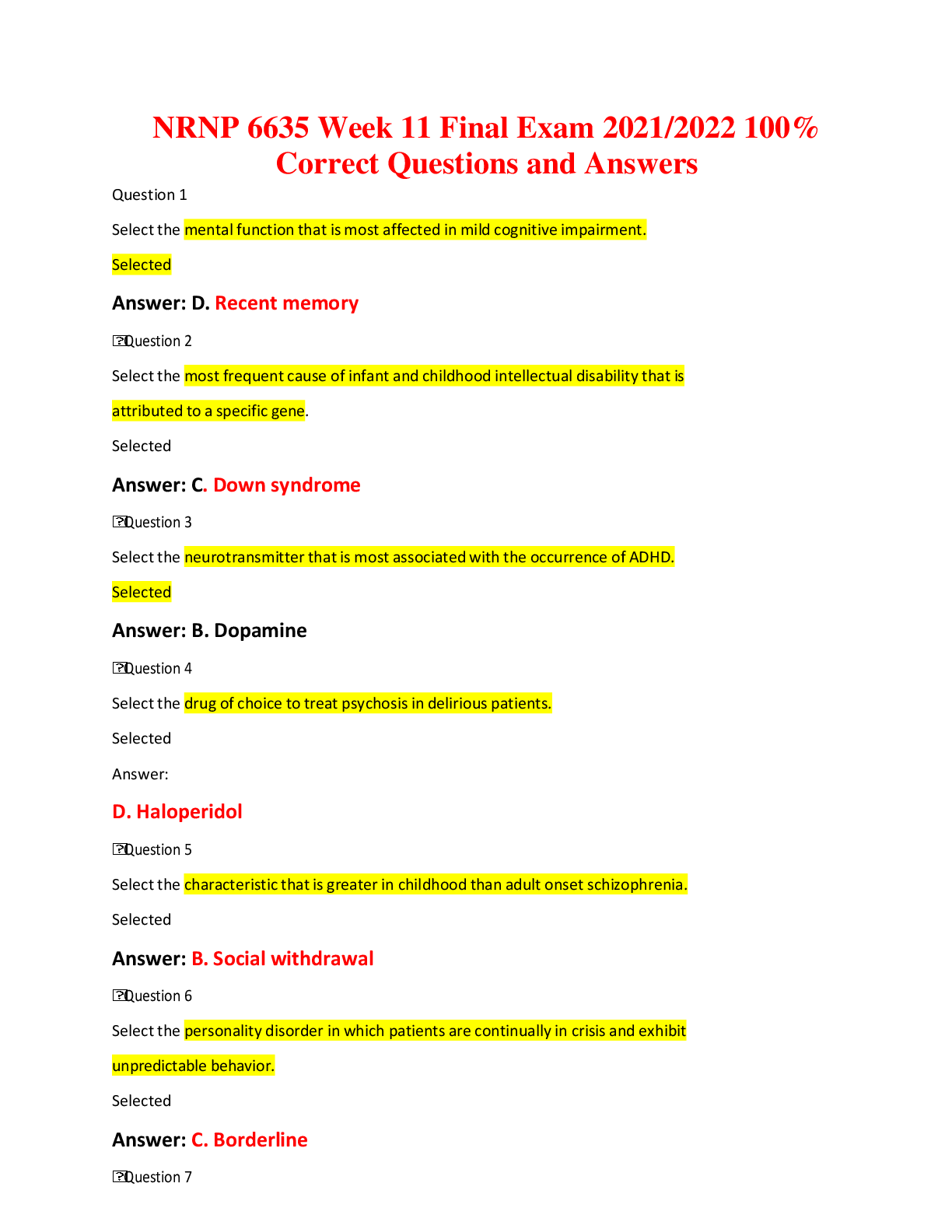
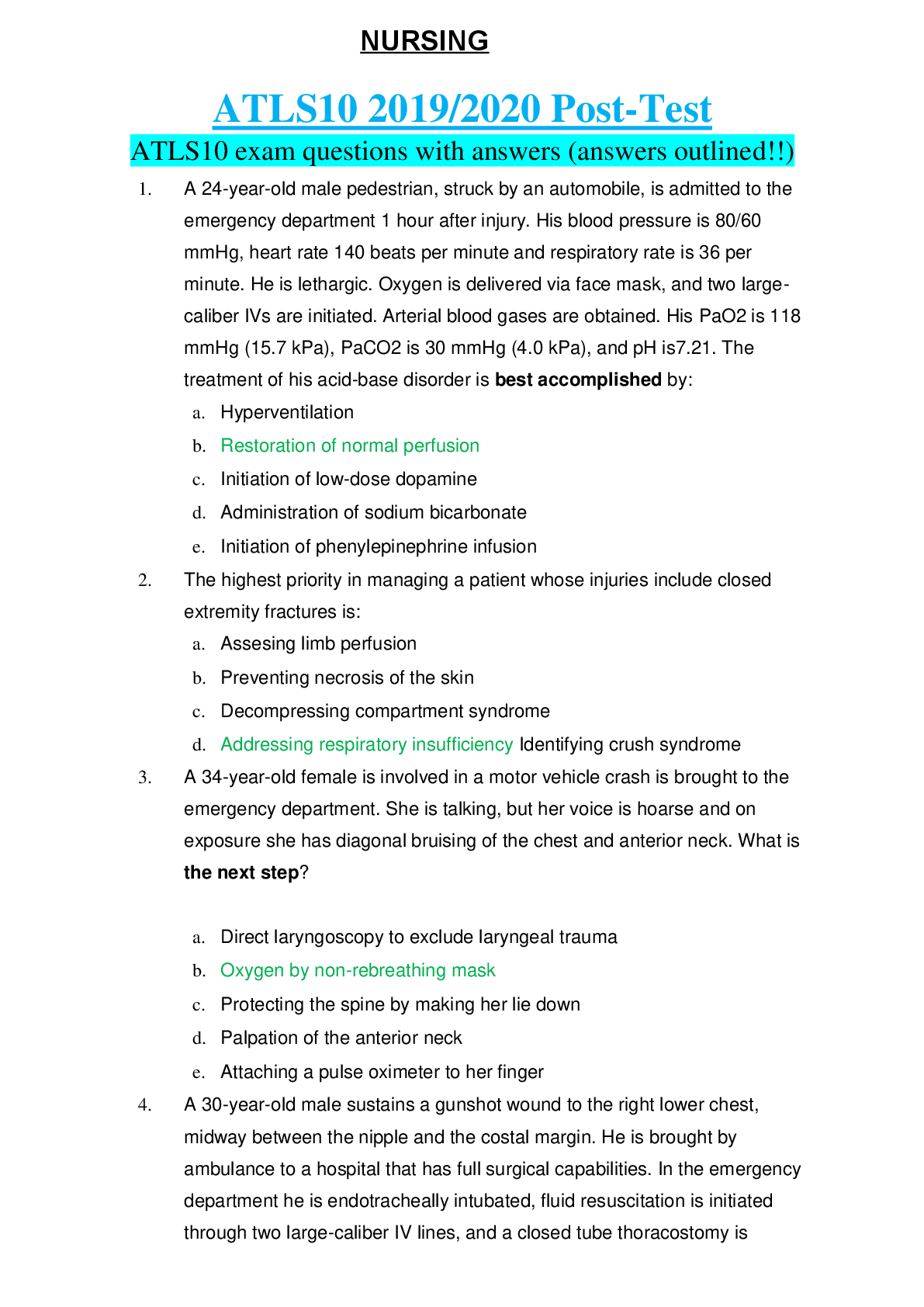
NG tube placement & verification:
o Review the prescription & purpose of the procedure, understand the need for placement. Identify client, explain the procedure.
o Review history of nasal problems, anticoagulants, pre
...
[Show More]
Last updated: 4 years ago
Preview 1 out of 17 pages
Instant download

Buy this Document to get the Full Access Instantly
Provided by Students Who Aced it
We Verify Document Content to Gurantee Accuracy
Reviews( 0 )
Document information
Connected school, study & course
About the document
Uploaded On
Jul 14, 2022
Number of pages
17
Written in
All

Additional information
This document has been written for:
Uploaded
Jul 14, 2022
Downloads
0
Views
53
Topic Tags
Recommended For You
Get more on EXAM »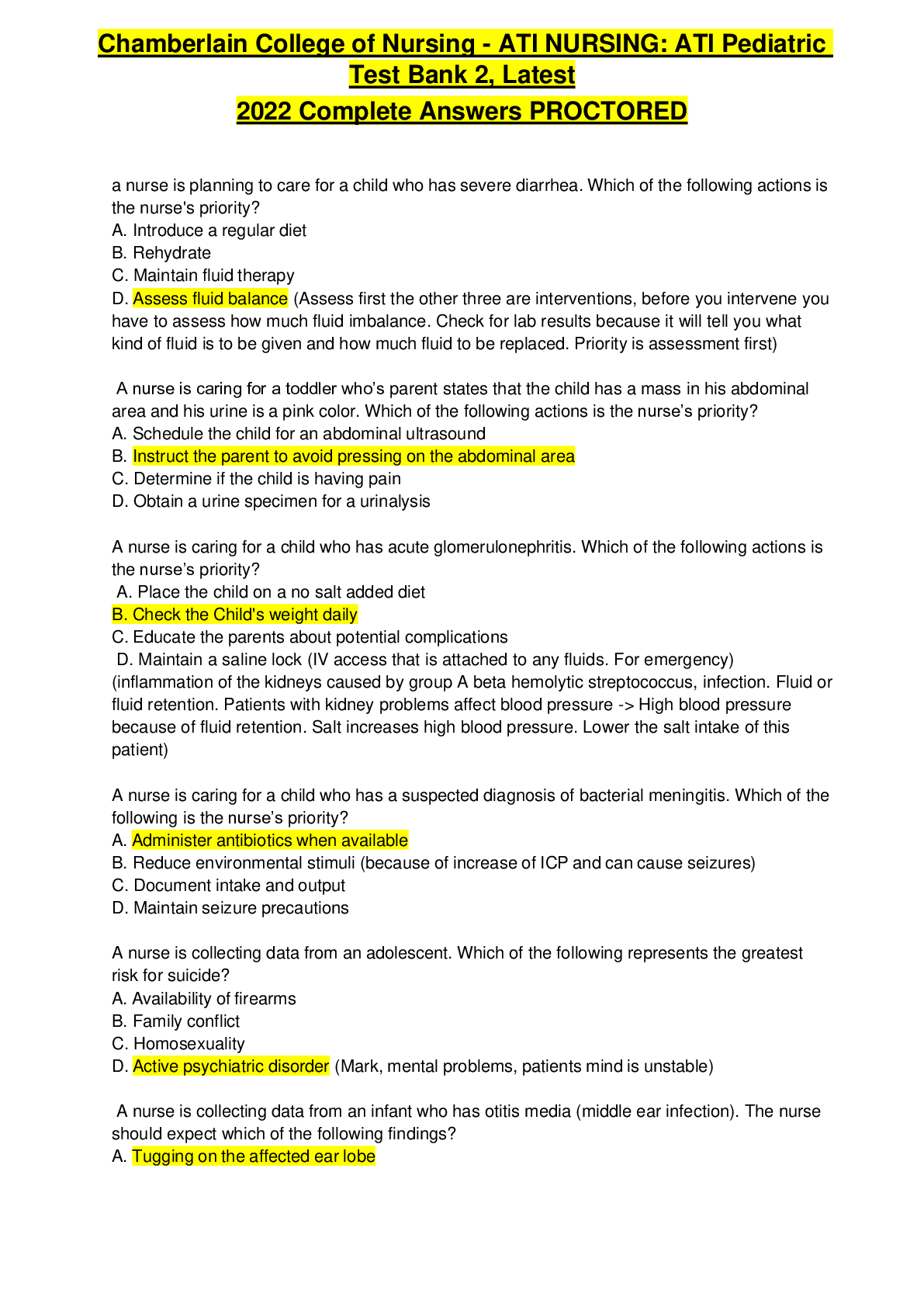
$16.5
39 Pages
ATI Pediatric Test Bank 2, Latest 2022 Complete Answers PROCTO...

$17
21 Pages
NURS 120 ATI Advanced Med Surg FINAL EXAM Questions and Answer...
$16
30 Pages
ATI PEDS PROCTORED EXAM | A nurse is preparing to assess a 4-...

$14
23 Pages
NR 511 / NR511 MIDTERM EXAM STUDY GUIDE LATEST 2022 ALREADY PA...

$13
30 Pages
NR 511 / NR511 FINAL EXAM 1 STUDY GUIDE LATEST 2022 GRADED A
$18
49 Pages
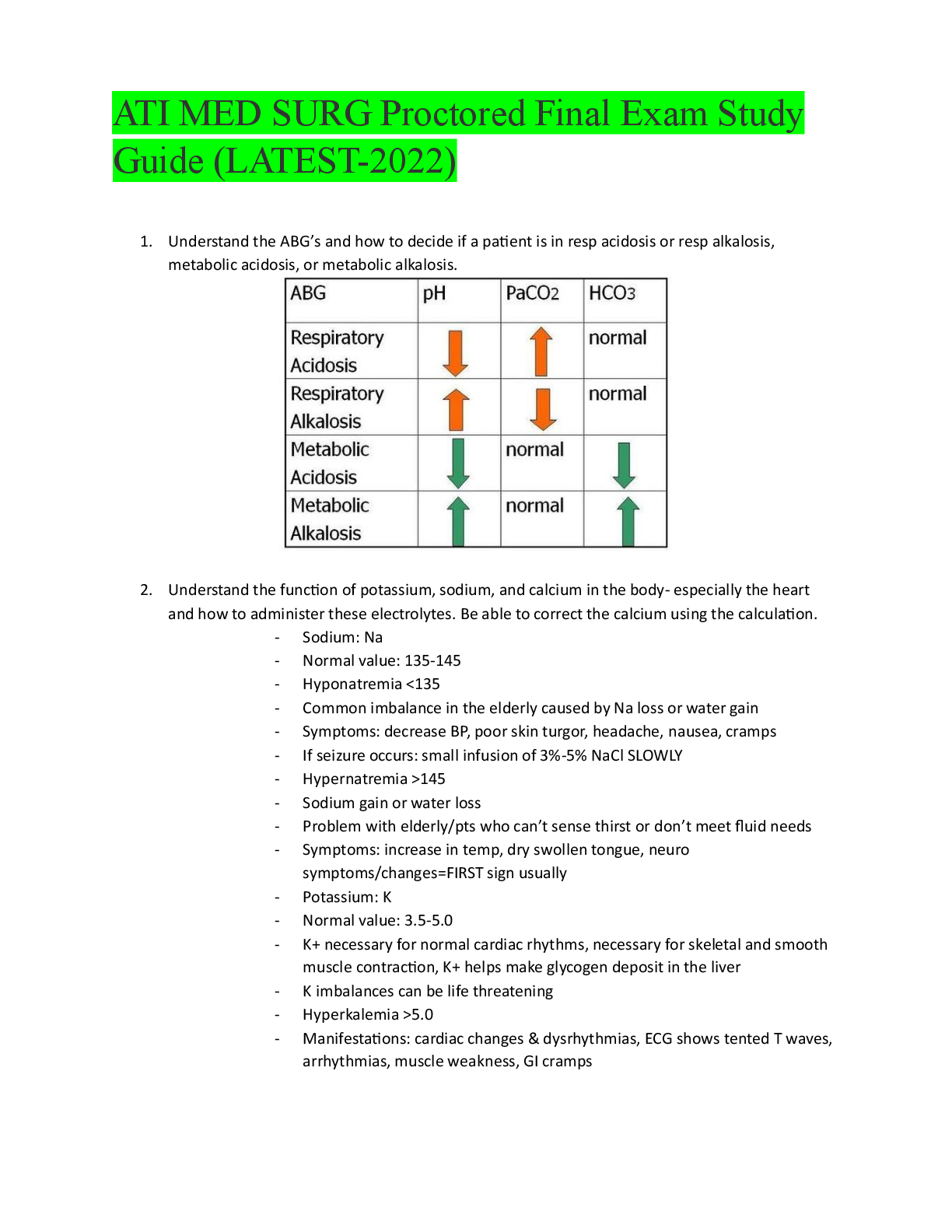
ATI MED SURG Proctored Final Exam Study Guide (LATEST-2022)

$26
345 Pages
eBook [PDF] Barash, Cullen, and Stoelting's Clinical Anesthesi...

$29
551 Pages
eBook [PDF] Fundamentals of Nursing 3rd Edition By Joanne Toll...

$29
1067 Pages
eBook [PDF] Burns' Pediatric Primary Care 7th Edition BY Dawn...

$16
137 Pages
Test Bank for Burns' Pediatric Primary Care 7th Edition by Daw...
$26
209 Pages
Burns' Pediatric Primary Care, 7th Edition by Garzon, Barber S...
$15
835 Pages
Complete Test Bank Emergency Care 14th Edition Daniel Limmer Q...
$16
835 Pages
Test Bank Emergency Care 14th Edition Daniel Limmer Questions...
More related documents below
 Nutritional Principles in Nursing - Rasmussen College.png)

