Unit 2: Nutrition to Support Wellness
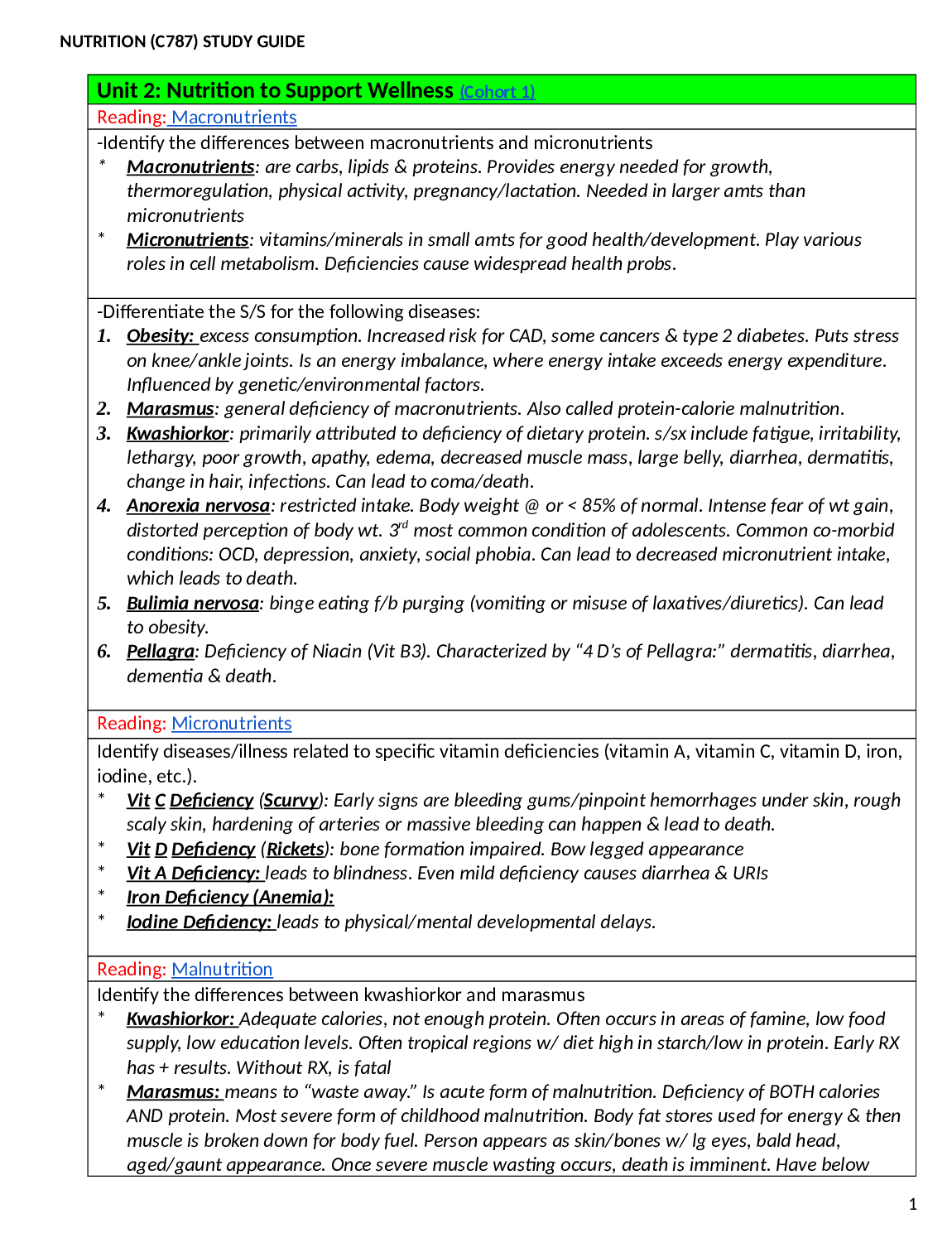
What are some disorders associated with inadequate intake of macronutrients? Select
all that apply.
a. Obesity
b. Anorexia nervosa
c. Bulimia nervosa
d. Hypercholesterolemia
"
...
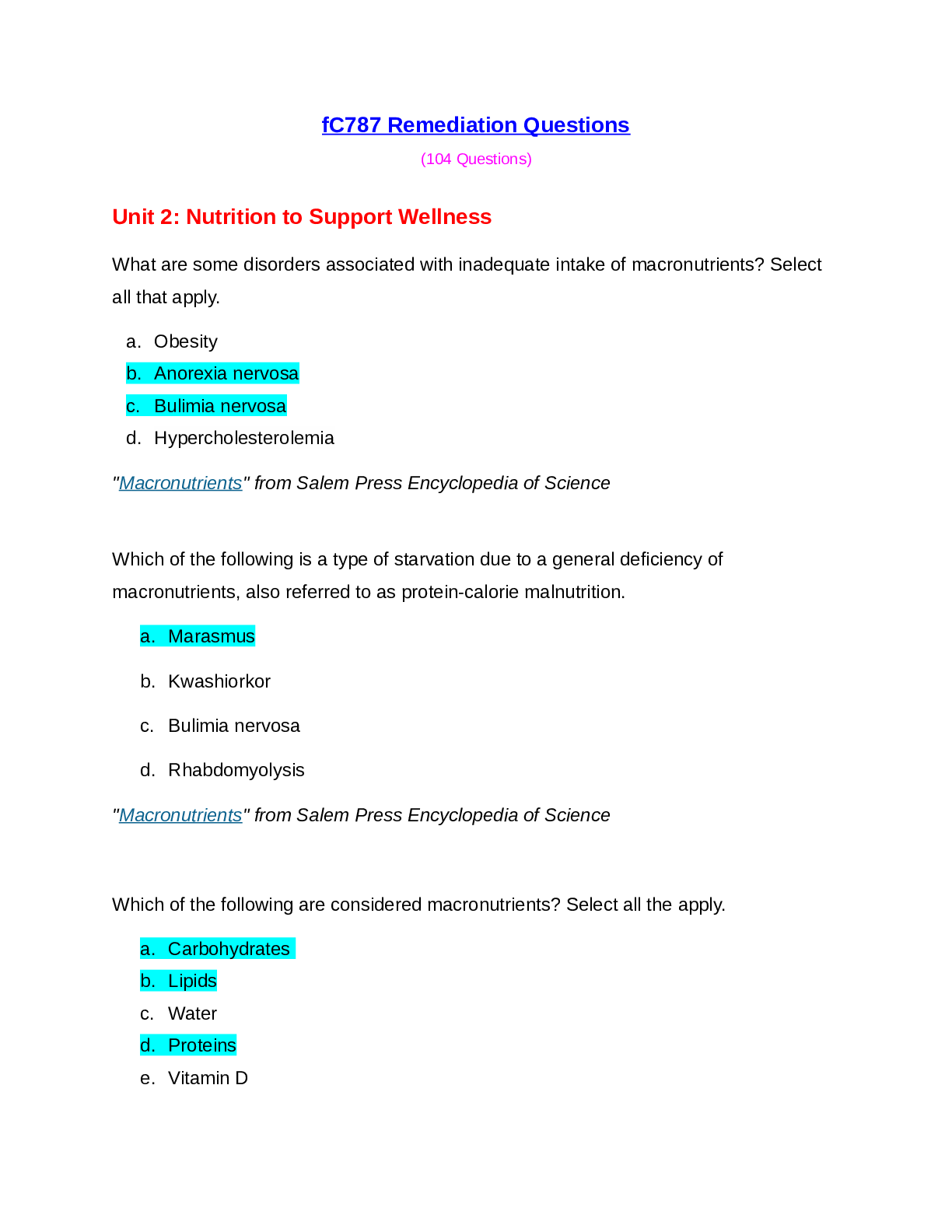
Unit 2: Nutrition to Support Wellness
What are some disorders associated with inadequate intake of macronutrients? Select
all that apply.
a. Obesity
b. Anorexia nervosa
c. Bulimia nervosa
d. Hypercholesterolemia
"Macronutrients" from Salem Press Encyclopedia of Science
Which of the following is a type of starvation due to a general deficiency of
macronutrients, also referred to as protein-calorie malnutrition.
a. Marasmus
b. Kwashiorkor
c. Bulimia nervosa
d. Rhabdomyolysis
"Macronutrients" from Salem Press Encyclopedia of Science
Which of the following are considered macronutrients? Select all the apply.
a. Carbohydrates
b. Lipids
c. Water
d. Proteins
e. Vitamin D
"Macronutrients" from Salem Press Encyclopedia of Science
Which of the following are always considered micronutrients? Select all the apply
a. Calcium
b. Copper
c. Iodine
d. Potassium
e. Iron
f. Sodium
g. Zinc
"Micronutrients" from Salem Press Encyclopedia
Which of the following is not considered a carbohydrate?
a. Simple sugars
b. Monosaccharides
c. Disaccharides
d. Amino Acid
e. Polysaccharides
f. Starch (digestible)
g. Fiber (indigestible)
(Watch: Fundamentals of Nutrients and the History of Nutrition:
https://www.youtube.com/watch?v=x4-VUJvT9bw&feature=youtu.be )
A healthy weight loss program consists of which of the following? Select all that apply.
a. A reasonable, realistic weight loss goal
b. A reduced calorie, nutritionally-balanced eating plan
c. Regular strenuous physical activity
d. A behavior change plan to help you stay on track with your goals
Interested in Losing Weight?" at Nutrition.gov)
Based on the Myplate tips what portion of the plate should be grains?
a. ⅔ of plate
b. ½ of plate
c. ¼ of plate
d. ⅓ of plate
Which of the following are the two types protein energy malnutrition, or PEM?
a. Anorexia nervosa
b. Obesity
c. Kwashiorkor
d. Marasmus.
article "Macronutrients" from Salem Press Encyclopedia of Science
Which of the following in not a sign of Kwashiorkor?
a. potbelly
b. moist unpigmented skin
c. coarse reddish hair
d. low muscle mass
e. lethargy
f. failure to grow
g. edema in the legs
(article "Macronutrients" from Salem Press Encyclopedia of Science)
Which is the most severe form of childhood malnutrition?
a. Kwashiorkor
b. Marasmus
(article "Macronutrients" from Salem Press Encyclopedia of Science)
Pellagra is the deficiency disease of which of the following vitamins?
a. Vitamin D
b. Vitamin B12
c. Vitamin B3 (niacin)
d. Vitamin A
e. Vitamin C
article "Malnutrition" from Magill’s Medical Guide
Which of the following is not considered a DRI:
a. Recommended Dietary Allowance (RDA)
b. Adequate Intake (AI)
c. Adequate Lower Intake Level (IL)
d. Tolerable Upper Intake Level (UL)
Read "Nutrient Recommendations: Dietary Reference Intakes (DRI)" at the National Institutes of Health
How much calcium is recommended for a healthy adult?
1,000 mg per day
True or False. Relatively few modifiable risk factors—for example, a lack of fruit and
vegetables in the diet, obesity, smoking, inappropriate use of alcohol, and physical
inactivity—cause the majority of the chronic disease burden.
a. True
b. False
Chapter 1 in Nutrition in Public Health
Which of the following is the premiere database for articles on nutrition topics?
a. Pubmed
b. ScienceDirect
c. ABI/Inform
d. CINAHL
Chapter 1 in Nutrition in Public Healthvf
Which of the following is not a specified diet limit for an American diet?
a. Consume less than 20% of calories per day from added sugars
b. Consume less than 10% of calories per day from saturated fats
c. Consume less than 2,300 milligrams (mg) per day of sodium
d. If alcohol is consumed, it should be consumed in moderation
Chapter 1 in Nutrition in Public Health
A overweight 65 year old woman on a 2000 calorie per day diet should consume how
much calcium daily?
a. 80% DV
b. 90% DV
c. 100% DV
d. 120% DV
"How to Understand and Use the Nutrition Facts Label" at U.S. Food and Drug
Administration.
State the formula for calculating a BMI ___________________________
1. Divide your weight (kg) by your height (m
[Show More]


.png)
.png)