BioChemistry > Lab Report > Lab Report > MICB 3301 Lab Report 2_ Exercise 10. Isolation and Identification of Two Unknown Organi (All)
Lab Report > MICB 3301 Lab Report 2_ Exercise 10. Isolation and Identification of Two Unknown Organisms from a Mixed Culture by means of Selective and Differential Testing
Document Content and Description Below
Last updated: 3 years ago
Preview 1 out of 12 pages
Instant download

Buy this Document to get the Full Access Instantly
Provided by Students Who Aced it
We Verify Document Content to Gurantee Accuracy
Reviews( 0 )
Document information
Connected school, study & course
About the document
Uploaded On
Dec 02, 2020
Number of pages
12
Written in
All

Additional information
This document has been written for:
Uploaded
Dec 02, 2020
Downloads
0
Views
253
Topic Tags
Recommended For You
Get more on Lab Report »
University of Minnesota - MICB 3301 EXAM 4. 100 %. Includes no...

Grand Canyon University - HLT 362V HLTV Week 2 Exercise 10 & 2...

Test Bank for Biochemistry The Molecular Basis of Life 7th Edi...

Essentials of General, Organic, and Biochemistry, 3rd Edition...
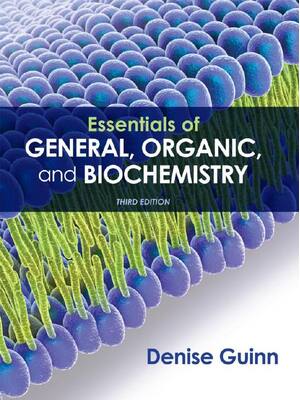
Test Bank for Essentials of General, Organic, and Biochemistry...
Test Bank For Lehninger Principles of Biochemistry 8th Edition...
Solutions Manual for Biochemistry by Reginald Garrett, Charles...
E book Phytochemistry in Corrosion Science Plant Extracts and...
Solutions manual For Chemistry, 4th Canadian Edition by John A...
E book Biogeochemistry of Wetlands Science and Applications 2n...
Trends in Counterfeit Drugs 1st Edition By Kelly Elkins eBook...

[eBook][PDF] Harper’s Illustrated Biochemistry, 31st Edition B...
BIOD 331 / NURS 231 Pathophysiology Module 7 Exam – Actual Que...
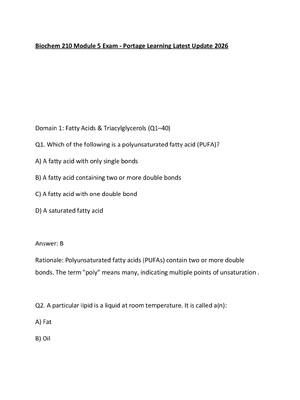
Biochem 210 Module 5 Exam - Portage Learning Latest Update 202...