NURSING > EXAM > NURS 428 Hesi/saunders online review for NCLEX MODULE 8 Exam Questions With Rationales (All)
NURS 428 Hesi/saunders online review for NCLEX MODULE 8 Exam Questions With Rationales
Document Content and Description Below
Last updated: 3 years ago
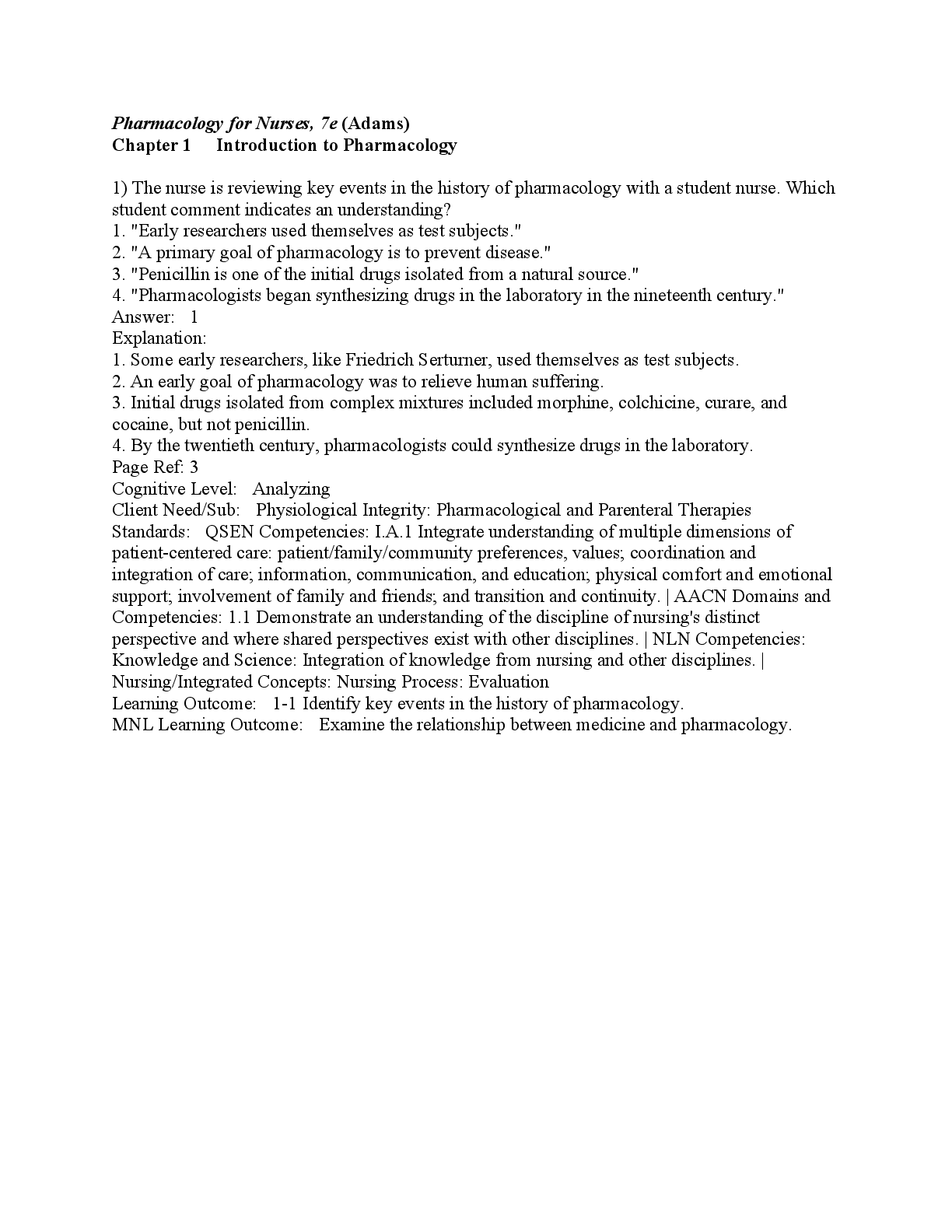
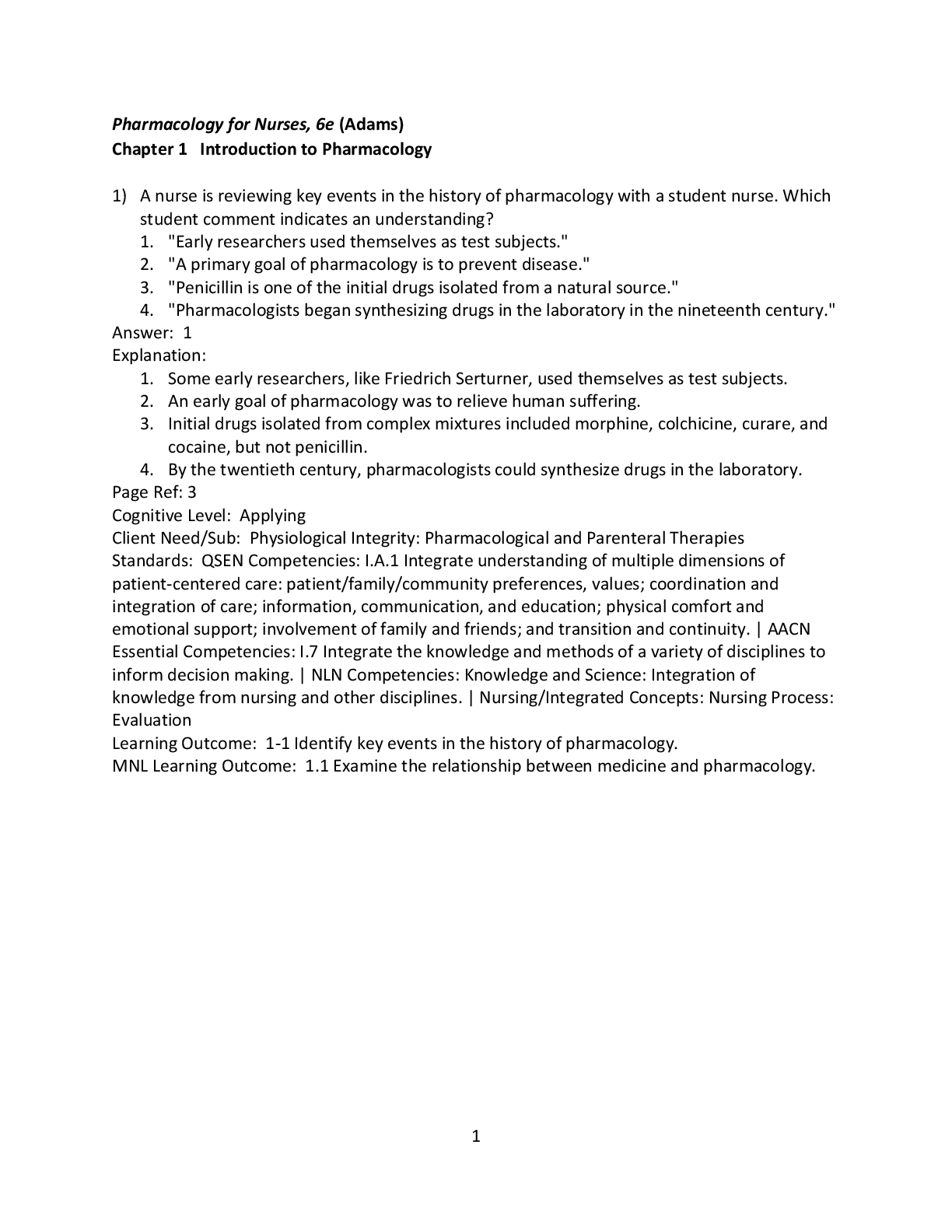
Preview 1 out of 61 pages
Instant download
.png)
Buy this Document to get the Full Access Instantly
Provided by Students Who Aced it
We Verify Document Content to Gurantee Accuracy
Reviews( 0 )
Document information
Connected school, study & course
About the document
Uploaded On
Jul 15, 2022
Number of pages
61
Written in
All

Additional information
This document has been written for:
Uploaded
Jul 15, 2022
Downloads
0
Views
123
Topic Tags
Recommended For You
Get more on EXAM ».png)
NURS 428 Hesi/saunders online review for NCLEX MODULE 9 Exam Q...
Hesi Saunders Online Review for the NCLEX-RN Examination 2 yea...
HESI Saunders Online Review for the NCLEX-RN Examination 2 Yea...
HESI Saunders Online Review for the NCLEX-RN Examination 2 Yea...

HESI Saunders Online NCLEX 2nd Edition – Module 5 (Updated 202...
HESI Saunders Online Review for the Nclex-RN Examination 2Year...
Complete Test Bank For Lehnes Pharmacotherapeutics for Advance...
Test Bank for Brunner & Suddarth's Textbook of Medical-Surgica...

Saunders Online NCLEX-RN Course Notes from the Test Preparatio...





.png)


