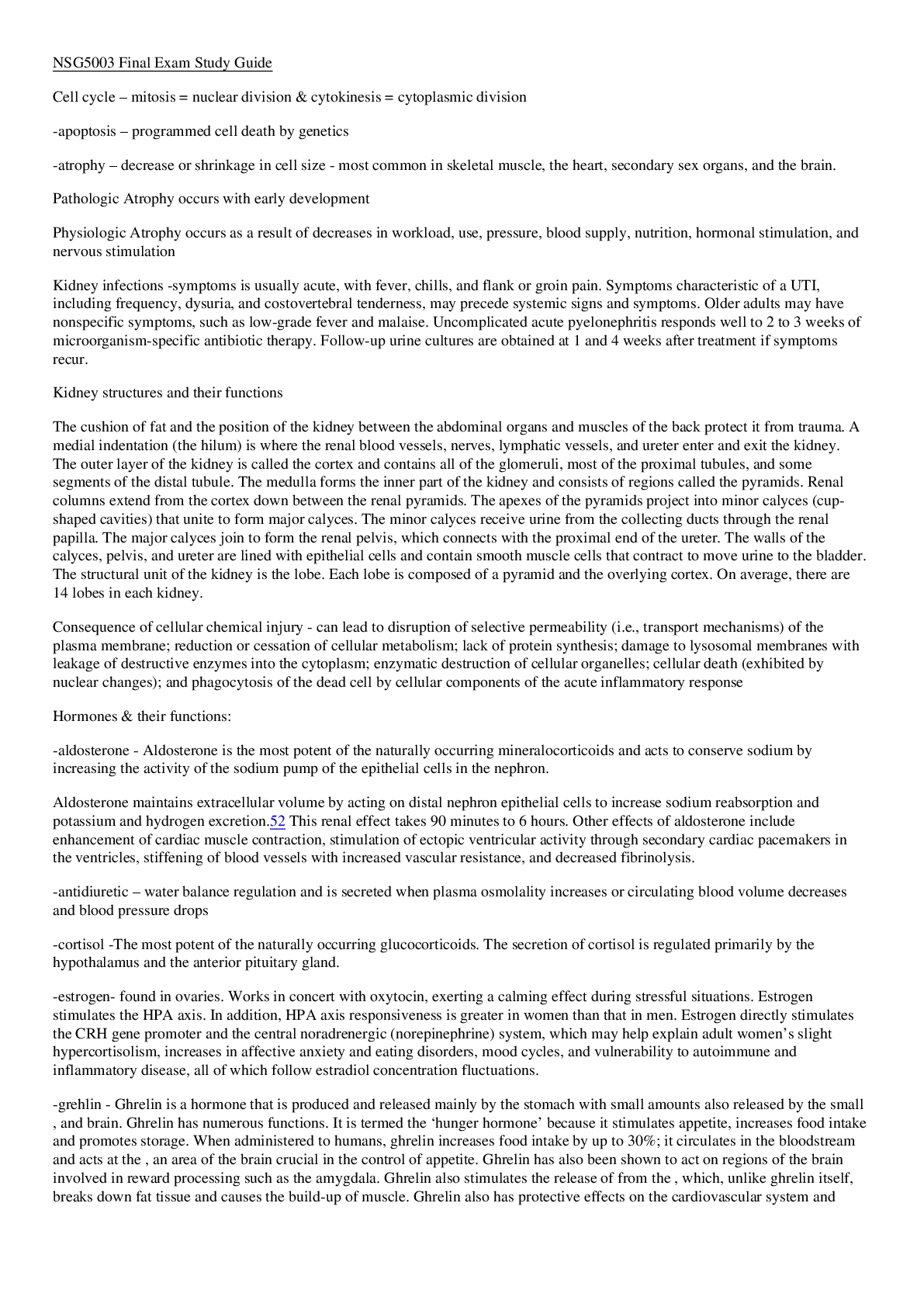
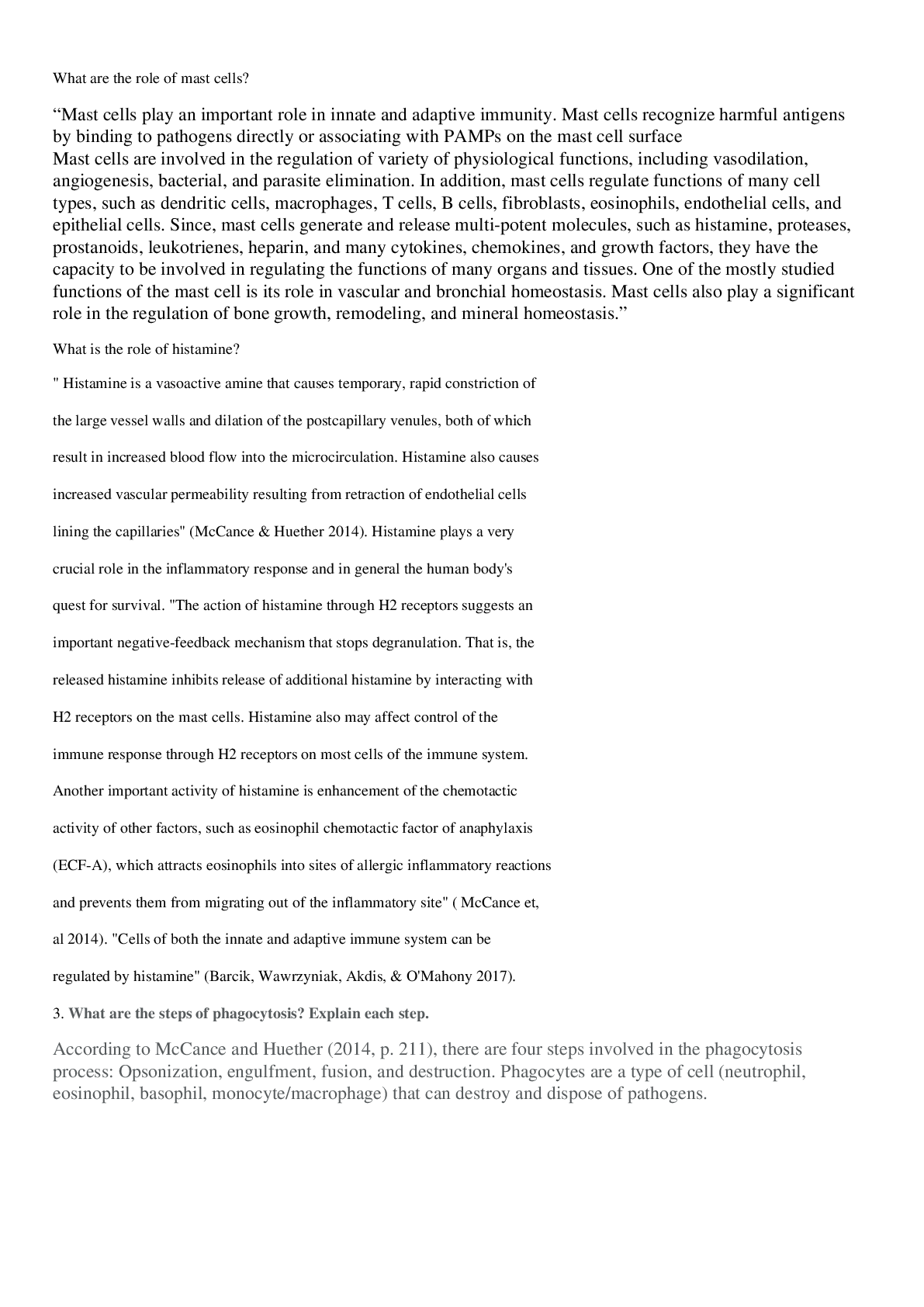
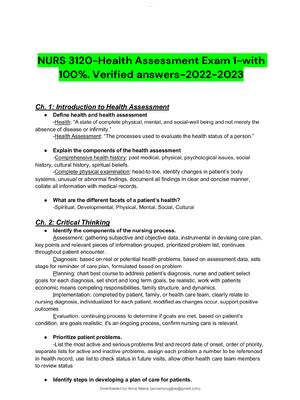
NSG 5003-week 1 exam review- with verified questions and
Document Content and Description Below
. It is true that a eukaryotic cell:
Week 1 review questions THE CELL
Eukaryotic cells contain organelles and histones, they have a welldefined nucleus, and are larger than prokaryotic cells.
Th
...
[Show More]
Last updated: 4 years ago
Preview 1 out of 19 pages
Instant download
Buy this Document to get the Full Access Instantly
Provided by Students Who Aced it
We Verify Document Content to Gurantee Accuracy
Reviews( 0 )
Document information
Connected school, study & course
About the document
Uploaded On
Jul 18, 2022
Number of pages
19
Written in
All

Additional information
This document has been written for:
Uploaded
Jul 18, 2022
Downloads
0
Views
194
Topic Tags
Recommended For You
Get more on EXAM »
$10
25 Pages
NSG5003 / NSG 5003: Advanced Pathophysiology Final Exam Week 1...

$10
22 Pages
NSG5003 / NSG 5003: Advanced Pathophysiology Midterm Exam Late...
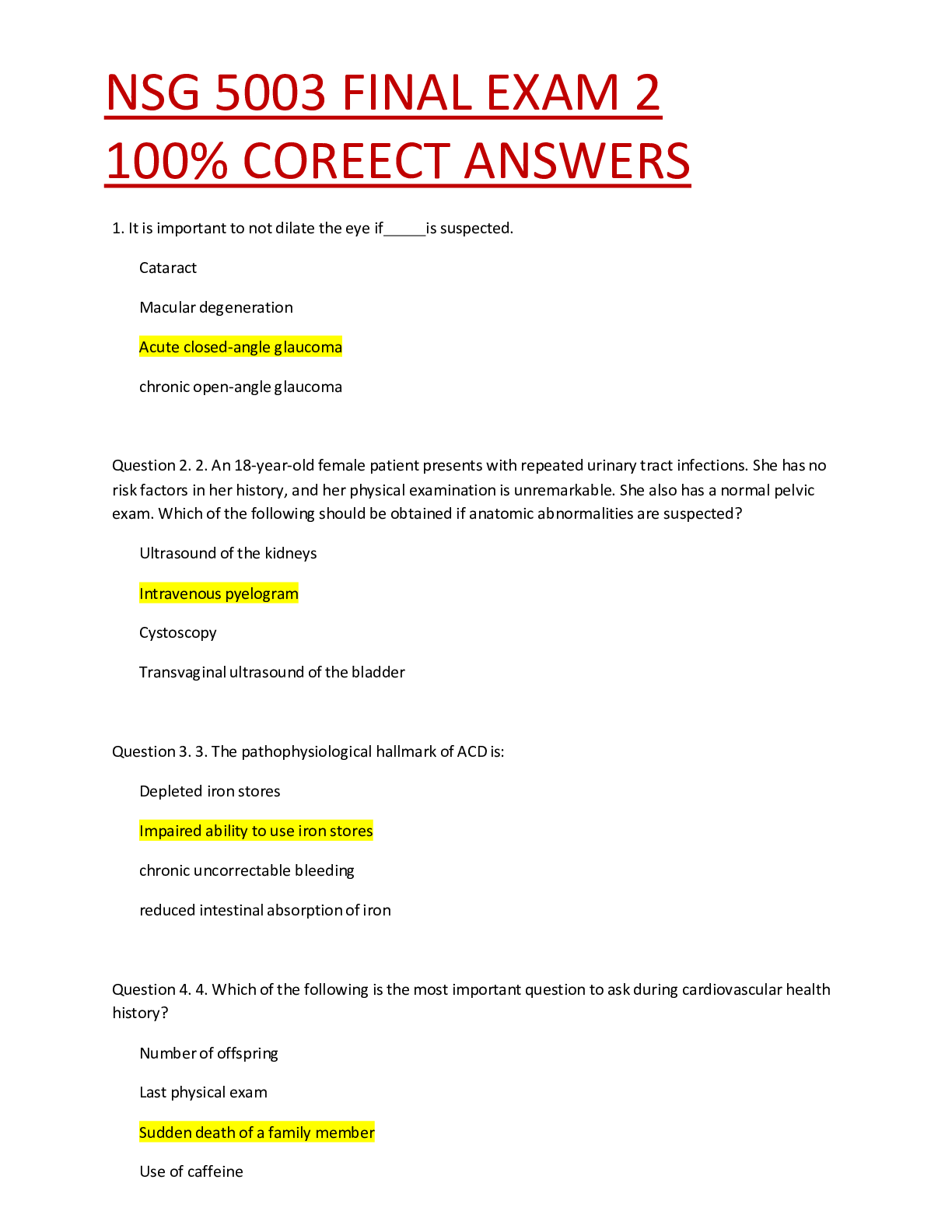
$15
54 Pages
NSG 5003 FINAL EXAM 2 - Questions and Answers (latest 2020)

$8
70 Pages
NSG 5003 Mid Term Exam 3 - Questions and Answers (Latest 2020)
$15
19 Pages
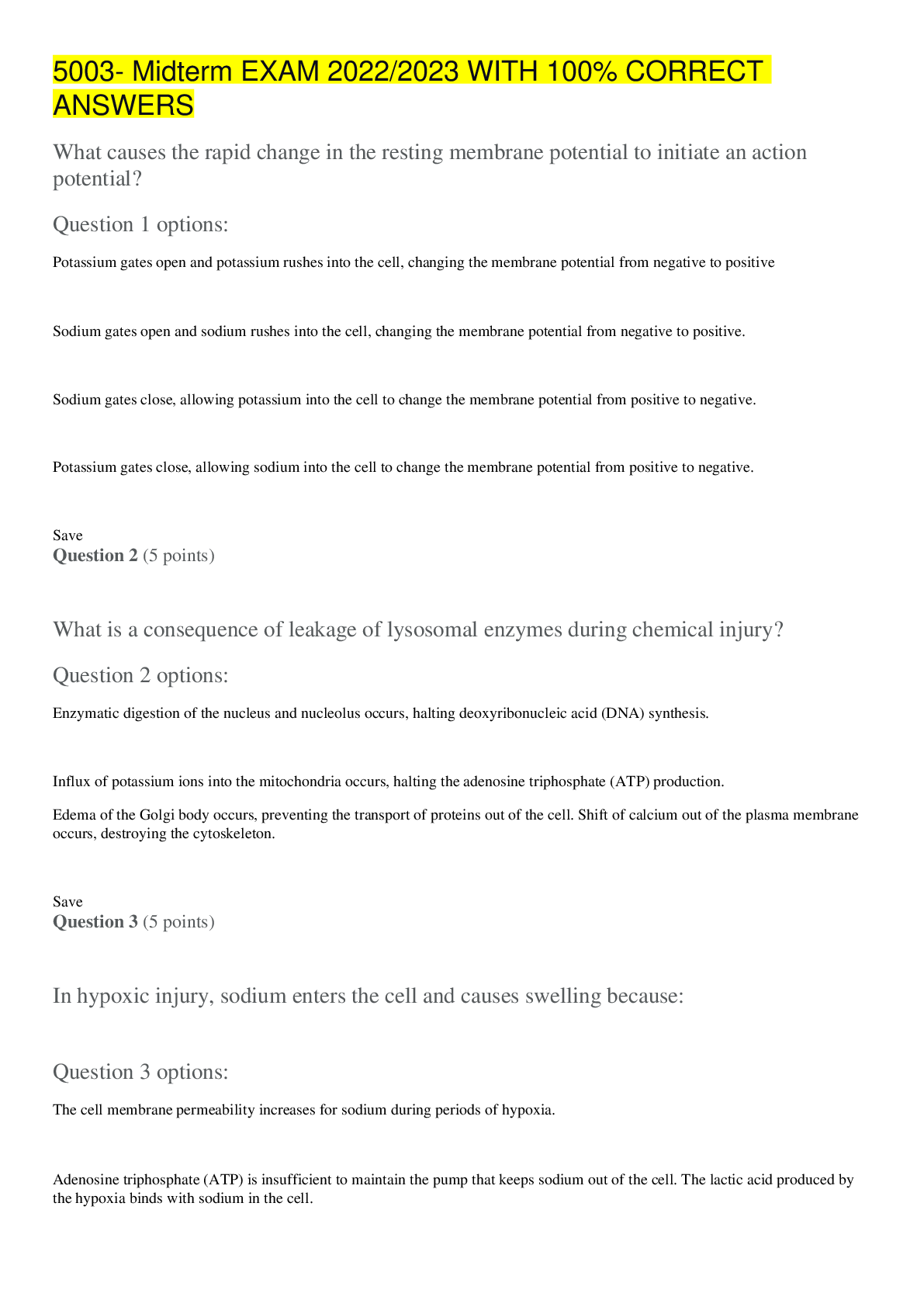
NSG 5003 Advanced Pathophysiology Midterm Exam-Questions and A...

$3
3 Pages
NSG 5003 Week 4 Knowledge Check Quiz (Latest): Advanced Pathop...
$15
289 Pages
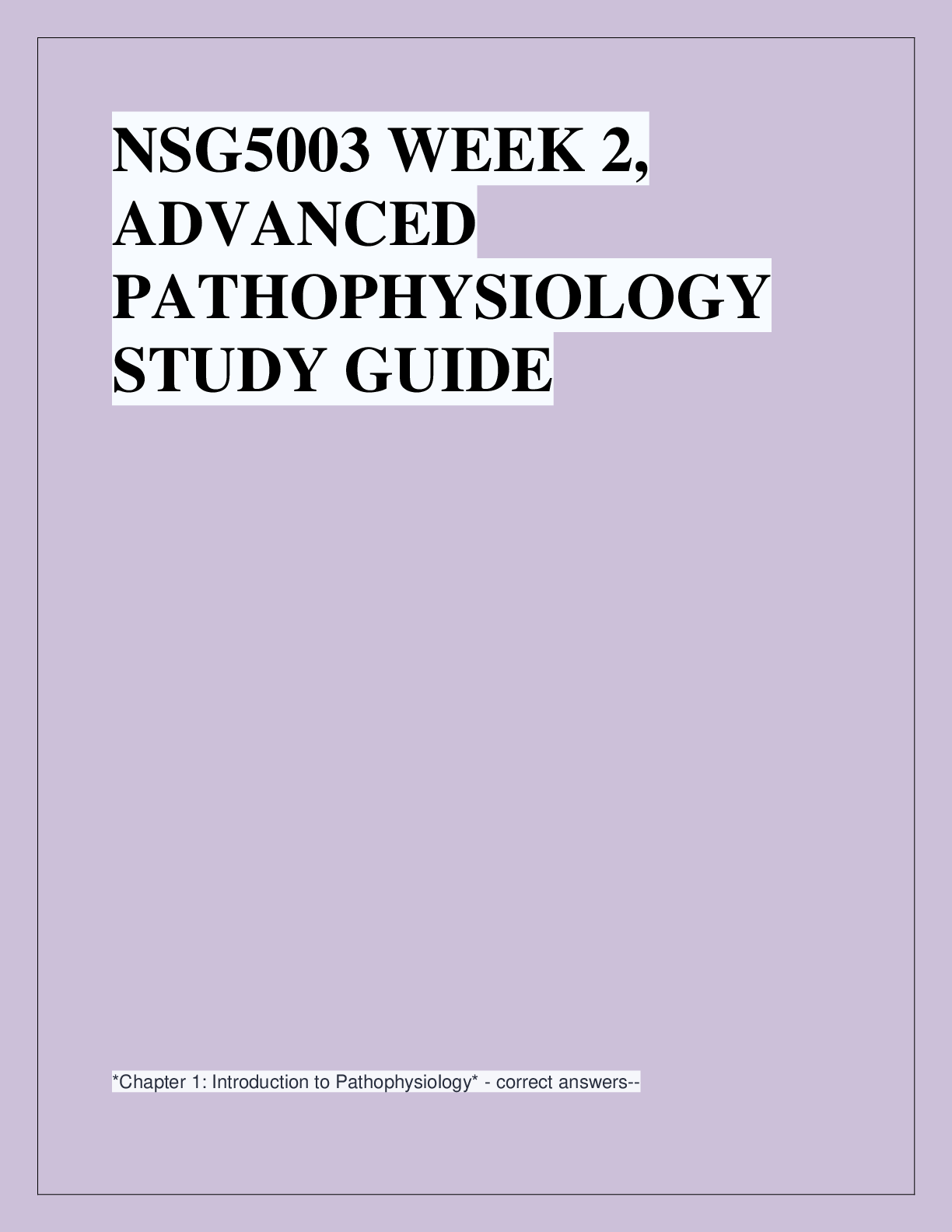
NSG 5003 pharmacology | Advanced Pathophysiology testbank, Lat...
$10
11 Pages
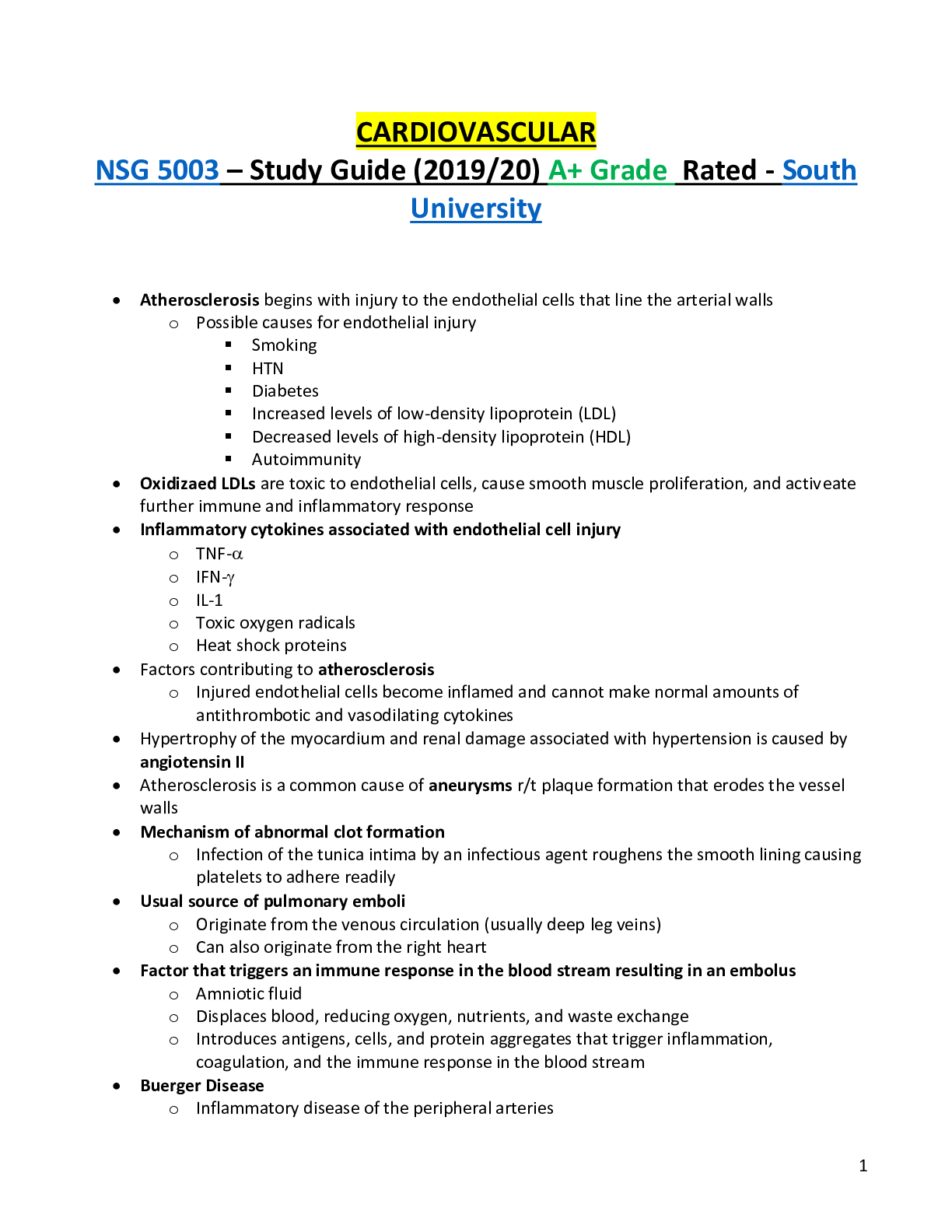
South University > NSG 5003 : CARDIOVASCULAR - Study Guide (20...

$10
9 Pages
NSG 5003 APEA CARDIO Advanced Pathophysiology | South Universi...

$14
7 Pages
Musculoskeletal Case Study | Week 10 Discussion NSG 5003, Late...
$29
289 Pages