What are the obstacles of therapeutic communication?
a) Resistance- lack of awareness of problems in order to avoid anxiety
b) Transference- unconscious assoc. NS with someone significant in his/her life.
c) Countertr
...
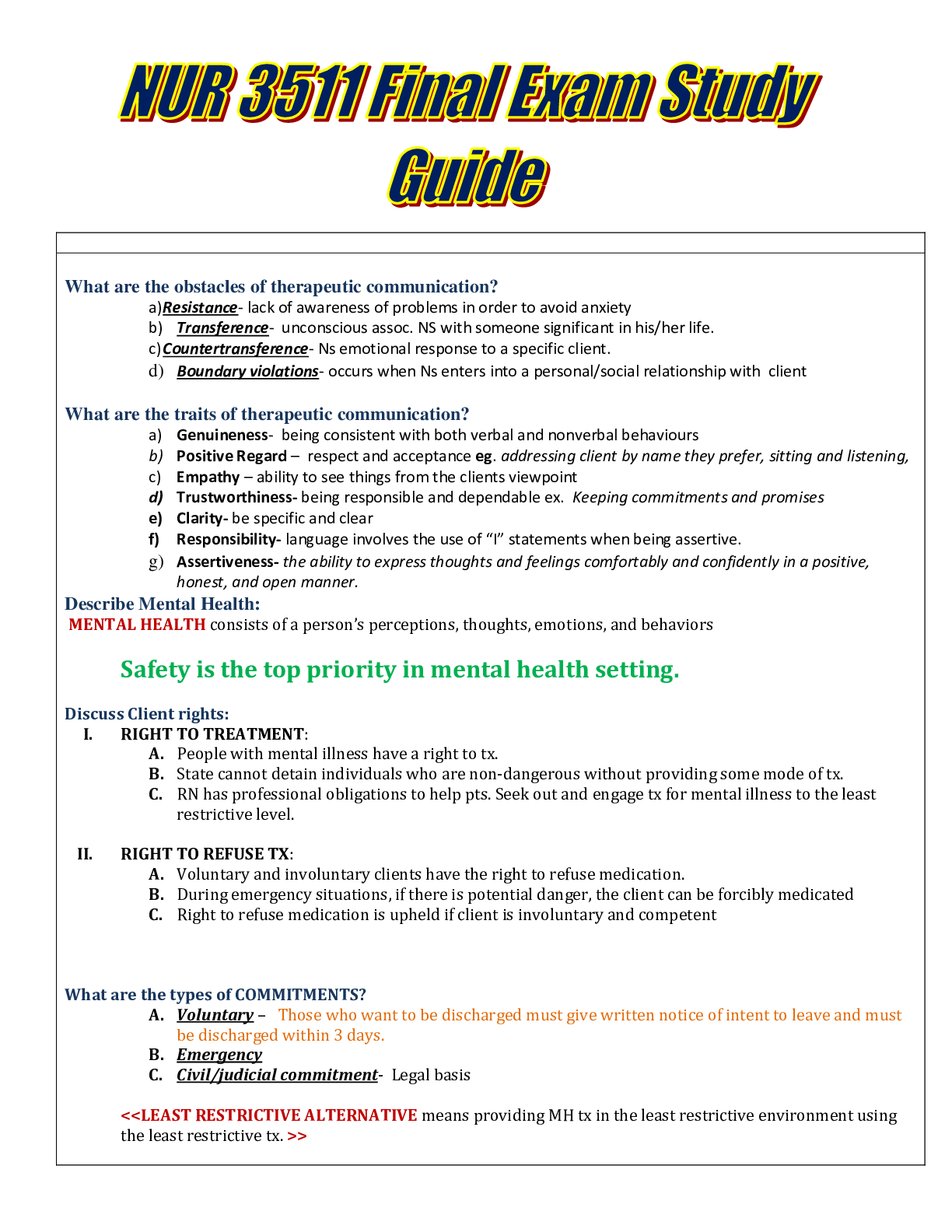
What are the obstacles of therapeutic communication?
a) Resistance- lack of awareness of problems in order to avoid anxiety
b) Transference- unconscious assoc. NS with someone significant in his/her life.
c) Countertransference- Ns emotional response to a specific client.
d) Boundary violations- occurs when Ns enters into a personal/social relationship with client
What are the traits of therapeutic communication?
a) Genuineness- being consistent with both verbal and nonverbal behaviours
b) Positive Regard – respect and acceptance eg. addressing client by name they prefer, sitting and listening,
c) Empathy – ability to see things from the clients viewpoint
d) Trustworthiness- being responsible and dependable ex. Keeping commitments and promises
e) Clarity- be specific and clear
f) Responsibility- language involves the use of “I” statements when being assertive.
g) Assertiveness- the ability to express thoughts and feelings comfortably and confidently in a positive, honest, and open manner.
Describe Mental Health:
MENTAL HEALTH consists of a person’s perceptions, thoughts, emotions, and behaviors
Safety is the top priority in mental health setting.
Discuss Client rights:
I. RIGHT TO TREATMENT:
A. People with mental illness have a right to tx.
B. State cannot detain individuals who are non-dangerous without providing some mode of tx.
C. RN has professional obligations to help pts. Seek out and engage tx for mental illness to the least restrictive level.
II. RIGHT TO REFUSE TX:
A. Voluntary and involuntary clients have the right to refuse medication.
B. During emergency situations, if there is potential danger, the client can be forcibly medicated
C. Right to refuse medication is upheld if client is involuntary and competent
CONTINUED.........
[Show More]