Computer Networking > QUESTIONS & ANSWERS > HomeWork 3 Wireshark Exam. Questions and Answers (All)
HomeWork 3 Wireshark Exam. Questions and Answers
Document Content and Description Below
Last updated: 3 years ago
Preview 1 out of 5 pages
Instant download

Buy this Document to get the Full Access Instantly
Provided by Students Who Aced it
We Verify Document Content to Gurantee Accuracy
Reviews( 0 )
Document information
Connected school, study & course
About the document
Uploaded On
Jul 31, 2022
Number of pages
5
Written in
All

Additional information
This document has been written for:
Uploaded
Jul 31, 2022
Downloads
0
Views
209
Topic Tags
Related Subjects & Courses
Explore similar study resources and related concepts.
Recommended For You
Get more on QUESTIONS & ANSWERS »
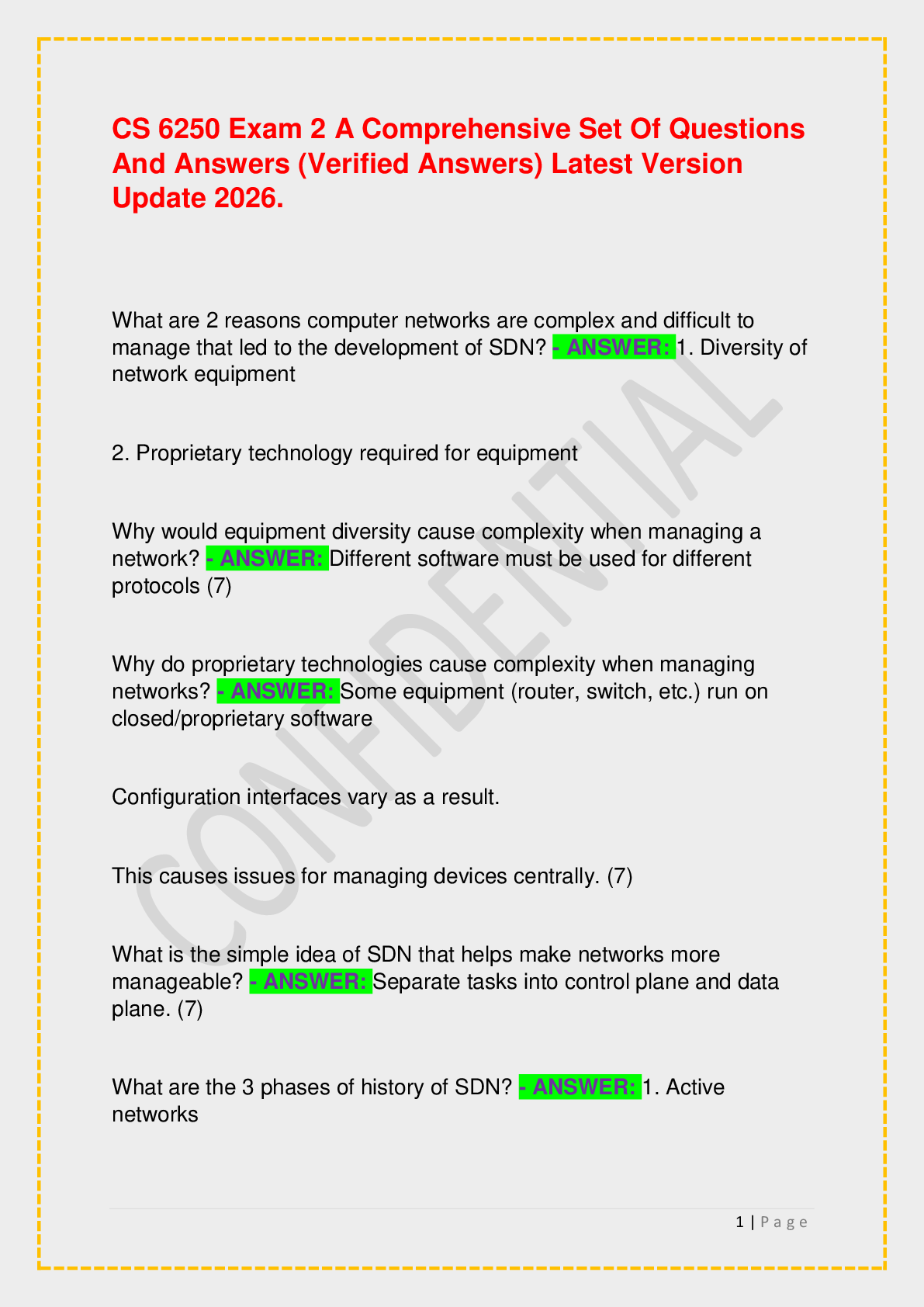

Introduction to Networking Basics 2nd Edition By Ciccarelli Fa...
Introduction to Networking Basics 2nd Edition By Ciccarelli Fa...

Hands-On Networking Fundamentals 2e Michael Palmer (Solution M...
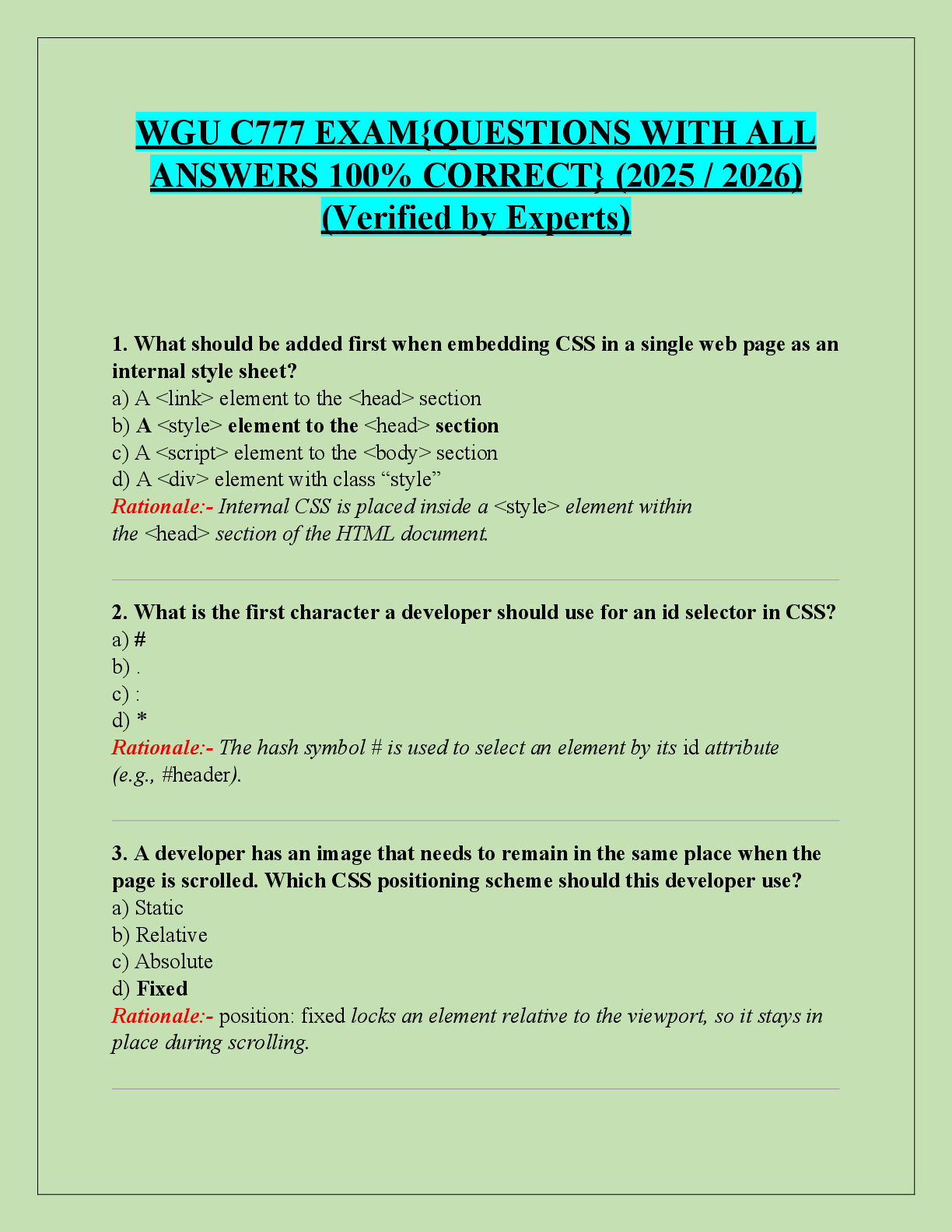
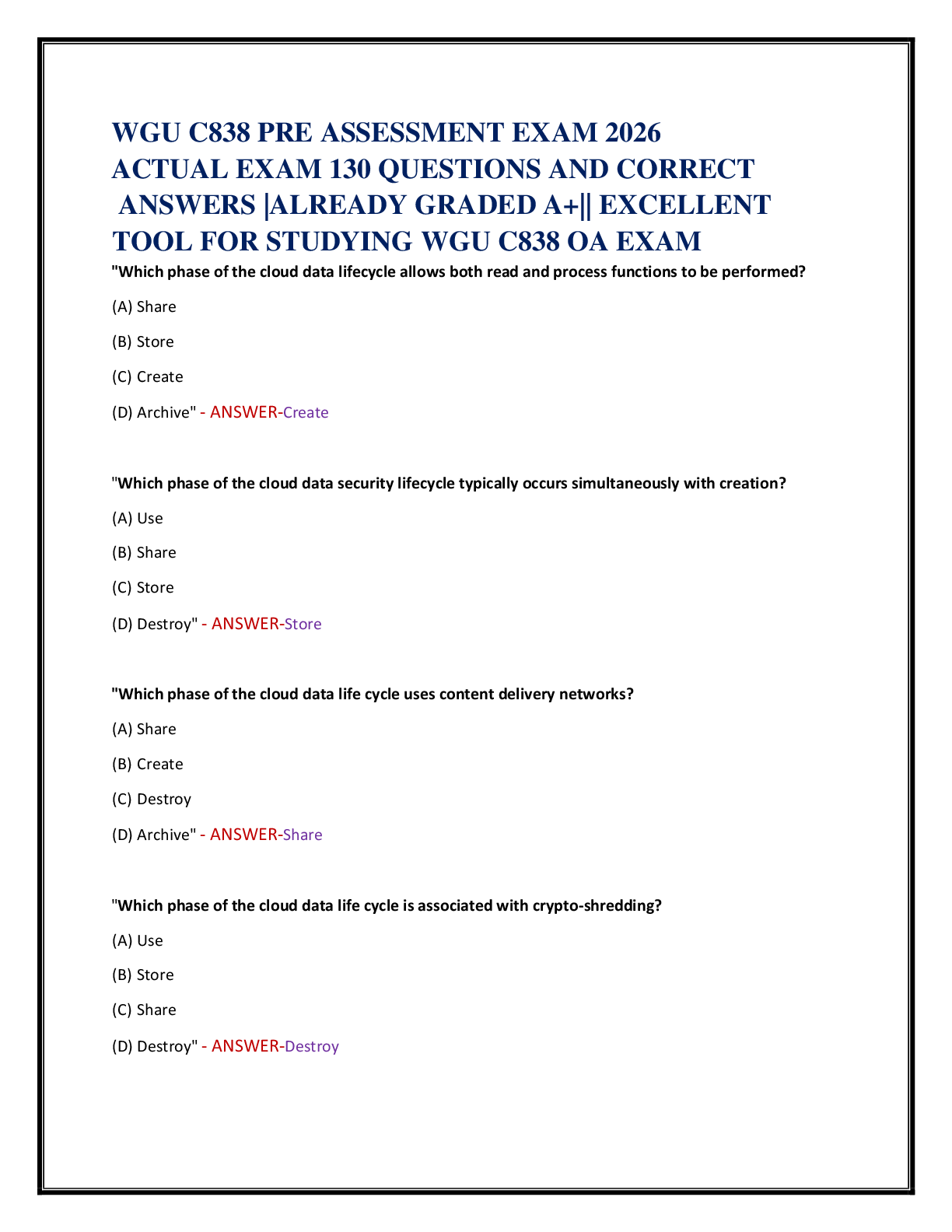
WGU C838 PRE ASSESSMENT EXAM 2026 ACTUAL EXAM 130 QUESTIONS...
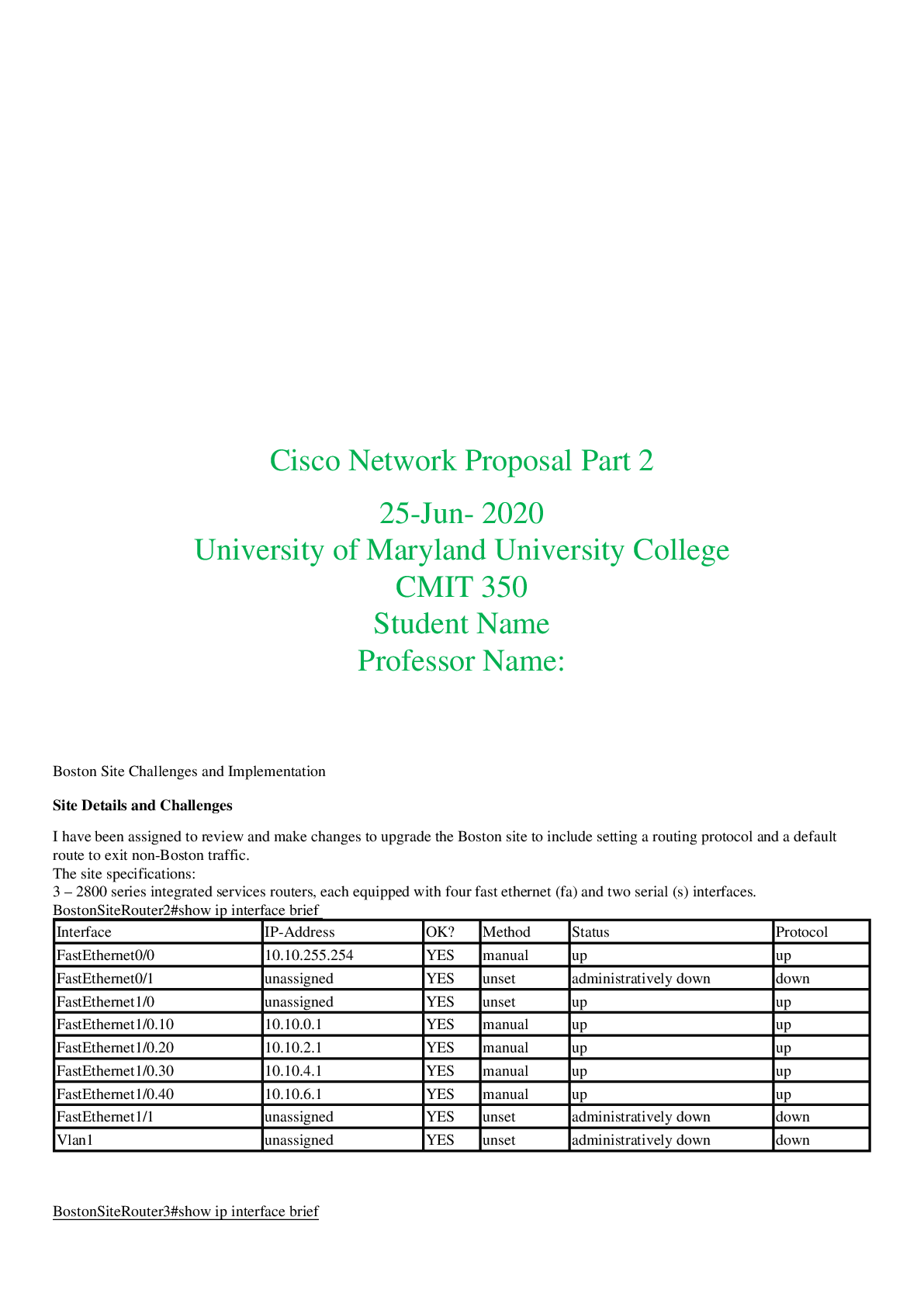
University of Maryland, University College CMIT 350 Cisco Netw...

University of Maryland, University College CMIT 350 Cisco Netw...
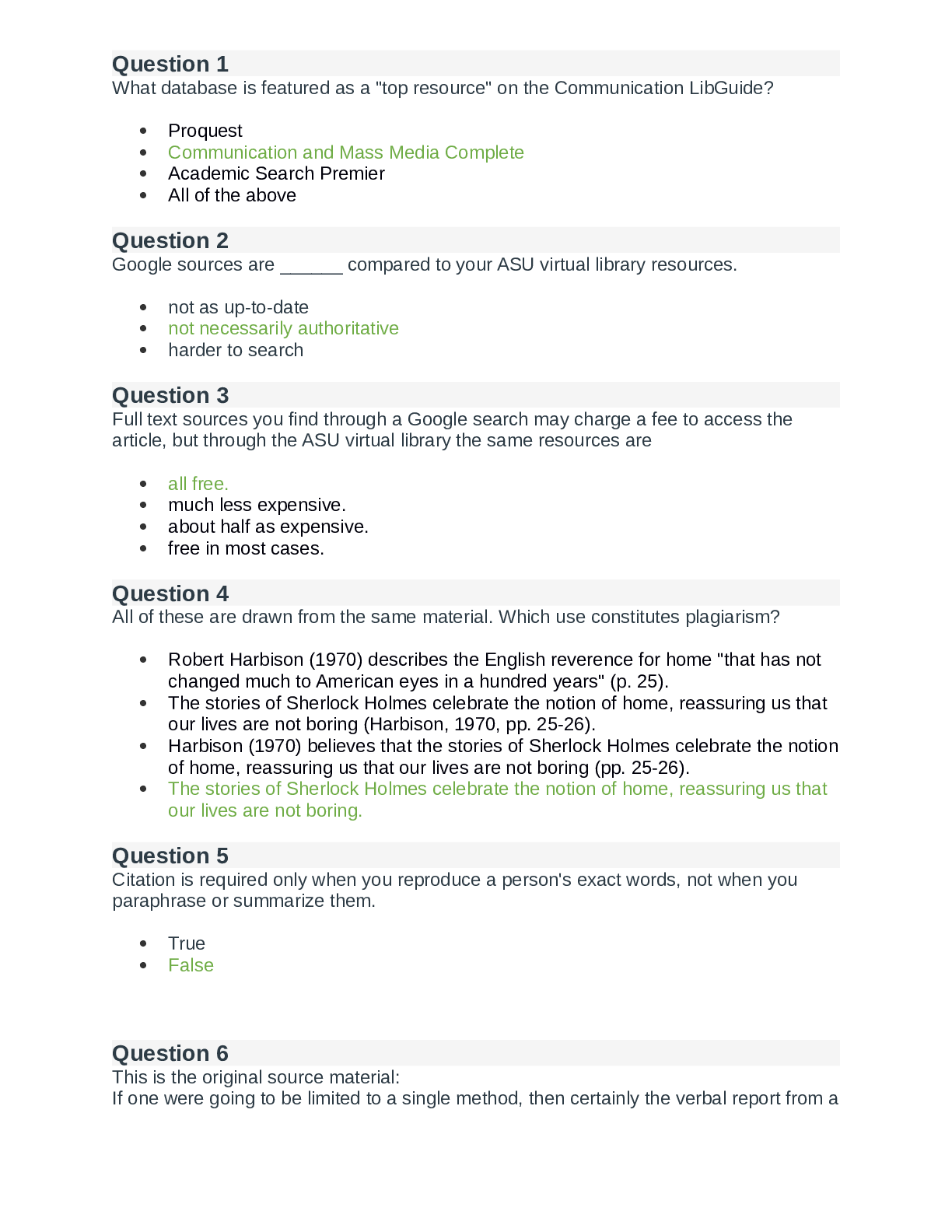
COM 207 | COM207 EXAM 2 STUDY GUIDE - ARIZONA STATE UNIVERSITY

University of Maryland, University College CMIT 350 Cisco Netw...
MoCA Test Montreal Cognitive Assessment 2025 Update / Complete...