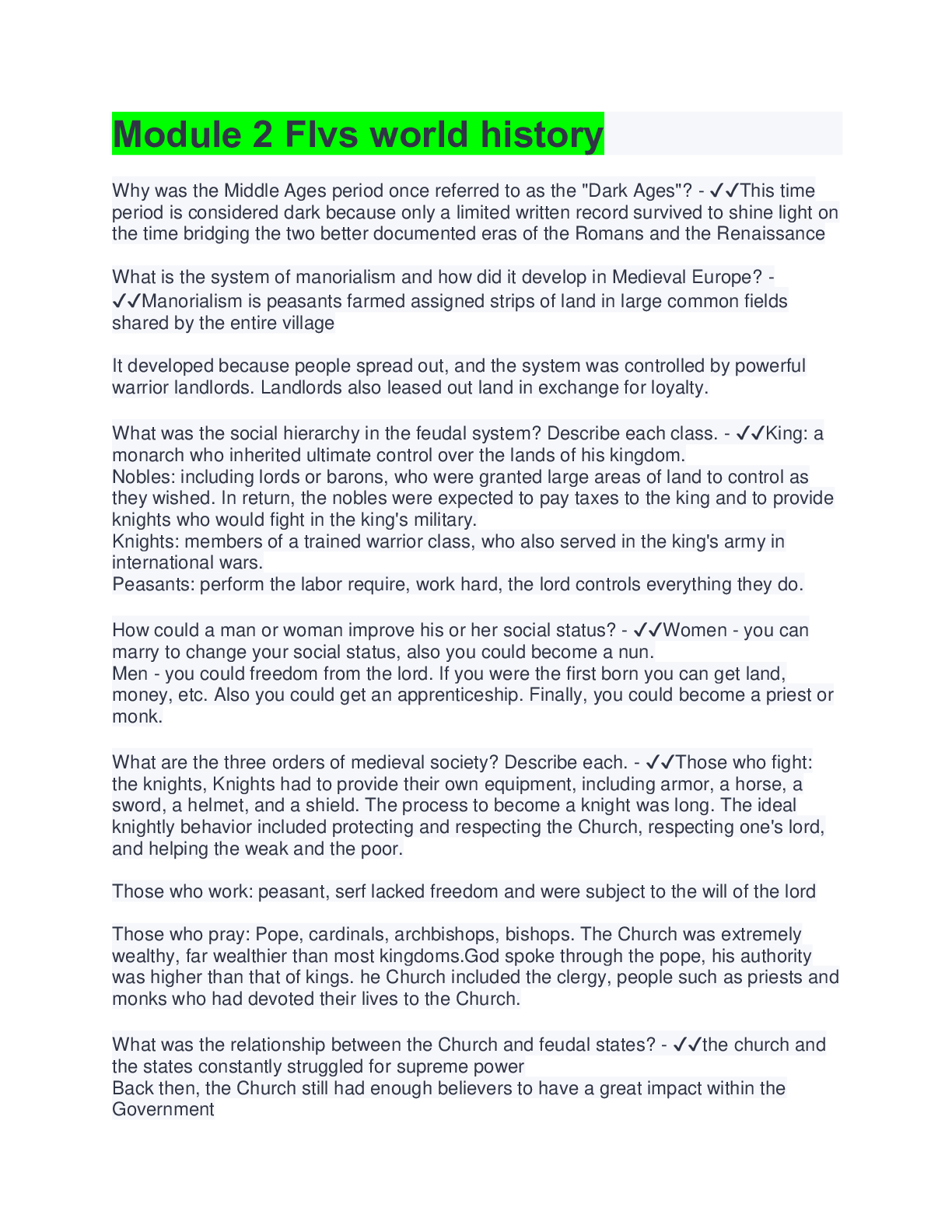
Why was the Middle Ages period once referred to as the "Dark Ages"? - ✔✔This time
period is considered dark because only a limited written record survived to shine light on
the time bridging the two better documented e
...
Why was the Middle Ages period once referred to as the "Dark Ages"? - ✔✔This time
period is considered dark because only a limited written record survived to shine light on
the time bridging the two better documented eras of the Romans and the Renaissance
What is the system of manorialism and how did it develop in Medieval Europe? -
✔✔Manorialism is peasants farmed assigned strips of land in large common fields
shared by the entire village
It developed because people spread out, and the system was controlled by powerful
warrior landlords. Landlords also leased out land in exchange for loyalty.
What was the social hierarchy in the feudal system? Describe each class. - ✔✔King: a
monarch who inherited ultimate control over the lands of his kingdom.
Nobles: including lords or barons, who were granted large areas of land to control as
they wished. In return, the nobles were expected to pay taxes to the king and to provide
knights who would fight in the king's military.
Knights: members of a trained warrior class, who also served in the king's army in
international wars.
Peasants: perform the labor require, work hard, the lord controls everything they do.
How could a man or woman improve his or her social status? - ✔✔Women - you can
marry to change your social status, also you could become a nun.
Men - you could freedom from the lord. If you were the first born you can get land,
money, etc. Also you could get an apprenticeship. Finally, you could become a priest or
monk.
What are the three orders of medieval society? Describe each. - ✔✔Those who fight:
the knights, Knights had to provide their own equipment, including armor, a horse, a
sword, a helmet, and a shield. The process to become a knight was long. The ideal
knightly behavior included protecting and respecting the Church, respecting one's lord,
and helping the weak and the poor
[Show More]