Physics > QUESTIONS & ANSWERS > Physics 223 Name: Task 2 – Some simple harmonic motion calculations (All)
Physics 223 Name: Task 2 – Some simple harmonic motion calculations
Document Content and Description Below
Last updated: 4 years ago
Preview 1 out of 3 pages
Instant download

Buy this Document to get the Full Access Instantly
Provided by Students Who Aced it
We Verify Document Content to Gurantee Accuracy
Reviews( 0 )
Document information
Connected school, study & course
About the document
Uploaded On
Aug 12, 2022
Number of pages
3
Written in
All

Additional information
This document has been written for:
Uploaded
Aug 12, 2022
Downloads
0
Views
123
Topic Tags
Recommended For You
Get more on QUESTIONS & ANSWERS »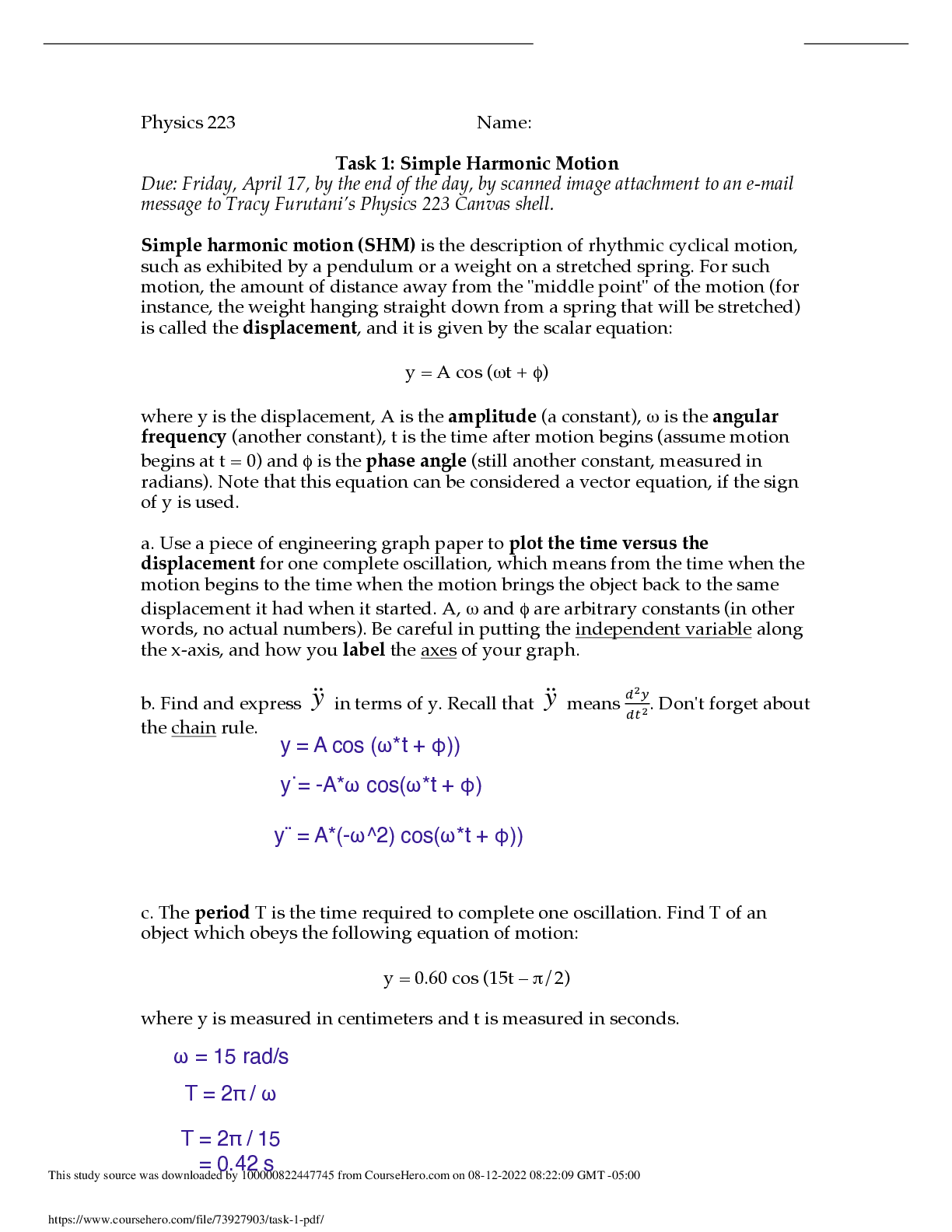
North Seattle College PHYSICS 223: Task 1: Simple Harmonic Mot...
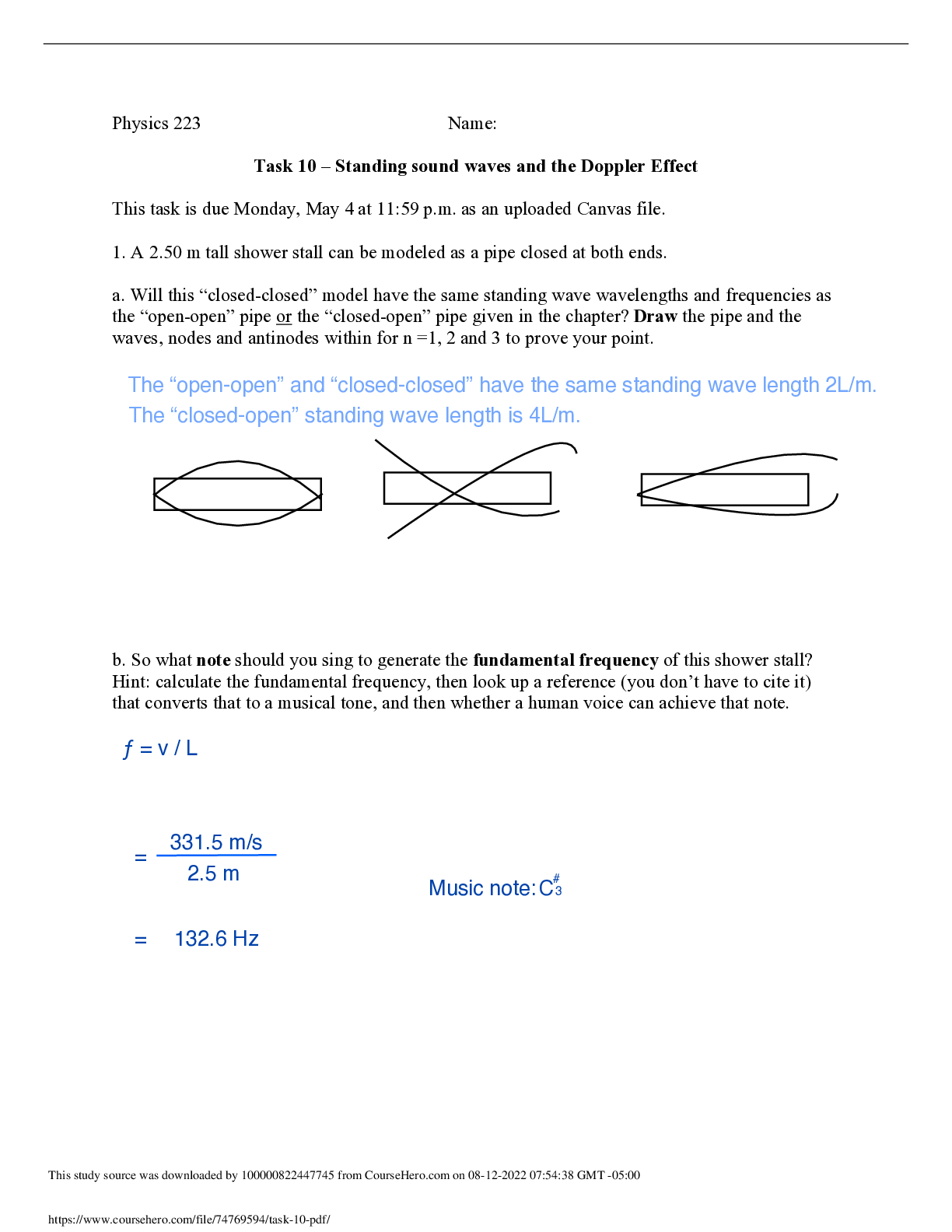
North Seattle College: Physics 223 Name: Task 10 – Standing so...
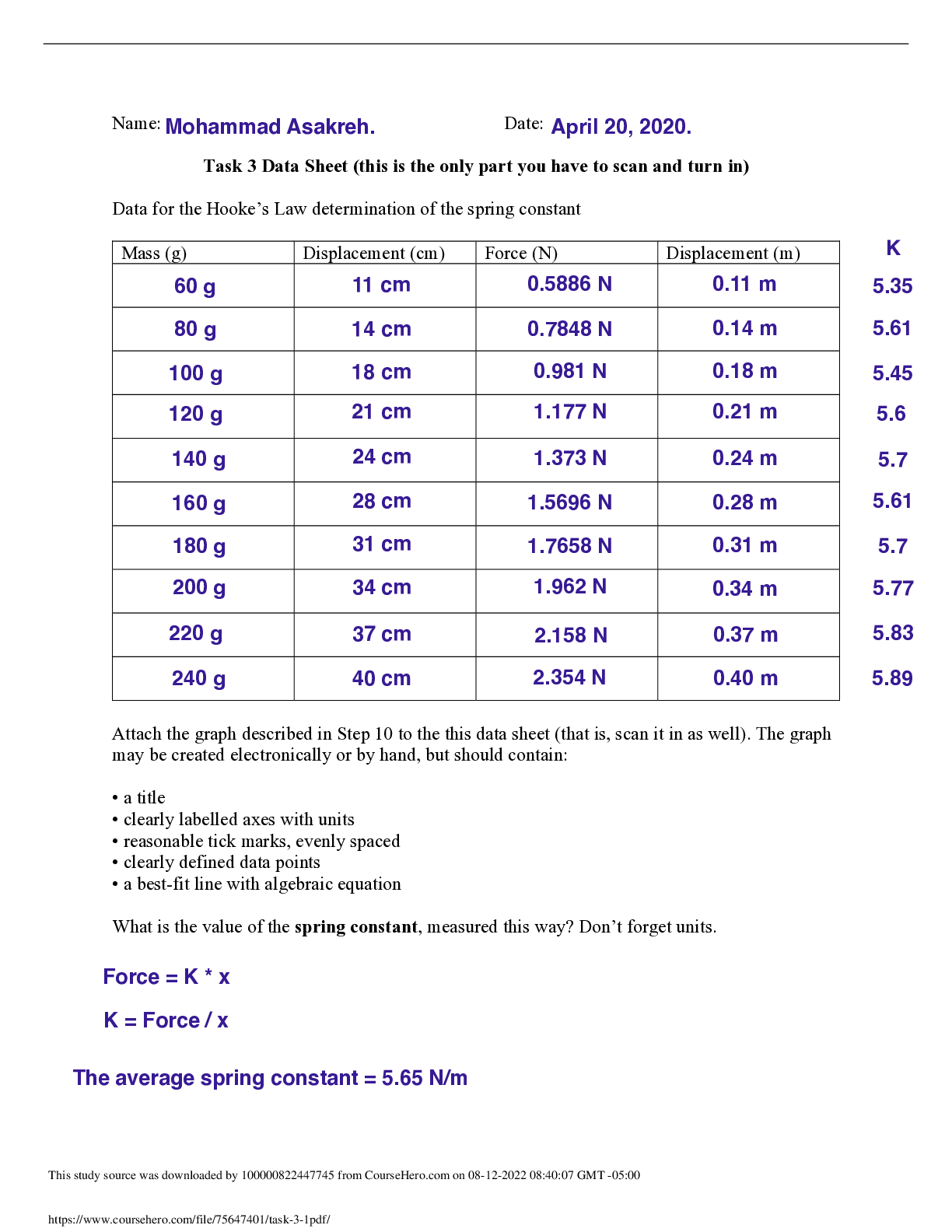
PHYSICS 223 Task 3 Data Sheet (this is the only part you have...

Plasma Physics, 2e by Richard Fitzpatrick (Solutions Manual)

Introduction to Nuclear Reactor Physics 1st Edition By Robert...
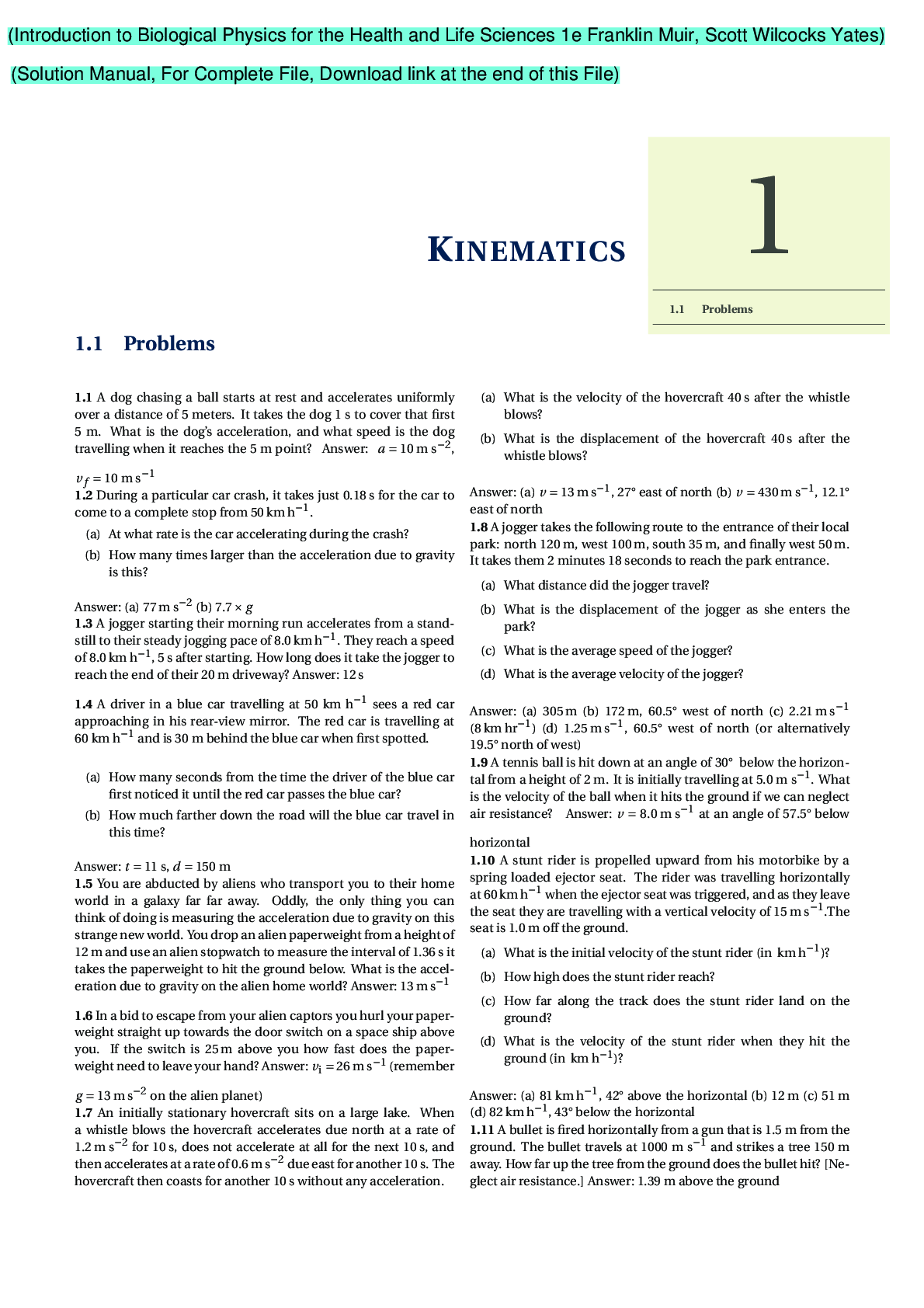
Introduction to Biological Physics for the Health and Life Sci...