Biology > Lab Experiment > The Urinary System. PRE-LAB QUESTIONS. Experiment 1: Kidney Filtration, Experiment 2: Urinalysis, Ex (All)
The Urinary System. PRE-LAB QUESTIONS. Experiment 1: Kidney Filtration, Experiment 2: Urinalysis, Experiment 3: Virtual Model – The Urinary System, Experiment 4: Fetal Pig Dissection –The Urinary System
Document Content and Description Below
Last updated: 3 years ago
Preview 1 out of 12 pages
Instant download

Buy this Document to get the Full Access Instantly
Provided by Students Who Aced it
We Verify Document Content to Gurantee Accuracy
Reviews( 0 )
Document information
Connected school, study & course
About the document
Uploaded On
Dec 15, 2020
Number of pages
12
Written in
All

Additional information
This document has been written for:
Uploaded
Dec 15, 2020
Downloads
0
Views
557
Topic Tags
Recommended For You
Get more on Lab Experiment »
Straighterline_BIOL 202L Lab 14 The Urinary System, Experiment...

portage learning bio 152. Lab 3 Exam - Requires Respondus Lock...

portage learning bio 152.. Lab 1 Exam - Requires Respondus Loc...

ACLS PreTest: Pharmacology and Practical Application Questions...

TEST BANK for Human Biology, 16th Edition By Mader and Windels...
TEST BANK for The Cell: A Molecular Approach 8th Ed by Cooper...
TEST BANK for Essential Cell Biology 5th Edition By Bruce Albe...
Test Bank for Biology The Essentials 4th Edition By Marielle H...
Test Bank for Introduction To Marine Biology 4th Edition Karle...
Test Bank For Essential Cell Biology, 5th Edition By Bruce, Ho...
Introduction to Marine Biology 4th Edition By George Karleskin...
Solutions Manual Campbell Essential Biology 8th Edition By Eri...
eBook [PDF] Advances in Chromatography Volume 60 By Grinberg N...
Solution Manual for Biological Science, 8th edition Scott Free...
Human biology 17th international edition 2024 By Sylvia S. Mad...
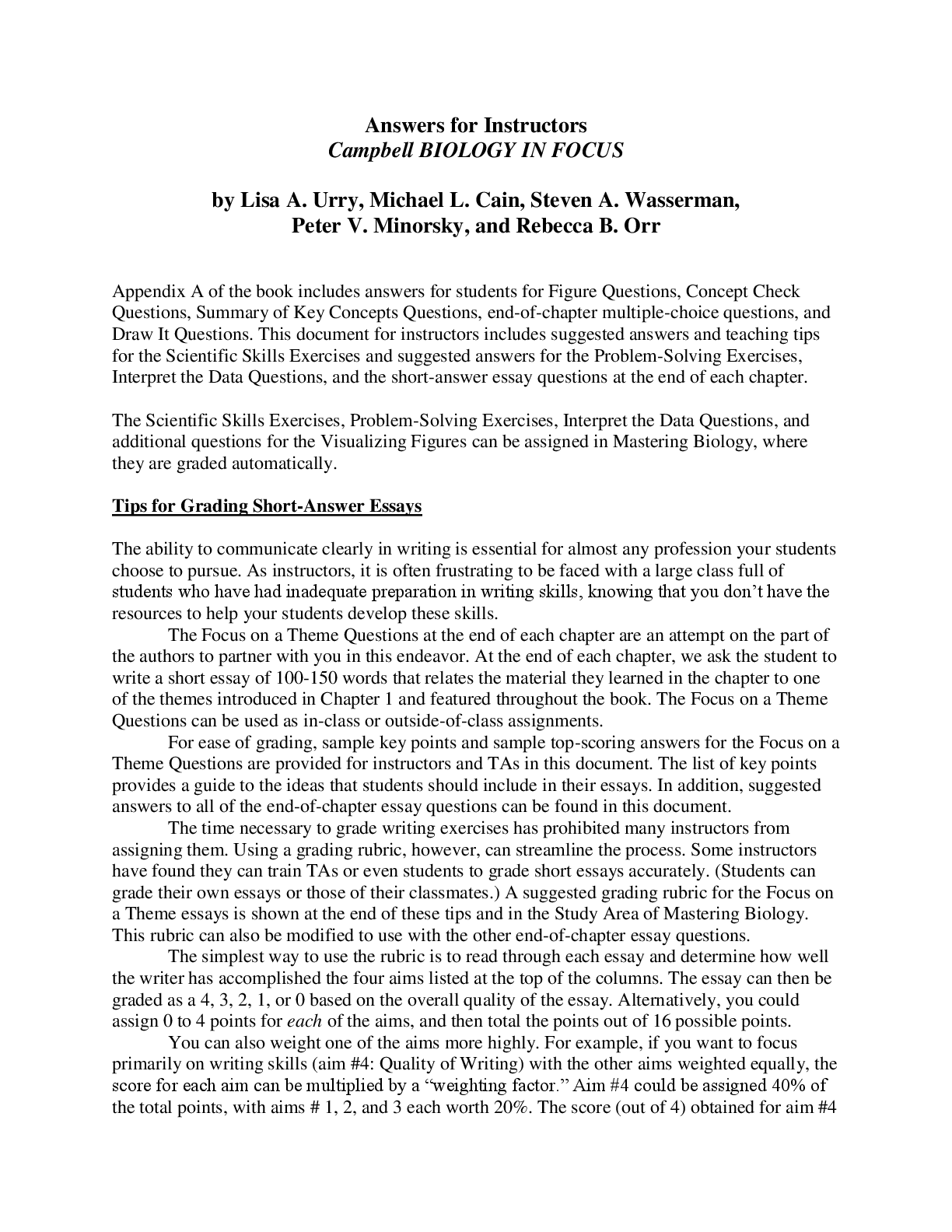
SOLUTION MANUAL FOR CAMPBELL 4TH EDITION by Lisa A. Urry, Mich...



.png)


