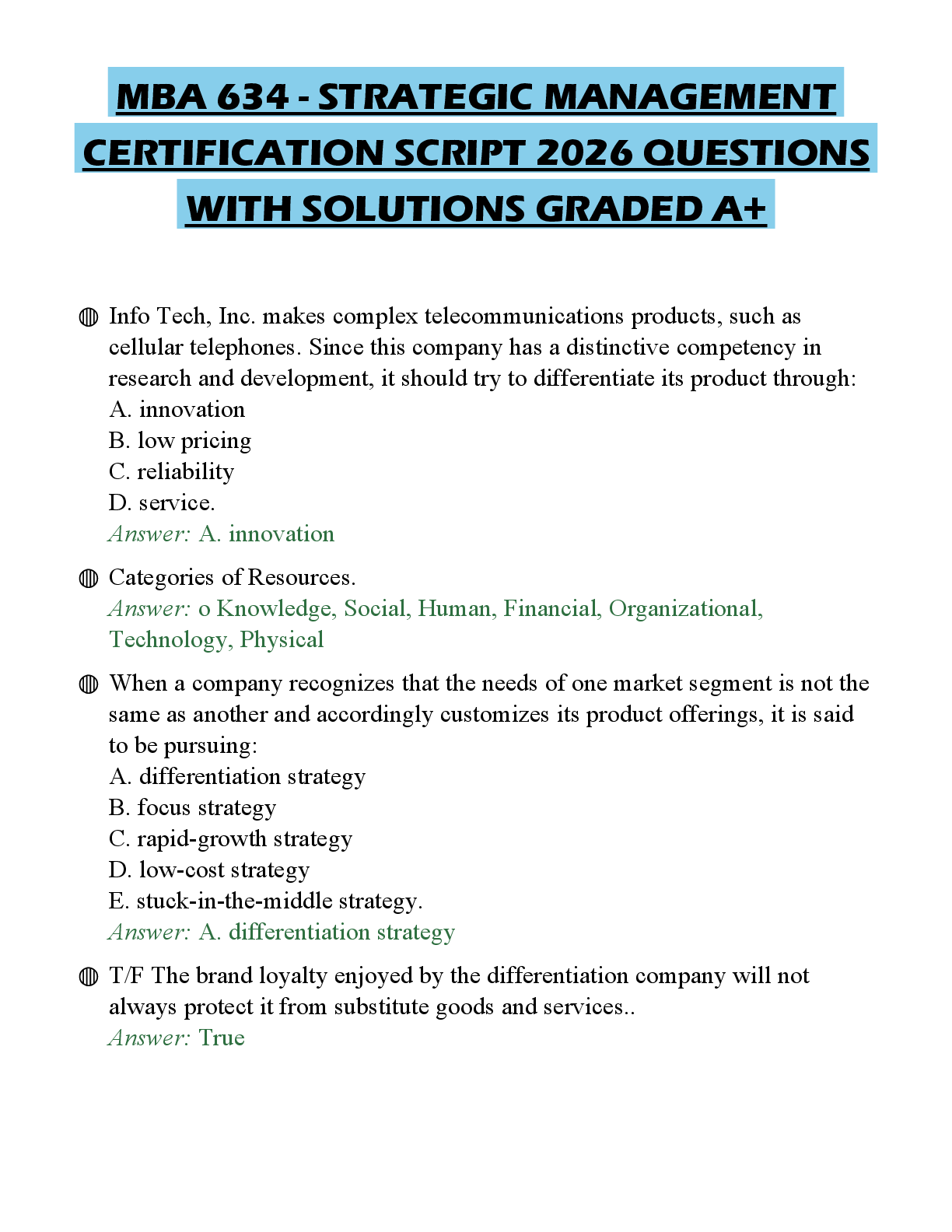
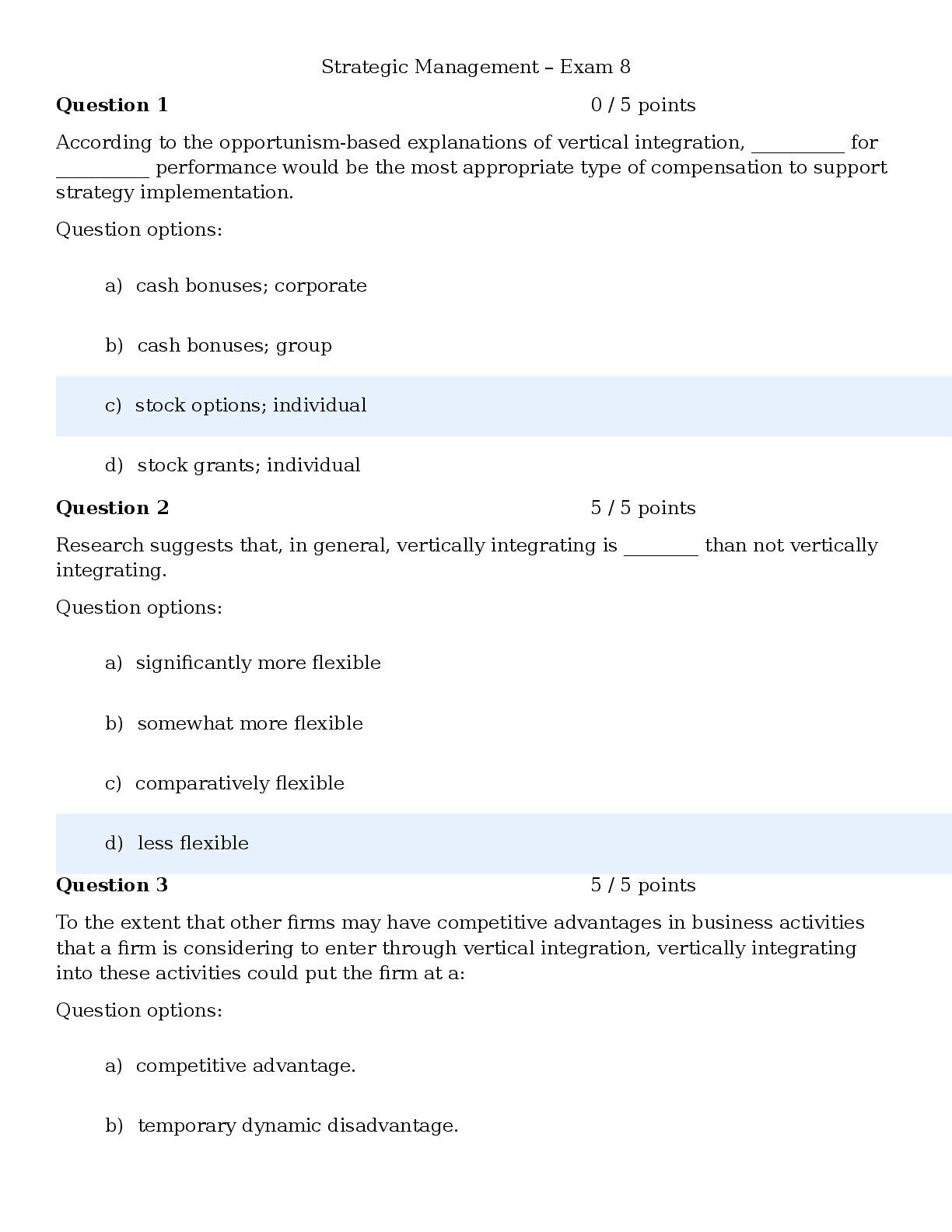
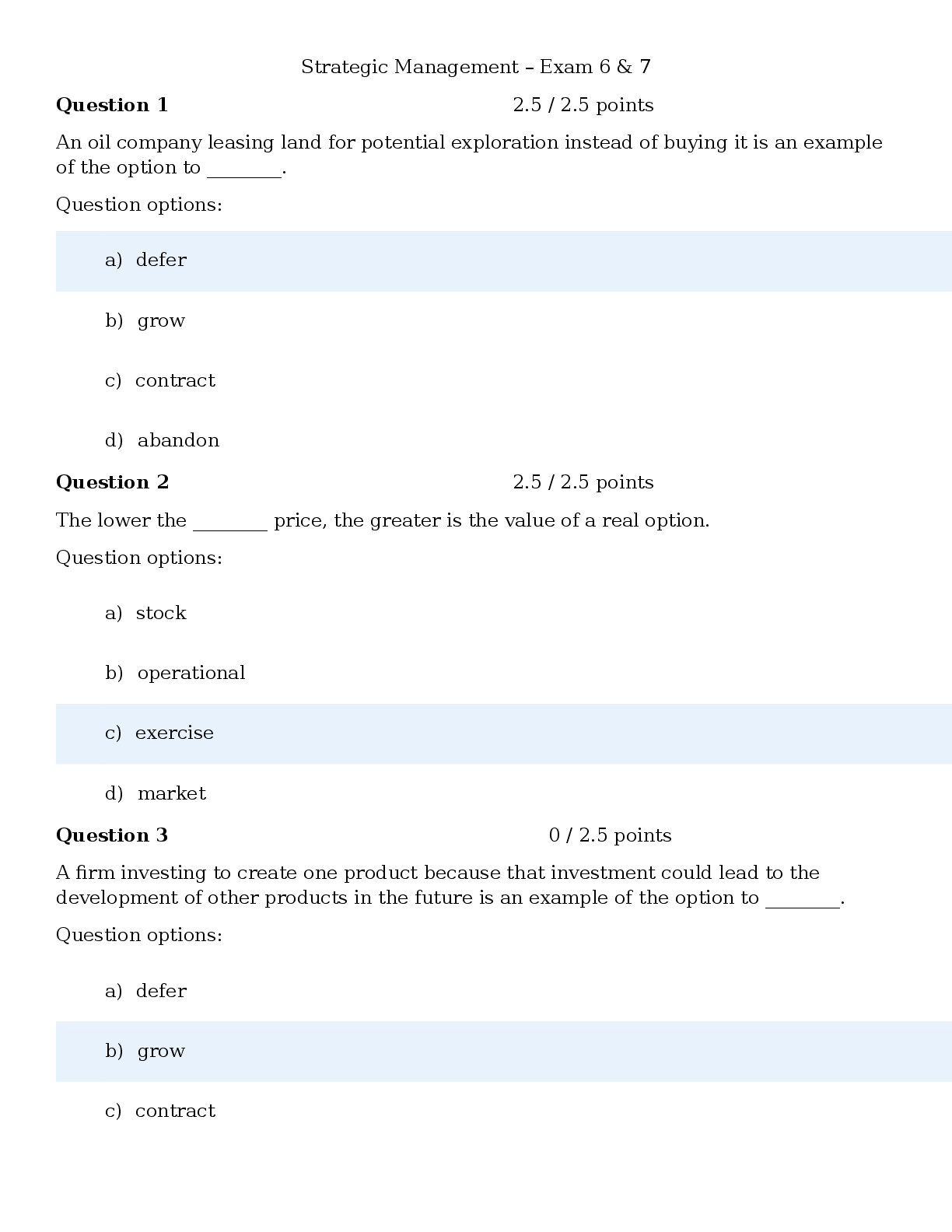
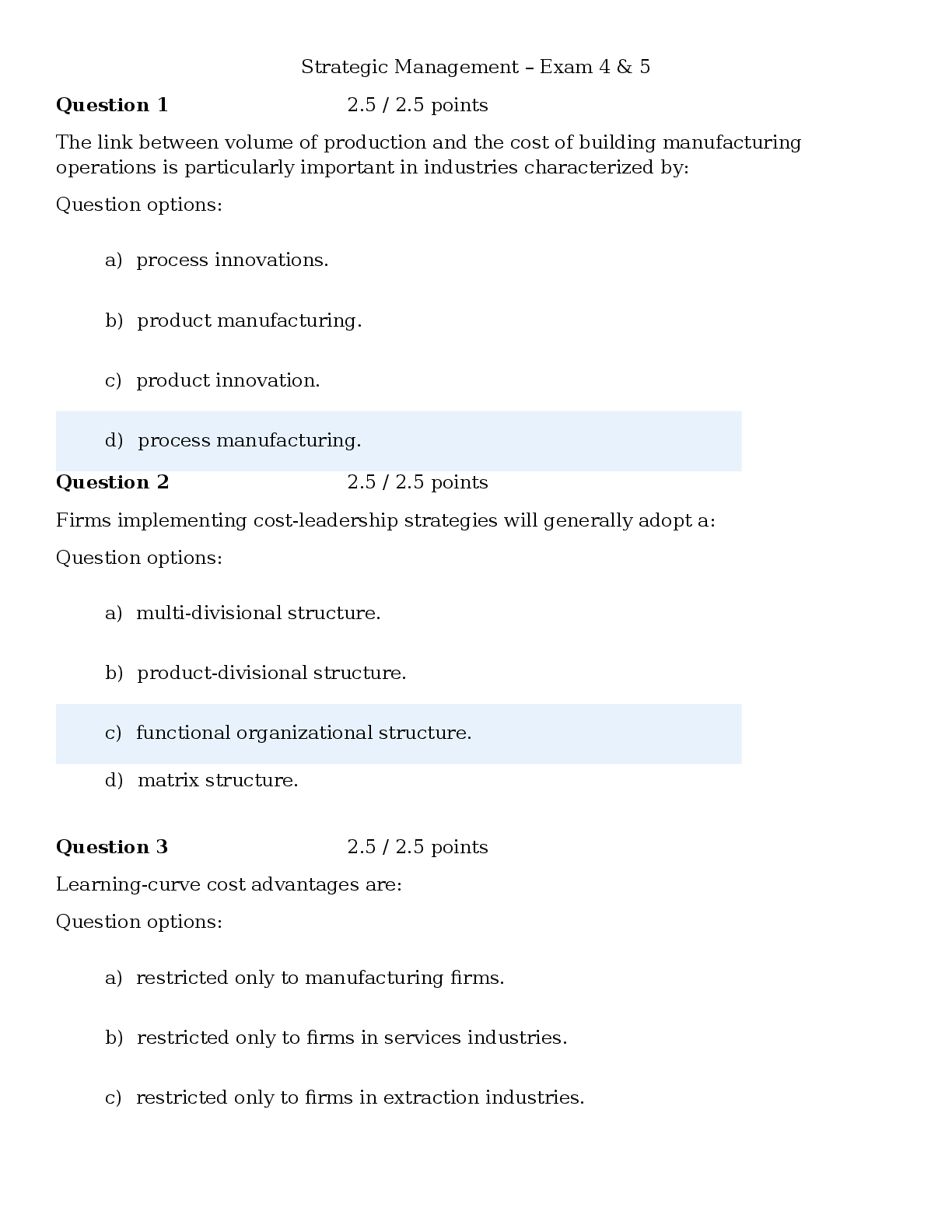
Management > QUESTIONS & ANSWERS > Module Data, Information, Knowledge, Decision making. Pre-Webinar/Workshop Assessed Task (marked out (All)
Module Data, Information, Knowledge, Decision making. Pre-Webinar/Workshop Assessed Task (marked out of 5) Use this template Complete the tasks and the task reflection Save your complete ... d template as either .docx or .pdf By Monday 9:00am of week 5, submit this completed template (including task reflection) to Learning@Griffith using the provided submission link We will work through it in the Webinar/workshop. After the webinar/workshop. You have the option of re-submitting after the Webinar, if you choose to resubmit then you must do so by Friday 23:59 week 5. Marking criteria 5 marks = 4 errors or less in total + reflection 2.5 marks = 5-8 errors in total + reflection 1 mark = more than 8 errors in total + reflection No reflection: minus 1 mark If there is only one attempt submitted and it is submitted after Monday 9:00am of week 5 but by Friday 23:59 week 5 it will be considered late. (note: Attempts will be marked after the Friday submission opportunity. Since students are able to self-correct attempts after attending or viewing the live workshop/webinar) Task Read Ron Stampers article. Ronald stamper organisational analysis.pdf. Make dot point summary of at least 4 key points from the article that you believe are important to information systems. Explain why the points you make are important. 1.Signs: Signs is used to describe the action performed by human agent. Without involving signs, the agent is confined within its immediate here-and-now environment. 2.Norms: Norms reflect pattern in the behaviour, that is commonly accepted, of member in an organisation. Norms can be seen as the rules that perceive the world and determine how people behave. Social norms within an organisation makes it easier to workout with the information requirements it has. 3.Semiotic analysis: It analyses how people in the organisation make use of the data within the information system and how the meaning interacts with the behaviour in the accustomed way. 4.Six layers of semiotic analysis: These layers (social, pragmatic, semantic, syntactic, empirical and physical) are included within an information system. The layers represent a conversion from data to information to knowledge, which can be used in decision-making. Scenario: Answer the questions in relation to the scenario The car service business is associated with an automobile dealership, and many cars that are booked for service are under warranty from a purchase from the car dealer. Other car owners of the same manufacturer (for example Toyota) are able to have their cars serviced at this business too. However, car servicing is highly competitive. [Show More]
Last updated: 3 years ago
Preview 1 out of 3 pages
Buy this document to get the full access instantly
Instant Download Access after purchase
Buy NowInstant download
We Accept:
Can't find what you want? Try our AI powered Search
Connected school, study & course
About the document
Uploaded On
Aug 25, 2022
Number of pages
3
Written in
All
This document has been written for:
Uploaded
Aug 25, 2022
Downloads
0
Views
49
Scholarfriends.com Online Platform by Browsegrades Inc. 651N South Broad St, Middletown DE. United States.
We're available through e-mail, Twitter, Facebook, and live chat.
FAQ
Questions? Leave a message!
Copyright © Scholarfriends · High quality services·