NHA CCMA Test 1-MA EXAM-with 100% verified answers-2022
Document Content and Description Below
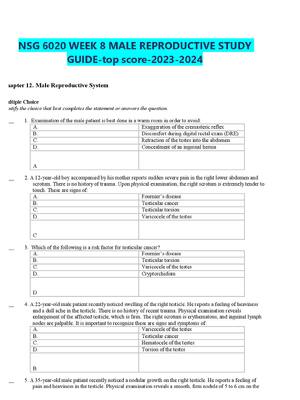
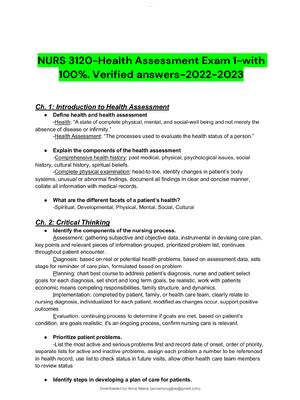
1) A patient asks a medical assistant to explain the difference between a liniment and a medicated lotion. Which of the following responses should the assistant make?
a) “Medicated lotions are used to treat disorders in
...
[Show More]
Last updated: 4 years ago
Preview 1 out of 27 pages
Instant download

Buy this Document to get the Full Access Instantly
Provided by Students Who Aced it
We Verify Document Content to Gurantee Accuracy
Reviews( 0 )
Document information
Connected school, study & course
About the document
Uploaded On
Aug 26, 2022
Number of pages
27
Written in
All

Additional information
This document has been written for:
Uploaded
Aug 26, 2022
Downloads
0
Views
126
Topic Tags
Recommended For You
Get more on EXAM »

$35.5
22 Pages
Club Pilates Anatomy Course 322 (2025/2026) – 100 Exam Questio...
$65
53 Pages
NR 507 Midterm Study Guide NR-507 Advanced Pathophysiology Com...
$14
2 Pages
RN VATI Maternal Newborn 2019 With 100% Correct And Complete (...
$8.5
18 Pages