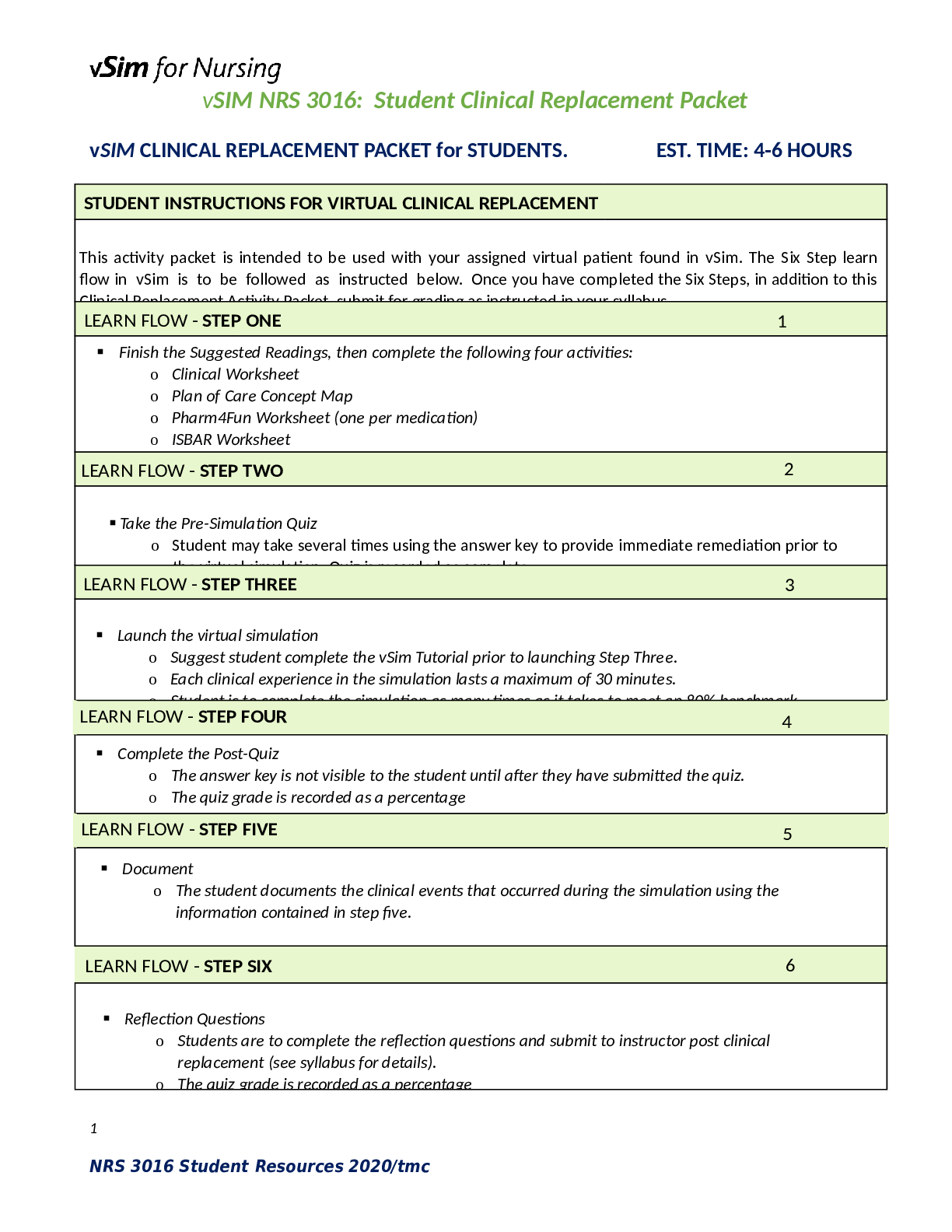
NURSING > VSIM for NURSING FUNDAMENTALS > vSim CLINICAL REPLACEMENT PACKET for STUDENTS | The Six Step learn flow (All)
vSim CLINICAL REPLACEMENT PACKET for STUDENTS | The Six Step learn flow
Document Content and Description Below
Last updated: 1 year ago
Preview 1 out of 18 pages
Instant download

Loading document previews ...
Buy this Document to get the Full Access Instantly
Provided by Students Who Aced it
We Verify Document Content to Gurantee Accuracy
Reviews( 0 )
Document information
Connected school, study & course
About the document
Uploaded On
Aug 26, 2022
Number of pages
18
Written in
All

Additional information
This document has been written for:
Uploaded
Aug 26, 2022
Downloads
0
Views
223
Topic Tags
Related Subjects & Courses
Explore similar study resources and related concepts.
Recommended For You
Get more on VSIM for NURSING FUNDAMENTALS »
NURS 220_VSIM_3 - California State University | vSim CLINICAL...
vSim 350 Clinical Replacement Packet for Students 8.20_2020 |...
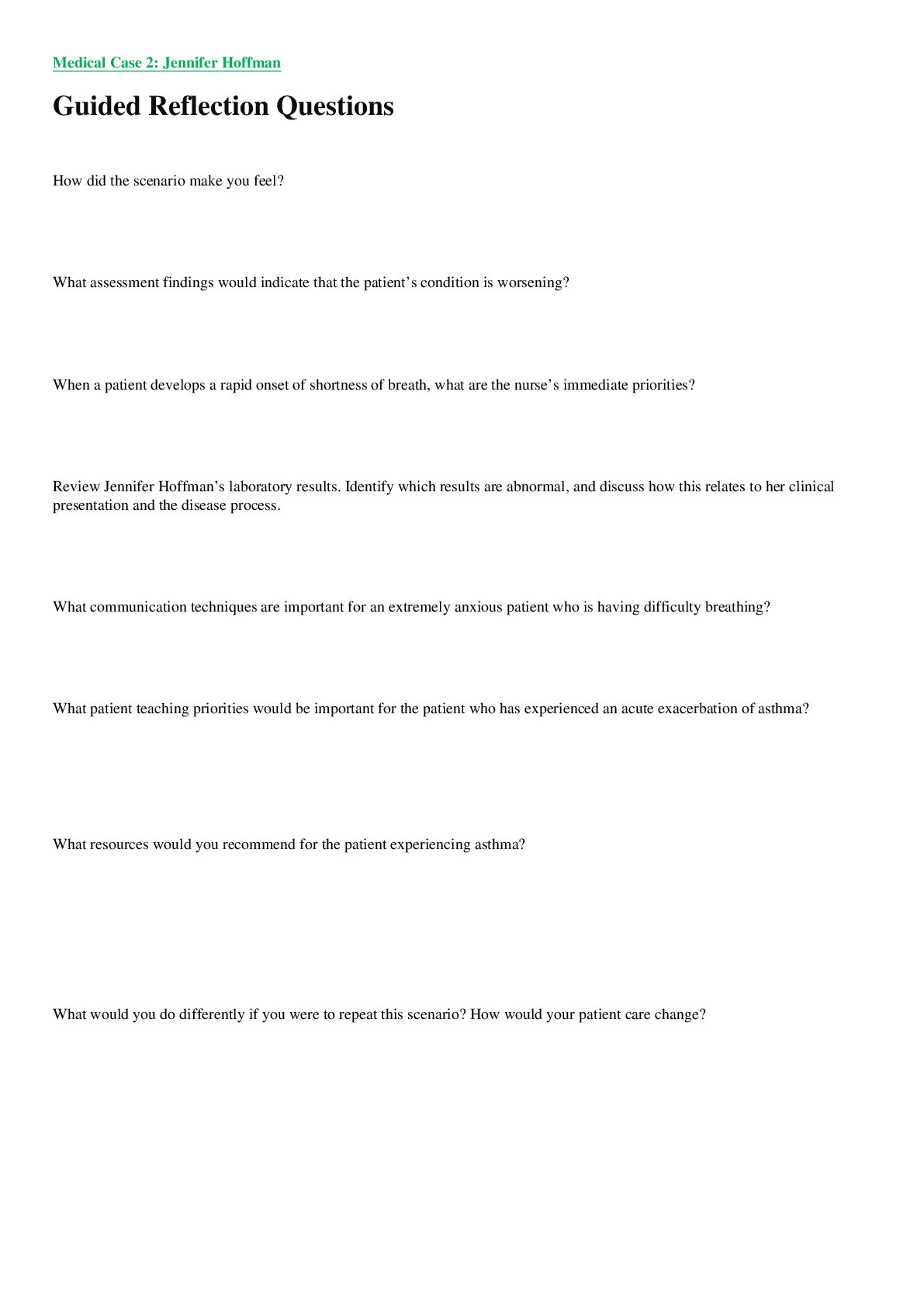
Jennifer Hoffman Medical Case 2: Guided Reflection Questions W...
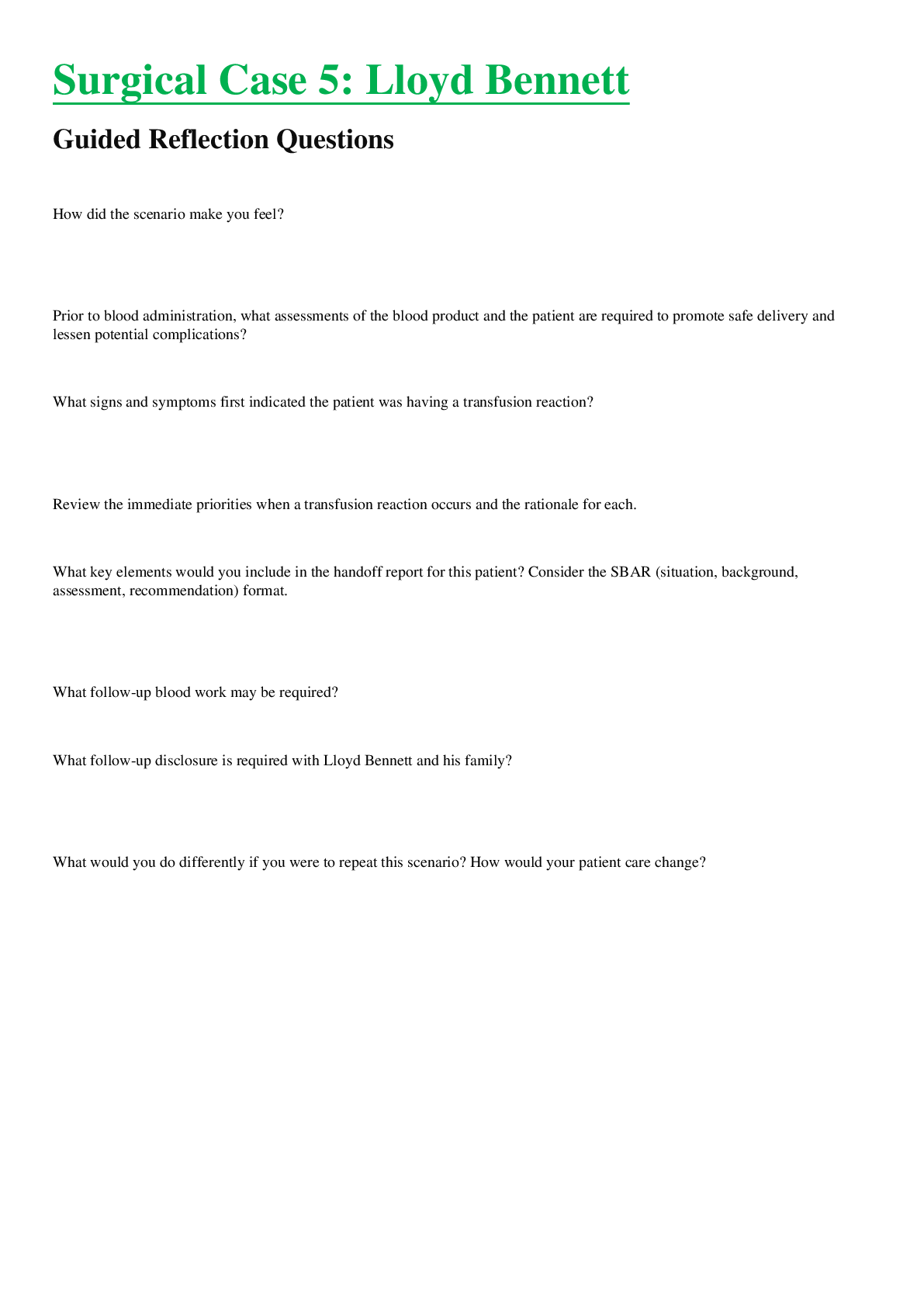
Lloyd Bennett : Surgical Case 5 Guided Reflection Questions Co...

Lloyd Bennett Surgical Case 5 Documentation Assignments & Guid...

TEST BANK for Davis Advantage for Psychiatric Mental Health Nu...
Test Bank For Fundamentals of Nursing 11th Edition Potter Perr...

TEST BANK for Essentials of Psychiatric Mental Health Nursing:...
Essentials of Psychiatric Nursing 2nd Edition Boyd TEST BANK
Test Bank for Essentials of Psychiatric Nursing 2nd Edition by...
ATLS POST TEST 2025-2026 Exam | Complete Questions and Correc...
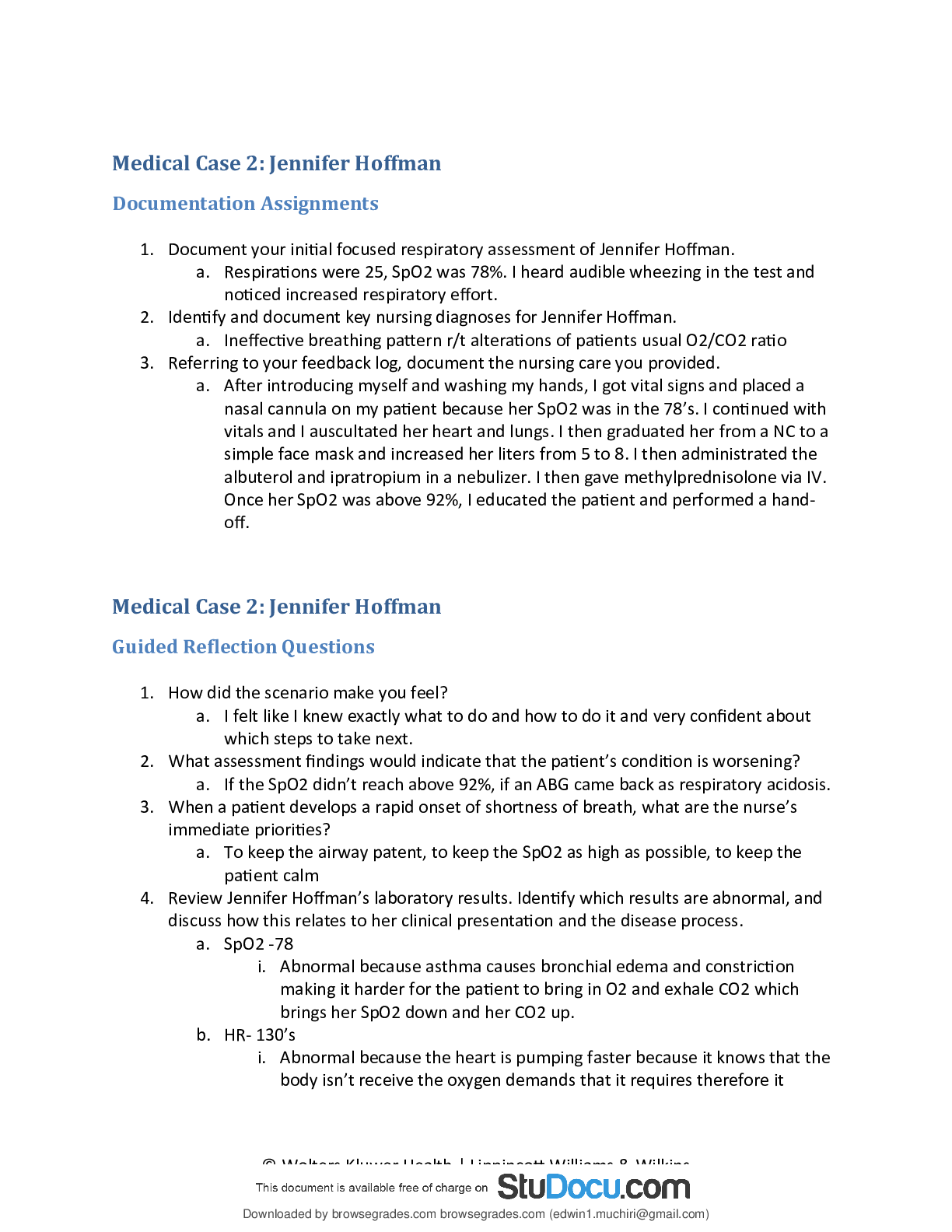
VSIM Jennifer Hoffman DA. Medical Case 2 Documentation Assignm...

vSim Kenneth Bronson | Age 27 Years | Diagnosis Pneumonia | C...

Fatime Sanogo age 23;Diagnosis vsim packet-Clinical Replacemen...