NURSING > vSim For Nursing > NUR 3010 vSim | CLINICAL PACKET FOR STUDENTS | Latest Version 2022 (All)
NUR 3010 vSim | CLINICAL PACKET FOR STUDENTS | Latest Version 2022
Document Content and Description Below
Last updated: 4 years ago
Preview 1 out of 24 pages
Instant download
Buy this Document to get the Full Access Instantly
Provided by Students Who Aced it
We Verify Document Content to Gurantee Accuracy
Reviews( 0 )
Document information
Connected school, study & course
About the document
Uploaded On
Aug 26, 2022
Number of pages
24
Written in
All

Additional information
This document has been written for:
Uploaded
Aug 26, 2022
Downloads
0
Views
231
Topic Tags
Related Subjects & Courses
Explore similar study resources and related concepts.
Recommended For You
Get more on vSim For Nursing »
Test Bank For Introduction to Maternity and Pediatric Nursing...
Test Bank For Fundamentals of Nursing 11th Edition Potter Perr...
ATI TEAS 7 TESTBANK (LATEST VERIFIED VERSION 2022/2023)

Esther Parks Focused Exam Abdominal Pain Care Plan |NUR 3010;E...
Shadow Health Esther Parks Focused Exam Abdominal Pain Care P...

Test Bank for Fundamentals of Nursing 11th Edition Potter Perr...
NUR 3010 Focused Exam: Chest Pain Results | Turned In Physical...
NUR 3010 Brian Foster Focused Exam Chest Pain Completed Shadow...

NUR 3010 Biran Foster Focused Exam Chest Pain Completed Shadow...
NUR 3010;Esther Parks Focused Exam Abdominal Pain Care Plan.

Test Bank Pharmacology A Patient-Centered Nursing Process Appr...
Test Bank for Fundamentals of Nursing 11th Edition Potter Perr...
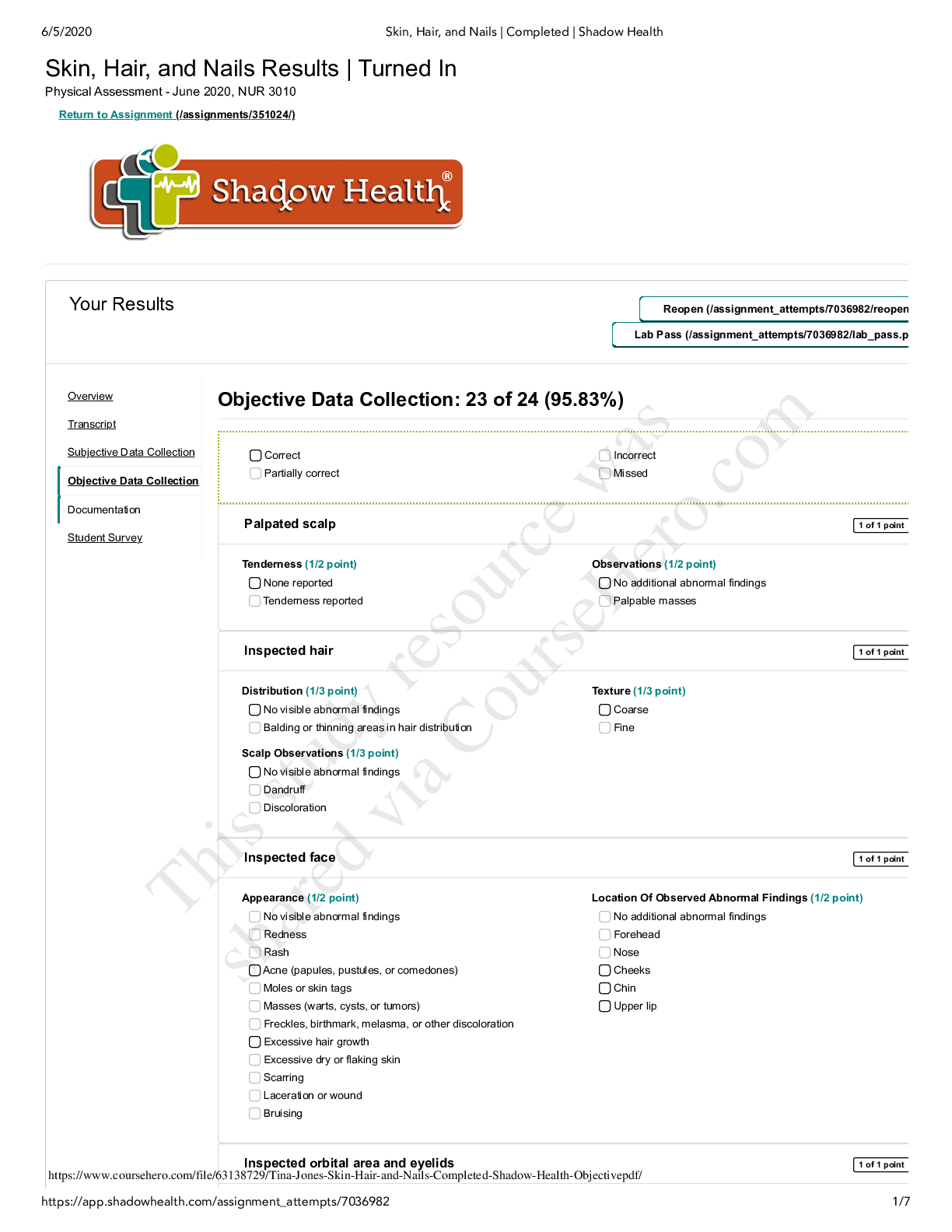
NUR 3010 Tina Jones Skin, Hair, and Nails Completed Shadow Hea...
 LATEST VERSION 2022.png)
Antepartum Care UNFOLDING Reasoning ; Anne Jones is a 17-year-...
.png)
WGU C779 Web Development Foundations Latest Version 2022 Rated...
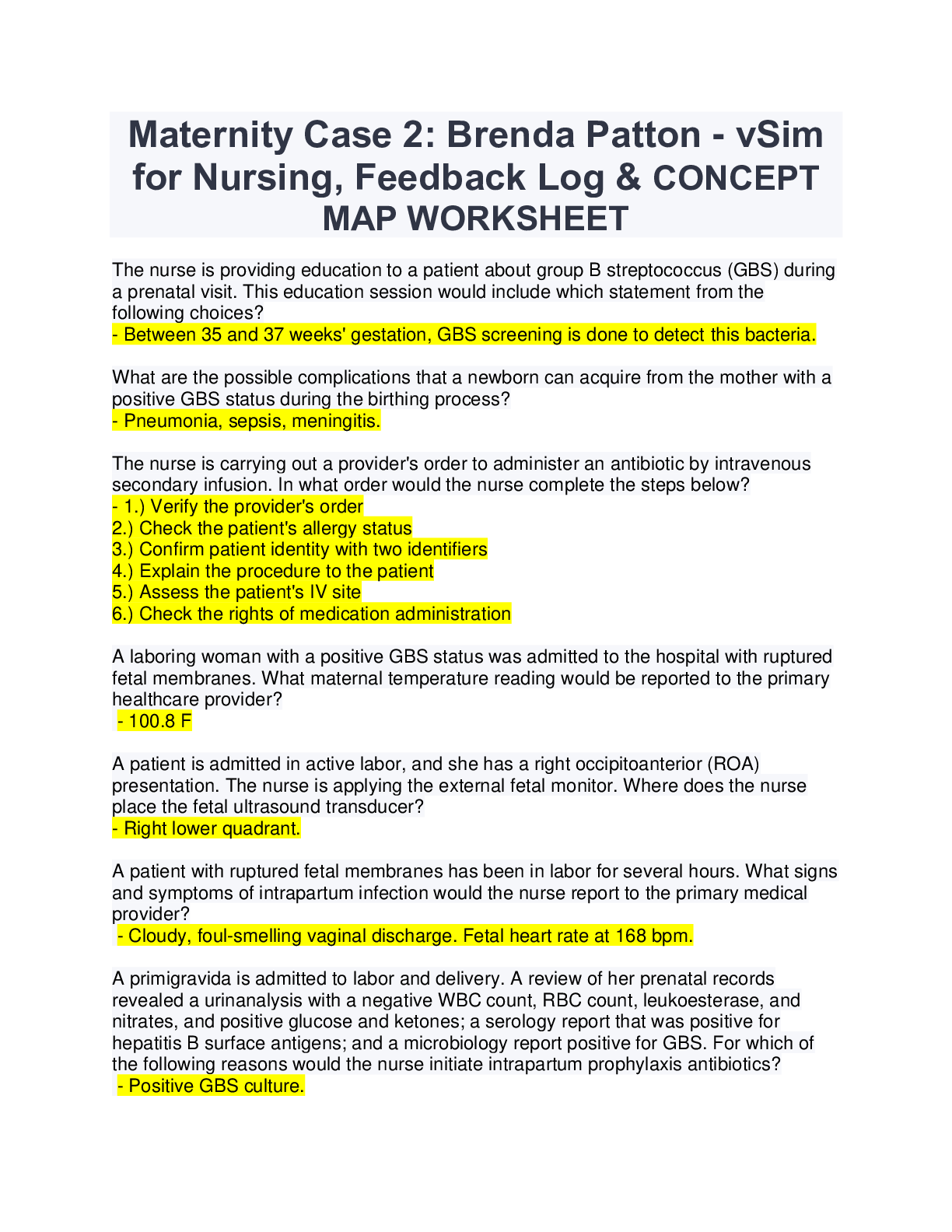
Maternity Case 2: Brenda Patton - vSim for Nursing, Feedback L...

Jody Rush, 20 Y/O Female; SBAR,SOAP NOTE AND CAREPLAN (Answere...

Summary Fatime Sanogo vsim steps. Fatime Sanogo Age: 23 years...