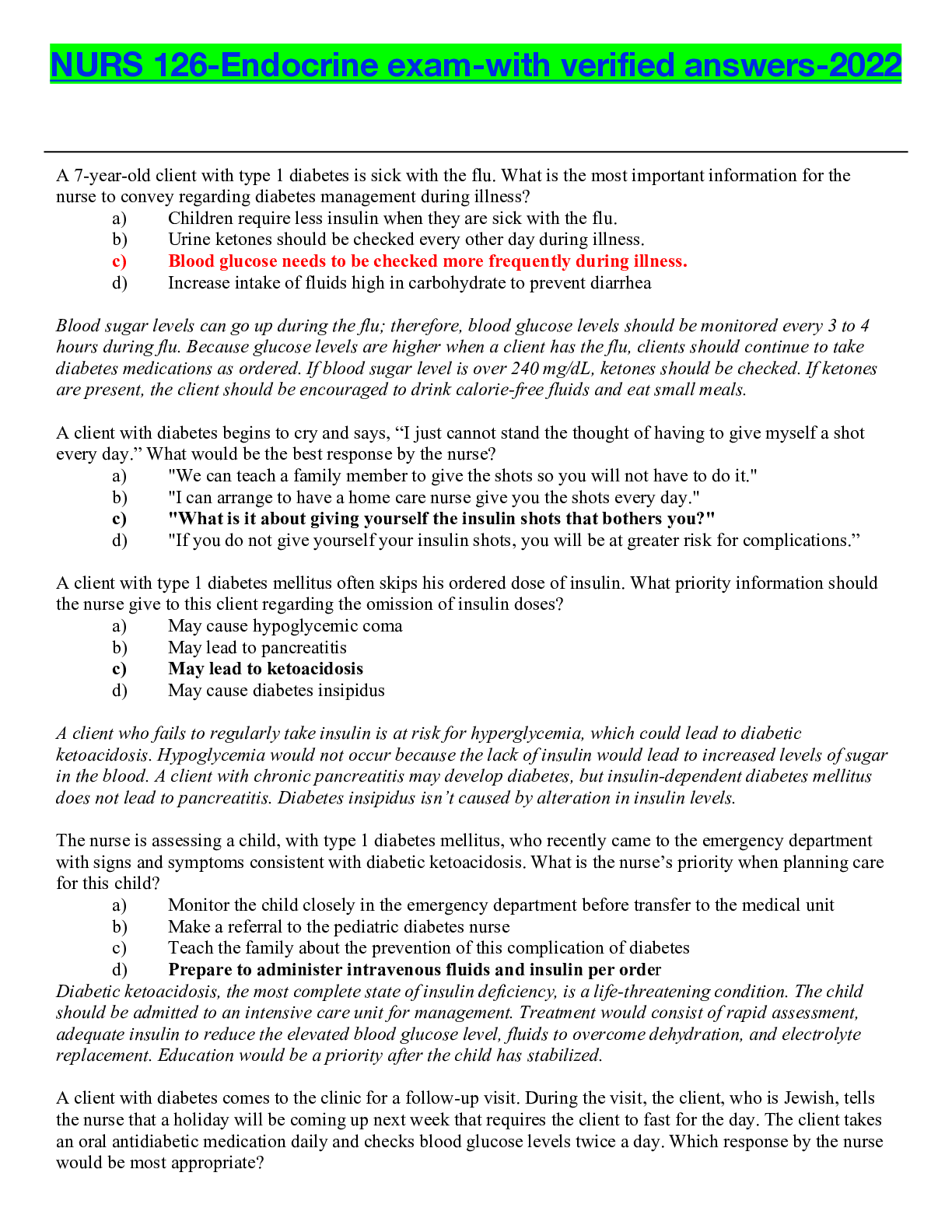
A 7-year-old client with type 1 diabetes is sick with the flu. What is the most important information for the nurse to convey regarding diabetes management during illness?
a) Children require less insulin when they are
...
A 7-year-old client with type 1 diabetes is sick with the flu. What is the most important information for the nurse to convey regarding diabetes management during illness?
a) Children require less insulin when they are sick with the flu.
b) Urine ketones should be checked every other day during illness.
c) Blood glucose needs to be checked more frequently during illness.
d) Increase intake of fluids high in carbohydrate to prevent diarrhea
Blood sugar levels can go up during the flu; therefore, blood glucose levels should be monitored every 3 to 4 hours during flu. Because glucose levels are higher when a client has the flu, clients should continue to take diabetes medications as ordered. If blood sugar level is over 240 mg/dL, ketones should be checked. If ketones are present, the client should be encouraged to drink calorie-free fluids and eat small meals.
A client with diabetes begins to cry and says, “I just cannot stand the thought of having to give myself a shot every day.” What would be the best response by the nurse?
a) "We can teach a family member to give the shots so you will not have to do it."
b) "I can arrange to have a home care nurse give you the shots every day."
c) "What is it about giving yourself the insulin shots that bothers you?"
d) "If you do not give yourself your insulin shots, you will be at greater risk for complications.”
A client with type 1 diabetes mellitus often skips his ordered dose of insulin. What priority information should the nurse give to this client regarding the omission of insulin doses?
a) May cause hypoglycemic coma
b) May lead to pancreatitis
c) May lead to ketoacidosis
d) May cause diabetes insipidus
A client who fails to regularly take insulin is at risk for hyperglycemia, which could lead to diabetic ketoacidosis. Hypoglycemia would not occur because the lack of insulin would lead to increased levels of sugar in the blood. A client with chronic pancreatitis may develop diabetes, but insulin-dependent diabetes mellitus does not lead to pancreatitis. Diabetes insipidus isn’t caused by alteration in insulin levels.
The nurse is assessing a child, with type 1 diabetes mellitus, who recently came to the emergency department with signs and symptoms consistent with diabetic ketoacidosis. What is the nurse’s priority when planning care for this child?
a) Monitor the child closely in the emergency department before transfer to the medical unit
b) Make a referral to the pediatric diabetes nurse
CONTINUED.....
[Show More]