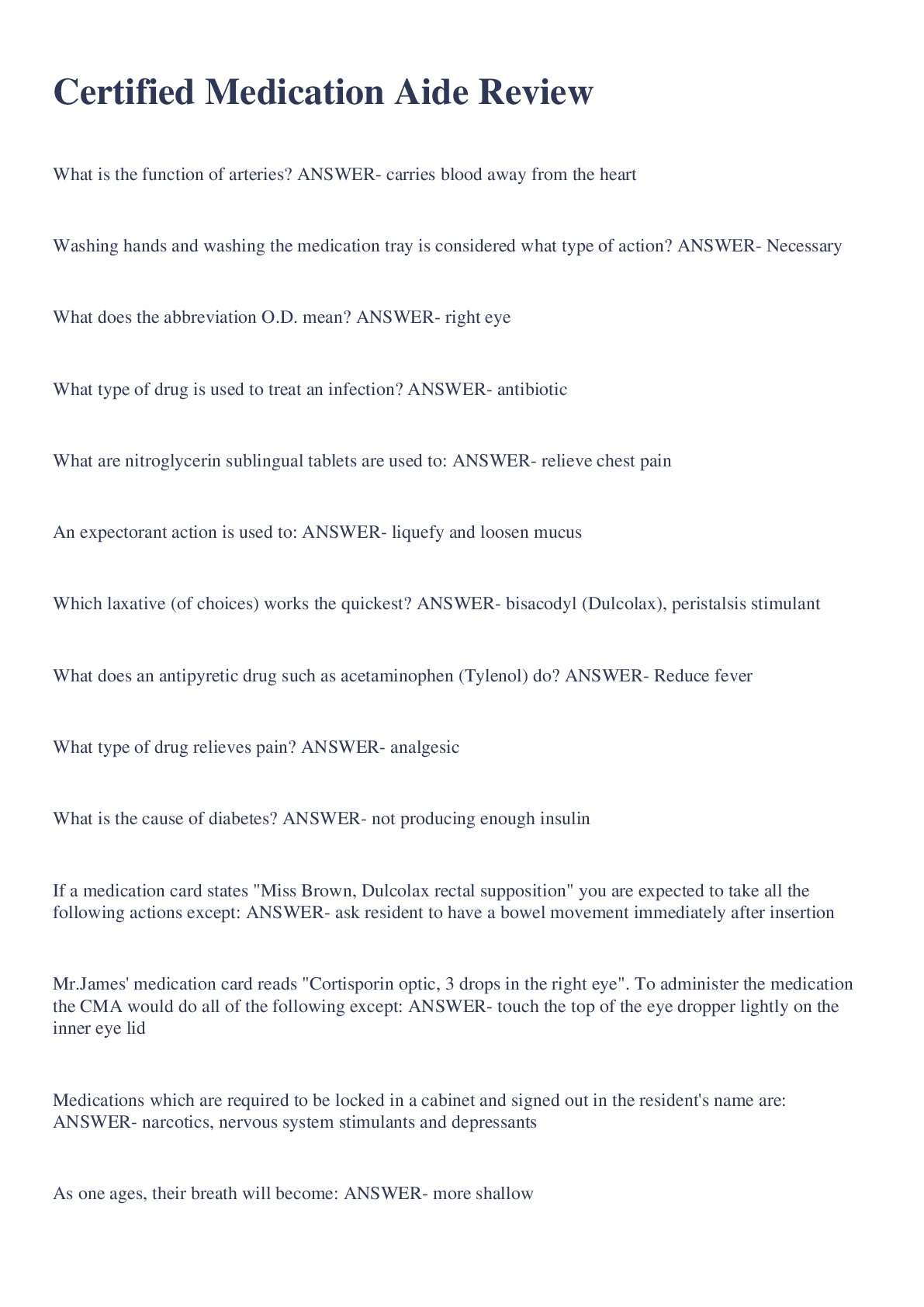
Dentistry > QUESTION PAPER & MARK SCHEME > PHARMACOLOGY AND DENTAL QUIZ WITH VERIFIED ANSWERS. (All)
PHARMACOLOGY AND DENTAL QUIZ WITH VERIFIED ANSWERS.
Document Content and Description Below
Last updated: 4 years ago
Preview 1 out of 13 pages
Instant download

Buy this Document to get the Full Access Instantly
Provided by Students Who Aced it
We Verify Document Content to Gurantee Accuracy
Reviews( 0 )
Document information
Connected school, study & course
About the document
Uploaded On
Aug 30, 2022
Number of pages
13
Written in
All

Additional information
This document has been written for:
Uploaded
Aug 30, 2022
Downloads
0
Views
177
Topic Tags
Recommended For You
Get more on QUESTION PAPER & MARK SCHEME »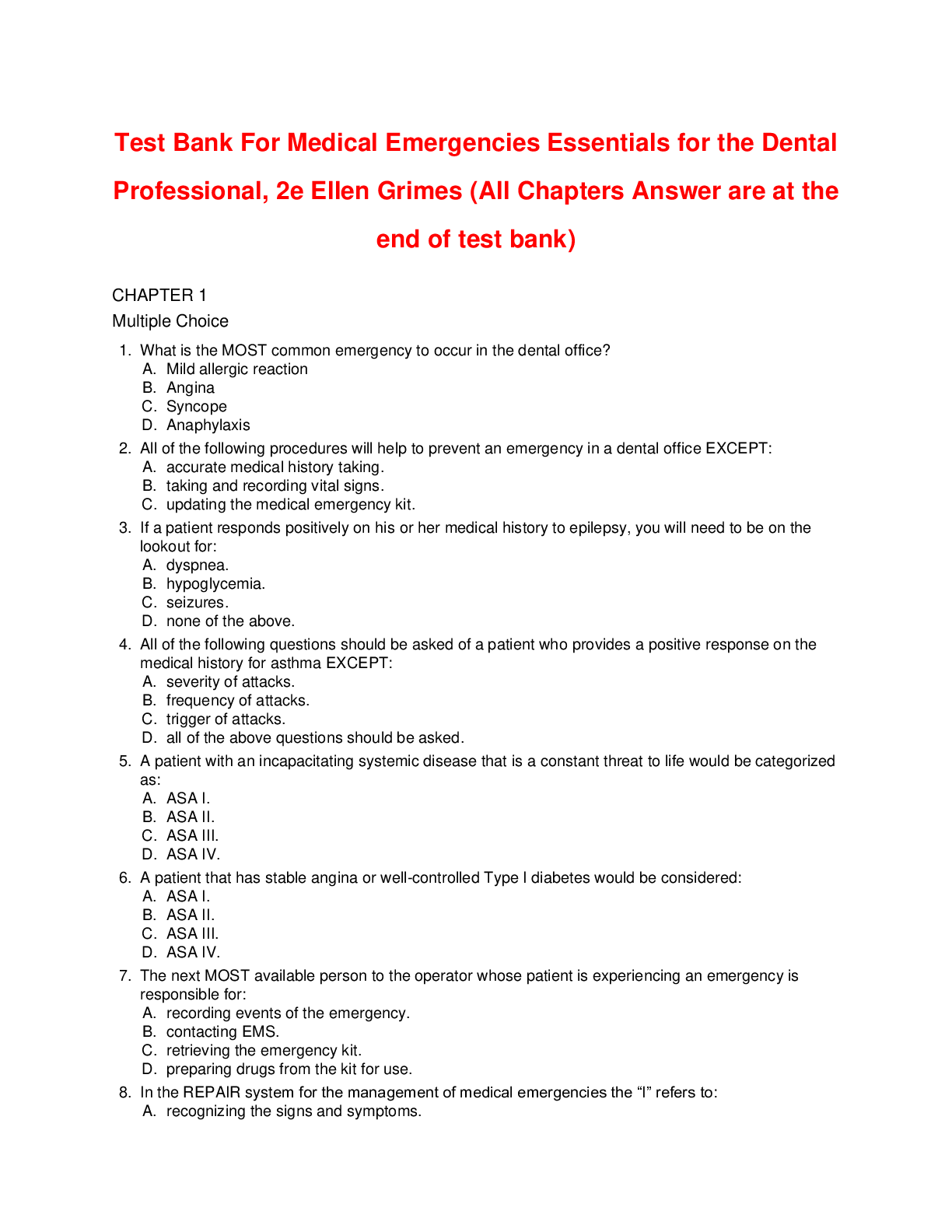
Test Bank for Medical Emergencies Essentials for the Dental Pr...

DENTAL HYGIENE APPLICATIONS TO CLINICAL PRACTICE, 1e Rachel Ke...
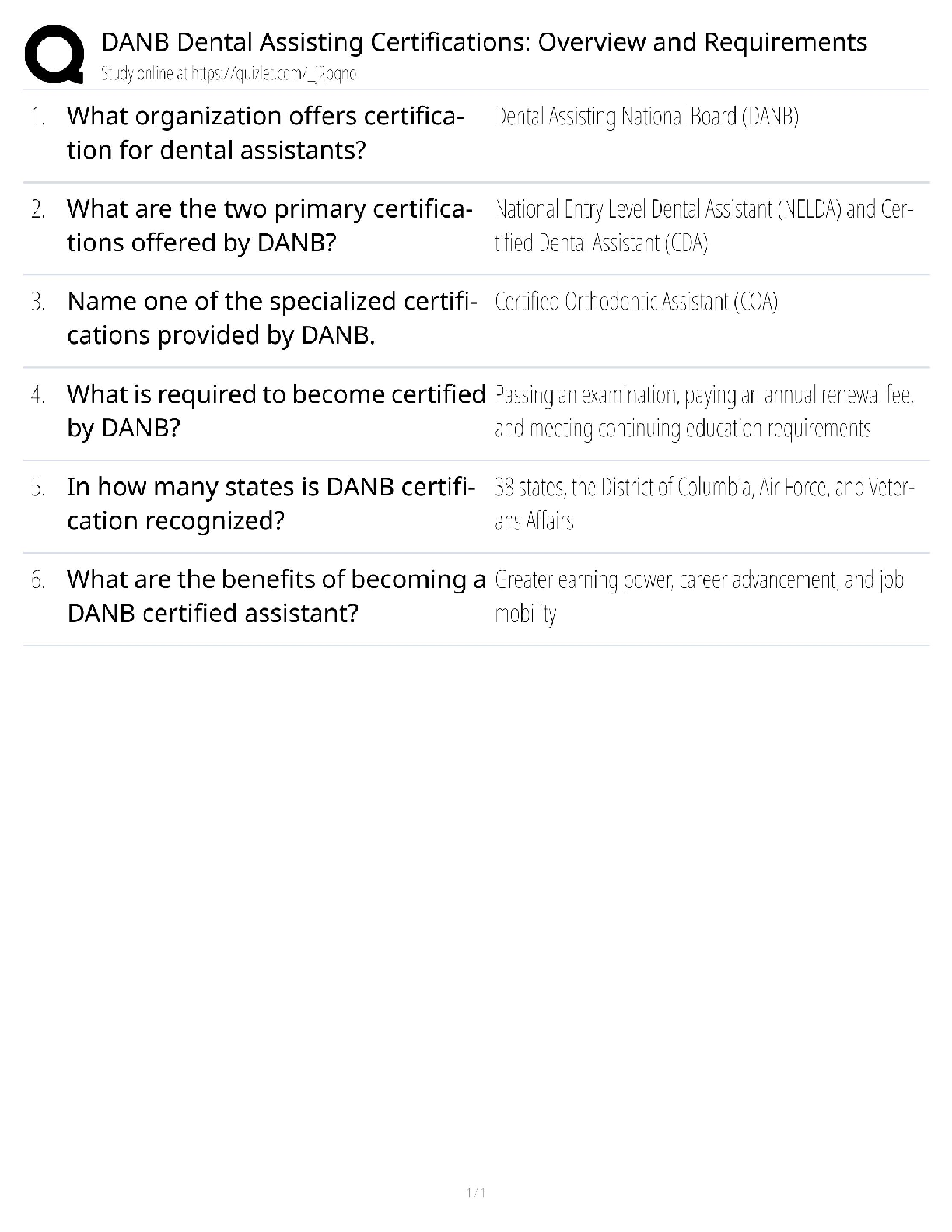
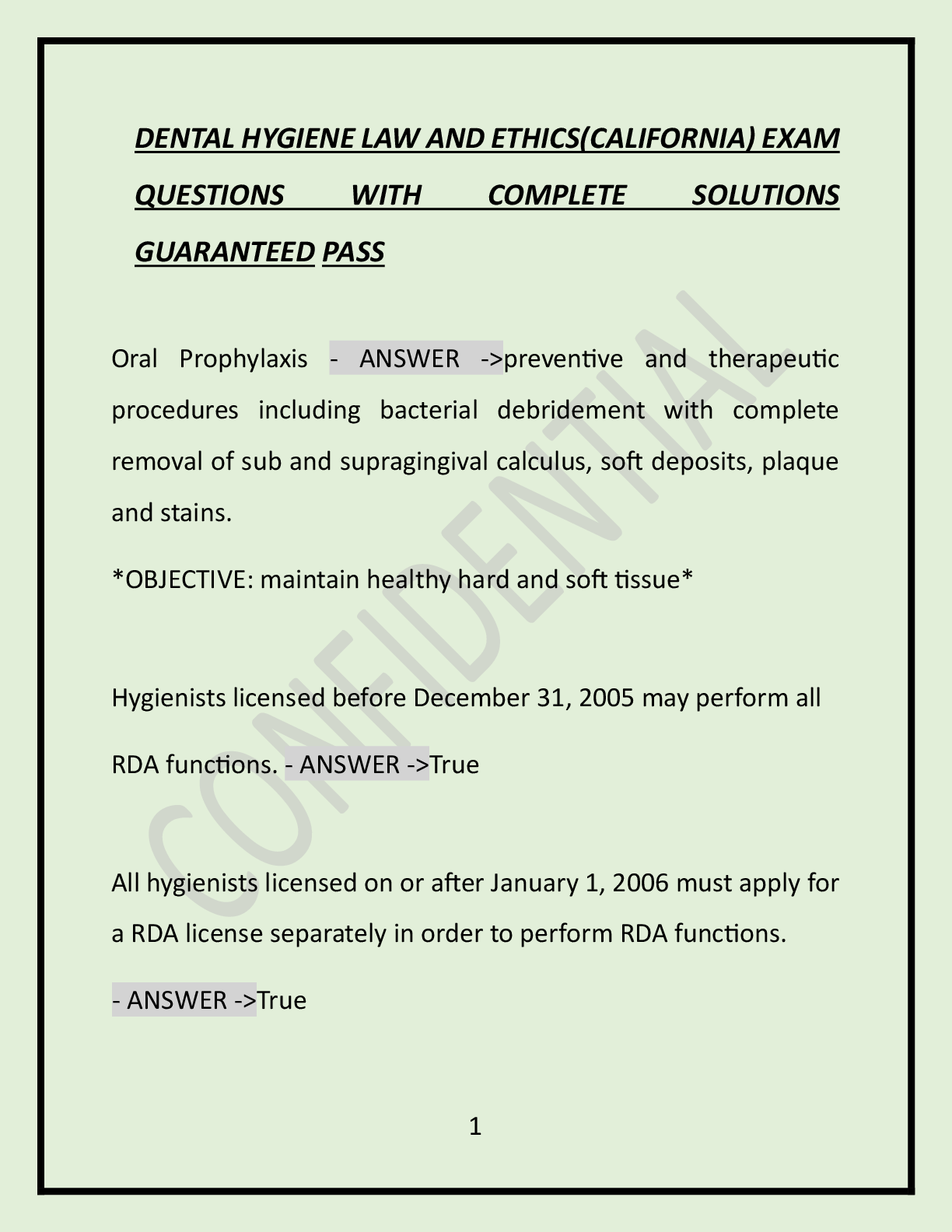
RDA Written Practice Exam – Correctly Answered and Graded A+ (...
RDA EXAM STUDY SET Correctly Answered Questions | Up-To-Date |...

Newman and Carranzas Clinical Periodontology for the Dental Hy...
Test Bank for Illustrated Dental Embryology, Histology, and An...

Comprehensive DHT2 Final Exam – Oxford College Dental Hygiene...
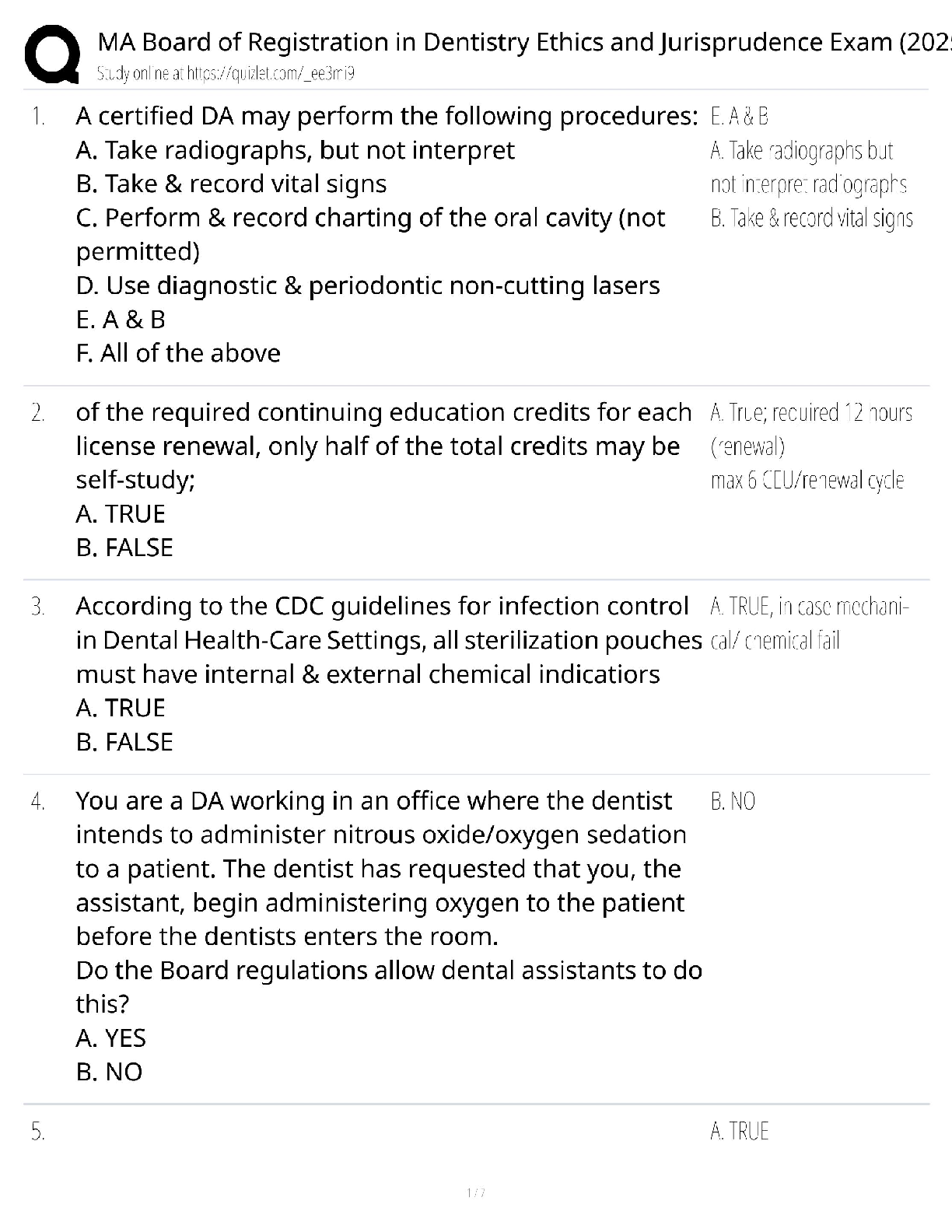
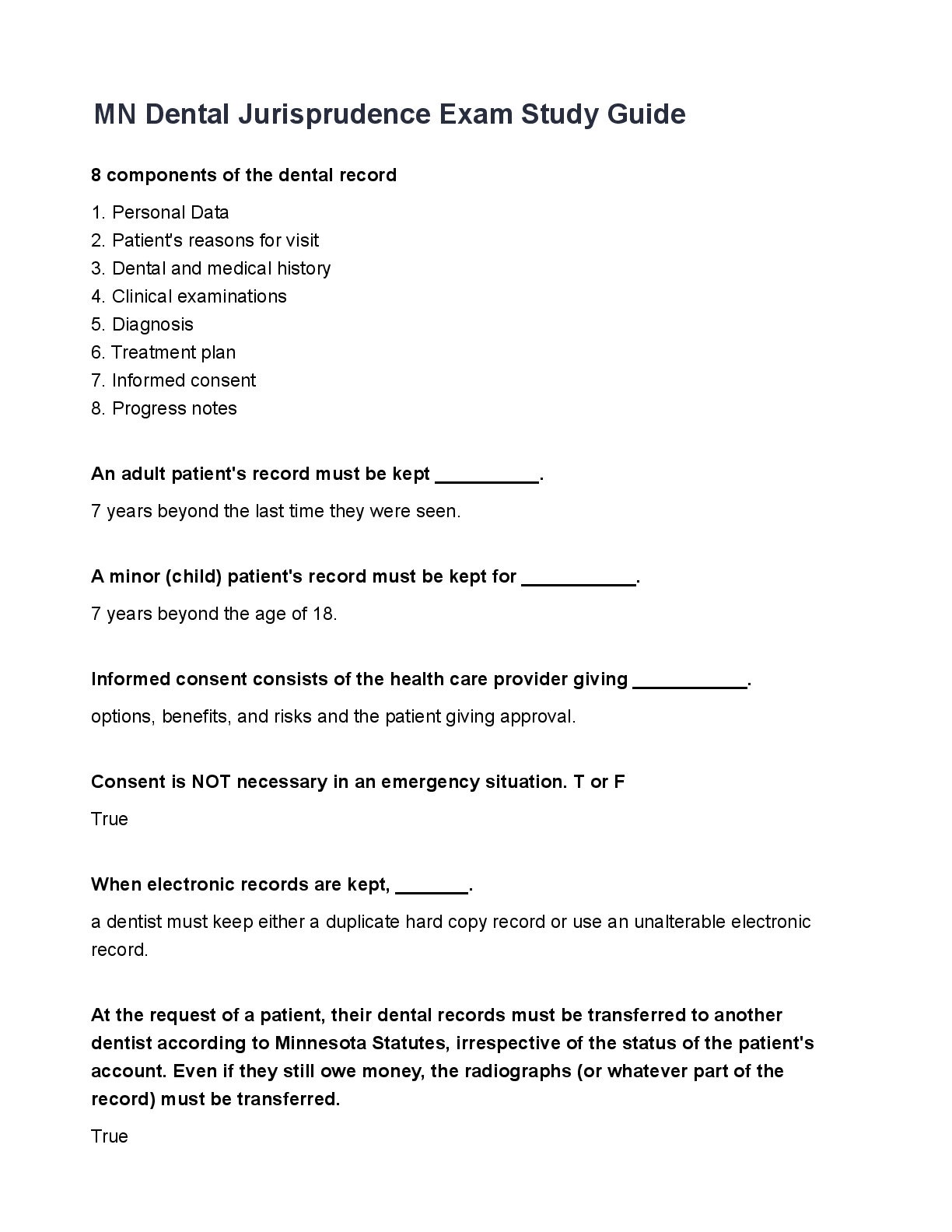
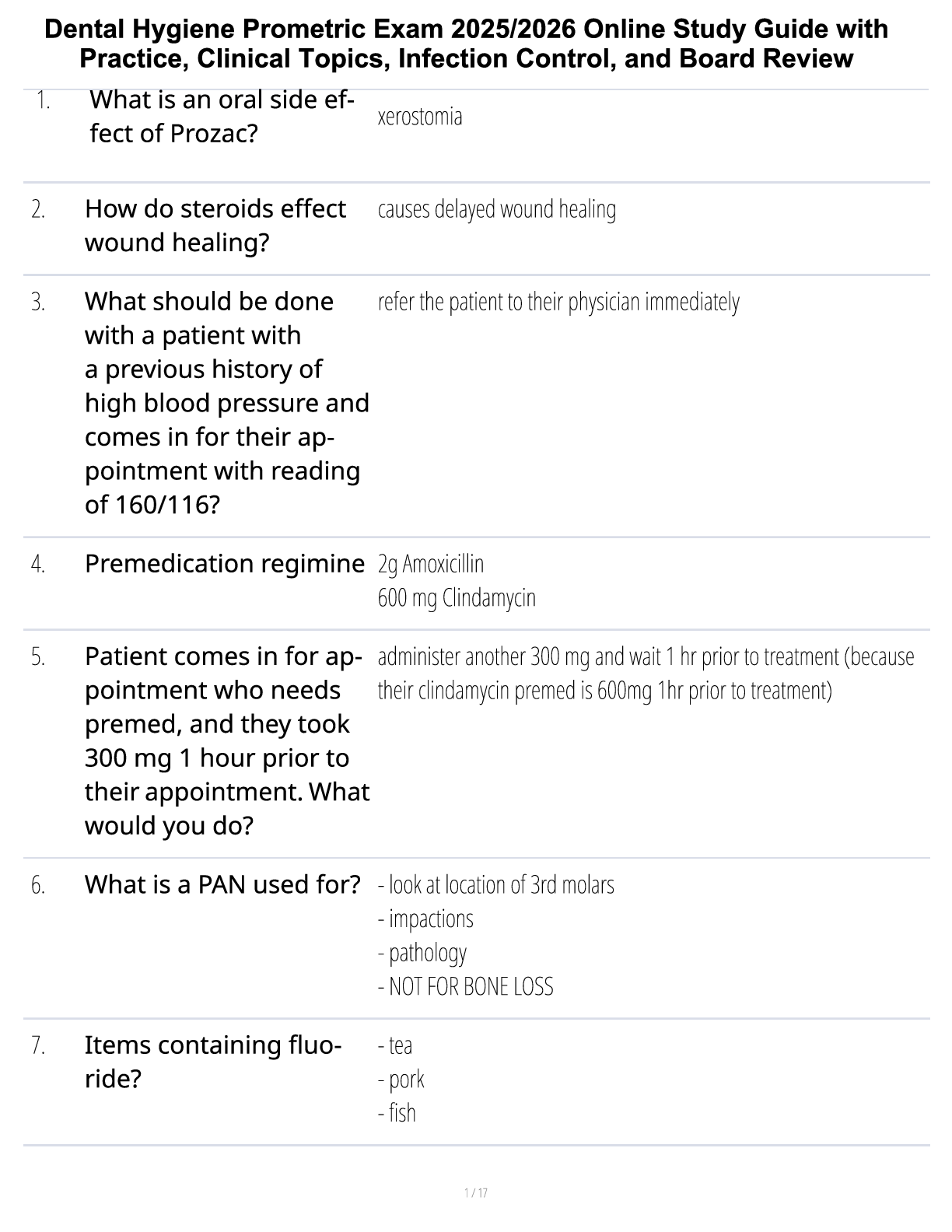
Dental Hygiene Prometric Exam 2025/2026 Online Study Guide wit...