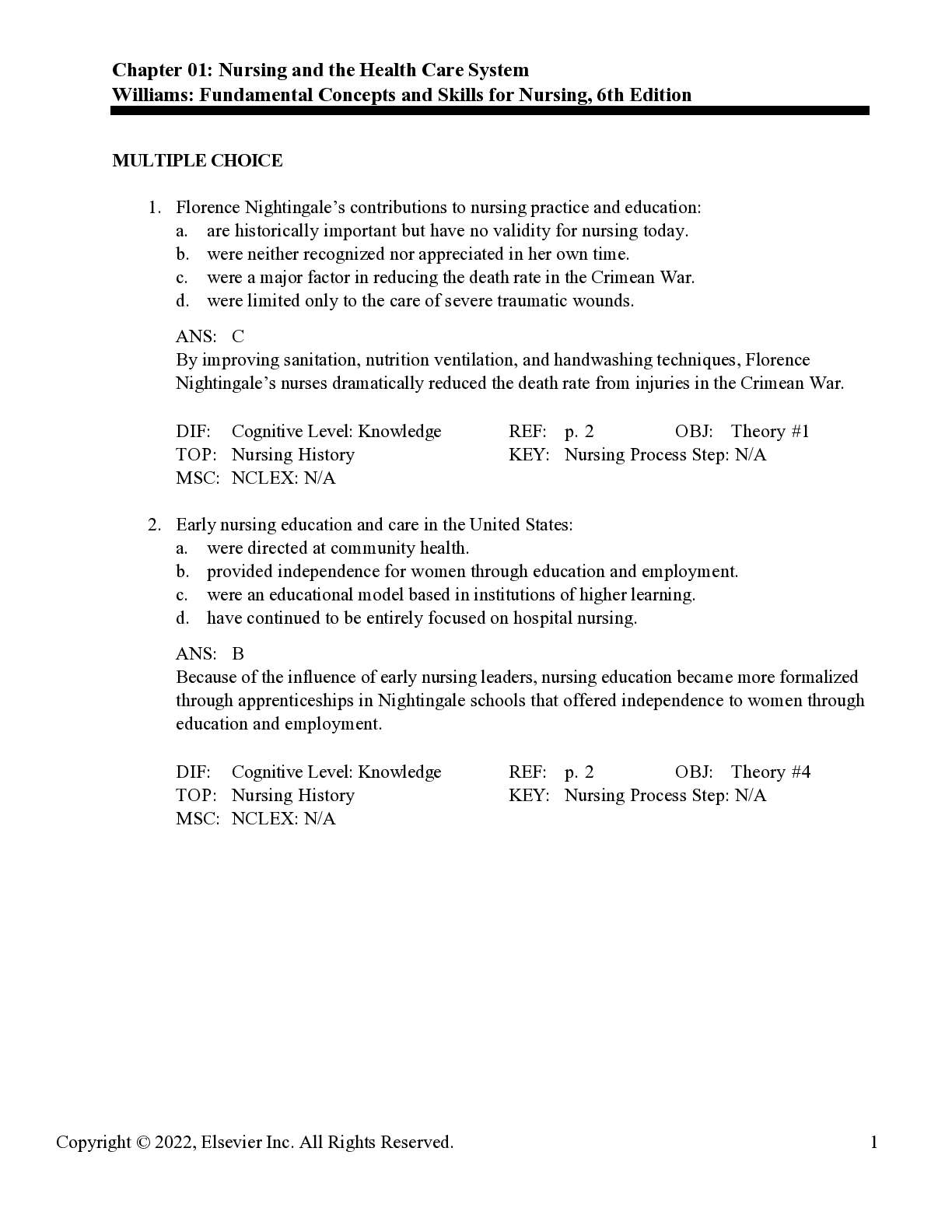
Test Bank for Introduction to Corrections, 3rd Edition, 3e by Robert D. Hanser TEST BANK ISBN-13: 9781544365206 Full chapters included PART I: FOUNDATIONS OF CORRECTIONS Chapter 1: Early History of Punishment and the Dev
...
Test Bank for Introduction to Corrections, 3rd Edition, 3e by Robert D. Hanser TEST BANK ISBN-13: 9781544365206 Full chapters included PART I: FOUNDATIONS OF CORRECTIONS Chapter 1: Early History of Punishment and the Development of Prisons in the United States • Prisoner Number One at Eastern Penitentiary Defining Corrections: A Variety of Possibilities The Role of Corrections in the Criminal Justice System The Notion of Punishment and Corrections Throughout History Early Codes of Law Early Historical Role of Religion, Punishment, and Corrections Early Secular History of Punishment and Corrections • CROSS-NATIONAL PERSPECTIVE 1.1: Penal Slavery in Western Europe and East Asia The Enlightenment and Correctional Reform William Penn, the Quakers, and the Great Law Charles Montesquieu, Francois Voltaire, and Cesare Beccaria John Howard: The Making of the Penitentiary Jeremy Bentham: Hedonistic Calculus Punishment During Early American History: 1700s–1800s The Walnut Street Jail The Pennsylvania System • FOCUS TOPIC 1.1: Escape From Old Newgate Prison The Auburn System Two American Prototypes in Conflict • CORRECTIONS AND THE LAW 1.1: Ruffin v. Commonwealth (1871) The Southern System of Penology: Before and After the Civil War The Western System of Penology • APPLIED THEORY 1.1: The Subculture of Violence Theory and Corrections The Age of the Reformatory in America Prisons in America: 1900s to the End of World War II Prison Farming Systems The Progressive Era The Era of the “Big House” The Medical Model The Reintegration Model The Crime Control Model Modern-Day Systems: Federal and State Inmate Characteristics The Emergence of the Top Three in Corrections • TECHNOLOGY AND EQUIPMENT 1.1: The Tucker Telephone Conclusion Discussion Questions Key Terms Key Case Applied Exercise 1.1 What Would You Do? Chapter 2: Ideological and Theoretical Underpinnings to Sentencing and Correctional Policy • The Original Gangsta Introduction Philosophical Underpinnings Retribution Incapacitation Deterrence Rehabilitation Restorative Justice Reintegration Types of Sanctions The Continuum of Sanctions Monetary Probation and Intermediate Sanctions • CROSS-NATIONAL PERSPECTIVE 2.1: The Philosophy of Corrections in Thailand Incarceration Sentencing Models Indeterminate Sentences Determinate Sentences Mandatory Minimum Sentences Sentencing Has Become More Indeterminate in Nature Sentencing Disparities Smarter Sentencing Act: Sentence Leniency to Relieve Disparities • CORRECTIONS AND THE LAW 2.1: United States v. Booker on Determinate Sentencing Criminological Theories and Corrections Individual Traits Classical Theory and Behavioral Psychology Operant Conditioning Reinforcers and Punishments Social Learning Anomie/Strain Labeling and Social Reaction • APPLIED THEORY 2.1: Classical Criminology, Behavioral Psychology, and Corrections Conflict Criminology Conclusion Discussion Questions Key Terms Key Case Applied Exercise 2.1 What Would You Do? Chapter 3: Correctional Law and Legal Liabilities • The Writ Writer Introduction The Hands-Off Doctrine The Beginning of Judicial Involvement The Emergence of Inmate Rights Access to Courts and Attorneys Access to Law Libraries Corrections and the Constitution First Amendment Cases in Corrections • APPLIED THEORY 3.1: Peacemaking Criminology and Suffering Begets Suffering Fourth Amendment Cases in Corrections Eighth Amendment Cases in Corrections Fourteenth Amendment Cases in Corrections A Restrained Hands-On Perspective and Court Deference to Prisons The Prison Litigation Reform Act of 1995 • CROSS-NATIONAL PERSPECTIVE 3.1: Palestinian Inmates Go on Hunger Strike in Israeli Prisons State and Federal Legal Liabilities State Levels of Liability Liability Under Section 1983 Federal Lawsuits Torts • CORRECTIONS AND THE LAW 3.1: Estelle v. Gamble, Farmer v. Brennan, and the Legal Concept of Deliberate Indifference Forms of Immunity and Types of Defenses Indemnification and Representation Types of Damages Compliance With Judicial Orders Injunctions and Court-Imposed Remedies Consent Decrees Conclusion • TECHNOLOGY AND EQUIPMENT 3.1: The Use of Video Cameras in Prisons to Protect Staff From Inmate Lawsuits Discussion Questions Key Terms Key Cases Applied Exercise 3.1 What Would You Do? PART II: CORRECTIONAL PRACTICES Chapter 4: Jail and Detention Facilities • Learning the Ropes Introduction Jails in the Past The Modern Jail Rural Jails Metropolitan Jail Systems Podular Direct-Supervision Jails Innovations in Jail Operations Jails as Short-Term Institutions The Booking Area • CROSS-NATIONAL PERSPECTIVE 4.1: A Jail Facility in Canada: Central East Correctional Centre, Ontario, Canada Issues With Booking Female Inmates Information Technology and Integration Jails as Long-Term Facilities Local Jails That House State Inmates Jails as Overflow Facilities: For a Fee Jail Overcrowding and the Matrix Classification System Health Care in Jails Clinics, Sick Call, and Standards of Care The Lifestyle of Offenders Inside and Outside Communicable Diseases in Jails Jail Training Standards Language, Ethnic Diversity, and the Selection of Staff Challenges Faced by Female Staff Other Employee Issues Evolving Professionalism Specialized Types of Jail Sentences Weekend Confinement Shock Incarceration/Split Sentences Special Issues in Jails Substance-Abusing Offenders in Jails • APPLIED THEORY 4.1: Labeling Theory and First-Time Jail Inmates Mental Health Issues in Jails Jail Suicide Conclusion Discussion Questions Key Terms Applied Exercise 4.1 What Would You Do? Chapter 5: Probation • Probation Officer Stress Introduction A Brief History of Probation • FOCUS TOPIC 5.1: Historical Developments in Probation in the United States Contemporary Probation: When the Jail Is Full Characteristics of Probationers The Administration of Probation The Probation Agency The Presentence Investigation • CROSS-NATIONAL PERSPECTIVE 5.1: The History of Probation in England Granting Probation Conditions of Probation Probation Officers Demographics of Probation Officers: Gender Demographics of Probation Officers: Race Demographics of Probations Officers: Education Tasks and Nature of Work for Probation Officers Working Conditions • CORRECTIONS AND THE LAW 5.1: Gagnon v. Scarpelli (1973) Probation Officers in the Role of Law Enforcers and Brokers of Services Qualifications for Probation Officers • TECHNOLOGY AND EQUIPMENT 5.1: The Use of GPS Tracking and Home Confinement Caseload Management Probation Revocation Court Decisions on Revocation Common Reasons for Revocation • APPLIED THEORY 5.1: Critical Criminology and Probation Supervision Conclusion Discussion Questions Key Terms Applied Exercise 5.1 What Would You Do? Chapter 6: Intermediate Sanctions • Parenting While on Probation Introduction Types of Intermediate Sanctions Fines Community Service • FOCUS TOPIC 6.1: Doing Time in the Working World Intensive Supervision Probation Electronic Monitoring Global Positioning Systems Home Detention • CROSS-NATIONAL PERSPECTIVE 6.1: Electronic Monitoring in Sweden Day Reporting Centers • FOCUS TOPIC 6.2: An Example of a Day Reporting Center Methods of Ensuring Compliance Detecting Drug Use Among Offenders Sex Offenders • TECHNOLOGY AND EQUIPMENT 6.1: Breathalyzers and Urine Tests Intermediate Sanctions in Different States Kansas: Home Surveillance Program • CORRECTIONS AND THE LAW 6.1: Smith v. Doe (2003) and the Constitutionality of Sex Offender Notification Laws Missouri: A Control and Intervention Strategy for Technical Parole Violators Tennessee: GPS Tracking of Sex Offenders • APPLIED THEORY 6.1: Routine Activity Theory as Applied to Community Supervision Conclusion Discussion Questions Key Terms Applied Exercise 6.1 Applied Exercise Case Scenarios Applied Exercise Intermediate Sanction Choices Chapter 7: Facility Design to Meet Security and Programming Needs • The Challenges of Design and Security Introduction Prison Facility Designs Throughout History The Bastille Pennsylvania Prisons Auburn/Sing Sing Panopticon Direct Supervision Minimum-Security Prison Design (Modern) Medium-Security Prison Design (Modern) Maximum-Security Prison Design (Modern) Pods Prison Locations The Rise of the Supermax USP Marion: The Protégé of Alcatraz States Utilize the Marion Model • FOCUS TOPIC 7.1: Security Breaches Can Happen, Even at USP Florence ADMAX USP Florence ADMAX: “The Alcatraz of the Rockies” Constitutional Issues With Confinement in Supermax Custody Accommodations for Inmates With Disabilities ADA Compliance • TECHNOLOGY AND EQUIPMENT 7.1: Dome Technology in Cell Block Design Versus Traditional Prison Construction Innovative Security Designs Perimeter Security Compassionate Prison Design • CORRECTIONS AND THE LAW 7.1: Protection of Inmates Known to Be in Danger Alarm Systems Isolation Zone Lighting Razor Wire Internal Security Avoiding Blind Spots in Correctional Facilities Auxiliary Services and Physical Security Kitchen Services and Facilities Feeding and Security Food Service Facilities and Equipment Food Supplies and Storage Laundry Facilities Recreational Facilities Religious Facilities • CROSS-NATIONAL PERSPECTIVE 7.1: Prison Programming and Design in India Tool Shop Facilities • APPLIED THEORY 7.1: Routine Activity Theory, Inmate Traffic Flow, and Institutional Infractions Technology Systems in Prisons Prisoner Identification Conclusion Discussion Questions Key Terms Key Cases Applied Exercise 7.1 What Would You Do? Chapter 8: Classification and Custody Levels • Reclassification of a Gang Member Introduction History of Classification Modern Classification Systems Rationale for Classification The Goals of Classification Systems Protect the Public Protect Inmates Control Inmate Behavior Provide Planning and Accountability Elements of All Classification Systems Security and Custody Issues • FOCUS TOPIC 8.1: Ex-Warden Claims That Tennessee Changed Classification Process of Violent Offenders to Save Money Initial Security Classification • TECHNOLOGY AND EQUIPMENT 8.1: Automated Classification Systems Inmate Needs, Services, and Housing and the Classification Team Reclassification Processes Special Housing Assignments Protective Custody • FOCUS TOPIC 8.2: The Confluence of Assessment, Classification, and Staff Attitudes in Determining Program Effectiveness Administrative Segregation • CORRECTIONS AND THE LAW 8.1: Court Cases and Legal Issues With Protective Custody Specialized Offender Categories Substance Abuse Issues, Assessment, and Classification • FOCUS TOPIC 8.3: Leaving Gang Life and Administrative Segregation Behind in Texas • APPLIED THEORY 8.1: Differential Association: Minimizing Further Associations Through Effective Classification Processes Screening and Placement Criteria • CROSS-NATIONAL PERSPECTIVE 8.1: Electronic Monitoring, Housing, Classification, and Inmate Activity in Australia Conclusion Discussion Questions Key Terms Key Cases Applied Exercise 8.1 What Would You Do? Chapter 9: Prison Subculture and Prison Gang Influence • The Gang Is My Family; the Gang Is My Purpose Introduction Theories of Prison Subculture Importation Theory Indigenous Prison Culture and Exportation Theory The Inmate Subculture of Modern Times The Convict Code and Snitching Sex Offenders and Punks The Prison Rape Elimination Act of 2003 • FOCUS TOPIC 9.1: Focus From the Inside With Jonathan Hilbun, Inmate With Richwood Correctional Center The Strong, Silent Type and the Use of Slang Maintaining Respect The Con and the Never-Ending Hustle • APPLIED THEORY 9.1: Labeling Theory as a Paradigm for the Etiology of Prison Rape: Implications for Understanding and Intervention The Impact of the Inmate Subculture on Corrections Staff Scenario 1 Scenario 2 Prisonization The Guard Subculture Female Correctional Officers The Impact of Gangs Upon Prison Subculture • CORRECTIONS AND THE LAW 9.1: Largest Case Prosecuted Against White Supremacist Prison Gang Members: The Aryan Brotherhood of Texas and the Aryan Circle The Impact of Cross-Pollination: Reciprocal Relationships Between Street Gangs and Prison Gangs • CROSS-NATIONAL PERSPECTIVE 9.1: Prison Gang Riots in Brazil Major Prison Gangs in the United States • FOCUS TOPIC 9.2: MS-13 Gang Member Trafficked Drugs to New Jersey From Inside His Prison Cell in California Gang Management in Corrections Gang Control, Management, and Administrative Segregation • TECHNOLOGY AND EQUIPMENT 9.1: RFID in Correctional Settings Conclusion Discussion Questions Key Terms Applied Exercise 9.1 What Would You Do? Chapter 10: Immigration Detention Centers • Deciding to Stay or Go Introduction A History of Competing & Contradictory Objectives to Immigration Control Current Organization & Implementation of Immigration Control Special Insert Figure 10.1: The 38 National Detention Standards The Mission of the ERO • CORRECTIONS AND THE LAW 10.1: Federal Protection of Undocumented Immigrants in Detention The Structure of the ERO and Detention Facilities • APPLIED THEORY 10.1: Conflict Theory, Immigrant Child Separation, and Delinquency The ERO Classification System Jails and Immigration Detention • TECHNOLOGY AND EQUIPMENT 10.1: Technology and Custody Management Budgeting for ICE: Notable Concerns Lobbying and Big Money for Private Prison Companies Civil Rights Violations in Immigration Detention Facilities Detention Facility Housing Conditions • FOCUS TOPIC 10.1: Immigration and Customs Enforcement Salary: Positions Related to Immigration Detention Failure to Uphold Legal Requirements • FOCUS TOPIC 10.2: What Is DACA? • CROSS-NATIONAL PERSPECTIVE 10.1: China Faces Immigration Challenges Conclusion Discussion Questions Key Terms Key Cases Applied Exercise 10.1 What Would You Do? Chapter 11: Female Offenders in Correctional Systems • A Mom Behind Bars Introduction Female Offenders Behind Bars: A Detailed Look at Percentages and Rates Rates of Women Held in State Prisons, in Local Jails, or on Community Supervision History of Women Behind Bars The Work of Elizabeth Fry Female Criminality From 1850 Onward The Evolution of Separate Custodial Prisons for Women and Further Evidence of the Chivalry Hypothesis • APPLIED THEORY 11.1: Feminist Criminology and the Female Offender Minority Female Offenders Compared to Caucasian Female Offenders in American History Women’s Reformatories in the Early Twentieth Century: A Feminist Perspective • FOCUS TOPIC 11.1: Disproportionate Sentencing and Incarceration of Minority Women Issues Related to the Modern-Day Female Offender Population The Female Inmate Subculture and Coping in Prison Considerations for Female Offenders Domestic Violence Physical and Sexual Abuse Sex Industry Activity and Sexually Transmitted Diseases Drugs Violent Crime Mental Health Issues Female Offenders as Mothers Conditions of Care for Female Offenders Guiding Principles to Improve Services for Female Offenders • CROSS-NATIONAL PERSPECTIVE 11.1: Free to Grow Up: Home for Female Inmates With Children in Europe The Prison Rape Elimination Act of 2003 Revisited • CORRECTIONS AND THE LAW 11.1: Legal Issues Regarding Female Offenders in Jail and Prison Female Offenders and Treatment Implications • TECHNOLOGY AND EQUIPMENT 11.1: Evaluating the Use of Radio Frequency Identification Device Technology to Prevent and Investigate Sexual Assaults in a Correctional Setting Conclusion Discussion Questions Key Terms Applied Exercise 11.1 What Would You Do? Chapter 12: Specialized Inmate Populations • Nae-Nae, a Transsexual Behind Bars Introduction Administrative Considerations Access to Program Activities and Availability Separate Care or Inclusion in General Population Special Facilities and Housing Accommodations Special Facilities and Support Prison Subculture and Special Needs Offenders Mentally Ill Offenders Access to Care: The Four Standards of Mental Health Care Screening, Treatment, and Medication • CORRECTIONS AND THE LAW 12.1: The Case of Ruiz v. Estelle and Mental Illness in Prison Environments Beyond Screening: Mental Health Assessment Malingering Broad Array of Pathology Impact of Institutionalization on Mental Illness • APPLIED THEORY 12.1: Individual Trait Criminological Theories and Criminal Activity Sex Offenders Assessment and Classification Basic Sex Offender Management Staff Issues With the Sex Offender Population in Prison Treatment of Sex Offenders Prison Subcultural Reactions and Treatment HIV/AIDS-Related Offenders Inmate Medical Care and HIV/AIDS Improvements in Medical Services for Inmates With HIV/AIDS Rights to Privacy and Inmate Subcultural Views HIV/AIDS and Custodial Staff Safety • TECHNOLOGY AND EQUIPMENT 12.1: Telemedicine Can Cut Medical Costs for Inmate Populations Legal Liabilities for Staff Safety, Security, and Assistance for LGBTI Inmates Elderly Offenders Classification of Elderly Offenders • CROSS-NATIONAL PERSPECTIVE 12.1: Japan to Upgrade Care of Elderly Inmates Elderly First-Time Offenders Habitual Elderly Offenders Offenders-Turned-Elderly-in-Prison Health Care Services and Costs Conclusion Discussion Questions Key Terms Applied Exercise 12.1 What Would You Do? Chapter 13: Juvenile Correctional Systems • A Game of Yahoo Gone Bad Introduction History of Juvenile Corrections English Origins Evolution of Juvenile Corrections in the United States Legal Precepts and Orientation of the Juvenile Justice System • CROSS-NATIONAL PERSPECTIVE 13.1: Overview of Family Court Jurisdiction in Juvenile Cases in Japan • CORRECTIONS AND THE LAW 13.1: Miller v. Alabama (2012) Juvenile Rights Processes Involved With Juveniles in Custody Screening and Classification of Juvenile Offenders Emphasis on Treatment • FOCUS TOPIC 13.1: Adolescents With Mental Health Needs Commonality of Juvenile as Victim of Prior Abuse Types of Child Abuse and Detection of Abuse • APPLIED THEORY 13.1: Adolescent- Limited Versus Life-Course-Persistent Juvenile Offenders: The Theoretical Work of Terrie Moffitt Female Juveniles in Custody Juvenile Gang Members Lifestyle, Peer Groups, and Youth Subculture Reasons for Joining Detention Versus Incarceration Juvenile Waiver for Serious Juvenile Offenders Incarceration of Juveniles Secure Correctional Facilities and Youth Current Status of Disparity in Juvenile Detention and Incarceration • TECHNOLOGY AND EQUIPMENT 13.1: Using COMPSTAT in Juvenile Corrections The PREA and Juvenile Facility Standards Conclusion Discussion Questions Key Terms Key Cases Applied Exercise 13.1 What Would You Do? Chapter 14: Correctional Administration • Sexual Harassment and Prison Culture Introduction Federal Bureau of Prisons Administration Central Office Regional Offices and Jurisdictions Correctional System Administration At the State Level At the Local Level Levels of Prison Management System-Wide Administrators • FOCUS TOPIC 14.1: Strategic Plan for the Texas Department of Criminal Justice—Institutional Division Regional Administrators Institutional-Level Administrators Styles of Management Proactive Correctional Management Authoritarian Forms of Management • FOCUS TOPIC 14.2: Job Duties of a Warden Bureaucratic Forms of Management The Participative Method of Management • FOCUS TOPIC 14.3: Back to the Future in Prison Management Centralized Versus Decentralized Management Management Versus Leadership Experience, Intelligence, and Emotional Intelligence in Leadership Leadership and the Custodial Staff (What Gets Respect) Span of Control and/or Influence Women in Correctional Management Challenges to Upward Mobility Prison System Culture • TECHNOLOGY AND EQUIPMENT 14.1: Strategic Planning Process in Determining the Acquisition of Technology and Equipment for Facility Security Purposes The Corrections Workforce Racial and Cultural Diversity Professionalization of Corrections Professionalization of Correctional Officers and the Convict Code Emergency Management Gauging the Climate • APPLIED THEORY 14.1: Conflict Theory and Prison Management Gang Management Data • CORRECTIONS AND THE LAW 14.1: Conditions of Confinement and Case Law—Implications From Wilson v. Seiter Administrative Cooperation With Outside Agencies Conclusion Discussion Questions Key Terms Applied Exercise 14.1 What Would You Do? Chapter 15: Prison Programming • Roderick’s New Chapter Introduction Medical Care History of Prison Health Care Deliberate Indifference Revisited Medical Services for Female Inmates Birth Control and Pregnancy Abortion Food Service Planning the Menu Training Requirements The Quality of Food as Leverage for Social Control Educational Programs Educational Programs Throughout History Types of Education Programs in Corrections • FOCUS TOPIC 15.1: A Warden’s View on Prison Education Programs Celebrating Achievements Prison Work Programs • FOCUS TOPIC 15.2: Ashland University: The Longest Continuously Operating Post-Secondary Correctional Education Program in the United States Inmate Labor Throughout History The History of Inmate Labor in a Model Program: UNICOR Other Prison Work Programs The Texas Prison Industry— Texas Correctional Industries Drug Treatment Programs Peer Support Groups The Therapeutic Community The Benefits of Substance Abuse Treatment in Corrections Recreational Programs History • TECHNOLOGY AND EQUIPMENT 15.1: Computerized and Web-Enabled Addiction Severity Index Recreational Programming • APPLIED THEORY 15.1: Social Learning and Behavior Management Recreational Programs: Benefits as Tools for Rehabilitation • FOCUS TOPIC 15.3: The NCRA Position Statement on Weight Lifting Programs in Correctional Settings Religious Programs History of Religion in Corrections • CORRECTIONS AND THE LAW 15.1: Legal Issues and Religious Practices Religious Diets and Holy Days Chaplain Functions and the ACCA • FOCUS TOPIC 15.4: Focus From the Inside With Ronald “Raúl” Drummer; Criminal Charge: Aggravated Battery and Attempted Armed Robbery Religious Volunteers Are Inmates Really Motivated by Religion? • CROSS-NATIONAL PERSPECTIVE 15.1: The Prison System of France and the Muslim Inmate Population Conclusion Discussion Questions Key Terms Key Cases Applied Exercise 15.1 What Would You Do? Chapter 16: Parole and Reintegration • Making Parole Introduction Parole and Parolee Characteristics The Beginning History of Parole Parole From 1960 Onward History of Federal Parole and Supervised Release • APPLIED THEORY 16.1: Braithwaite’s Crime, Shame, and Reintegration as Related to Parole Parole at the State Level The Granting of Parole in State Systems Parole as the Correctional Release Valve for Prisons The Role of Institutional Parole Officers • CORRECTIONS AND THE LAW 16.1: Liability of Parole Board Members for Violation of Substantive or Procedural Rights • CROSS-NATIONAL PERSPECTIVE 16.1: Parole Officers in Canada Common Conditions of Parole Reentry Initiatives • TECHNOLOGY AND EQUIPMENT 16.1: Global Positioning System for High- Risk Gang Offenders in California The Use of Reentry Councils • FOCUS TOPIC 16.1: Freedman Inc. Halfway House for Offenders Released From Prison Violations of Parole, Parole Warrants, and Parole Revocation Proceedings Conclusion Discussion Questions Key Terms Key Case Applied Exercise 16.1 What Would You Do? PART III: ISSUES AND TRENDS IN CORRECTIONS Chapter 17: The Death Penalty • The Death Penalty Song Introduction Constitutionality of the Death Penalty Constitutional Limits on the Death Penalty Key U.S. Supreme Court Decisions • FOCUS TOPIC 17.1: The Sixth Amendment Right to Counsel Does Not Transcend the Will of the Client Death Row Statistics An Analysis of Persons on Death Row Race of Offender and Victim in Death Penalty Cases • CORRECTIONS AND THE LAW 17.1: Racism and the Death Penalty: The Supreme Court Case of Miller-El v. Cockrell (2003) • FOCUS TOPIC 17.2: Women Who Have Been Executed Since Gregg v. Georgia (1976) Federal Death Penalty and Death Row • CROSS-NATIONAL PERSPECTIVE 17.1: Nations That Impose the Death Penalty for Drug Offenses Methods of Execution Execution by Lethal Injection Execution by Electrocution Execution by Lethal Gas • FOCUS TOPIC 17.3: Special Confinement Unit Opens at USP Terre Haute Arguments For and Against the Death Penalty Deterrence Retribution Arbitrariness • TECHNOLOGY AND EQUIPMENT 17.1: The Use of DNA Technology Frees Death Row Inmates, Brings Others to Justice Brutalization Hypothesis • APPLIED THEORY 17.1: Death Penalty and Rational Choice Theory Correctional Aspects of the Death Penalty Conclusion Discussion Questions Key Terms Key Cases Applied Exercise 17.1 What Would You Do? Chapter 18: Program Evaluation, Evidence-Based Practices, and Future Trends in Corrections • Research-Based Funding Decisions for Rehabilitation in Thailand Introduction Evaluation Research Implementation Evaluation Process Evaluation Outcome Evaluation Program Quality and Staffing Quality • FOCUS TOPIC 18.1: Commonly Used Measures of Reentry Program Performance • APPLIED THEORY 18.1: The Tenets of Classical Criminology and the HOPE Program: A Swift and Certain Process for Probationers Feedback Loops and Continual Improvement Community Harm With Ineffective Programs, Separating Politics From Science in the Evaluative Process • FOCUS TOPIC 18.2: What Are Policies, Activities, Goals, and Objectives? • CROSS-NATIONAL PERSPECTIVE 18.1: Res



_cropped.png)
.png)
.png)






.png)
.png)