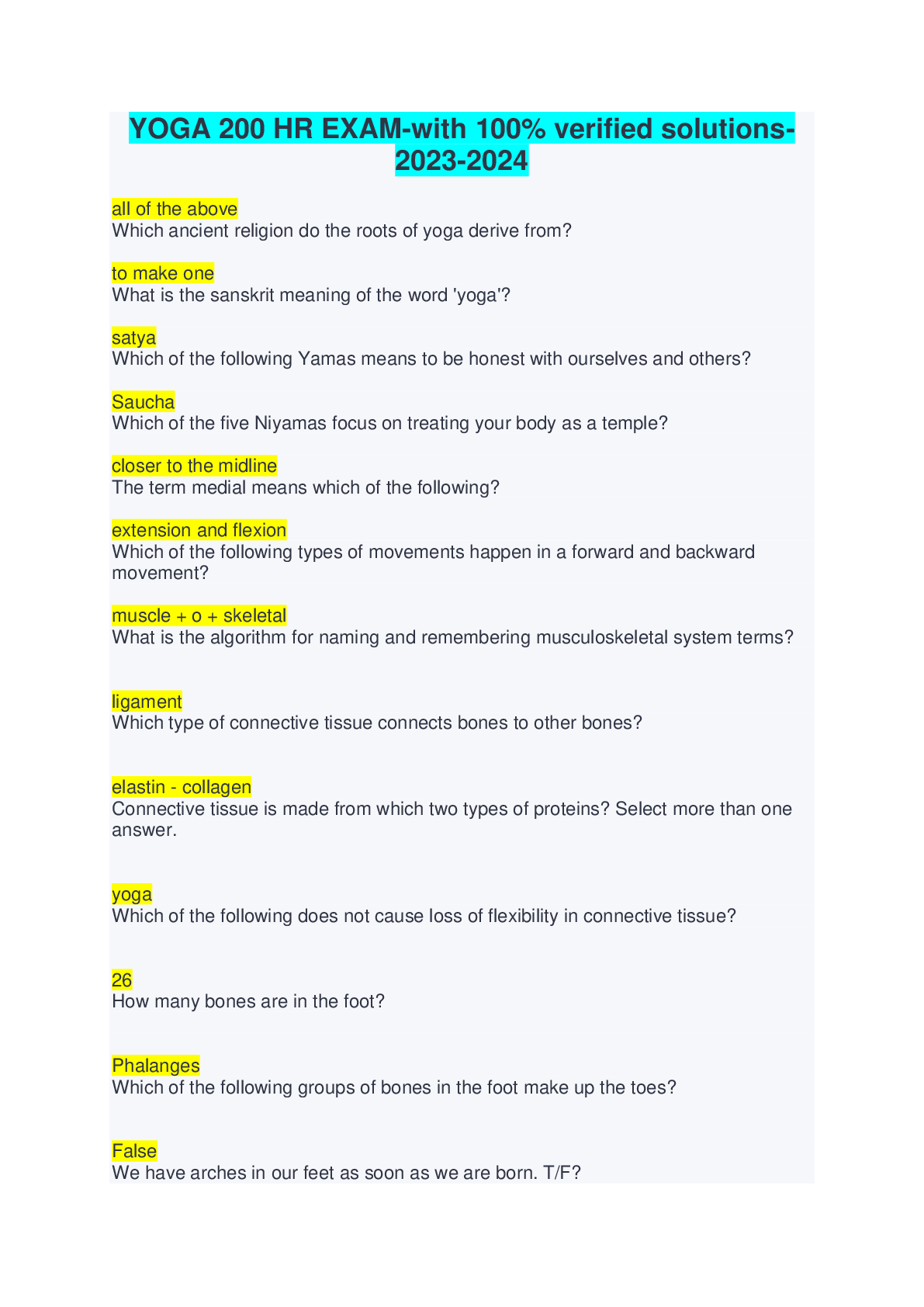
NUR 2571-Final exam - with verified answers-2022
Document Content and Description Below
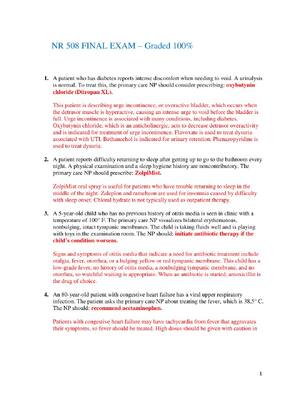
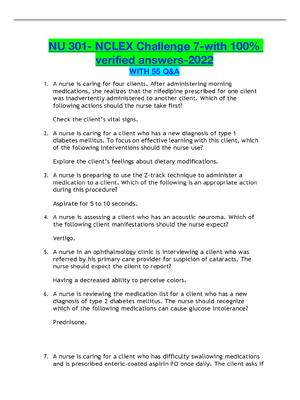
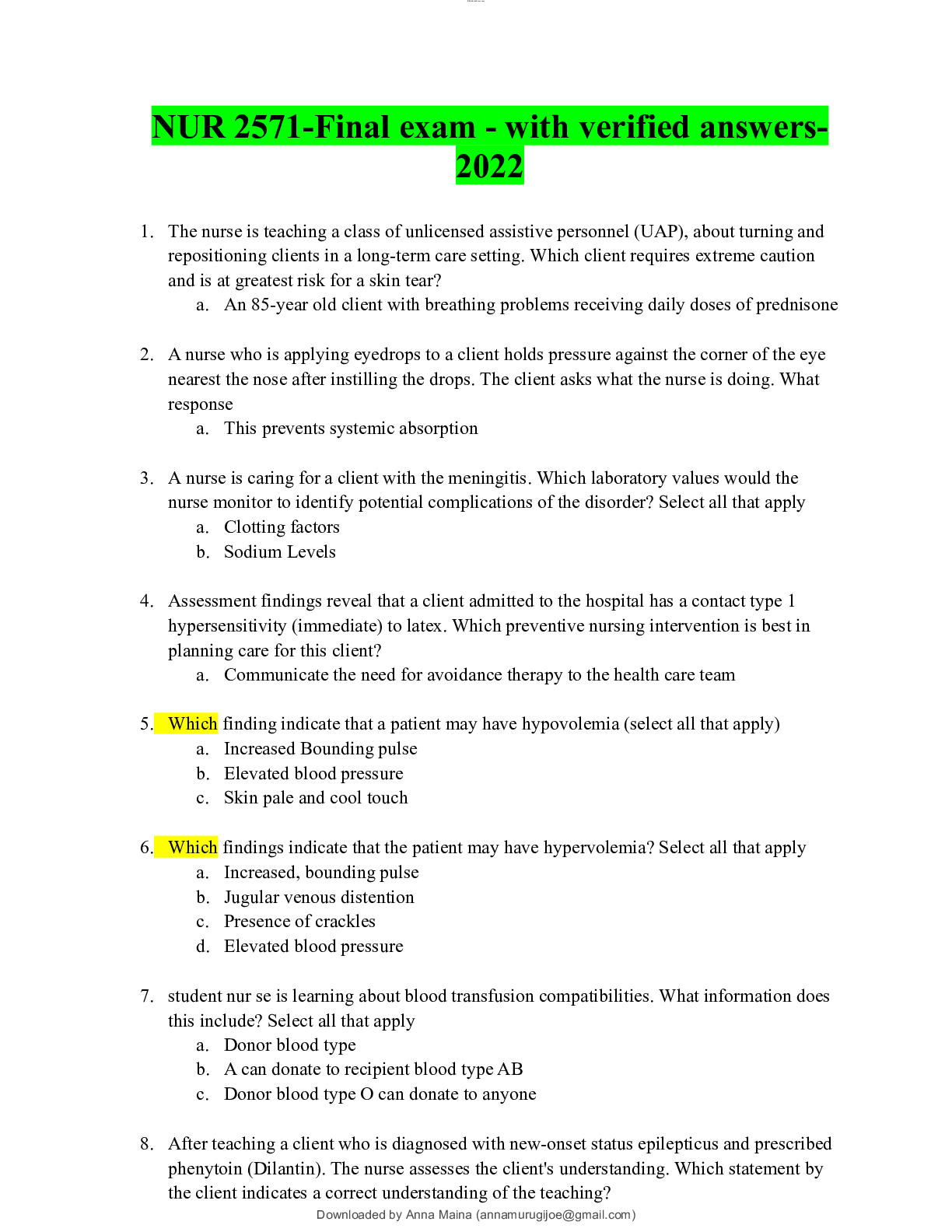
1. The nurse is teaching a class of unlicensed assistive personnel (UAP), about turning and repositioning clients in a long-term care setting. Which client requires extreme caution and is at greatest risk for a skin tear
...
[Show More]
Last updated: 4 years ago
Preview 1 out of 19 pages
Instant download
Buy this Document to get the Full Access Instantly
Provided by Students Who Aced it
We Verify Document Content to Gurantee Accuracy
Reviews( 0 )
Document information
Connected school, study & course
About the document
Uploaded On
Sep 07, 2022
Number of pages
19
Written in
All

Additional information
This document has been written for:
Uploaded
Sep 07, 2022
Downloads
0
Views
65
Topic Tags
Related Subjects & Courses
Explore similar study resources and related concepts.
Recommended For You
Get more on EXAM »
$13
27 Pages
NUR 2571 / NUR2571 Professional Nursing II / PN 2 Final Exam ....

$12
11 Pages
NUR 2571 / NUR2571 Professional Nursing II / PN2 Final Exam Re...
$10
9 Pages
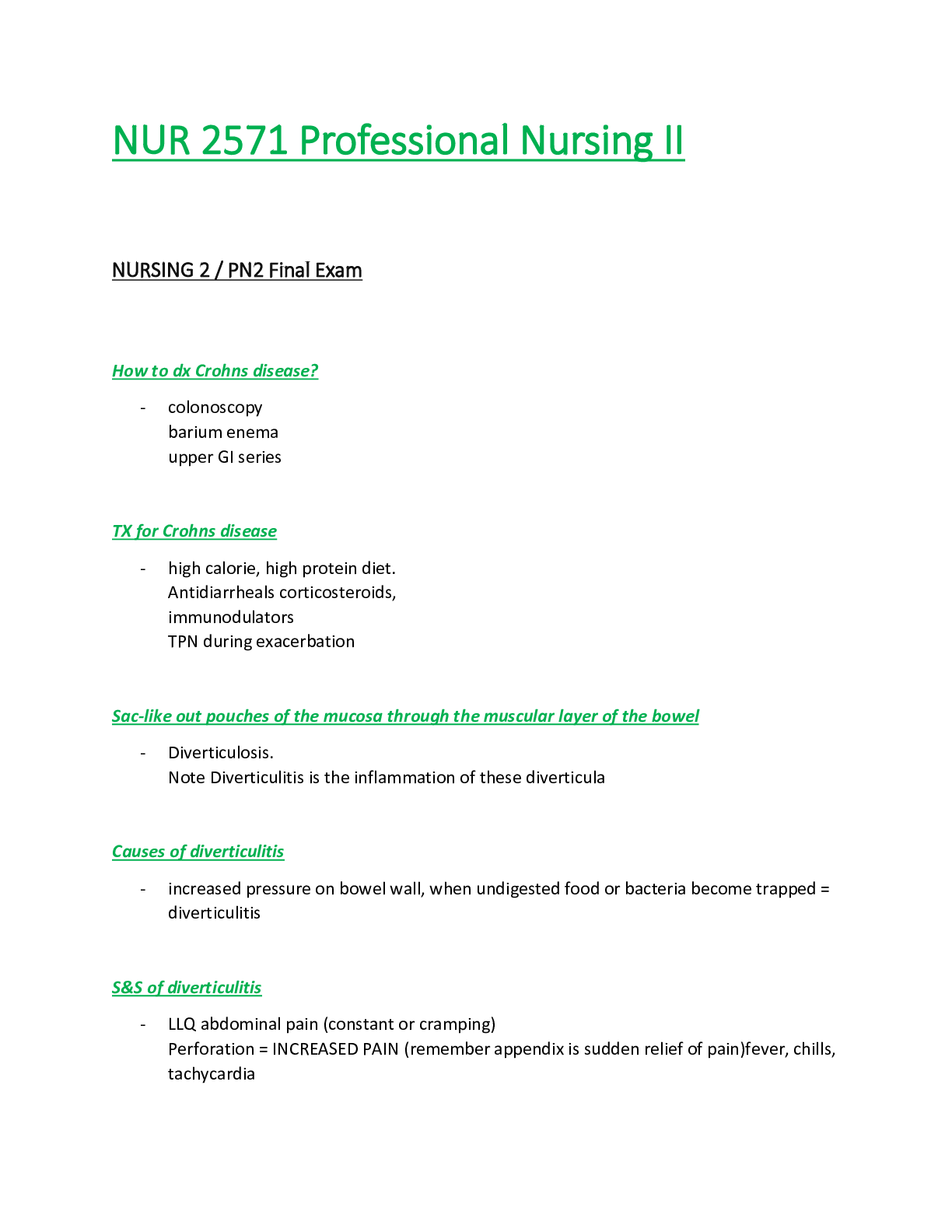
NUR 2571 / NUR2571 Final Exam (Latest Update): Professional Nu...
$9.5
16 Pages
NUR 2571 / NUR2571 Final Exam (Latest Update): Professional Nu...
$14
33 Pages
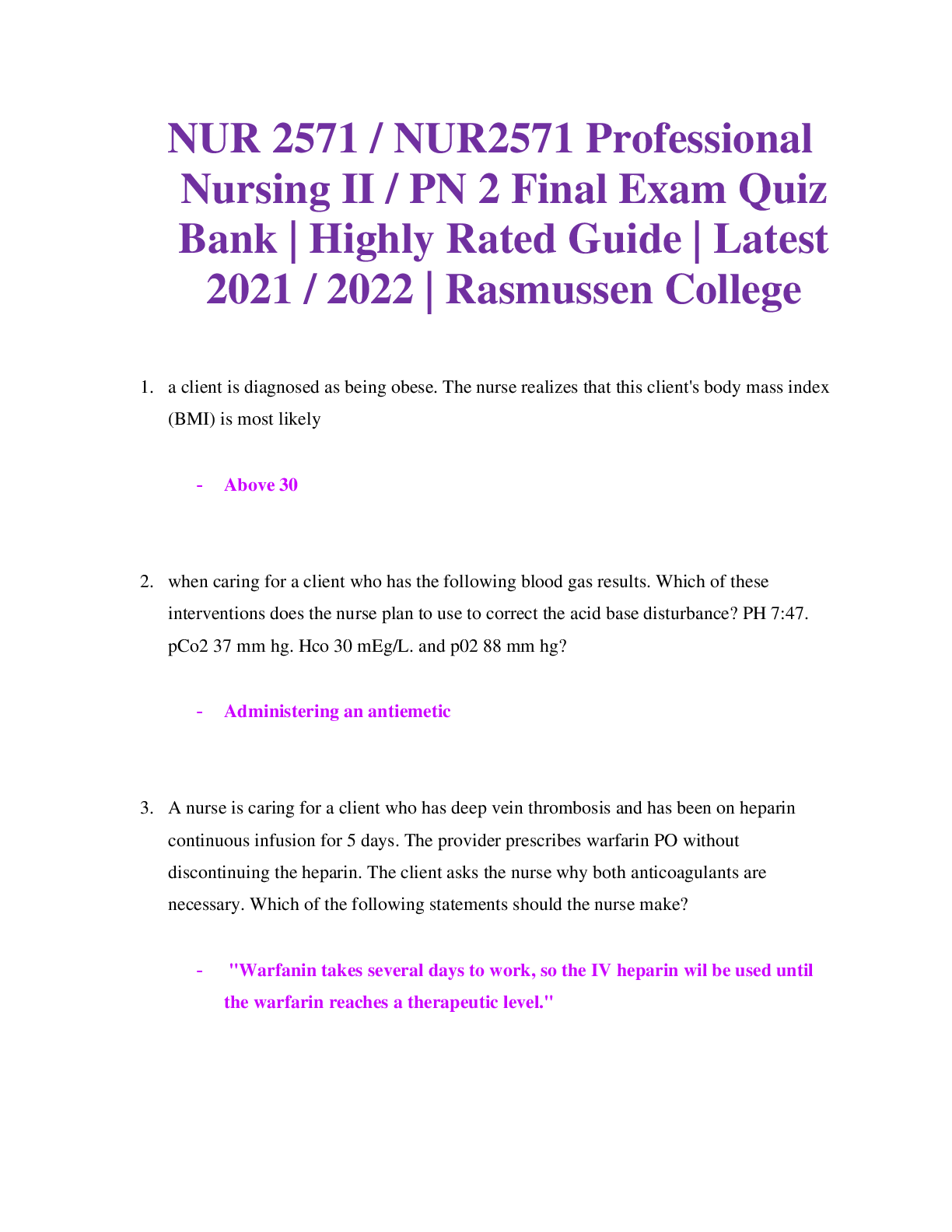
NUR 2571 / NUR2571 Professional Nursing II / PN 2 Final Exam Q...

$19
43 Pages
NUR2571| ATI med surg PN II Exam I - Complete Questions/answer...


$17
12 Pages